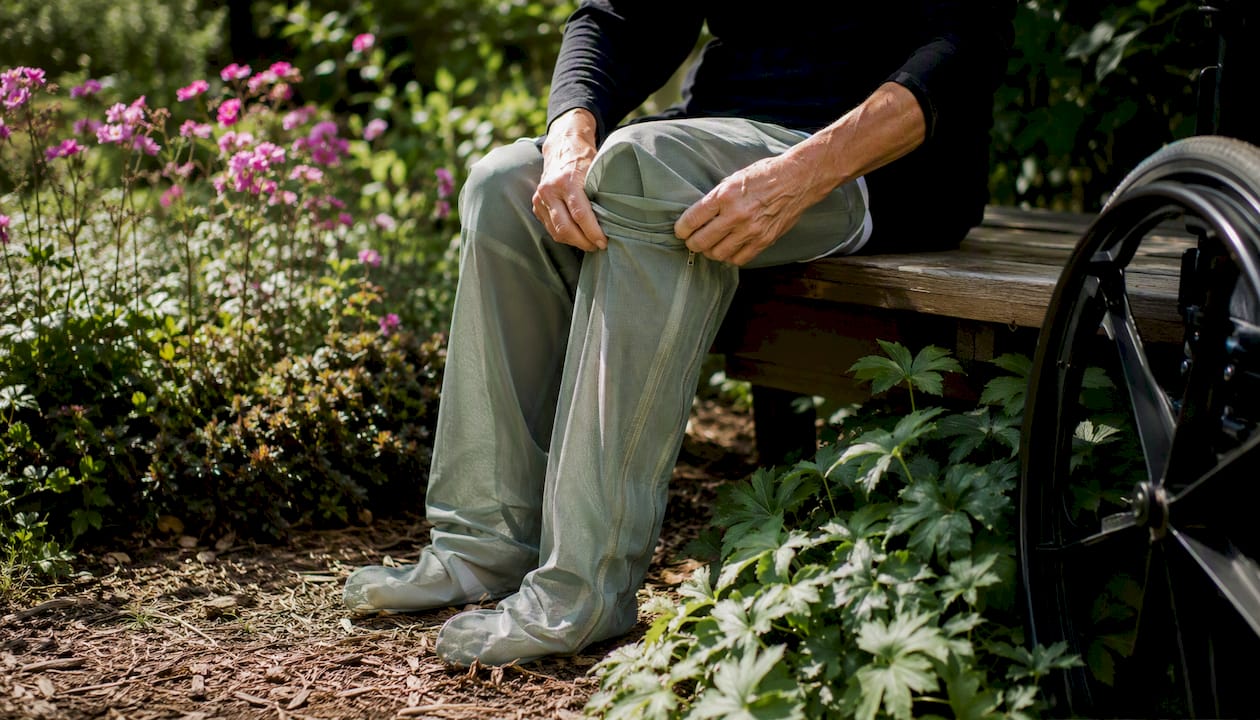
The most effective approach for wheelchair users is a layered defense: ultra-fine physical mesh clothing over the body, a stroller-style insect net or canopy mounted over the wheelchair frame, and a skin-applied repellent on any exposed skin. No single product covers every gap, but this combination comes closest.
Here is what the evidence supports:
- Physical mesh clothing (like Bugawaygear’s chemical-free mesh jackets and pants) creates a full-body barrier without any chemicals, making it the safest first layer for people with sensitive skin or autonomic concerns.
- Permethrin-treated clothing is an EPA-registered alternative. According to EPA guidance, permethrin is the only insect repellent currently used for factory treatment of clothing, and it protects only the skin covered by the treated garment. Factory-treated items can maintain protection for up to many washes.
- Wheelchair-mounted netting (adapted from stroller designs) covers the chair itself and fills the gaps clothing cannot reach.
- Skin repellents (DEET or picaridin) go on any skin the clothing leaves uncovered, such as hands and face.
Pro Tip: Before your first outdoor outing, sit in your chair while wearing the mesh clothing and have someone check for fabric gaps at the knees, waist, and lower back. Seated posture stretches fabric differently than standing does, and those stretched spots are where bites happen.
Key Takeaways
A layered defense combining physical mesh clothing, a wheelchair-mounted insect net, and skin repellent on exposed areas gives wheelchair users the most reliable mosquito protection available.
| Point | Details |
|---|---|
| Layer your protection | Mesh clothing on the body plus a mounted net on the chair covers gaps neither alone can seal. |
| Seated fit matters most | Choose loose-cut garments with adjustable closures to prevent taut fabric at knees, thighs, and lower back. |
| Track treated garment wash-life | Factory-treated permethrin clothing lasts up to ~70 washes; home treatments last roughly 25 washes before protection fades. |
| Repellents fill the final gap | Apply DEET or picaridin only to exposed skin, patch-test first, and never apply under clothing. |
| Bugawaygear for chemical-free coverage | Bugawaygear’s mesh pants and jackets offer breathable, chemical-free protection with a 30-day money-back guarantee for fit testing. |
Table of Contents
- Why no clothing is truly 100% mosquito-proof
- Two proven approaches: permethrin-treated fabric vs. physical mesh
- What wheelchair users specifically need from protective clothing
- Practical wheelchair adaptations: nets, canopies, and gap-sealing
- What to look for when buying protective clothing for wheelchair use
- Washing and lifespan: how to keep protection working
- When to use skin repellents and how to do it safely
- How Bugawaygear’s mesh clothing fits wheelchair users’ needs
- The layered approach is the only one worth trusting
- Bugawaygear’s mesh clothing: where to start
- Sources
Why no clothing is truly 100% mosquito-proof
Gaps are the real problem, not the fabric itself. Every garment has seams, openings at the wrists and neck, and areas where fabric rides up or stretches thin. For wheelchair users, seated posture adds another layer of vulnerability: fabric bunches at the waist, pulls tight across the knees, and shifts away from the ankles. Any of those spots can become a bite pathway.
The EPA notes that permethrin-treated clothing protects only the skin it actually covers, and potency can decline with repeated washing. A garment that started with strong chemical protection may offer significantly less after many wash cycles, especially if dried on high heat.
Common failure points for wheelchair users include:
- Waistband gaps where the shirt rides up when leaning forward
- Knee and thigh stretch zones where thin fabric allows bites through
- Wrist and ankle openings that stay open during transfers or repositioning
- Chair-to-clothing gaps where the seat, armrests, or footrests leave skin or thin fabric exposed
Mosquitoes can bite through fabric that is pressed tightly against skin. A garment that fits loosely while standing may pull taut across the thighs or lower back when seated, creating exactly that contact point.
Understanding this shapes every purchase decision. Loose cut, adjustable closures, and a chair-mounted net are not optional extras — they are the fix for these failure points.
Two proven approaches: permethrin-treated fabric vs. physical mesh
The choice comes down to whether you want a chemical barrier or a physical one.
Permethrin-treated clothing bonds an insecticide to the fabric fibers. Mosquitoes that land on the garment are repelled or killed on contact. The EPA registers factory-treated clothing as an effective repellent method. According to We Are Explorers, factory-treated garments can advertise protection for many washes, while home-spray treatments typically last fewer washes.
Physical mesh clothing uses ultra-fine woven fabric to block insects mechanically. No chemicals, no wash-life countdown, no irritation risk from insecticide residue. The mesh works as long as the fabric is intact.
For wheelchair users specifically:
- Breathability: Mesh wins here. Seated users with limited mobility generate less body heat through movement but can overheat from trapped warmth. Ultra-fine mesh allows airflow that treated woven fabrics often restrict.
- Skin irritation risk: Permethrin residue can irritate sensitive skin, particularly where fabric presses against the body for extended periods. Mesh carries no chemical risk.
- Wash care: Treated garments require cold water, mild detergent, and air-drying to preserve the chemical bond. Mesh clothing is more forgiving.
- Durability: Both last well with proper care. Mesh needs inspection for tears; treated clothing needs wash-count tracking.
Statistic: Factory-treated permethrin clothing can maintain repellent efficacy for a high number of washes, compared to fewer washes for home-applied treatments, per consumer outdoor-gear guidance.
For most wheelchair users, physical mesh is the lower-maintenance, lower-risk primary layer. Permethrin-treated clothing is a reasonable choice for users without skin sensitivities who want chemical backup, but it requires careful permethrin clothing safety awareness.
What wheelchair users specifically need from protective clothing
The standard outdoor buyer’s checklist does not account for seated posture, thermoregulation challenges, or the realities of dressing with caregiver assistance. Living Spinal’s clothing guidance makes the point clearly: loose-cut, layering-friendly garments reduce fabric tension and limit bite risk at the contact points that seated posture creates.
Prioritize these features:
- Loose cut through the seat and thighs to prevent fabric from pressing against skin
- Adjustable wrist and ankle closures (elastic or Velcro) to seal gaps without restricting circulation
- Integrated foot coverage or compatible gaiters so ankles stay protected without extra steps
- Flat or minimal seams at pressure points (lower back, seat area) to reduce skin irritation
- Lightweight, breathable mesh to support thermoregulation, especially for users with spinal cord injuries who have reduced ability to regulate body temperature
Pro Tip: If you use a caregiver for dressing, test the garment’s opening and closure system before buying. Front-zip or full-side-opening designs are far easier to manage than overhead pullovers, and that difference matters every single day.
Practical wheelchair adaptations: nets, canopies, and gap-sealing
Clothing covers the person. The chair itself needs its own barrier.
- Mount a stroller-style insect net over the wheelchair frame. Adaptive Specialties carries the Convaid mosquito net, a universal-fit design that adapts to wheelchair frames and creates an environmental barrier around the seated occupant. Secure it so it does not sag against the user’s face or hands.
- Consider a UV mesh canopy that combines shade with insect protection. Products like the Delta UV Mesh Insect Protector (available from Beachwheels Australia) demonstrate how canopy designs can maintain airflow while blocking insects.
- Seal wrist and ankle gaps with elastic cuffs or lightweight gaiters. Tuck pants into socks and use a gaiter or ankle strap to keep the hem down during movement.
- Check for purpose-built wheelchair mosquito nets. Products like the Chicco wheelchair mosquito net show that seated-occupant designs are commercially available and worth comparing against adapted stroller nets.
- Anchor the net to the chair’s frame, not just draped over it. A net that shifts or sags creates contact points where mosquitoes can bite through.
Pro Tip: Clip the net’s lower edge to the chair’s frame with small binder clips or cord locks. It takes two minutes and prevents the net from riding up when you move.
What to look for when buying protective clothing for wheelchair use
| Feature | What to check |
|---|---|
| Coverage and fit | Loose cut at seat, thighs, and lower back; no taut zones when seated |
| Closures | Adjustable wrist and ankle cuffs; front-zip or side-open for dressing ease |
| Breathability | Ultra-fine mesh or ventilated weave; avoid heavy woven fabrics |
| Seam placement | Flat seams away from pressure points (lower back, seat area) |
| Foot coverage | Integrated coverage or gaiter compatibility |
| Wash care | Cold wash, air-dry; track wash count for treated garments |
| Return policy | 30-day money-back guarantee (Bugawaygear offers this) for fit testing |
Additional buying considerations:
- Verify the mesh pore size is fine enough to block mosquitoes (not just larger insects). Bugawaygear’s mosquito net clothing guide explains the difference between mesh grades.
- For very small biting insects, check no-see-um protection specs before purchasing.
- If you are shopping for a child or a family member, Bugawaygear’s family bundles cover multiple sizes in one order.
Washing and lifespan: how to keep protection working
The short answer: follow the label, and track your wash count for treated garments.
| Garment type | Wash-life claim | Key care rules |
|---|---|---|
| Factory-treated permethrin | Up to many washes | Cold wash, mild detergent, air-dry, no bleach |
| Home-treated permethrin | Up to fewer washes | Same as above; re-treat when protection fades |
| Physical mesh clothing | No wash-life limit | Inspect for tears after each wash; avoid abrasive surfaces |
For mesh garments specifically:
- Check seams and mesh panels for small tears before each outing. A pinhole in the mesh is a bite point.
- Wash separately from items with Velcro or rough hardware that can snag the mesh.
- Air-dry flat when possible to preserve the mesh structure.
- Replace any panel with a tear larger than a few millimeters rather than patching with tape.
When to use skin repellents and how to do it safely
Clothing covers most of the body, but hands, face, and neck often stay exposed. That is where DEET and picaridin earn their place. Both are effective, though they can irritate sensitive skin in some users.
Safety steps for wheelchair users:
- Patch-test first. Apply a small amount to the inner wrist 24 hours before full use, especially if you have sensitive skin or reduced sensation.
- Apply only to exposed skin, never under clothing. Applying repellent under a mesh garment traps it against the skin and increases irritation risk.
- Choose lower concentrations (10–20% DEET or picaridin) for everyday outdoor use; higher concentrations are for extended high-exposure situations.
- Avoid broken or irritated skin. Wheelchair users who experience pressure sores or skin breakdown should keep repellents well away from those areas.
- Reapply on schedule, not just when you feel bites. Most formulations last 2–4 hours depending on concentration and sweat.
Clothing-based protection reduces how much skin repellent you need, but it does not eliminate the need entirely. Any skin the garment does not cover is unprotected unless you apply repellent directly to it.
How Bugawaygear’s mesh clothing fits wheelchair users’ needs
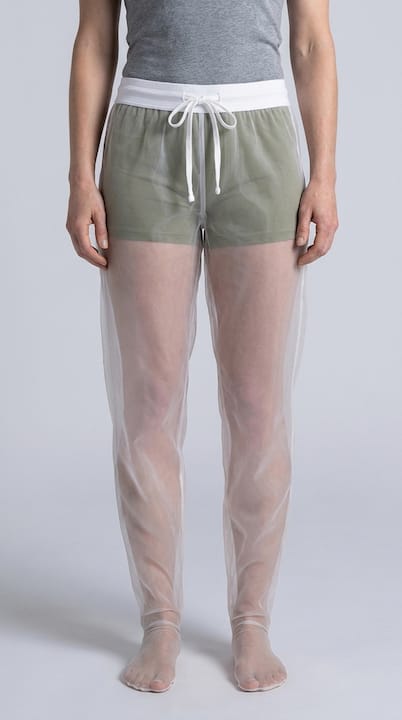
Bugawaygear’s ultra-fine, chemical-free mesh provides full-body physical protection while keeping breathability and adjustable closures at the center of the design. For wheelchair users, that combination addresses the two biggest risks: overheating from non-breathable fabric and bite exposure from taut or ill-fitting garments.
Key features that map directly to wheelchair needs:
- Integrated foot coverage so ankles stay protected without separate gaiters
- Loose cut designed to avoid tension at the knees, thighs, and lower back when seated
- Breathable ultra-fine mesh that supports thermoregulation for users with limited mobility
- Eco-responsible, chemical-free materials with no irritation risk from insecticide residue
- 30-day money-back guarantee so you can test fit and ventilation on real outings before committing
The brand’s how it works page explains the mesh technology in detail. Customer reports cite zero tick bites while wearing the products, and the chemical-free construction means no wash-life countdown.
Pro Tip: Order one size up from your usual fit for seated use. The extra room prevents the fabric from pulling tight across the thighs and lower back, which is where most bite-through incidents happen.
The layered approach is the only one worth trusting
Most guides pick a side: chemical treatment or physical barrier. After working through the evidence, that framing misses the point. Neither approach alone covers every gap a wheelchair creates. Seated posture, chair hardware, and the practical limits of any single garment mean that a mesh suit without a chair net leaves the seat area exposed, and a chair net without body coverage leaves the person exposed.
The combination that actually works is mesh clothing on the body, a mounted net on the chair, and repellent on exposed skin. Start with the chemical-free mesh layer because it carries no wash-life limit, no irritation risk, and no re-treatment cost. Add the chair net for the gaps the clothing cannot reach. Use repellent sparingly on whatever skin remains uncovered.
Testing fit in a short 20-minute outdoor session before a full outing is worth doing. Adjustments are much easier to make at home than in the field.
Bugawaygear’s mesh clothing: where to start
For wheelchair users who want non-chemical protection they can test risk-free, Bugawaygear’s mesh clothing is the practical first purchase. The 30-day money-back guarantee means you can wear it on real outings, check the fit in your seated position, and return it if the coverage or ventilation does not work for you.
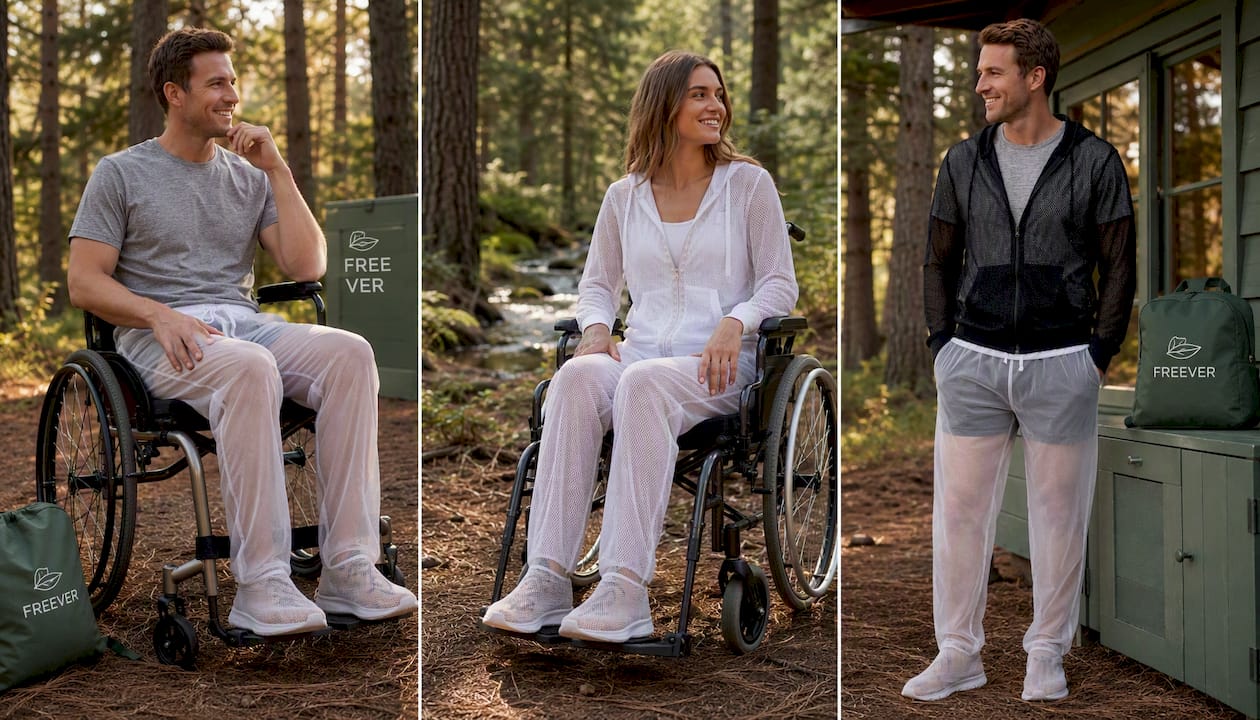
The men’s mesh pants and women’s mesh pants are the highest-priority pieces for wheelchair users because leg and thigh coverage is where seated users are most exposed. Pair either with a mesh jacket for full-body coverage. Caregivers shopping for multiple users can browse family bundles that cover adults and kids in one order.
Measure your seated inseam and waist before ordering, size up one if you are between sizes, and plan a short test outing before committing to longer outdoor sessions. Questions about fit for specific wheelchair models can go to Bugawaygear’s support team directly. Shop all products to compare options and bundles.
Sources
- Repellent-Treated Clothing | US EPA
- Convaid mosquito net product listing | Adaptive Specialties
- Insect precautions for travelers | Indiana University Health Center
- Our guide to insect repellent gear – We Are Explorers
- Clothing & apparel guidance for spinal injury readers | Living Spinal
This article is general information, not a substitute for advice from a qualified doctor. Consult a qualified healthcare professional about your own circumstances before acting on anything here.