
Wear light-colored, tight-woven long sleeves and pants, treat the fabric with 0.5% permethrin or choose a chemical-free fine mesh like Bugawaygear, and apply an EPA-registered repellent (DEET or picaridin) to any exposed skin. That three-layer approach, physical barrier plus treated fabric plus skin repellent, is what public health practitioners recommend for high-exposure scenarios. If you are dressing children or pets, read every label first: permethrin has age restrictions and is toxic to cats until it dries completely.
Pro Tip: If you only do one thing before a hike, tuck your pants into your socks. Ticks latch at ankle height and crawl up — sealing that entry point stops most of them before they ever reach skin.
Table of Contents
- What should you pack and wear before heading outdoors?
- Which fabrics and fits actually block ticks?
- What should you put on skin vs. clothing for tick protection?
- How to put your clothing on so ticks can’t reach skin
- What to do after you come back indoors
- How do you protect kids and stay comfortable in hot weather?
- Chemical-free mesh vs. permethrin-treated clothing: which is right for you?
- Key Takeaways
- The case for putting protection before style
- Zero-chemical tick protection from Bugawaygear
- Useful sources for further reading
What should you pack and wear before heading outdoors?
A quick checklist you can screenshot and use right now:
Wear:
- Long pants (light-colored, tight-woven or fine mesh)
- Long-sleeved shirt tucked into pants
- Closed-toe shoes that cover the ankle
- High socks or gaiters over pant cuffs
- Hat or cap (neck flap optional for dense brush)
Pack:
- Permethrin spray or pretreated clothing (for fabric treatment)
- EPA-registered skin repellent: DEET, picaridin, or oil of lemon eucalyptus
- Sealable bag for used clothes at the trailhead
- Fine-tipped tweezers or a tick removal tool
Before you leave the car:
- Apply permethrin to boots, socks, and outer pants the night before (it needs to dry fully).
- Apply skin repellent to exposed wrists, neck, and ankles.
- Tuck shirt into pants, pants into socks.
- Do a quick visual scan of your clothing for any hitchhikers before getting back in the vehicle.
The repellent split matters: permethrin goes on fabric only, never on skin. Skin repellents go on exposed skin, not under clothing where they cannot evaporate properly.
Which fabrics and fits actually block ticks?
The short answer: tight-woven synthetics work; loose-knit fabrics do not. Ticks need texture and leverage to bite, and a dense enough weave denies them both. Research confirms that covering skin with tight-woven sleeves and pants acts as an effective physical barrier. Loose crochet, open-weave linen, or stretched-out knits leave gaps wide enough for a nymph tick, which can be smaller than a poppy seed.
Light-colored clothing is about visibility, not repellency. Harvard’s Lyme disease resource is clear on this: a light-colored shirt does not deter ticks, but it makes a dark-brown deer tick easy to spot before it attaches. Combine light colors with tight weave for the real defense.
Ticks do not jump, fly, or drop from trees. They wait on grass or low shrubs, latch near shoe or pant-leg height, and crawl upward toward dark, moist spots like the waist, armpits, and groin. Every sealing tactic you use at the ankle and cuff directly interrupts that path.
Fit tactics that cut risk:
- Tuck shirt into pants — to close the gap at the waist.
On denim: jeans feel protective, but standard denim is not tight-woven enough to stop a determined nymph tick. Layering gaiters over jeans at the ankle compensates for that gap.
Pro Tip: Convertible pants with a fabric flap sewn over the leg zipper are an overlooked field solution. The flap covers the seam gap that a standard zipper leaves open, and most hikers never think to check it.
What should you put on skin vs. clothing for tick protection?
The two categories are distinct and non-interchangeable.
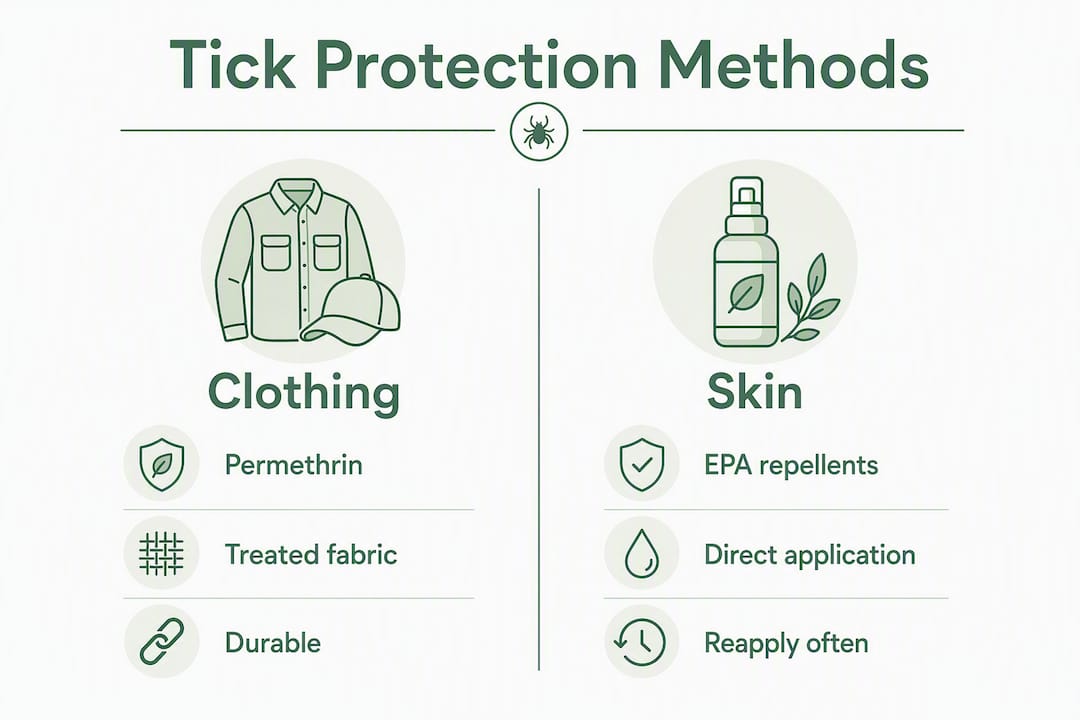
Skin repellents (applied directly to exposed skin):
- DEET (any concentration from 20–30% covers most outdoor activities)
- Picaridin (20% concentration for ticks)
- Oil of lemon eucalyptus (OLE) — note: not recommended for children under 3
All three are EPA-registered and proven effective against ticks when used as directed.
Clothing treatment: permethrin
The CDC recommends treating clothing and gear with products containing 0.5% permethrin. Unlike skin repellents, permethrin is a contact insecticide: it kills ticks that land on treated fabric rather than just deterring them. That kill-on-contact action is why TickEncounter at URI describes permethrin-treated clothing as a better clothing-directed option than DEET alone.
| Treatment type | Where applied | Durability | Notes |
|---|---|---|---|
| 0.5% permethrin spray (DIY) | Clothing, boots, gear | Several wash cycles (CDC) | Must dry completely before wearing; never apply to skin |
| Commercially pretreated clothing | Factory-bonded to fabric | Up to 70 wash cycles (manufacturer claims) | Higher upfront cost; no DIY application needed |
| DEET / picaridin | Exposed skin only | Reapply per label (typically 4 hours) | Follow age restrictions on label |
DIY permethrin spray needs to dry fully before you put the garment on, which means treating boots and pants the evening before a hike. Commercially pretreated clothing bonds the compound more deeply into the fiber, which is why durability claims reach up to 70 wash cycles for some products. Always check the manufacturer’s label for the specific wash-cycle count, because it varies by brand and fabric.
One safety note that gets overlooked: permethrin is toxic to cats until it dries. Keep treated clothing away from cats during the drying period, and store it out of reach once dry.
How to put your clothing on so ticks can’t reach skin
Dressing for tick country is a sequence, not just a wardrobe choice. The order matters.
- Apply permethrin to boots, socks, and outer pants the night before; let them dry overnight.
- Put on your base layer, then tuck your shirt fully into your waistband.
- Pull on your pants and tuck the cuffs into your socks before lacing your boots.
- Lace boots snugly so no gap opens between the boot collar and the sock.
- If wearing gaiters, fit them over the boot and lower pant leg to seal the ankle completely.
- Check that zipper flaps on convertible pants lie flat over the seam.
- Apply skin repellent to exposed neck, wrists, and any skin above the sock line.
Footwear matters more than most people realize. Sandals and low-cut sneakers leave the ankle exposed, which is exactly where ticks latch. High-top trail shoes or light hiking boots that cover the ankle give permethrin-treated socks a surface to work on and close the gap that low-cut shoes leave open.
Pro Tip: Wear a second pair of light-colored socks over your pant cuffs. The pale surface makes crawling ticks visible immediately, and you can peel them off before they find a gap.

What to do after you come back indoors
Aftercare is where most people lose the protection they built with good clothing choices.
- Shower within two hours — CDC data shows that showering within two hours of coming indoors reduces the risk of Lyme disease and helps wash off unattached ticks.
| Laundry scenario | Recommended action |
|---|---|
| Dry clothing | Tumble-dry on high heat, 10 minutes minimum |
| Damp or wet clothing | Extend drying time beyond 10 minutes until fully dry |
| Heavily soiled items | Wash in hot water first, then tumble-dry on high |
If you find an attached tick, use fine-tipped tweezers, grasp the tick as close to the skin surface as possible, and pull upward with steady, even pressure. Do not twist or jerk. Clean the bite area with rubbing alcohol. Seek medical advice if you develop a rash, fever, or flu-like symptoms within 30 days.
Pro Tip: Change into a clean set of clothes at the trailhead before getting in your car. Ticks on clothing can survive the drive home and transfer to car seats, where they wait for the next passenger.
How do you protect kids and stay comfortable in hot weather?
Children need the same physical barriers adults do, with a few adjustments.
- Repellent age limits: Do not use oil of lemon eucalyptus on children under 3. DEET and picaridin are generally safe for children over 2 months when applied by an adult; follow label directions precisely.
- Permethrin on kids’ clothing: Safe when applied to fabric and fully dried before wearing, but never apply directly to a child’s skin.
- Dress kids in lightweight, breathable tight-weave layers rather than heavy denim. Moisture-wicking synthetics keep them cooler and are easier to tuck and seal.
- Fun gaiters in bright colors improve compliance: kids are more likely to keep them on when they feel like gear rather than a chore.
- Light-colored clothing serves double duty for children: it keeps them cooler in sun and makes tick checks faster.
Hot weather does not have to mean short sleeves. Lightweight, ventilated long-sleeve shirts made from moisture-wicking fabric can feel cooler than a cotton T-shirt in direct sun because they block UV and reduce sweat evaporation loss. Schedule high-activity outdoor time for early morning or late afternoon to avoid peak heat, and build in shaded rest breaks every 30–45 minutes.
Reapplication of skin repellents matters more for children because they sweat more and touch their faces. Reapply according to the label, and wash repellent off with soap and water when the outdoor session ends.
Chemical-free mesh vs. permethrin-treated clothing: which is right for you?
Both strategies work. The choice comes down to exposure level, personal preferences, and who is wearing the gear.
The CDC recommends a dual-action approach: treat clothing with permethrin AND apply an EPA-registered repellent to exposed skin for the most reliable protection in high-exposure environments.
| Factor | Permethrin-treated clothing | Chemical-free fine mesh (e.g., Bugawaygear) |
|---|---|---|
| Mechanism | Kills ticks on contact | Physical barrier; ticks cannot penetrate the mesh |
| Durability | Several wash cycles (DIY); up to 70 cycles (commercial) | Permanent — no re-treatment needed |
| Chemical exposure | Low when dry; avoid skin contact | Zero — chemical-free |
| Best for | High-exposure hiking, hunting, dense brush | Families, gardeners, chemical-sensitive users |
| Cat safety | Keep away from cats until dry | No concern |
| Cost model | Ongoing (DIY spray) or upfront (pretreated) | One-time purchase |
Bug Away Pants — Women and Bug Away Pants — Men are Bugawaygear’s core chemical-free option: ultra-fine breathable mesh with integrated foot coverage, sized for adults, and built for hiking, gardening, and yard work. The mesh weave is dense enough that ticks cannot gain the leverage to bite through, which is the same principle that makes tight-woven synthetics effective, taken further. Bugawaygear backs them with a 30-day money-back guarantee and reports over 500 customers who experienced zero tick bites while wearing their products.
For non-toxic tick prevention with children or anyone avoiding insecticides, the mesh-first approach removes the chemical variable entirely. For a solo hiker pushing through dense brush in peak tick season, layering permethrin-treated socks and boots under a mesh outer layer gives both kill-on-contact action at the ankle and a physical barrier above it.
Key Takeaways
Wearing tight-woven or fine-mesh long pants and sleeves, sealing ankle and cuff entry points, and combining permethrin-treated fabric with an EPA-registered skin repellent gives you the most reliable protection against tick bites outdoors.
| Point | Details |
|---|---|
| Physical barrier first | Tight-woven or fine-mesh fabric stops ticks from reaching skin; loose-knit fabrics do not. |
| Seal entry points | Tuck pants into socks and shirts into waistbands; ticks latch low and crawl up. |
| Dual treatment strategy | Use 0.5% permethrin on clothing and DEET or picaridin on exposed skin for high-exposure outings. |
| Aftercare is non-negotiable | Shower within two hours, tumble-dry clothes on high for at least 10 minutes, and do a full-body check. |
| Bugawaygear mesh option | Bug Away Pants offer a chemical-free physical barrier backed by a 30-day money-back guarantee. |
The case for putting protection before style
Most tick-prevention advice focuses on what to spray. The clothing conversation gets less attention, and that gap costs people.
The real insight from the research is behavioral: ticks do not ambush from above. They wait at knee height or lower, latch onto a shoe or sock, and spend minutes crawling upward before they bite. That means every gap you close at the ankle and waist is a genuine intervention point, not just a precaution. A pair of gaiters over permethrin-treated socks, or a pair of fine-mesh pants with integrated foot coverage, stops the tick before it ever starts the climb.
What I find underestimated is the chemical-free mesh category. Permethrin is effective and well-studied, but it requires planning: treating gear the night before, keeping it away from cats, tracking wash cycles. A physical mesh barrier requires none of that. You put it on and it works. For families with young children, gardeners who go in and out of the yard multiple times a day, or anyone who finds the chemical logistics friction enough to skip protection entirely, the mesh approach removes every excuse. Bugawaygear’s eco-responsible design and satisfaction guarantee make it a practical starting point for that group.
The best tick protection is the one you actually wear consistently, every time.
Zero-chemical tick protection from Bugawaygear
If the permethrin routine feels like too many steps, Bugawaygear’s mesh clothing solves the problem differently: no sprays, no drying time, no re-treatment schedule.

Bug Away Pants — Women and Bug Away Pants — Men use ultra-fine breathable mesh with integrated foot coverage to create a physical barrier ticks cannot penetrate. They are lightweight enough for summer hikes, durable enough for regular yard work, and sized for adults. Over 500 customers report zero tick bites while wearing them, and every order is backed by a 30-day money-back guarantee. If you are also using permethrin on boots or a skin repellent on exposed areas, follow those product labels as directed. Browse the full tick-proof clothing range at Bugawaygear and place your order before your next outdoor session.
Useful sources for further reading
- Preventing Tick Bites | CDC — The CDC’s primary guidance on permethrin use, shower timing, and laundry steps after outdoor activity.
- Tips to Prevent Tick Bites | U.S. EPA — EPA guidance on clothing barriers, tucking techniques, and registered repellent use.
- Recreate Responsibly in Tick Country | U.S. Fish & Wildlife Service — Practical field tips including convertible-pant zipper flaps and habitat awareness.
- Preventing Tick Bites | Harvard Lyme Disease Resource — Harvard’s guidance on light-colored clothing, visibility, and Lyme disease risk reduction.
- Bugawaygear | Chemical-Free Tick Protection — Bugawaygear’s product range and blog covering chemical-free mesh clothing for hikers, gardeners, and families.