
Ticks find people through a mix of chemical and physical signals: carbon dioxide from breathing, radiant body heat, sweat and skin odors shaped partially by your microbes, plus the moisture and shade of tick-friendly habitat. Add in wildlife, pets, and gear moving through brushy areas, and you’ve got the full attraction package. You can’t turn off your own CO₂ output, but you can control the rest.
The attractors that matter most:
- Carbon dioxide from your breath, detectable from several feet away
- Body heat radiating off exposed skin
- Sweat compounds like lactic acid and ammonia
- Skin microbes that produce odor-boosting volatiles
- Moist, shaded ground cover like leaf litter and tall grass
- Host traffic from deer, rodents, and pets moving through your yard
Three moves cut your risk fast: wear long pants tucked into socks or a mesh barrier layer, keep grass mowed and leaf litter cleared near walking paths, and check yourself, your kids, and your pets after any time outdoors.
Key Takeaways
Ticks locate hosts by sensing CO₂, body heat, and microbial odors through Haller’s organ, which is why physical clothing barriers interrupt attachment more reliably than scent-based defenses alone.
| Point | Details |
|---|---|
| Main attractors | CO₂, body heat, sweat compounds, skin microbes, and moist shaded habitat all combine to draw ticks in. |
| Habitat matters most | Leaf litter, tall grass, and woods-to-lawn edges create the microclimates ticks need to survive. |
| Microbial synergy is real | Skin microbe volatiles combined with CO₂ attracted 3.7 to 10 times more ticks than CO₂ alone in lab trials. |
| Heat kills ticks on clothing | Tumble-drying clothes on high heat for 10 minutes neutralizes ticks that hitchhiked on fabric. |
| Physical barriers work | Bugawaygear’s chemical-free mesh clothing blocks ticks before they attach, backed by a 30-day guarantee. |
Table of Contents
- What Attracts Ticks to Humans: How They Sense You Coming
- Where Do Ticks Live? Spotting Tick-Friendly Habitat
- Are Ticks Attracted to Sweat and Body Odor?
- Do Pets and Gear Bring Ticks Into the House?
- Where Do Ticks Bite, and Who’s Most at Risk?
- What Actually Reduces Tick Exposure?
- Found a Tick? Do This Immediately
- Why Prevention Beats Reaction
- A Chemical-Free Way to Stop Ticks Before They Attach
- Sources
What Attracts Ticks to Humans: How They Sense You Coming
Ticks don’t have eyes worth much. Instead, they rely on a sensory structure on their front legs called Haller’s organ, which picks up carbon dioxide, radiant heat, moisture, and specific odors like ammonia and lactic acid. Some species, including the lone star tick and the American dog tick, can detect radiant heat from several meters away, long before you’d ever notice them.
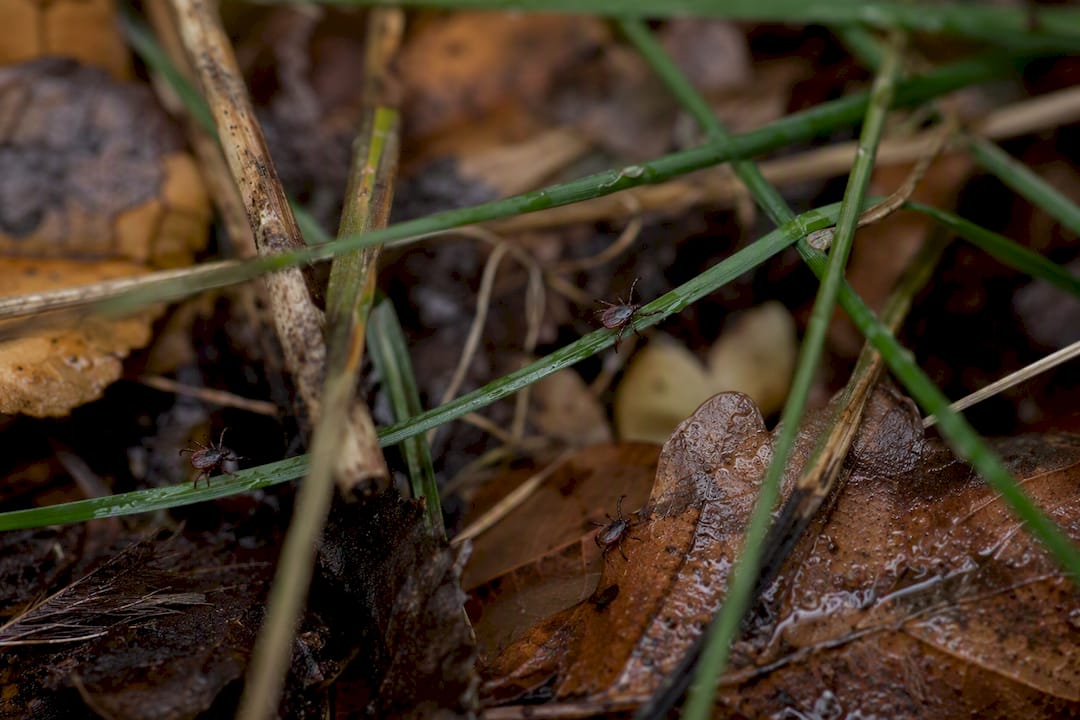
Most ticks don’t chase. They “quest” instead, climbing to the tip of a blade of grass or a low branch, front legs outstretched, and waiting for something warm and CO₂-emitting to brush past. Once a host is close enough, a tick will make a short, deliberate move toward it.
Research on Ixodes pacificus found that combinations of microbial volatiles and CO₂ attracted 3.7 to 10 times more ticks in certain trials than CO₂ alone, with the effect scaling up as the odor blend got stronger.
That’s exactly why questing behavior makes clothing barriers so effective. A tick perched on a grass tip has one shot at grabbing onto whatever brushes it. Tuck your pants into your socks or wear a woven barrier layer, and there’s nothing exposed skin for it to grab.
Pro Tip: Ticks that fail to attach on the first brush often just wait for the next passerby. Treating your ankles and lower legs as the primary contact zone is the single most useful habit you can build before a hike.
Where Do Ticks Live? Spotting Tick-Friendly Habitat
Ticks need humidity to survive; dry heat kills them fast. That’s why they cluster in specific microhabitats rather than spreading evenly across a property.
Watch for these high-risk spots:
- Leaf litter piles, especially at the woods-to-lawn edge
- Tall grass and unmowed borders
- Dense brush and overgrown shrubs
- Shaded, damp ground under trees
- Woodpiles and stone walls (rodent magnets)
These danger zones often connect along what wildlife biologists call host highways: deer paths, rodent runs, and the transition strip where a mowed lawn meets untamed woods. Ticks ride in on the animals using those corridors and drop off wherever the animal pauses.
Before letting kids or pets loose in the yard, scan for overgrown edges, stacked wood near play areas, and shaded strips that never quite dry out.

Pro Tip: A three-foot barrier of wood chips or gravel between your lawn and any wooded edge measurably slows tick migration into your yard. It’s cheap, it’s permanent, and it works because ticks avoid crossing dry, exposed surfaces.
Are Ticks Attracted to Sweat and Body Odor?
Yes, and the mechanism is more specific than “ticks like people.” Your body constantly emits a mix of cues that questing ticks are built to detect: exhaled CO₂, radiant heat off your skin, and sweat components like lactic acid and ammonia. Layered on top of that is something most people never think about: the volatile compounds produced by bacteria living on your skin.
That microbial layer isn’t a footnote. Lab experiments found that odorant blends from deer-associated skin microbes, combined with CO₂, drew dramatically more ticks than CO₂ by itself, in a dose-dependent way. In plain terms, the more of that microbial scent signature present, the harder ticks were pulled toward it.
Here’s the myth worth busting: you can’t change your CO₂ output, and you can’t fully rewrite your skin microbiome overnight. What you can change is exposure. That means:
- Showering after outdoor activity to reduce lingering sweat odor
- Wearing looser, woven fabric rather than tight clothing that traps moisture against skin
- Avoiding scented lotions and sunscreens in tick season, which can add to your volatile signature
Interestingly, not every skin microbe attracts ticks; some may even be mildly deterrent, which partly explains why two people standing in the same patch of grass can have very different luck.
Do Pets and Gear Bring Ticks Into the House?
Pets are the most common way ticks hitchhike indoors, and gear left on porches or in cars runs a close second. A tick doesn’t need to survive your living room long. It just needs a few hours to find a new host once it’s inside.
Run this checklist after any outdoor outing:
- Check your dog’s ears, collar line, and paws before it comes inside
- Inspect backpacks, jackets, and shoes left on porches or in trunks
- Wash and dry outdoor clothing on high heat before it touches the laundry pile
- Keep hiking gear staged in a garage or mudroom, not the bedroom
Pro Tip: Store field gear in a sealed bin near the entryway rather than tossing it on a bed or couch. It’s a five-second habit that keeps hitchhikers from spreading to soft furniture where they’re much harder to find.
Where Do Ticks Bite, and Who’s Most at Risk?
Attachment sites shift by age. In adults, 55% of bites occur on the legs, while in children, 32% of bites happen on the head and neck, a difference driven largely by height and how kids play in vegetation.
Seasonality matters just as much as location. Nymph-stage ticks, the size of a poppy seed and easy to miss, peak in late spring through early summer, while adult ticks tend to surge again in fall.
Some groups carry more exposure than others:
- Children, who play low to the ground in brush and tall grass
- Hikers and anglers, who brush against vegetation along trails and shorelines
- Gardeners and landscapers, who spend hours in leaf litter and mulch
- Pet owners, whose animals track ticks in from the yard
What Actually Reduces Tick Exposure?
Not every prevention step carries equal weight. Start with the ones that block contact entirely, then layer in the rest.
- Cover exposed skin. Long pants tucked into socks, long sleeves, and a woven or mesh barrier layer stop questing ticks before they ever reach skin.
- Choose your repellent strategy. EPA-registered repellents work on exposed skin; permethrin-treated clothing kills ticks on contact but comes with handling and washing caveats worth understanding before you buy. Chemical-free mesh clothing achieves a similar physical block without any treated chemicals at all.
- Manage your yard. Mow regularly, clear leaf litter from walking paths, and install a wood chip or gravel border where lawn meets woods.
- Reduce wildlife attractants. Bird feeders and unsecured trash draw deer and rodents; both are major tick carriers.
- Do a full-body check every time you come inside from tick habitat, and don’t skip the scalp, behind the ears, and behind the knees.
Pro Tip: After any hike or yard job, toss your clothes straight into the dryer on high heat for at least 10 minutes. That single step kills ticks riding on dry fabric, no washing required first. If clothes are damp, run the cycle longer.
If you want a deeper walkthrough on tucking pants into socks or comparing treated versus chemical-free clothing options, those guides go step by step.
Found a Tick? Do This Immediately
Grab fine-tipped tweezers, grip the tick as close to the skin as possible, and pull straight up with steady, even pressure. Disinfect the bite site afterward. If you plan to have it tested, drop the tick into a sealed bag or small container with a damp cotton ball.
Skip the folklore. No petroleum jelly, no lit matches, no squeezing the body, since that can push infected fluid back into the bite.
- Remove with tweezers, straight upward pull
- Disinfect the site with soap and water or alcohol
- Save the tick in a sealed container if testing is a possibility
Pro Tip: Label the container with the date and location of the bite. That detail matters if symptoms show up later and your doctor needs context.
Why Prevention Beats Reaction
I’ve spent enough time reading tick research to notice a pattern: most people act only after finding a bite, when the better opportunity was stopping the tick before it ever attached. Ticks often crawl on skin or clothing for hours first. A physical barrier during that window does more than any repellent applied after the fact.
That’s the thinking behind Bugawaygear’s chemical-free mesh clothing, built to physically block ticks without sprays, backed by a 30-day money-back guarantee.

A Chemical-Free Way to Stop Ticks Before They Attach
If you spend weekends hiking, gardening, or camping with kids, you already know repellents wear off and treated clothing comes with its own handling rules. Bugawaygear takes a different route: ultra-fine mesh that physically blocks ticks from reaching skin, with zero chemicals involved.

The mesh is breathable enough for summer trails, covers down to the feet, and comes in sizes for men, women, and kids, which matters if you’re outfitting a whole family for tick season. Every set ships with a 30-day money-back guarantee, so trying it out on your next hike or gardening afternoon carries no real risk. If you’re gearing up a child for backyard play or camp, the Bug Away Kids Set is built exactly for that. For your own starter kit, check the Men’s Combo Set and see how it fits your next trip outdoors.
Sources
- Synergistic attraction of Western black-legged ticks, Ixodes pacificus, to CO2 and odorant emissions from deer-associated microbes (Royal Society Open Science, 2023)
- Centers for Disease Control and Prevention — Tickborne disease prevention
Check your local health department for region-specific tick activity and testing resources.
This article is general information, not a substitute for advice from a qualified doctor. Consult a qualified healthcare professional about your own circumstances before acting on anything here.