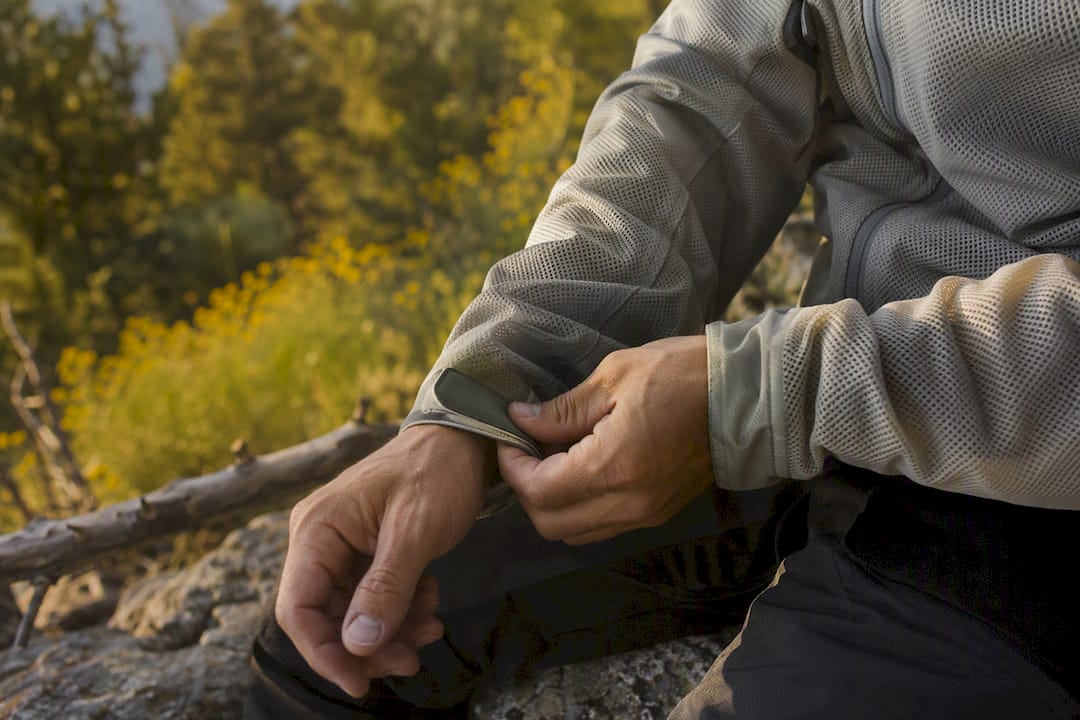
Physical barrier mesh, 3D spacer textiles, and tightly woven untreated fabrics all block ticks and insects without a drop of chemical treatment, and each fits a different kind of day outside. For most hikers, gardeners, and families, chemical-free mesh clothing like Bug Away’s jacket and pant sets is the simplest consumer-ready pick: it’s washable, breathable, and built for repeated wear without reapplying anything.
TL;DR:
- Chemical-free textiles like mesh, spacer fabrics, and untreated dense weaves offer different levels of insect protection depending on activity duration and environment.
- Spacer textiles provide over 90% resistance to certain insects and are more durable than simple mesh, but are heavier and less common in everyday clothing.
- Proper fit and coverage are just as important as material choice, with gaps at cuffs and waist reducing protection regardless of fabric type.
- Mesh clothing is generally the most breathable and affordable, suited for short activities, while spacer textiles excel in longevity and resistance for longer wear.
- Real-world testing shows layered, design-led textiles can block insects without chemicals, supported by independent research and strong warranties.
Table of Contents
- What Are the Main Chemical-Free Textile Categories?
- How Do These Alternatives Compare on Durability and Comfort?
- How Do You Choose the Right Chemical-Free Textile?
- What Evidence Supports Chemical-Free Protection?
- Shop Bug Away’s Chemical-Free Protection by Activity
- When Chemical-Free Textiles Make Sense, and When They Don’t
- Sources
What Are the Main Chemical-Free Textile Categories?
Chemical-free protection breaks down into three real categories, plus a set of accessories that fill in the gaps. None of them rely on permethrin, DEET, or any other treatment soaking into the fibers. They work the way a screen door works: the bug simply can’t get through.
Physical barrier mesh and netting is the most familiar option. It’s a tightly knit or woven fabric, often nylon or polyester blends, sewn into pants, jackets, and full-body suits. The mesh hole size is small enough to stop mosquitoes and most ticks from reaching skin, while still letting air move. This is the category you’ll see at garden centers, on Amazon, and in most outdoor retailers. It’s ideal for casual hiking, weekend gardening, and kids playing in the backyard, since it’s lightweight and doesn’t add much bulk.
3D spacer, or “maze,” textiles are the newest and most technically interesting category. Instead of relying purely on a small pore size, these fabrics use a multi-layer knitted structure that creates a physical maze inside the material itself. An insect that manages to push past the outer layer runs into a second, offset layer that blocks the path. Research from the Wilson College of Textiles at NC State found this geometry works even against insects small enough to slip through a conventional single layer, because the barrier is about distance and disorientation, not just hole diameter.
Tightly woven, untreated performance fabrics take a simpler approach: dense weave, tough fibers, no chemical finish. Ripstop nylon and similar fabrics used in some hiking and hunting apparel fall here. They’re not usually engineered specifically for insect exclusion the way mesh or spacer textiles are, but a dense enough weave combined with snug cuffs and ankles cuts down on bites significantly. The tradeoff is heat. Dense weaves breathe less than open mesh, which matters a lot on a humid August trail.
Adjuncts round things out. These are the pieces that plug the gaps a shirt and pants can’t cover on their own:
- Gaiters that seal the boot-to-pant-leg transition, a common entry point for questing ticks.
- Head nets for anyone working or hiking in heavy brush or near standing water
- Free-standing exterior netting for a picnic table, campsite, or garden bed, which protects the space rather than the person
For casual outdoor time, plain barrier mesh is often all you need, and it’s the option most families already reach for because it’s affordable and easy to find. But if you’re gardening organically and want to avoid every possible chemical exposure while still getting serious protection, a 3D spacer garment or a well-fitted mesh set with gaiters closes more of the gap than a loose cotton shirt ever will.
One thing all three categories share: they only protect where the fabric actually sits against or near the body. A mesh jacket with a gap at the wrist, or pants that ride up when you crouch to weed a garden bed, defeats the purpose no matter how good the fabric is. Fit and coverage matter as much as the material itself.
How Do These Alternatives Compare on Durability and Comfort?
The categories split apart fast once you look at durability, washability, and breathability side by side, and the differences matter more than most product pages let on.
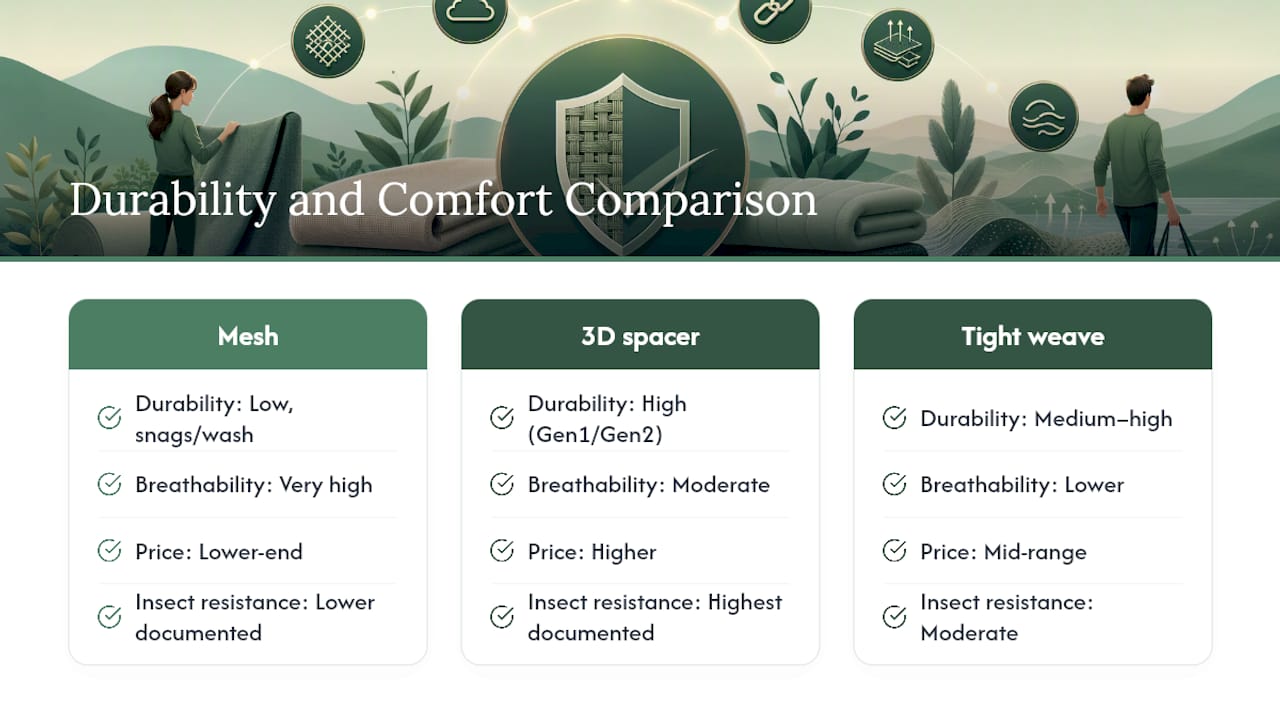
Physical barrier mesh wins on breathability and price. It’s the lightest option, moves air well even on hot days, and tends to sit at the lower end of the price range for protective outdoor clothing. Its weakness is durability. Fine open-weave mesh can snag on branches or barbed wire, and repeated washing can loosen the weave over time if the fabric isn’t reinforced at stress points like knees and seat.
3D spacer textiles trade some of that lightness for a meaningful jump in resistance. The NC State research on Plant Armor crop covers is the clearest data point available on how this geometry performs under real insect pressure. The second-generation spacer textile, PA Gen 2, was more than 90% resistant to penetration by certain caterpillar neonates and dramatically slowed tobacco thrips compared with a standard single-layer cover.
By the numbers: Martindale abrasion testing on the same Plant Armor textiles showed Gen 1 was 6 times more durable than a standard single-layer control, and Gen 2 was 1.8 times more durable. That’s a substantial gap in how long the fabric holds up under repeated friction, whether from trail brush or a washing machine drum.
That durability data was generated for agricultural crop covers, not garments, and consumer clothing built on the same spacer principle is still an emerging category rather than something on every store shelf yet. The design logic transfers, though: a multi-layer structure that forces an insect to navigate a maze rather than just squeeze through one hole is a fundamentally sturdier idea than pore size alone, and it’s why researchers describe it as an alternative to pore-size-only designs.
Tightly woven untreated fabrics land in the middle. They tend to hold up well to abrasion because the weave is inherently dense, but that same density cuts breathability, and wash-cycle performance varies a lot by fiber blend. A nylon ripstop pant will usually outlast a cotton-blend equivalent by a wide margin.
Here’s how the four approaches stack up across the dimensions that actually drive a purchase decision:
The practical trade-off comes down to weight versus certainty. A 3D spacer structure gives you a thicker, denser barrier and the strongest documented resistance numbers, but it’s heavier and less common in everyday apparel right now. A well-made mesh garment gives up some of that lab-tested certainty in exchange for comfort you’ll actually wear all day, every hike, without overheating.
For most people, that trade-off resolves in favor of mesh, because the best protective garment is the one you’ll actually put on before you walk into the yard. A highly resistant fabric sitting in a drawer protects nobody.
How Do You Choose the Right Chemical-Free Textile?
Picking the right approach starts with matching the fabric to what you’re actually going to do in it, not what sounds most impressive on a spec sheet.
- Match the product to the activity. A quick evening in the garden calls for something different than a full-day hike through tick-heavy brush. Casual, short-exposure activities are well served by standard mesh. Longer exposure in dense vegetation favors tighter coverage, reinforced knees, and possibly a woven fabric layered underneath.
- Check coverage and closure points first. Look specifically at the ankles, wrist cuffs, and waistband. Elastic or adjustable closures at these three points stop the single most common failure mode in protective clothing: gaps where insects simply walk in.
- Ask about wash-cycle claims directly. A product page that says “machine washable” without specifying cold water, gentle cycle, or a wash-count estimate is telling you less than it seems to. Push for specifics before you buy.
- Look for abrasion or durability testing. As the NC State data shows, durability testing like the Martindale method is a far better predictor of long-term protection than mesh density alone. A brand that publishes or references this kind of testing is telling you it takes longevity seriously.
For layering, mesh garments generally work best over a light base layer rather than bare skin, both for comfort on longer hikes and because a base layer reduces friction that can wear down the mesh faster. Families outfitting kids should size slightly loose rather than snug, since room to move reduces the chance of the fabric riding up at the ankles or wrists during play.
Watch for a few red flags on any product page. Vague wash instructions, no stated return or satisfaction policy, and materials descriptions that don’t specify fiber content or mesh construction are all signs the brand hasn’t invested much in the product behind the marketing copy. If you can’t find a return window listed anywhere, treat that as a real gap, not an oversight.
Pro Tip: After your first wear, do a quick three-point check: hold the garment up to a light and look for any thin or worn patches in the weave, run a finger along every seam to catch loose stitching early, and note how it feels after one full wash cycle. Catching a weak seam in week one is a lot easier than discovering it after a tick makes it through in week six.
Basic care extends the life of any chemical-free textile: wash in cold water on a gentle cycle, skip the fabric softener since it can clog fine mesh fibers, and air dry rather than tumble dry on high heat, which stresses synthetic fibers over time. For treating any skin irritations or wounds that might arise from tick bites, consider using safe post-bite care products like Bacitracin Zinc Ointment to support healing. A garment cared for this way will hold its protective structure through a full season of regular use, where one run through a hot dryer can noticeably loosen a fine weave.
What Evidence Supports Chemical-Free Protection?
The case for chemical-free textile protection isn’t just marketing language. It rests on published materials science and on how Bug Away has built its own product line around that same design logic.
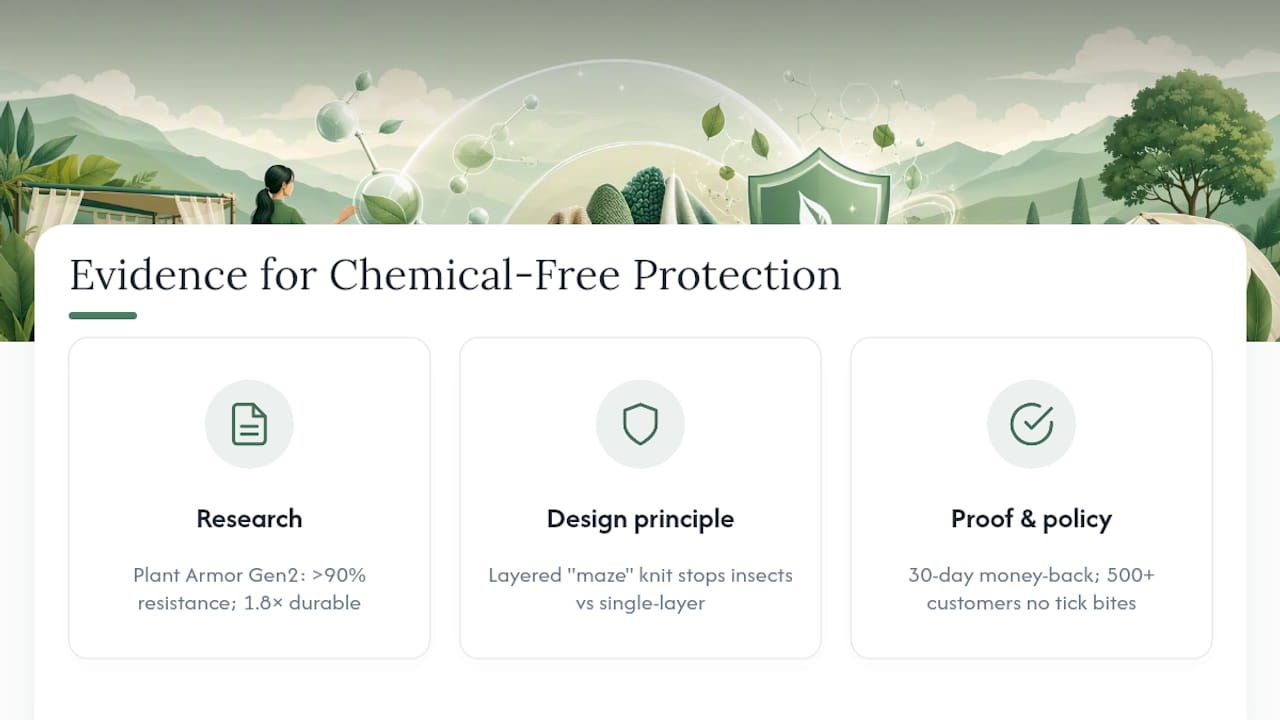
The clearest data point is still the NC State Plant Armor research. Researchers at the Wilson College of Textiles tested a knitted, multi-layer “maze” structure against insects that easily defeat standard single-layer covers, and the results were stark for the second-generation fabric.
Plant Armor Generation 2 fabric proved more than 90% resistant to penetration by certain caterpillar neonates and dramatically slowed tobacco thrips compared with a standard single-layer crop cover, while also testing 1.8 times more durable on Martindale abrasion trials.
That kind of result matters beyond the agricultural setting it was tested in. It confirms that a layered, design-led structure, not a chemical treatment, can be the difference between an insect getting through and getting stopped, which is exactly the principle behind physical barrier clothing built for people rather than crops.
Bug Away’s own products are built on that principle. That’s backed by a 30-day money-back guarantee, so if a jacket or pant set doesn’t fit right or doesn’t hold up the way you expected, you’re not stuck with it. And it’s not an unproven promise: more than 500 customers have reported zero tick bites while wearing the gear.
Put together, that’s the combination worth looking for in any chemical-free textile purchase: independent research validating the underlying design principle, a materials claim you can verify, and a return policy that puts the risk on the seller rather than the buyer.
Shop Bug Away’s Chemical-Free Protection by Activity
Bug Away builds five core options around exactly the use cases most outdoor days actually call for, so you’re not guessing which set fits your plans.
- Bug Away Pants — Women: A standalone piece for anyone who wants tick coverage on the lower body without committing to a full set, ideal for gardening or short trail walks.
- Bug Away Pants — Men: The same standalone coverage built to a men’s fit, a solid pickup for yard work or casual weekend hikes.
- Bug Away Combo Set Women — Jacket + Pants: Full upper and lower coverage for longer hikes or dense brush, where a pants-only setup leaves too much exposed.
- Bug Away Kids Set - Jacket + Pants: Sized for kids playing outside or joining family hikes, with the same mesh construction scaled down rather than a lighter, less protective version.
- Bug Away Combo Set Men — Jacket + Pants: The men’s full-coverage set for anglers, hunters, or anyone spending a full day in tick-heavy terrain.
For a family outing, bundling the kids set with a men’s and women’s combo set covers everyone in one order and avoids the mismatched protection you get from outfitting just one person. Size true to your regular fit, but if you plan to layer a base layer underneath on cooler days, consider sizing up one step so the mesh isn’t pulled tight at the joints, which can strain the weave over time.
Every purchase carries the same 30-day money-back guarantee, so if a size or fit isn’t right, you have room to sort it out. If you’re building out a full setup, Bug Away’s tick protection gear for hiking and garden clothing options group the right combo sets by activity, so you don’t have to piece it together yourself. Start with the set that matches how you’ll actually spend your weekend, and go from there.
When Chemical-Free Textiles Make Sense, and When They Don’t
Chemical-free mesh clothing is the right call for a lot more situations than people assume, but I don’t think it’s the answer to literally everything, and I’d rather say that plainly than oversell it.
If you’re gardening organically, taking kids on a family hike, or you’ve had a bad reaction to DEET or permethrin in the past, physical barrier clothing solves the problem cleanly. There’s no reapplication schedule, no chemical smell, nothing that breaks down after a few washes the way some treated fabrics do. You put it on, it works as a physical barrier, and you take it off at the end of the day with nothing to wash off your skin.
Where I’d add a caveat is occupational exposure. Someone doing wildlife fieldwork in heavily tick-infested habitat for eight hours a day, five days a week, is dealing with a different risk profile than a weekend hiker. In that situation, permethrin-treated clothing or topical repellents used alongside a physical barrier isn’t overkill, it’s a reasonable layer of redundancy. I’d frame that as supplemental, though, not as the default starting point the way a lot of outdoor gear advice treats it.
The honest expectation to set, no matter which textile you choose: nothing eliminates risk completely. A tick that lands on your shoulder and crawls to a gap at your collar has still found a way in, mesh or no mesh. Pair whatever you wear with a real tick check after you come inside and some basic habitat management around your yard, like keeping grass trimmed and leaf litter cleared near play areas. The clothing does most of the work. It’s not the whole job.
— Thomas