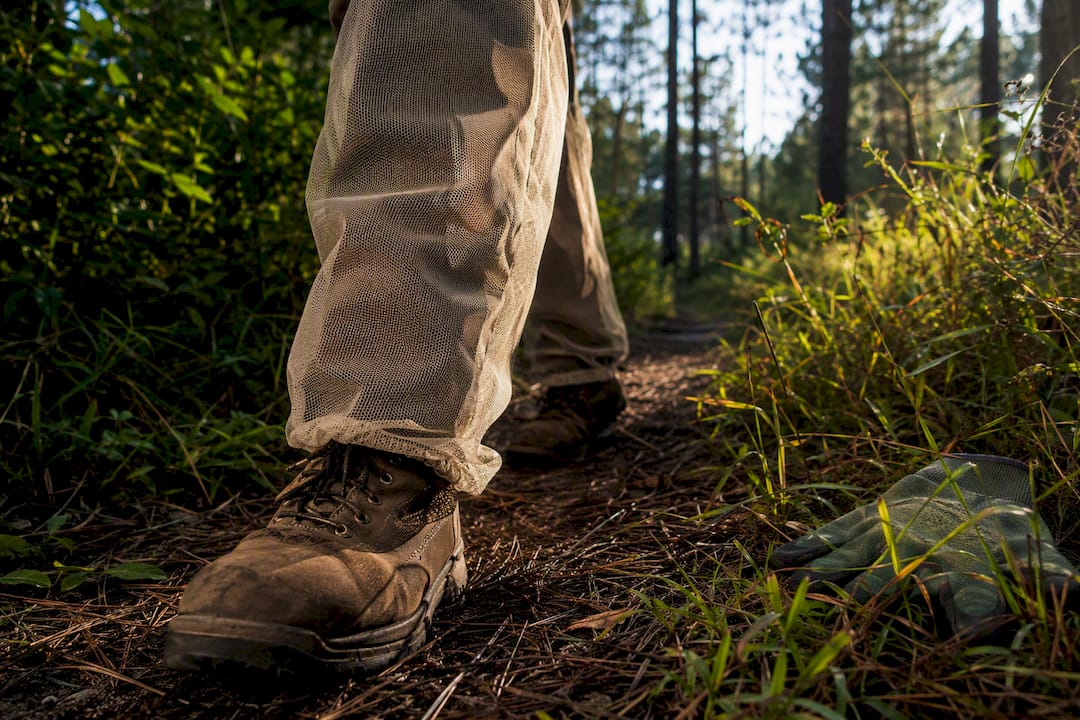
For trail work and family outings, chemical-free mesh clothing is a legitimate physical barrier that lowers tick bite risk, and it does so without a single drop of repellent. Protective clothing use was tied to a 40% reduction in Lyme disease risk in a controlled study, but that number only holds up if the garment fits tight at the ankles, wrists, and waist. Loose cuffs and gaps at the boots erase the benefit fast.
TL;DR:
- Proper fit and continuous coverage at ankles, wrists, and waist are critical for mesh clothing to effectively block ticks without chemicals.
- Reinforced seams, integrated foot coverage, and secure closures significantly improve the garment’s durability and seal integrity during active trail work.
- Washing in cold water, air drying, and regular inspection of seams extend the lifespan and maintain the protective barrier of mesh garments.
- Protective clothing alone offers about a 40% reduction in Lyme disease risk, but meticulous post-activity tick checks remain essential.
- Choose mesh garments with tight weaves, integrated sealing features, and proper sizing to ensure maximum physical protection against tick bites.
Table of Contents
- How Does Mesh Clothing Block Ticks Without Chemicals?
- What Should You Look for in a Tick-Blocking Garment?
- How Do You Wear Mesh Clothing to Seal Out Ticks?
- How Do You Care for Mesh Clothing So It Keeps Working?
- What Does the Research Actually Say About Protective Clothing?
- What Are the Symptoms of a Tick Bite, and What Should You Do?
- A Field-Tested Checklist for Trail Crews and Families
- Why Bug Away Pants Fit the Trail Work Job
- Sources
- FAQ
How Does Mesh Clothing Block Ticks Without Chemicals?
Ultra-fine mesh works on a simple principle: the weave is tight enough that a tick’s mouthparts and legs can’t grip through it or find a gap to crawl in. Ticks don’t jump or fly. They climb up from grass and brush, then hunt for exposed skin, usually starting at the ankles and working upward. A continuous mesh barrier from foot to waist removes that path entirely.
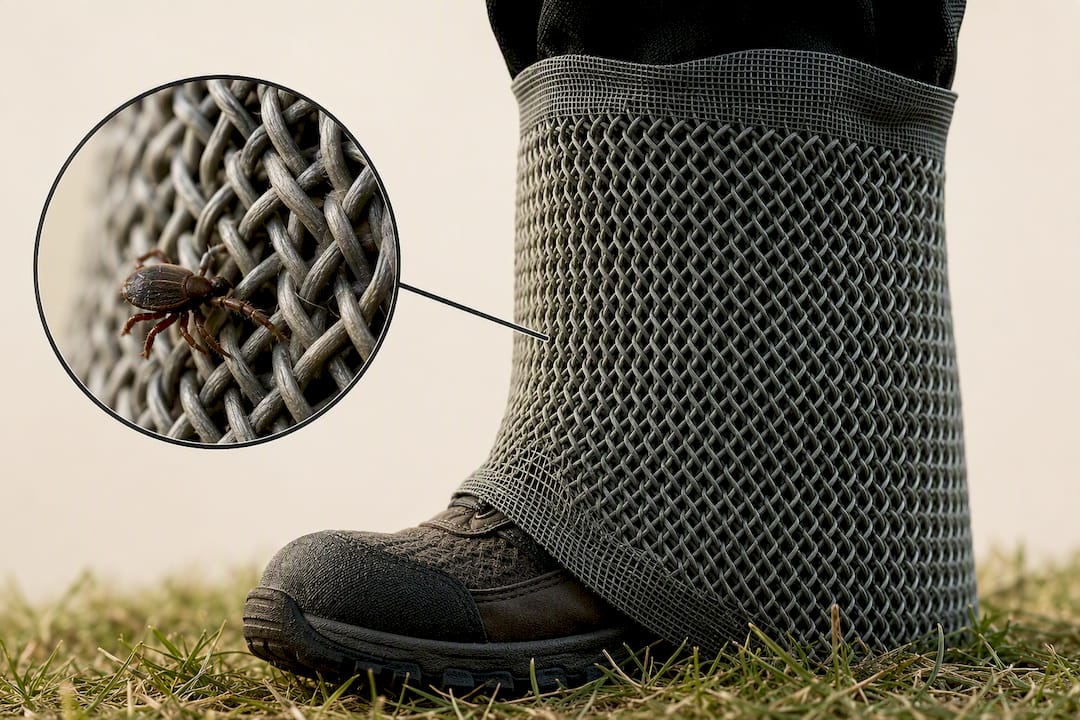
The catch is that the barrier is only as strong as its weakest seam. A single open cuff, a gap at the sock line, or a stretched-out waistband gives a tick the one entry point it needs. That’s why coverage continuity, not just fabric quality, determines whether a garment actually works in the field.
Because there’s no spray, no permethrin treatment, and no chemical residue involved, mesh clothing sidesteps the safety questions that come up around treated fabrics. Bugawaygear builds its garments from 100% chemical-free materials for exactly this reason. Families with young kids and gardeners who don’t want residue on their hands get the same physical protection as trail crews working in heavy brush.
- Tight, ultra-fine weave that blocks tick access without blocking airflow
- Integrated ankle and cuff seals to close the gap ticks look for
- Reinforced seams that hold up under repeated bending and kneeling
- Zero chemical treatment, so there’s nothing to wash out or wear off
Pro Tip: Check the ankle and wrist seals every time you put the garment on. Mesh clothing fails at the seams before it fails in the fabric itself.
What Should You Look for in a Tick-Blocking Garment?
Not all mesh is built the same, and the difference shows up exactly where ticks look for an opening. Prioritize these features in order:
- Ankle and foot coverage. Integrated foot coverage or a built-in tuck point beats a plain hem every time, since it removes the sock-gap problem before you even think about it.
- High waist and long sleeves. A low-rise waistband or short sleeves leaves skin exposed exactly where brush contact happens most.
- Weave and durability. Look for a breathable, ultra-fine weave with reinforcement at the knees and seat, the two spots that take the most abrasion during trail work.
- Closures. Elastic cuffs, an adjustable waist, and reinforced seams matter more than fabric weight for keeping the barrier continuous while you move.
- Fit for layering. Buy one size up if you plan to tuck pants into socks or wear the garment over a base layer. A snug fit that can’t accommodate tucking defeats the purpose.
Sizing mistakes are the most common failure point. A garment that fits perfectly standing still can gap open the moment you kneel to clear brush or climb over a downed log. If you’re between sizes, size up. You can always cinch a waistband tighter, but you can’t stretch fabric that’s too short to tuck.
On the chemical question, verify the claim before you buy. “Chemical-free” should mean no permethrin, no DEET treatment, and no synthetic repellent bonded into the fibers. The barrier comes entirely from the weave and the fit. Wearing long pants and tucking them into socks is a recommendation that shows up across public-health guidance for exactly this reason.
How Do You Wear Mesh Clothing to Seal Out Ticks?
Putting on mesh clothing correctly takes about two minutes, and it’s the difference between real protection and a false sense of security.
- Start with a light base layer if the weather calls for it. Mesh works over bare skin or a thin layer underneath.
- Pull on the mesh pants first, then tuck the pant legs into your socks or boots, working around the whole leg rather than just the front.
- Secure any integrated ankle seals or foot coverage so there’s no visible gap between pant hem and boot.
- Put on the mesh jacket, then check that the cuffs sit snug against your wrists, not riding up your forearm.
- Cinch the waistband where the jacket and pants meet. This is the spot most people skip, and it’s a common entry point.
- Do a final visual scan: ankles, wrists, waist, collar. Four checkpoints, every time.
Seals loosen with movement. Kneeling to clear a culvert or climbing over deadfall stretches cuffs and can pull pant legs loose from your socks. Build a habit of re-checking the ankle and wrist seals every time you stand back up after kneeling work, not just when you first get dressed.
Pro Tip: Pair mesh pants with lightweight gaiters or tall wool socks on days with heavy brush. The extra layer at the ankle catches anything the mesh alone might miss during repeated bending.
How Do You Care for Mesh Clothing So It Keeps Working?
Barrier performance depends on the fabric staying intact, so washing and storage matter more than people expect.
- Wash on a gentle cycle in cold water and skip the dryer’s high heat, which can weaken the fine weave over time.
- Air dry when possible, since repeated washing and abrasive wear are the main threats to any protective garment’s longevity, chemical-free or not.
- Inspect seams and cuffs after every few uses. Small snags can usually be patched or reinforced with stitching before they become a real gap.
- Store garments folded or hung away from direct sun, since UV exposure breaks down synthetic fibers faster than normal wear.
- Retire the garment once you see seam separation, a stretched-out cuff that won’t hold a seal, or thinning fabric at the knees. At that point, the barrier is compromised even if the rest of the garment looks fine.
What Does the Research Actually Say About Protective Clothing?
The strongest data point behind this whole approach comes from a case control study: people who wore protective clothing outdoors saw about a 40% reduction in Lyme disease risk compared to those who didn’t, according to research published on personal protective measures. That’s a real, measurable effect from fabric alone, no chemicals involved.
Integrated pest management literature backs this up from a different angle. Physical interventions, including protective clothing as a core personal-protection measure, are treated as foundational to tick control programs, not as a fallback when sprays aren’t available.
None of this means mesh clothing is bulletproof. The same research notes that protective clothing reduces risk but doesn’t eliminate it, which is why a quick tick check after every shift still belongs in your routine even when you’re fully covered. This article sticks to physical barriers. If you’re weighing repellents or treated fabrics separately, that’s a different conversation with its own tradeoffs.
- 40% risk reduction from protective clothing in a case control study
- Physical barriers are a core IPM strategy, not a secondary option
- Inspection after work remains a necessary complement, not a redundant step
What Are the Symptoms of a Tick Bite, and What Should You Do?
Most tick bites cause no symptoms at all, which is exactly why the 90 second tick check after removing your gear matters so much. When a bite does react, you’ll typically see a small red bump at the site, sometimes with mild itching or swelling, appearing within hours to a couple of days.
Watch for a bullseye-shaped rash expanding outward from the bite over the following days. That pattern is a hallmark sign linked to Lyme disease and warrants a call to your doctor, along with any fever, chills, joint pain, or fatigue that shows up in the weeks after a bite.
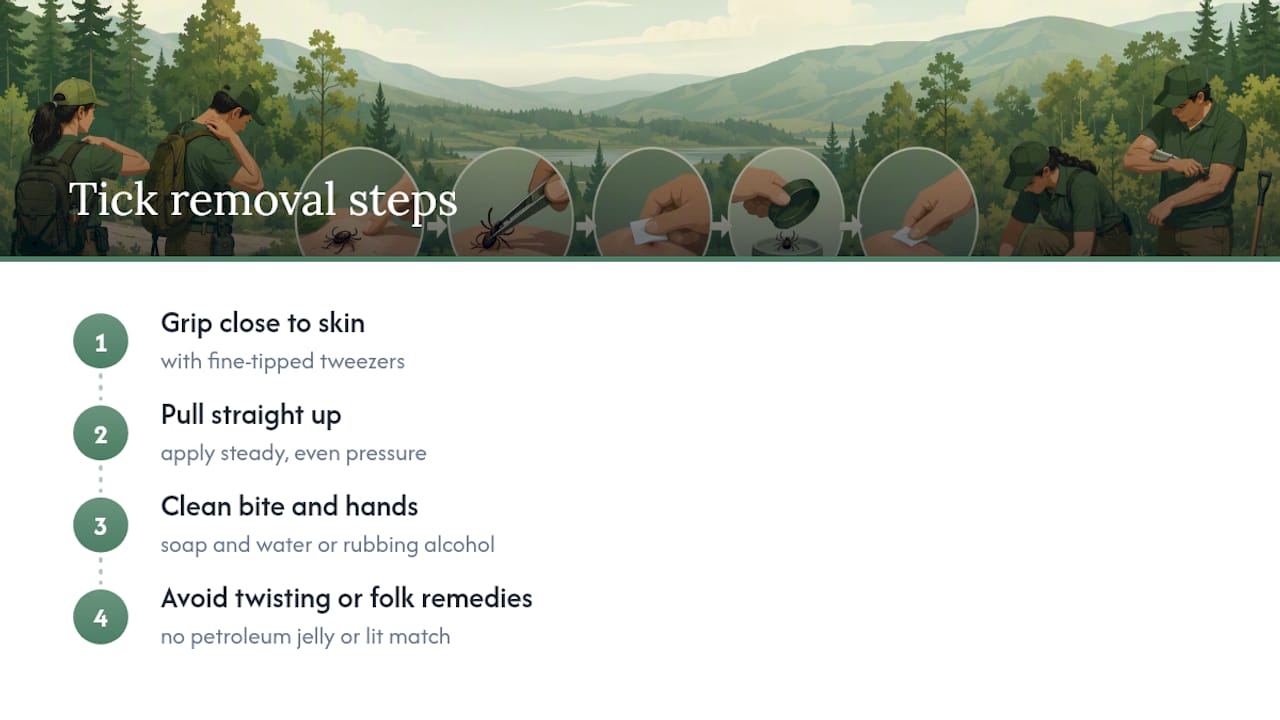
If you find an attached tick, remove it with fine-tipped tweezers following this safe step-by-step guide. Grip it as close to the skin as possible and pull straight up with steady pressure. Don’t twist, and don’t use folk remedies like petroleum jelly or a lit match. Clean the bite area and your hands with soap and water or rubbing alcohol afterward.
Save the tick in a sealed bag or container if you can. Some clinics can identify the species or test it, which helps if symptoms develop later. Note the date and location of the bite. Trail workers covering the same routes repeatedly should track this over a season, since it can reveal which sections of trail carry the highest tick density.
Most bites resolve without incident, but early treatment for tick-borne illness works far better than treatment started weeks in. When in doubt, call a doctor rather than wait out the symptoms.
A Field-Tested Checklist for Trail Crews and Families
Before any shift or hike, run the same three checks: garment fit at ankles and waist, a quick scan for snags or loose seams, and a spare pair of socks or gaiters stashed in the pack. It takes thirty seconds and it’s the difference between a barrier that holds and one that fails at the worst moment.
Heat management is the honest tradeoff nobody mentions enough. Mesh breathes better than most fabrics, but a fully sealed ankle and waist on a 90 degree day still runs warm. Pace your breaks to loosen and re-check seals rather than leaving them cinched all day, and re-tighten before you’re back in brush. If mesh tears mid-shift, a strip of tape or a quick pin closes the gap well enough to finish the day. Patch it properly that night.
— Thomas
Why Bug Away Pants Fit the Trail Work Job
If you’ve read this far, you already know what matters: continuous coverage, a tight weave, integrated ankle protection, and zero chemical treatment. That’s the exact spec Bug Away Pants — Women and Bug Away Pants — Men are built to.
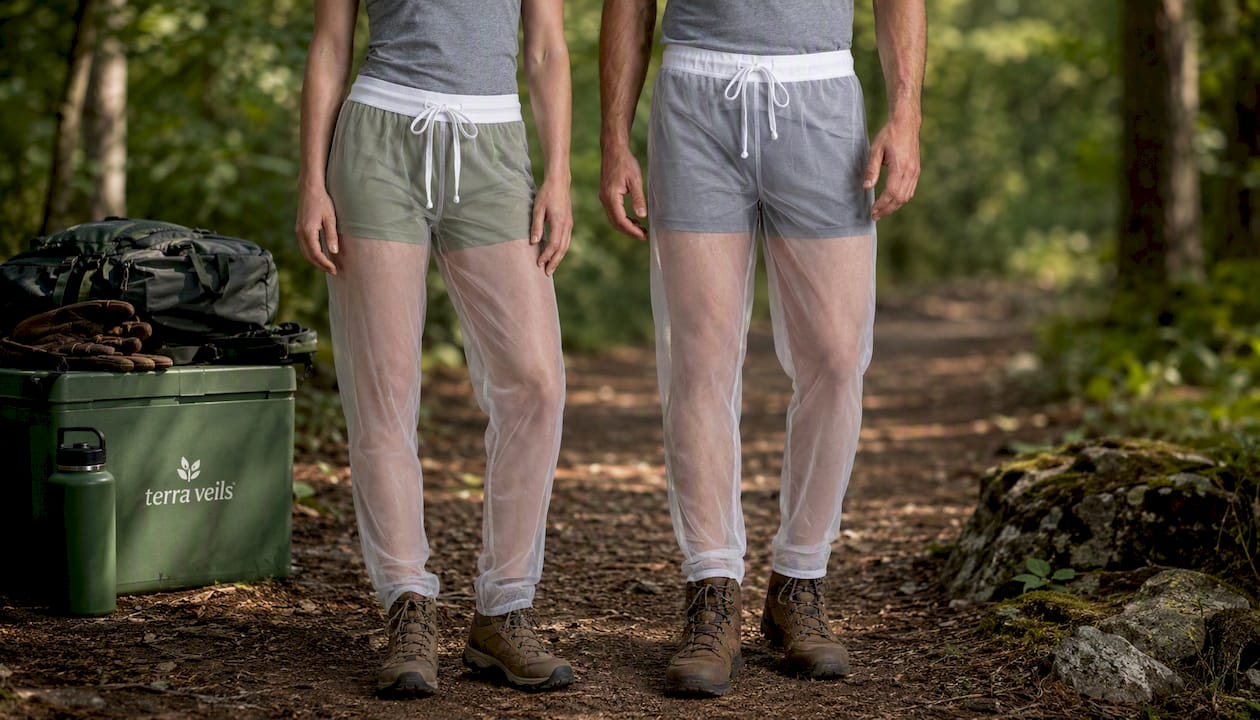
Both are made from 100% chemical-free mesh with built-in foot coverage, so you’re not relying on a loose hem and a hope that your socks stay tucked. The waist sits high enough to layer under a mesh jacket without gapping, and the seams are reinforced at the knees and seat for the kneeling and crawling that trail work actually involves.
Some brands highlight a 30-day money-back guarantee, and some customers report zero tick bites while wearing the gear as intended. Sizing runs true, but if you plan to tuck pants into socks or wear a base layer underneath, size up rather than down. Check the size chart on either product page, pick your fit, and get a barrier that’s ready before your next shift on the trail.
This article is general information, not a substitute for advice from a qualified doctor. Consult a qualified healthcare professional about your own circumstances before acting on anything here.
Sources
- Effectiveness of Personal Protective Measures to Prevent Lyme Disease
- Tick control strategies: chemical, biological, physical, and integrated approaches
- Tickproof your yard without spraying pesticides - Consumer Reports
FAQ
Does chemical-free mesh clothing really stop ticks?
Yes, when it fits correctly. Protective clothing was linked to a 40% drop in Lyme disease risk in a case control study, and the barrier works through weave tightness and coverage, not chemicals.
How tight does mesh clothing need to fit to work?
Tight enough that ankles, wrists, and waist have no visible gaps. A garment with integrated foot coverage or ankle seals closes the most common entry point ticks use to reach skin.
Can I wear mesh clothing over regular clothes?
Yes. Most mesh pants and jackets are sized to layer over a base layer or regular pants, which is also what lets you tuck fabric into socks for a sealed ankle.
How often should I replace tick-blocking mesh garments?
Replace them once you see seam separation, a cuff that won’t hold a seal, or thinning fabric at stress points like the knees. Regular gentle washing and air drying extends service life considerably.
Is chemical-free mesh clothing enough on its own?
It significantly reduces risk but isn’t perfect. Pair it with a quick tick check after every shift or hike, since inspection remains a necessary complement to any physical barrier.