No. Ticks cannot bite through intact, tightly woven leggings. They need direct skin contact to attach, and a dense fabric weave blocks that path. The actual risk comes from gaps at the ankle or waist, thin or stretched panels, and mesh sections that let a tick crawl under or through to bare skin. Sealing those entry points, covered next, is what turns leggings into a real barrier instead of a false sense of one.
TL;DR:
- Ticks cannot bite through tightly woven, dense fabric and need direct skin contact to attach, making sealed clothing the most effective barrier.
- Mesh panels, stretch fabric, and worn-out leggings with visible light pass-through or thinning at stress points significantly compromise tick protection.
- Tucking shirts into waistbands, overlapping socks over pants cuffs, and choosing close-weave, low-stretch leggings effectively seal gaps and prevent tick access.
- Using permethrin-treated clothing, EPA-registered repellents, and performing quick post-hike checks are essential layers in tick prevention.
- Bug Away Mesh Pants eliminate ankle gaps and thinning fabric issues, providing a chemical-free protective alternative for high-risk outdoor activities.
Table of Contents
- How ticks actually get past your clothing
- Where leggings actually let you down
- How to wear leggings for real tick protection
- Layering permethrin, repellents, and laundering into your routine
- Where Bug Away’s mesh clothing fits into this system
- A 90-second habit that matters more than the fabric
- Where these tick prevention facts come from
- Gear up with clothing built to close the gaps ticks exploit
- Sources
How ticks actually get past your clothing
Ticks don’t have the mouthparts to punch through woven fabric the way a mosquito can slip a needle-thin proboscis through a loose knit. A tick’s approach is slower and more opportunistic: it climbs onto your shoe or pant leg from grass or brush, then crawls upward searching for the fastest route to skin. That’s it. No fabric penetration involved.
A dense, closed weave stops that crawl cold. Tightly woven fabric acts like a wall the tick has to climb around, and TickEncounter’s field research has found ticks often just give up when they hit the resistance of snug, tightly fitted clothing rather than hunting for a way through.
The CDC’s tick prevention guidance backs this up with a practical fix: seal the openings. Tucking your shirt into your waistband and pulling your socks over your pant cuffs closes the two gaps a crawling tick is most likely to find. It’s a low-effort habit that changes the odds significantly, because a tick that can’t find an opening usually keeps crawling until it falls off or you brush it away.
The takeaway is simple. Intact fabric is not the weak point. Openings are.
Where leggings actually let you down
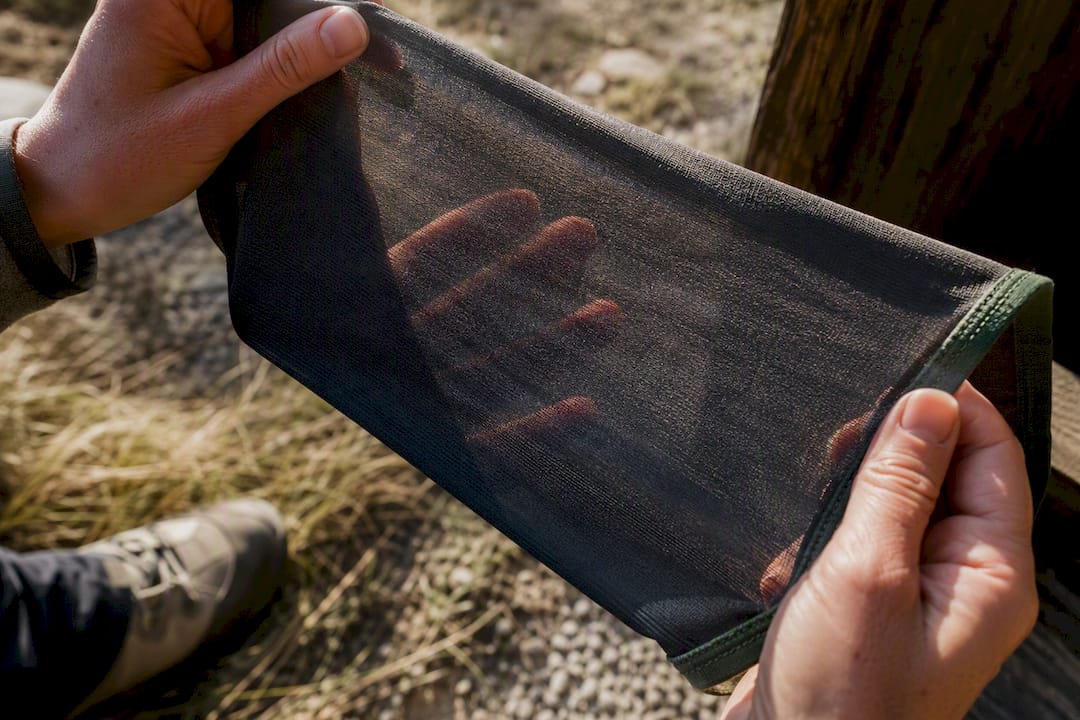
Leggings fail for a handful of predictable reasons, and most of them are visible if you know what to check. Mesh ventilation panels, common on athletic leggings for breathability, create exactly the kind of opening a tick can slip through. So can ultra-thin or semi-transparent tights, the kind you can see skin tone through when held up to light. If light passes through easily, so does a questing tick looking for a gap.
Wear matters just as much as fabric type. The CDC notes that overly stretched or thin fabric undermines the same mechanical barrier that dense weaves provide. Leggings that have gone through dozens of wash cycles, or that get stretched hard at the knees and hips during a hike, thin out in exactly those high-motion zones. That’s the fabric equivalent of a worn tire tread. It still looks like protection, but the resistance that once stopped a tick from crawling through is gone.
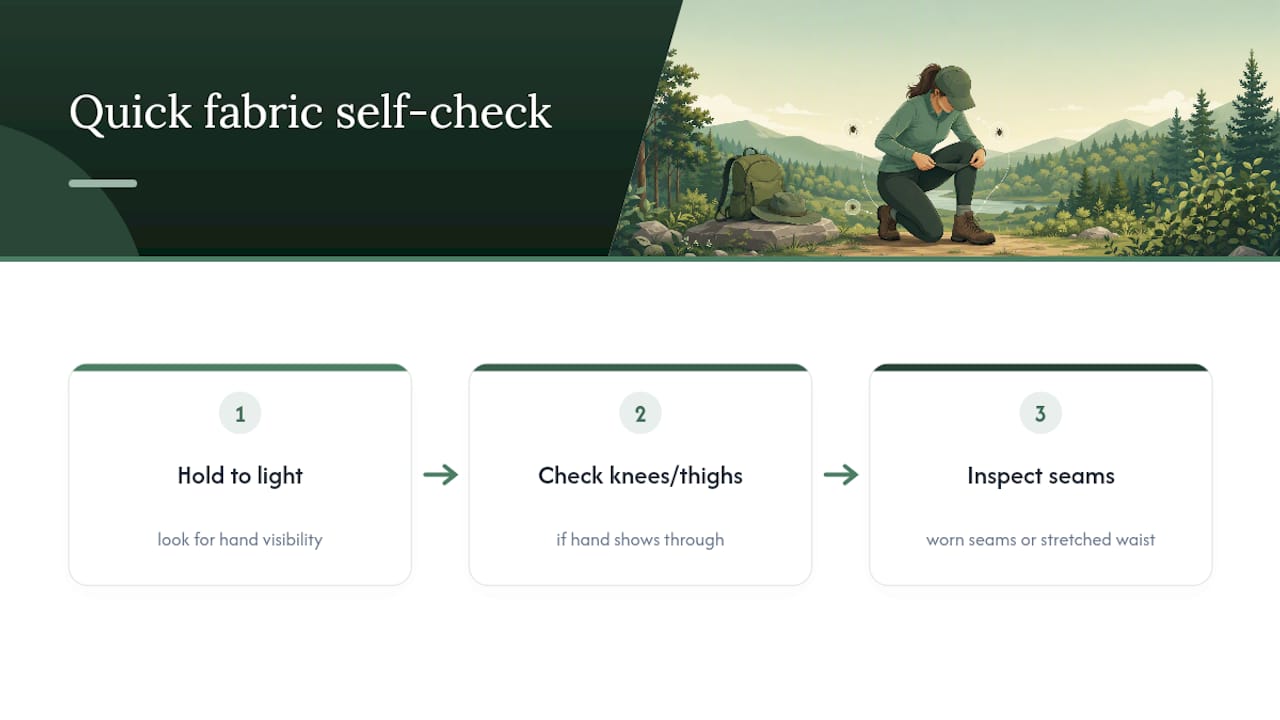
A quick self-check before you head out: hold the fabric up to a light source. If you can see your hand clearly through it, especially around the knees or inner thigh, that pair isn’t doing its job anymore. Worn seams and stretched-out waistbands deserve the same scrutiny.
How to wear leggings for real tick protection
Getting leggings to actually work as a barrier comes down to fit, sealing, and a few habits you build once and repeat every trip.
- Choose close-weave, low-stretch leggings. Skip anything with mesh ventilation panels or a stretch percentage so high the fabric goes sheer at the knee.
- Tuck your shirt into your waistband. This closes the gap at your midsection where ticks climbing upward from your legs would otherwise find bare skin.
- Overlap your socks over the legging cuff. TickEncounter’s tucking method works because it removes the ankle gap entirely, and a step-by-step tucking guide makes it a five-second habit instead of an afterthought.
- Add gaiters or tall boots in heavy brush. Overgrown trails and tick-dense areas call for an extra inch of coverage above the ankle.
- Go light-colored on your outer layer. Light fabric doesn’t repel ticks, but it makes a dark, crawling tick far easier to spot before it finds skin.
A few extras are worth keeping in your pack:
- Fine-point tweezers for quick, clean removal.
- A small sealed bag or container to isolate any tick you pull off.
- A permethrin-treated buff or gaiter for extra coverage in known hot spots.
Pro Tip: Check your leggings at the knee and inner thigh before you even leave the house. Those are the highest-stretch zones, and they’re usually the first to thin out enough to lose their mechanical resistance.
Layering permethrin, repellents, and laundering into your routine
Clothing is one layer, not the whole system. The EPA recommends treating clothing and gear with permethrin, or buying pre-treated garments outright, since permethrin kills ticks on contact and stays effective through several washings. It goes on fabric only. Never apply it directly to skin.
For exposed skin, an EPA-registered repellent does the job permethrin can’t. If you’re deciding between options, a breakdown of DEET versus picaridin covers how the two compare for outdoor use.
After you’re back inside:
- Do a full-body tick check, paying attention to the scalp, behind the ears, and the waistband line.
- Shower within two hours; it helps wash off ticks that haven’t attached yet.
- Toss clothes in the dryer on high heat for 10 minutes or more to kill any ticks riding along on dry fabric. Damp clothes need extra time.
Check gear bags and pets too. Ticks ride in on more than just pant legs, and no single measure works alone, which is exactly why the CDC frames prevention as layers, not one silver bullet.
Where Bug Away’s mesh clothing fits into this system
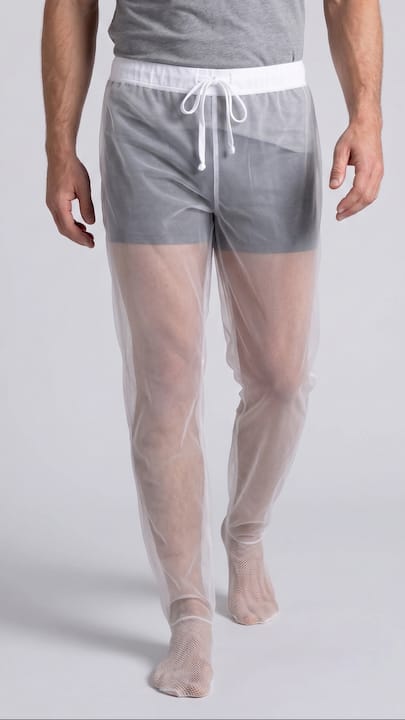
This is exactly the gap Bug Away Pants were built to close. Instead of relying on a stretchy knit that thins out at the knee, the pants use ultra-fine, densely woven mesh with integrated foot coverage, so there’s no ankle gap to tuck or overlap in the first place.
| What Bug Away Pants address | How |
|---|---|
| Ankle gaps | Integrated foot coverage removes the tuck-and-overlap step entirely |
| Thinning fabric at stress points | Ultra-fine mesh holds its density without ballooning out at the knee |
| Chemical dependence | chemical-free construction, no permethrin needed on this layer |
| Confidence over time | Backed by a 30-day money-back guarantee |
If you’re heading into a known hot spot, you can still add a permethrin-treated outer layer or use an EPA-registered repellent on exposed skin, letting the mesh handle the mechanical barrier while the treated layer handles anything that gets close. Wash on a normal cycle and let the mesh air dry to keep the weave intact over seasons of use.
A 90-second habit that matters more than the fabric
Here’s what I’d tell anyone before they trust any legging, treated or not: the check matters as much as the clothing. My habit after every hike is a 90-second sweep, head to toe, with extra attention at the waistband, knees, and inner thighs, the same stretch zones that weaken fabric over time.
No single layer, mesh, permethrin, or repellent, is airtight on its own. Stack them, then check yourself anyway.
— Thomas
Where these tick prevention facts come from
The guidance above draws on the CDC’s tick prevention pages, covering clothing, permethrin, and laundering; the EPA’s repellent guidance for skin protection; and TickEncounter’s field-tested prevention tips from the University of Rhode Island’s tick research program.
Gear up with clothing built to close the gaps ticks exploit
Everything above points to one conclusion: fabric only protects you when it’s dense, well-fitted, and sealed at the openings. Bug Away built its mesh clothing around exactly that principle, without relying on a chemical treatment that fades after a few washes. The ultra-fine weave stays close to the body without overstretching at the knees, and the integrated foot coverage removes the ankle gap that trips up most standard leggings.

If you spend your weekends on trails, in the garden, or chasing kids around the yard, check out Bug Away Pants for Women or Bug Away Pants for Men and see how the fit holds up against your usual gear. Every order carries a 30-day money-back guarantee, so you can test the mesh on a real hike before deciding it’s part of your regular kit.
Sources
- Preventing tick bites | Ticks | CDC
- Are you ready for spring ticks? | TickEncounter
- Lyme disease prevention | CDC
- Tips to prevent tick bites | EPA
- Tick prevention tips | TickEncounter