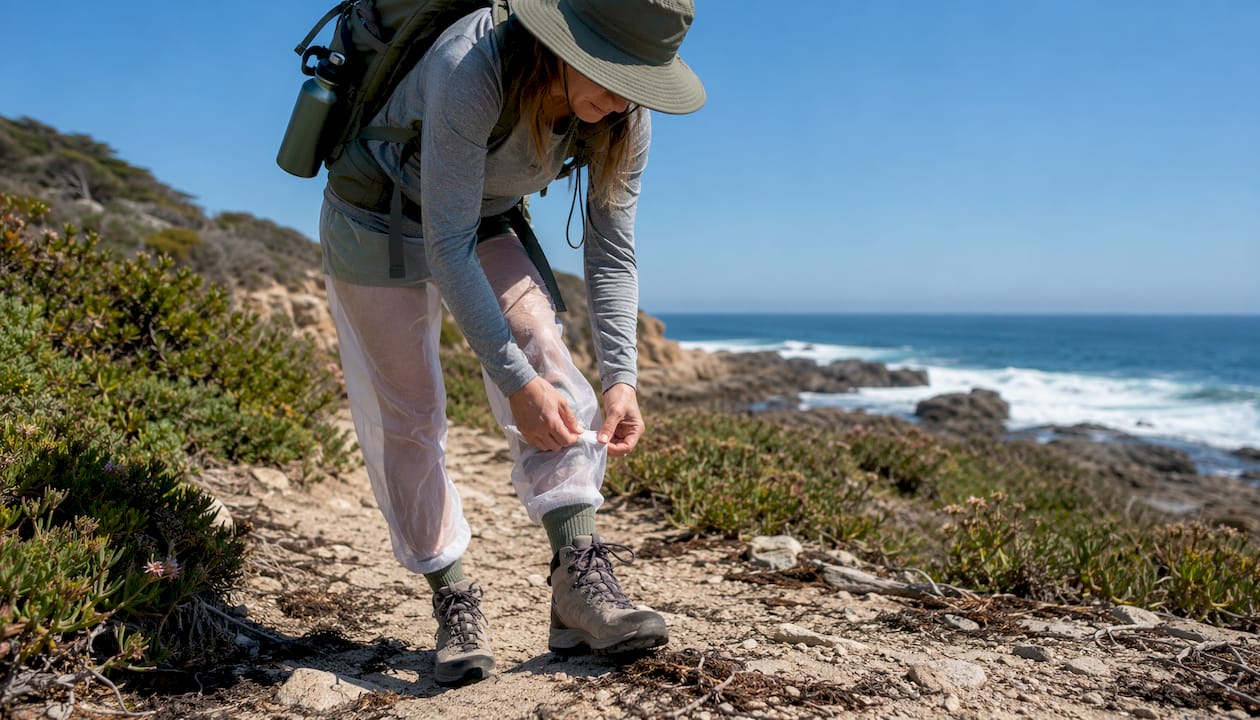
TL;DR:
- Ticks cannot bite through clothing fabric but crawl along gaps to attach to exposed skin. Wearing close-fitting, tightly woven mesh clothing with sealed cuffs and ankles significantly reduces tick entry points. Clothing serves as one layer of protection, but body checks after outdoor activities remain essential.
Ticks cannot bite through clothing fabric. That is the short answer, and it holds up across Harvard Health, Penn State Extension, and independent biology research. What ticks actually do is crawl along your clothes until they find an opening, then attach to exposed skin. The fabric itself is not the problem. The gaps are.
Pro Tip: Tuck your pants into your socks and secure your cuffs before stepping outside. That one habit closes the most common entry points ticks exploit. Bugawaygear’s mesh clothing is 100% chemical-free and backs every pair with a money-back guarantee to let you test it on a real trail with zero risk.
Table of Contents
- Why do ticks seem to bite through your clothes?
- Which fabrics and designs actually block ticks?
- How to wear mesh clothing so it actually works
- What mesh clothing cannot do on its own
- What to look for when buying chemical-free mesh clothing
- Why Bugawaygear’s mesh pants are worth your attention
- Key Takeaways
- The case for going chemical-free
- Get your Bug Away pants before your next outing
- Useful sources
Why do ticks seem to bite through your clothes?
Ticks do not hunt by sight. They practice a behavior called questing, which means they climb to the tip of a blade of grass or low shrub, extend their front legs, and wait for a warm body to brush past. The moment you make contact, they latch onto fabric and start moving. They follow the carbon dioxide you exhale and the warmth your body radiates, both of which guide them toward the closest gap in your clothing.
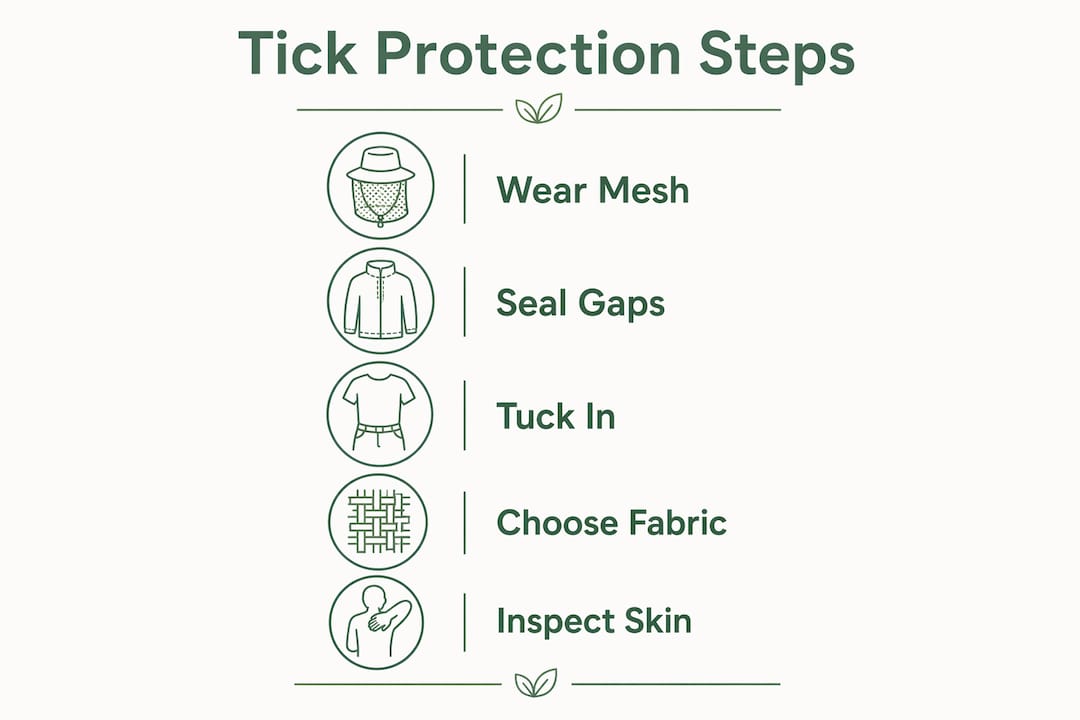
Ticks crawl toward openings like waistbands, cuffs, collar edges, and ankle hems rather than biting through the fabric itself. Nymphal ticks, which are roughly the size of a poppy seed, are especially good at slipping through loose weaves or unsealed hems without you feeling a thing.
Common entry points on typical outdoor clothing:
- Ankle openings where pants meet shoes
- Waistband gaps when a shirt is untucked
- Sleeve cuffs that are loose or unbuttoned
- Collar and neckline openings
- Zipper fly areas on pants
Penn State Extension makes the same point from a garment-fit angle: a well-sealed seam does more to reduce bite risk than simply wearing long pants that billow at the ankle.
Which fabrics and designs actually block ticks?
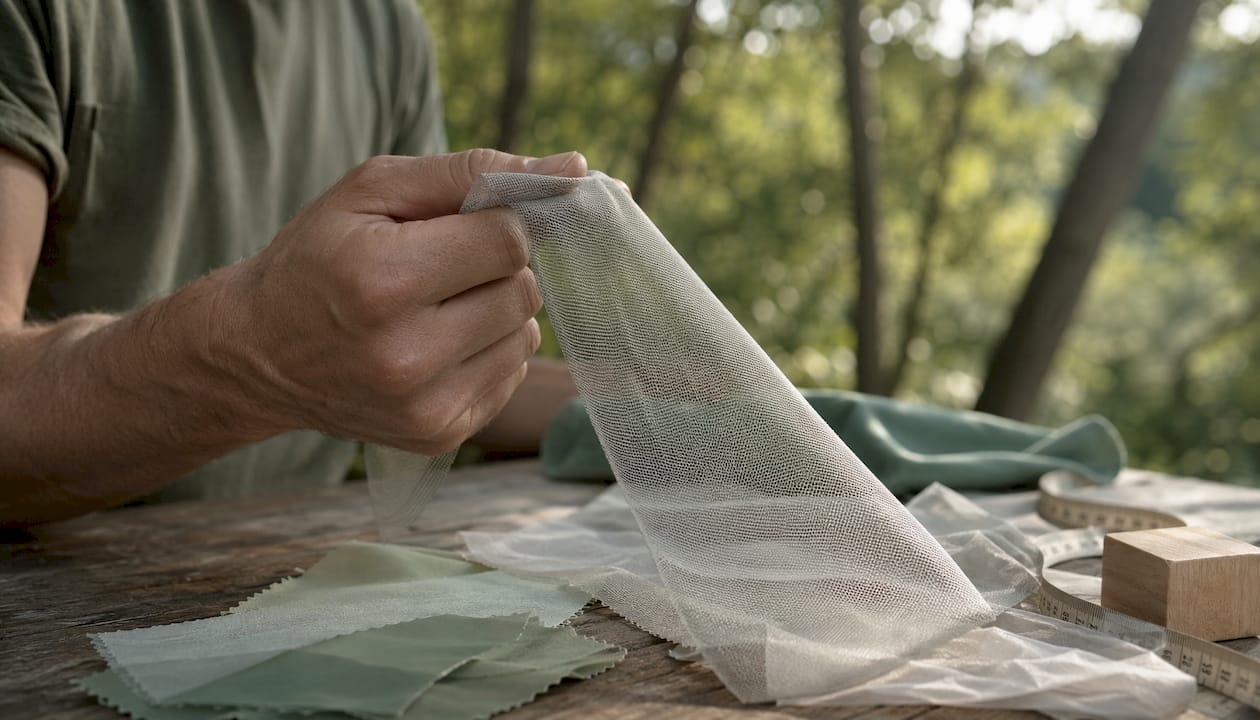
Not all fabrics are equal when it comes to physical tick protection. Tightly woven synthetics like nylon and polyester create a passive barrier that nymphal ticks struggle to penetrate or crawl through. Denim is similarly effective because of its dense weave. Loosely knit fabrics, open-weave linen, and standard athletic mesh with large holes offer almost no protection because the gaps between threads are wide enough for a nymph to pass through.
| Fabric type | Tick-blocking ability | Breathability |
|---|---|---|
| Ultra-fine mesh (tight weave) | High | High |
| Nylon / polyester (tight weave) | High | Moderate |
| Denim | High | Low |
| Loose-knit athletic fabric | Low | High |
| Open-weave linen | Very low | Very high |
Beyond the weave itself, garment design matters just as much. Integrated elastic cuffs at the ankle and wrist, high-waist panels, and sealed hems eliminate the gaps ticks target. Layered construction, where an outer mesh sits over a base layer, adds a second line of defense without adding significant weight.
Pro Tip: When evaluating mesh clothing, hold the fabric up to a light source. If you can see individual large holes clearly, the weave is too open for reliable tick protection. The mesh should diffuse light rather than let it pass through in distinct spots.
How to wear mesh clothing so it actually works
Putting on protective clothing in the right order matters. A tick that lands on your boot can walk upward and find a gap before you even reach the trailhead.
- Start with a close-fitting base layer to reduce skin exposure at the torso.
- Pull on your mesh pants, making sure the waistband sits high enough to overlap your base layer.
- Tuck the mesh pant legs into your socks, not over them.
- Secure elastic ankle cuffs over the top of your footwear.
- Add gaiters over the ankle area if you are walking through dense brush or tall grass.
- Tuck your shirt into the waistband of your pants, no gap at the hip.
- Add a hat or head net if you are in heavily wooded areas.
Features worth prioritizing when you shop: integrated foot coverage that wraps under the arch, elastic hems that stay put when you crouch or climb, breathable panels at the thigh and back, and a high-waist cut that does not drop when you bend forward. Technical outdoor fabrics that balance garment fit and breathability are worth understanding before you buy, since a shirt that traps heat will tempt you to loosen cuffs and undo the protection.
For care: machine wash in cold water and tumble dry on high heat for at least 10 minutes. That dryer cycle reliably kills any ticks that hitched a ride on the fabric. Avoid fabric softeners, which can degrade elastic cuffs and reduce the snug fit that makes mesh effective.
Pair the clothing with smart route choices. Staying on the center of a trail, away from overhanging brush, cuts your exposure significantly. A full-body tick check within two hours of coming indoors catches anything that made it past the fabric.
What mesh clothing cannot do on its own
Physical barriers are highly effective, but no single method eliminates all risk. Gaps can appear in ways you do not anticipate.
- An open zipper fly, even briefly, creates an entry point.
- Torn or stretched mesh loses its barrier integrity.
- Hair and the back of the neck are often uncovered and attract ticks that crawl up from a collar.
- Nymphs near a loose seam can find their way through before you notice.
- Ticks can attach to a bag or gear and transfer to skin when you reach inside.
“Clothing is one layer of defense. Tick checks after high-risk exposure remain essential even when wearing protective clothing.” — Harvard Health, 2025
If you find an attached tick, remove it with fine-tipped tweezers, pulling straight upward with steady pressure. Note the date and the location on your body. If a rash, fever, or flu-like symptoms develop within 30 days, see a clinician. This article is general information, not medical advice. Consult a healthcare provider for guidance specific to your situation or region.
What to look for when buying chemical-free mesh clothing
| Feature | Why it matters | Minimum to look for |
|---|---|---|
| Weave density | Prevents nymphs from passing through threads | No visible individual holes when held to light |
| Ankle and cuff sealing | Closes the most common entry points | Integrated elastic or adjustable closure |
| Waist coverage | Prevents gap at hip when bending | High-waist cut that overlaps base layer |
| Breathability | Determines whether you actually wear it all day | Mesh panels at thigh and back |
| Layering compatibility | Allows base-layer system | Relaxed enough to fit over a light base |
| Care durability | Preserves fit and elasticity over time | Machine-washable, dryer-safe |
| Return policy | Lets you test fit on a real outing | 30-day money-back minimum |
Price expectations for quality chemical-free mesh pants in the U.S. market tend to be moderate; significantly cheaper options may compromise weave density or elastic quality. A reasonable return window allows enough time to test fit in real conditions.
Why Bugawaygear’s mesh pants are worth your attention
Bugawaygear built its product line around one premise: a physical barrier that does not rely on any chemical, spray, or treatment. Every garment uses 100% chemical-free materials, which matters for parents, gardeners, and anyone who spends hours outdoors and does not want repeated skin exposure to insecticides.
Key features across the Bug Away pants line:
- Ultra-fine breathable mesh that physically blocks ticks and insects
- Integrated foot coverage to seal the ankle gap entirely
- Elastic hems and cuffs that stay secure through a full day of movement
- Eco-responsible materials with no permethrin or DEET
- Sizing for men, women, and kids
The trust signals are concrete. Over 500 customers have reported zero tick bites while wearing Bug Away gear. The 30-day money-back guarantee means you can wear the pants on actual trails before committing.
The Bug Away Pants for women and Bug Away Pants for men are the core products to start with. Both are designed to layer over a base and seal at the ankle without feeling restrictive.
Key Takeaways
Ticks cannot bite through clothing fabric; they crawl to gaps and openings, so a close-fit, tightly woven mesh with sealed cuffs and ankles is the most effective physical barrier available.
| Point | Details |
|---|---|
| Ticks crawl, not bite through | Fabric blocks ticks; unsealed gaps at ankles, waist, and cuffs are where bites happen. |
| Fit matters more than length | A sealed ankle hem outperforms long pants that gap at the cuff, per Penn State Extension. |
| Weave density is the key spec | Choose mesh with no visible individual holes; tight-weave nylon and polyester are reliable. |
| Tick checks are still required | Harvard Health confirms clothing is one layer; a post-outing body check catches the rest. |
| Bugawaygear’s chemical-free option | 100% chemical-free mesh pants with integrated foot coverage and a 30-day money-back guarantee. |
The case for going chemical-free
The outdoor gear market has spent years defaulting to permethrin as the answer to tick protection. It works, and the CDC recommends it. But permethrin is still a chemical, and for families with young children, people with chemical sensitivities, or anyone who simply spends enough hours outdoors that repeated exposure adds up, the calculus shifts.
What gets underestimated is how well a physical barrier performs when the garment is actually designed for it. Most clothing marketed as “tick-resistant” is just long pants with a loose hem. The mechanism that stops ticks is not the fabric length; it is the sealed gap. A well-engineered mesh with integrated closures does the same job without any active ingredient.
The 30-day guarantee Bugawaygear offers is the right way to evaluate this. Wear it on a real outing, in real brush, and check afterward. The proof is in the tick check, not the marketing.
Get your Bug Away pants before your next outing
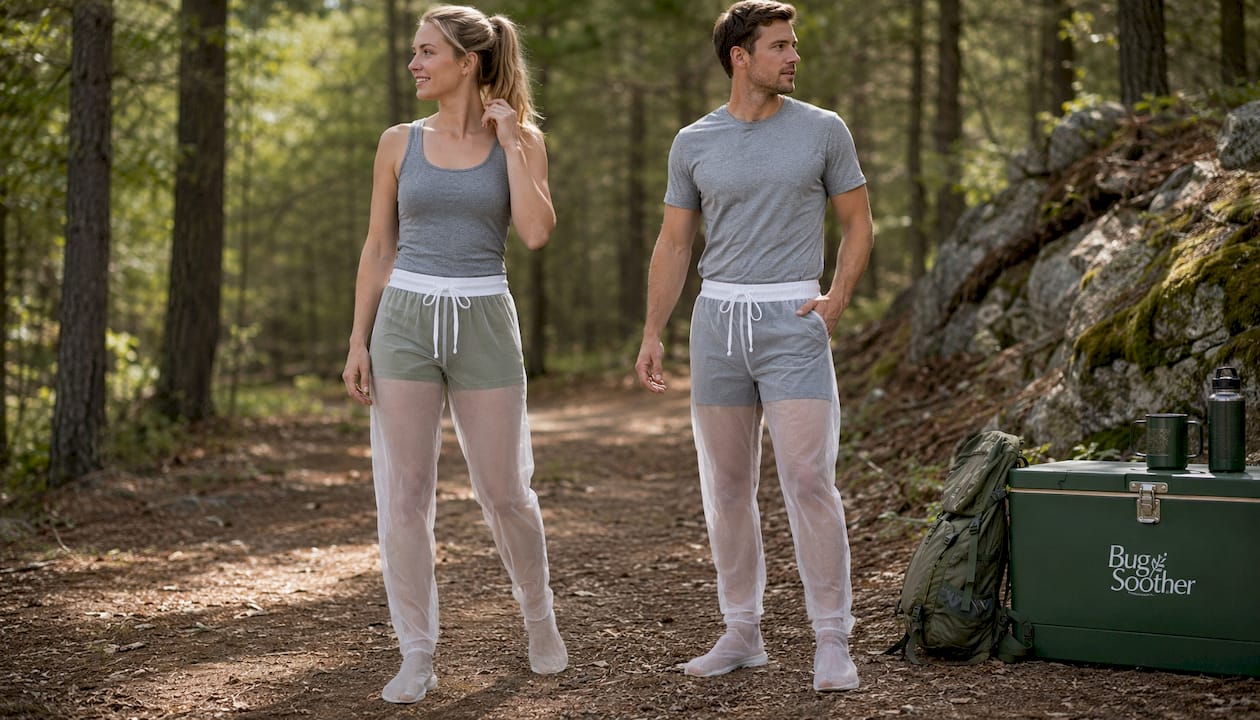
Bugawaygear ships the Bug Away Pants directly to your door with no subscription or ongoing cost. The women’s mesh pants and men’s mesh pants are available now through the online storefront. Every order comes with a 30-day money-back guarantee: if the fit is not right or the protection does not meet your expectations on the trail, return them. Sizing guidance is available on the product pages. For the full range of chemical-free outdoor clothing, visit bugawaygear.com.
Useful sources
| Source | Why it’s relevant |
|---|---|
| Harvard Health — Preventing Tick Bites | Expert guidance on tick behavior, questing, and the role of clothing as one layer of defense |
| Penn State Extension — Fight the Bite | Garment fit, gap-sealing, gaiters, and clothing treatment options for vector-bite reduction |
| CDC — Preventing Tick Bites | Official U.S. public health guidance on tick prevention, including dress-for-safety steps |
| Biology Insights — Can Ticks Get Through Clothes? | Detailed explanation of tick crawling behavior, fabric types, and dryer decontamination |
| Bugawaygear — Tick-Proof Outdoor Clothing | Product details, chemical-free materials, guarantee terms, and customer testimonials |
For clinical guidance on tick-borne illness or region-specific risk, consult the CDC tick prevention page or a qualified healthcare provider.