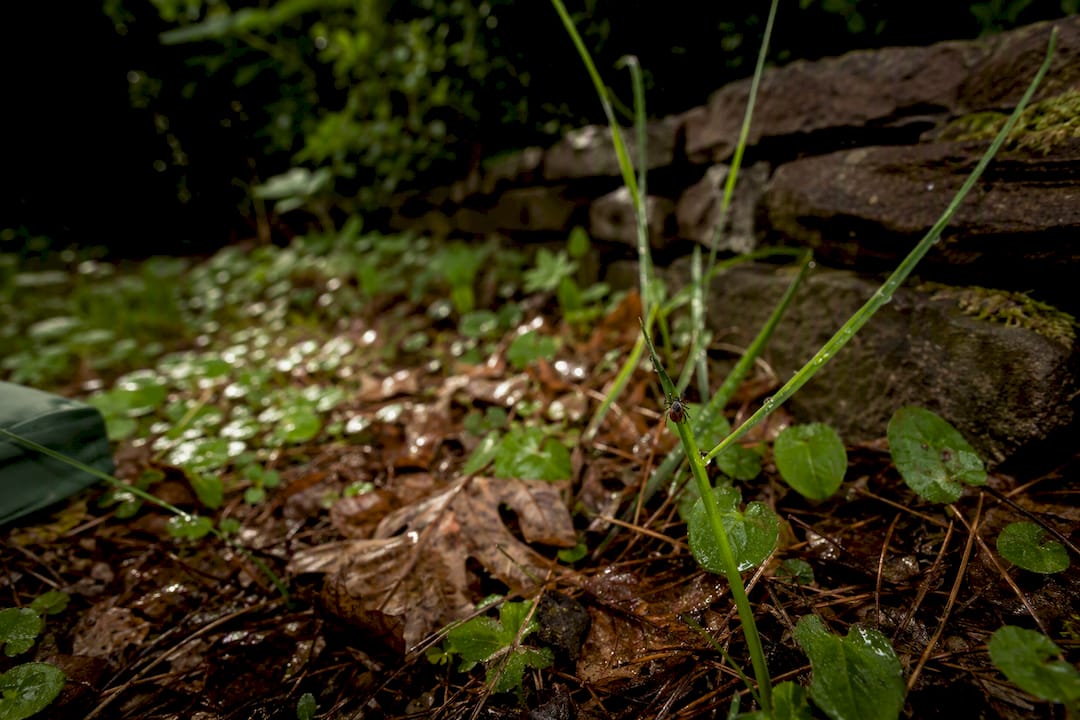
Ticks after rain don’t disappear. They become a bigger short-term risk, because the humidity a storm leaves behind is exactly what a tick needs to leave shelter and start hunting on grass, brush, and trail edges. If you’re heading outside within a day or two of rain, the smart move is to check clothing and pets closely and steer clear of dense, shaded vegetation for a while.
TL;DR:
- Tick activity increases after rain because high humidity and temperatures above 45°F create ideal questing conditions, especially on grass, groundcover, and shaded edges.
- Heavy rain temporarily knocks ticks off vegetation but does not eliminate them; they shelter during storms and resume questing within hours once humidity levels rise again.
- Post-rain tick risk is highest immediately after wet weather when microhabitats retain moisture, making yard edges, leaf litter, and overgrown areas more dangerous for at least a day.
- Physical barriers like fine-mesh clothing provide reliable protection unaffected by humidity, supplementing chemical repellents that can wash off in damp conditions.
- Light drizzle generally boosts humidity without disrupting tick activity, while heavy storms cause a short lull, but both scenarios lead to quick resurgence in tick questing within a day.
Table of Contents
- Why Ticks Get More Active After Rain, Not Less
- What Ticks Actually Do During and Right After a Storm
- Where and When Post-Rain Tick Encounters Spike
- What To Do After Rain, For Yourself And Your Pets
- A Physical Barrier That Doesn’t Care How Humid It Gets
- Light Drizzle vs. Heavy Storms: Not the Same Risk
- Host-Seeking vs. Resting: What Rain Actually Switches On
- Why Your Yard Looks Different (and Riskier) After a Storm
- How Fast Ticks Bounce Back, and What Keeps Risk Elevated
- Field-Tested Routines For Wet-Day Outings
- Where To Get Bug Away Pants And How To Buy Smart
- Sources
Why Ticks Get More Active After Rain, Not Less
Ticks aren’t waterproof, but they’re not fragile either. They survive downpours by hunkering down in leaf litter, under stone walls, and inside thick groundcover, then coming back out once the air around them holds enough moisture. That’s the real story behind tick activity after rain: it’s not about the water itself, it’s about what the water leaves behind.
A tick’s body loses water constantly through its cuticle, so it depends on humid air to stay hydrated enough to hunt. Laboratory work on humidity and questing behavior found that when relative humidity drops below a critical threshold for extended periods, nymph survival decreases and questing becomes less frequent.
Ticks thrive at relative humidity between moderate to high levels commonly around 80% to 90%, according to USGS research on temperature, humidity, and Lyme disease risk. Rain pushes local humidity straight into that range.
Temperature matters too. Most tick species start questing once temperatures hit around 45°F (7°C), according to New York State Department of Health guidance. Combine that threshold with post-storm humidity and you get conditions ticks are practically built for:
- Warm air (above 45°F) plus high humidity equals peak questing conditions.
- Ticks climb onto grass tips and low brush to wait for a passing host.
- Overcast, muggy days after rain often outperform hot, dry afternoons for tick activity.
What Ticks Actually Do During and Right After a Storm
Rain doesn’t drown ticks, and it doesn’t wash them off the landscape. During a downpour, most ticks simply retreat into leaf litter, under bark, into stone wall crevices, and deep into groundcover where the rain barely reaches them. Once conditions stabilize, they climb back out.
A light drizzle usually doesn’t interrupt questing at all. Ticks already sitting on vegetation may just keep waiting for a host, since a little extra moisture only helps them.
Heavier rain has more effect, at least briefly. A hard downpour can physically knock ticks off blades of grass or force them lower into cover, but that’s a temporary disruption, not a population crash. Field research on blacklegged tick activity found that single rain events rarely cause any lasting quiescence. Ticks rehydrate while sheltering and resume questing quickly once the storm passes.
A few behavioral notes worth knowing:
- Nymphs generally tolerate lower humidity than adults, so they can resume questing sooner after a storm.
- Adult ticks tend to need higher moisture levels to avoid drying out, which can delay their return to host-seeking by comparison.
- Species and life stage both affect how high on vegetation a tick will climb to wait for a host.
Where and When Post-Rain Tick Encounters Spike
The riskiest window is the stretch right after rain when the ground is still damp, the air is warm, and humidity is high. That combination doesn’t just bring ticks out. It brings them out onto exactly the surfaces people brush against on a walk.
- Trail edges and brushy borders. Where mowed lawn meets tall grass or woods is prime questing territory, since ticks wait at the exact height where a leg or a dog’s fur will pass by.
- Leaf litter and shaded groundcover. These spots hold humidity far longer than open lawn or pavement, so they stay favorable to ticks well after the sun comes out.
- Stone walls and rock piles. Common shelter spots during rain, and common launch points for questing once the surrounding air dries out.
- Tall or overgrown grass. Especially in yards, meadows, and unmowed field margins, where blade height puts a tick at ankle or knee level.
Here’s the part people miss: a lawn or trail can look completely dry on the surface while the microhabitat just beneath, inside leaf litter, under groundcover, at the base of tall grass, still holds elevated moisture. Long-term research on nymph activity found that this hidden humidity can outlast visible dryness by a wide margin, which means “the ground looks dry” is not a reliable signal that risk has passed.
What To Do After Rain, For Yourself And Your Pets
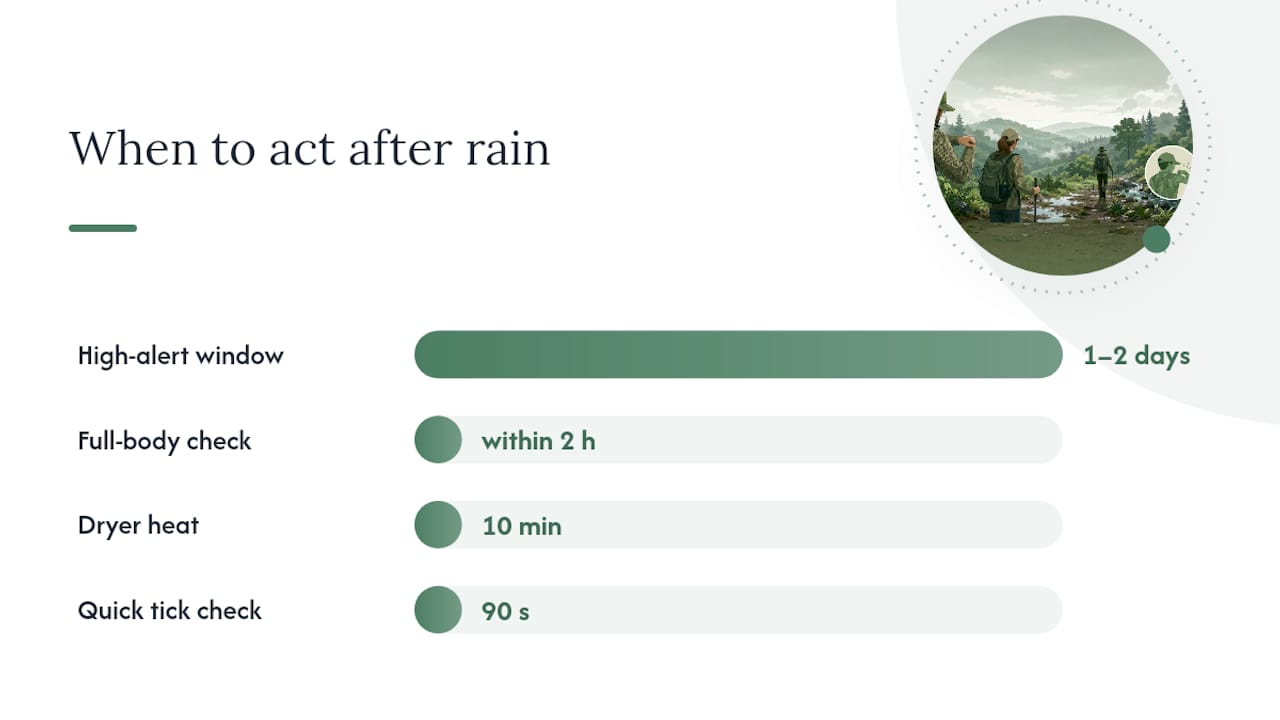
Treat the first day or two after rain as a higher-alert window, not a reason to stay inside. A few habit changes cut your odds of a bite substantially.
For people:
- Cover exposed skin with long sleeves and pants, and tuck pant legs into socks or boots.
- On especially humid days, a fine-mesh physical barrier holds up better than relying on skin coverage alone.
- Do a full-body check within two hours of coming indoors, paying close attention to behind the knees, waistline, underarms, and scalp.
For clothing: Remove outdoor clothing as soon as you’re back inside, rather than tossing it on a chair. If you can, wash it, then run it through the dryer on high heat for at least 10 minutes. Heat, not detergent, is what actually kills ticks clinging to fabric, so the dryer step matters even on clothes you don’t plan to wash right away. Bug Away’s guidance on the 10-minute dryer rule covers why this step outperforms a normal wash cycle alone.
For pets: Check dogs and cats around the ears, collar line, and between toes after any time spent in tall or wet brush. Avoid letting pets bound through overgrown, damp vegetation right after a storm, since that’s where questing ticks concentrate. Vet-approved preventives add another layer, but they work best paired with a physical check, not as a replacement for one.
For yards: Keep kids and pets out of leaf-littered edges and unmowed borders for a day or two after heavy rain. Mowing regularly and clearing leaf litter near play areas creates drier zones where ticks are far less likely to persist.
Pro Tip: Chemical repellents can wash off or dilute faster in humid, damp conditions, so they’re at their weakest exactly when tick activity is at its highest. Pairing a repellent with a physical barrier, rather than relying on sprays alone, closes that gap.
For a deeper walkthrough of quick checks, Bug Away’s 90-second tick check routine is worth bookmarking before your next hike.
A Physical Barrier That Doesn’t Care How Humid It Gets
This is where a mesh layer earns its place in a post-rain routine. A tick has to physically reach skin to bite, and Ultra-fine mesh clothing can block tick contact outright rather than relying on chemical repellents. Humidity, dampness, or time outside don’t change how the physical barrier works, which is important when ticks are most active.
- 100% chemical-free construction means no spray reapplication schedule to track when you’re already soaked from a wet trail.
- Integrated foot coverage and breathable mesh suit hikers, gardeners, and families who want coverage without overheating on a warm, humid day.
- A 30-day money-back guarantee backs every purchase, and Bug Away’s non-toxic prevention guidance walks through how a physical layer complements the laundering and check habits already covered above.
Light Drizzle vs. Heavy Storms: Not the Same Risk
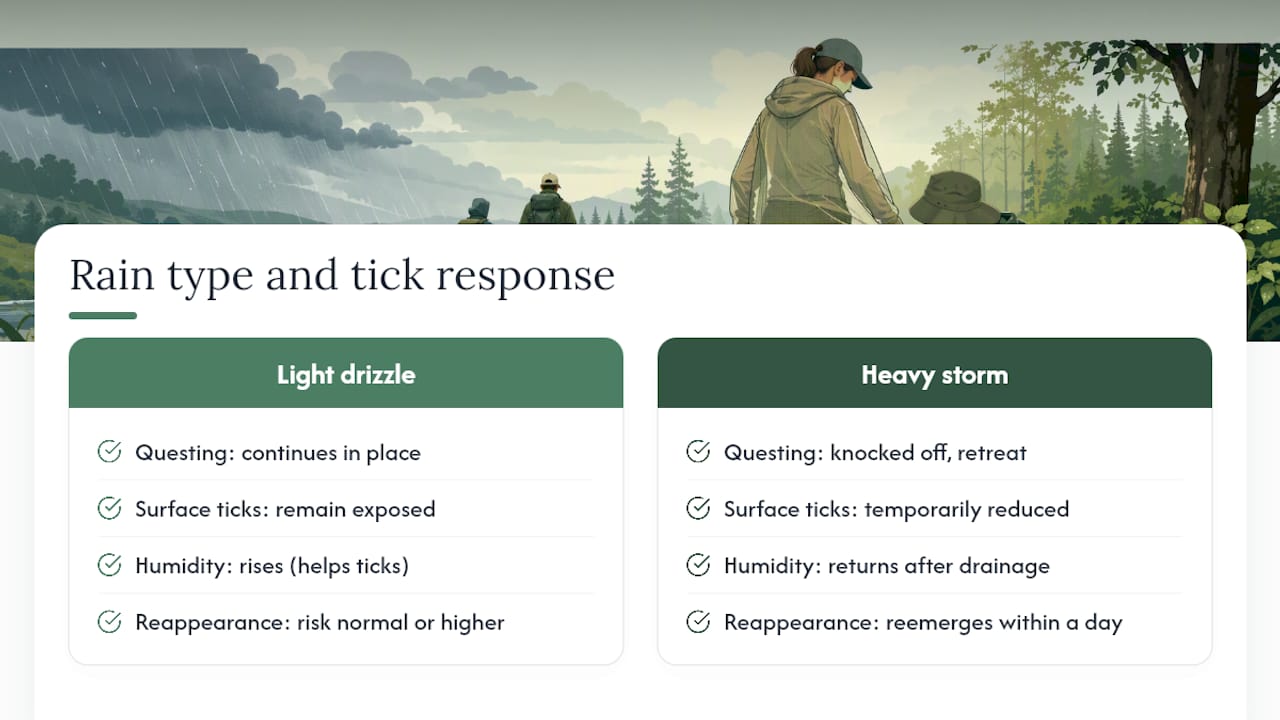
Rain isn’t one event with one effect on ticks. A slow, soaking drizzle over several hours barely interrupts questing behavior at all, and it can actually improve conditions by raising humidity without disturbing the tick’s position on vegetation. Ticks that were already questing before the drizzle started often just stay put and keep waiting for a host.
A heavy, fast-moving storm behaves differently. The physical force of hard rain can knock ticks off grass tips or force them to retreat lower into cover, and extension research on rain and tick behavior notes that flooding-level events can temporarily reduce the number of exposed ticks on the surface. But “temporarily” is the key word. Ticks sheltering in leaf litter and under debris survive the deluge and reemerge once conditions settle, often within a day.
The practical difference for you: after a light rain, assume questing risk is already back to normal or higher. After a heavy storm, expect a brief lull right as the rain ends, followed by a rebound in activity once humidity climbs back up and the ground stops actively draining. Neither scenario is a reason to relax for long. The lull after a big storm is the exception, not the rule, and it rarely lasts more than a day.
Host-Seeking vs. Resting: What Rain Actually Switches On
Ticks spend most of their time in one of two modes: resting in shelter to conserve moisture, or actively questing, which means climbing onto vegetation with front legs extended, waiting for a host to brush past. Rain is one of the main triggers that flips a tick from resting mode back into host-seeking mode.
Before rain, especially during a dry spell, ticks often retreat lower into leaf litter and groundcover to limit water loss. That’s resting behavior, and it can make ticks seem scarce on a dry, hot afternoon even though they’re still present in the habitat. Rain reverses that pattern almost immediately. As humidity rises, ticks that were conserving moisture in shelter climb back up into questing position, since the risk of desiccation that kept them low has passed.
This is the mechanism behind insight tying rain to higher questing height: post-rain humidity doesn’t just bring ticks out, it lets them quest higher on vegetation, which puts them at leg and knee height instead of buried in ground cover. That’s a meaningful difference for anyone walking through brush, because a tick questing higher up is a tick with a much better shot at contacting a passing person or dog.
Why Your Yard Looks Different (and Riskier) After a Storm
Rain changes more than tick behavior. It changes the terrain in ways that quietly raise your exposure. Standing water in low spots and containers boosts humidity in the immediate area, even after the puddle itself evaporates, which extends the window of favorable conditions for questing ticks nearby.
Vegetation growth is the other overlooked factor. A good rain triggers a visible growth spurt in grass, weeds, and groundcover within days, and taller vegetation gives ticks more places to climb and wait at host-contact height. A lawn that was mowed short two weeks ago can look noticeably overgrown at the edges after a wet stretch, right where it borders woods or brush.
Shaded areas near tree lines, stone walls, and garden borders hold onto post-rain moisture longest, since they get the least direct sun to dry them out. Combine slower drying with fresh growth and you get a short but real spike in tick-friendly habitat right in the yard, not just out on the trail.
How Fast Ticks Bounce Back, and What Keeps Risk Elevated
Ticks don’t need much recovery time. Once humidity in their immediate microhabitat climbs back into a favorable range, questing typically resumes within hours to a day, not days to weeks. That’s a short window, but it lines up with exactly when most people head back outside after a storm passes.
A few conditions stack the odds further in the tick’s favor:
- Warm temperatures combined with high humidity, the classic muggy, overcast day that follows a storm.
- Overcast skies, which slow evaporation and keep surface moisture (and questing conditions) favorable longer than a sunny day would.
- Recent dry spells before the rain, which can leave ticks more eager to quest once moisture returns, since they were water-stressed beforehand.
Interestingly, one long-term study found that past rainfall alone wasn’t a consistent predictor of nymph counts across a ten-year dataset, according to research on weather history and questing. What mattered more was current microhabitat humidity, not simply whether it had rained recently. In practice, that means the safest habit isn’t tracking the forecast. It’s checking how damp the ground and groundcover actually feel before you assume risk has passed.
Field-Tested Routines For Wet-Day Outings
I’ve learned to treat the first walk after rain differently than any other. I pick trails with mowed edges instead of brushing through tall grass, and I default to long pants tucked into socks, with a mesh layer over that if humidity feels heavy. Dogs get a hands-on check at the ears, collar, and paws before they’re back in the car, not after we get home.
One wet afternoon on an overgrown trail taught me the lesson directly. The grass was soaked and shoulder-high in spots, and a lightweight mesh layer was the only reason we came home bite-free.
— Thomas
Where To Get Bug Away Pants And How To Buy Smart
Once you’ve built the habit of checking clothing and pets, the next upgrade is wearing a layer that blocks ticks before they ever reach skin, regardless of how muggy the trail feels. Bug Away Pants for Women and Bug Away Pants for Men are built from the same ultra-fine, chemical-free mesh, sized separately for a fit that stays comfortable through a full hike, garden session, or muggy dog walk.
A couple of buying tips before you order: check the sizing chart closely, since a snug but not tight fit is what keeps the mesh doing its job at the ankles and waist, and follow the same laundering routine covered earlier, wash when needed, then a 10-minute high-heat dryer cycle for extra assurance. There’s a 30-day money-back guarantee, allowing trying a pair after your next post-rain hike at no risk if the fit isn’t right. Head to the Bug Away Pants — Women or Bug Away Pants — Men product pages to pick your size and get a pair in before your next wet-weather outing. If you’re also walking dogs through overgrown terrain, this dog walking safety guide pairs well with the pet-check habits above.
Sources
The USGS, PMC-indexed studies, and university extension pages cited above carry the field and lab data behind these claims. Tick species and season length vary by region, so check your local extension or public health office for details specific to where you live.
- USGS: It’s heat and humidity — new study finds why Lyme disease common in some places, rare in others
- Experimental study: humidity effects on survivorship and questing behavior of tick species
- Ghosts of weather past? Impact of past and present weather-related factors on Ixodes ricinus nymphs