
Tick season generally runs broadly during the warmer months across most of the United States, with two distinct danger windows: late spring to mid-summer, when pinhead-sized nymphs cause the majority of Lyme disease infections, and fall, when adult ticks resurge before winter. If you’re heading outside this week, do a full-body tick check tonight and consider an EPA-registered repellent before you go. The CDC treats April through September as the primary exposure window, but that’s a simplification, not a hard boundary.
- Broad season: spans much of the warmer months in most states
- Peak nymph risk: tends to be late spring to mid-summer
- Peak adult resurgence: typically falls in early fall to late fall
- Bugawaygear’s mesh clothing works as a physical barrier during any of these windows, no sprays required
Key Takeaways
Tick risk peaks twice a year: nymphs drive infections from mid-May through July, and adults resurge from September through November.
| Point | Details |
|---|---|
| Two peak windows | Nymphs peak mid-May through July; adults peak September through November. |
| Nymphs cause most infections | Their poppy-seed size lets them feed undetected long enough to transmit Lyme disease. |
| Watch temperature, not just dates | Ticks quest once ground temperature passes roughly 45°F, regardless of month. |
| Season is stretching longer | Milder winters are pushing tick activity earlier in spring and later into fall. |
| Physical barriers reduce reliance on sprays | Bugawaygear’s mesh pants block ticks without chemicals, useful during any peak window. |
Table of Contents
- When Is Tick Season, Month by Month?
- How Does Region Change the Tick Calendar?
- Why Do Nymphs and Adults Pose Different Risks?
- What Should You Do Each Month to Prevent Tick Bites?
- What Should You Do If You Find a Tick?
- When Are Pets Most at Risk From Ticks?
- Why Is Tick Season Getting Longer Each Year?
- Why Month-by-Month Guidance Actually Changes Behavior
- How Bugawaygear Fits Into Your Monthly Prevention Routine
- Where to Find More Tick Season Information
- Frequently Asked Questions
- Sources
When Is Tick Season, Month by Month?
Ticks don’t follow a switch that flips on in spring and off in fall. They respond to ground temperature, and understanding the calendar means understanding what each life stage is doing at any given point in the year.
January and February. Adult blacklegged ticks can still quest on any day the ground temperature climbs above roughly 45°F, a threshold research on tick activity points to as the real trigger, not the calendar page. A 50-degree afternoon in February in Virginia or the Carolinas can put an adult tick on your dog before you’ve even packed away the holiday decorations.
March and April. This is when adult tick activity climbs sharply. Overwintering adults that survived the cold emerge to feed and mate, and in the Northeast and Upper Midwest this often lines up with the first real thaw. Risk is moderate but rising fast.
May. Adult activity is still elevated, but nymphs start appearing by late May in many states, and this is the pivot point of the entire tick season.
June and July. This is typically peak nymph season in many areas. Nymphs are about the size of a poppy seed, they’re active in leaf litter and tall grass, and they are responsible for much of the Lyme disease transmission to humans, according to New York State Department of Health guidance. People miss them because they simply don’t see them attached.
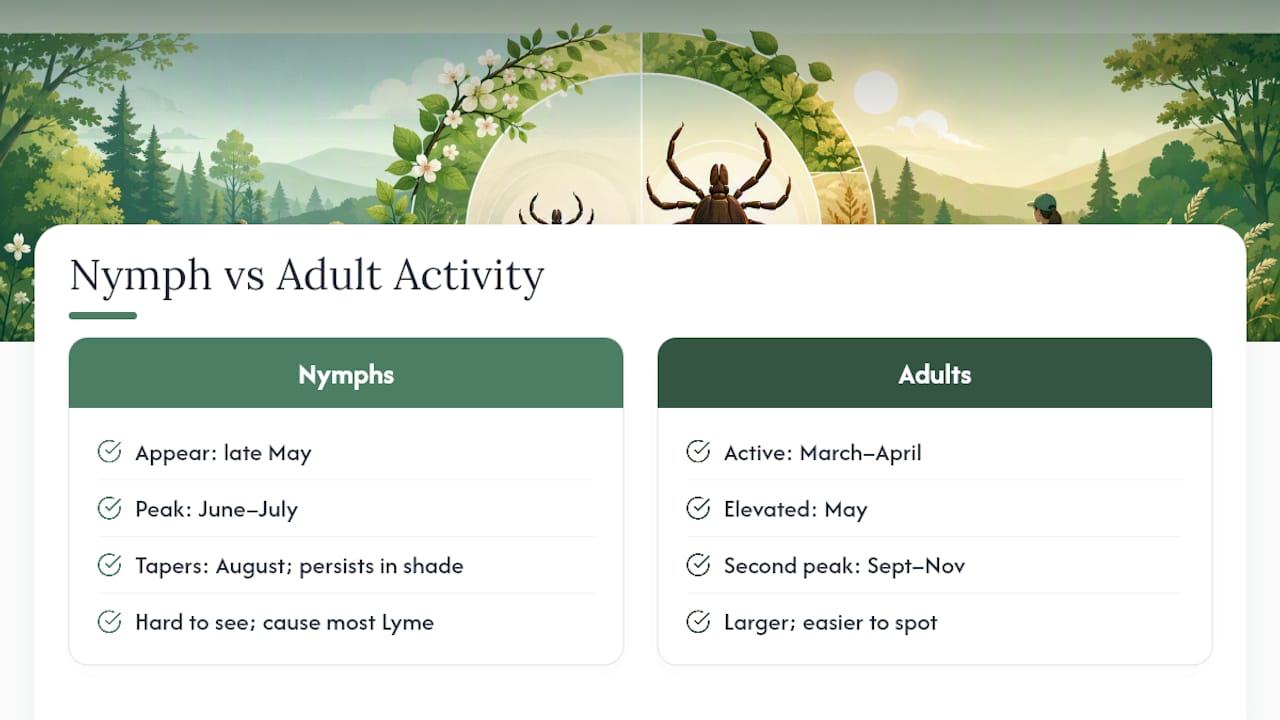
August. Nymph activity tapers, but it doesn’t vanish, especially in shaded or humid microclimates. This is often the quiet month people let their guard down, which is exactly the wrong instinct.
September, October, and November. Adult ticks often have a second peak of activity during this period. For example, in New York, adult activity typically runs from late summer into November; Minnesota shows a similar fall resurgence into October, per the Minnesota Department of Health. Hunters, hikers, and anyone raking leaves are at real risk here, and adults are larger and easier to spot than nymphs, which is the one silver lining.
December. Activity drops off in most of the country as sustained freezing sets in, but a warm spell can still bring ticks out, particularly in the mid-Atlantic and Southeast.
Pro Tip: Nymphs are the ones to fear, not because they’re more dangerous individually, but because they’re nearly invisible. A poppy seed on your ankle after a July hike is easy to miss for the two or three days it takes to transmit Lyme disease. Adults are bigger, slower, and far easier to catch before they attach.
Nymphs cause most human Lyme infections specifically because their size lets them go undetected long enough to feed for the extended period that transmission typically requires, a pattern confirmed by the New York State Department of Health.
How Does Region Change the Tick Calendar?
The national calendar is a starting point, not a rulebook. Where you live shifts the timing by weeks, sometimes months.
- Northeast: Classic bimodal pattern. Nymphs peak May through July, adults peak September through November, with blacklegged ticks the primary concern.
- Upper Midwest: Similar shape but compressed. Minnesota data shows nymphs peaking late May into June, with fall adult activity running into October.
- Southeast: Longer active season overall, with lone star ticks staying active well into fall and sometimes through mild winters.
- Pacific Coast: Wetter winters and milder temperatures mean western blacklegged ticks can quest nearly year-round in parts of California and Oregon.
- Mountain West: Shorter, sharper season tied tightly to snowmelt timing and elevation, with activity concentrated in a narrower spring-to-summer band.
The smarter approach, regardless of where you live, is watching ground temperature rather than the date on your calendar. Once soil hits about 45°F for a stretch of days, environmental research shows ticks begin questing, and that threshold arrives on wildly different dates from Minnesota to Georgia.
Pro Tip: Walk your yard’s edge habitat, where lawn meets woods or tall grass, on the first genuinely warm day of the season. If you brush against vegetation and don’t see anything crawling within a minute, you’ve got a rough gauge for when to start daily tick checks in your specific microclimate.
Why Do Nymphs and Adults Pose Different Risks?
Ticks pass through three life stages: larva, nymph, and adult. Larvae rarely bite humans. Nymphs and adults are where the real exposure risk lives, and they behave on almost opposite schedules.
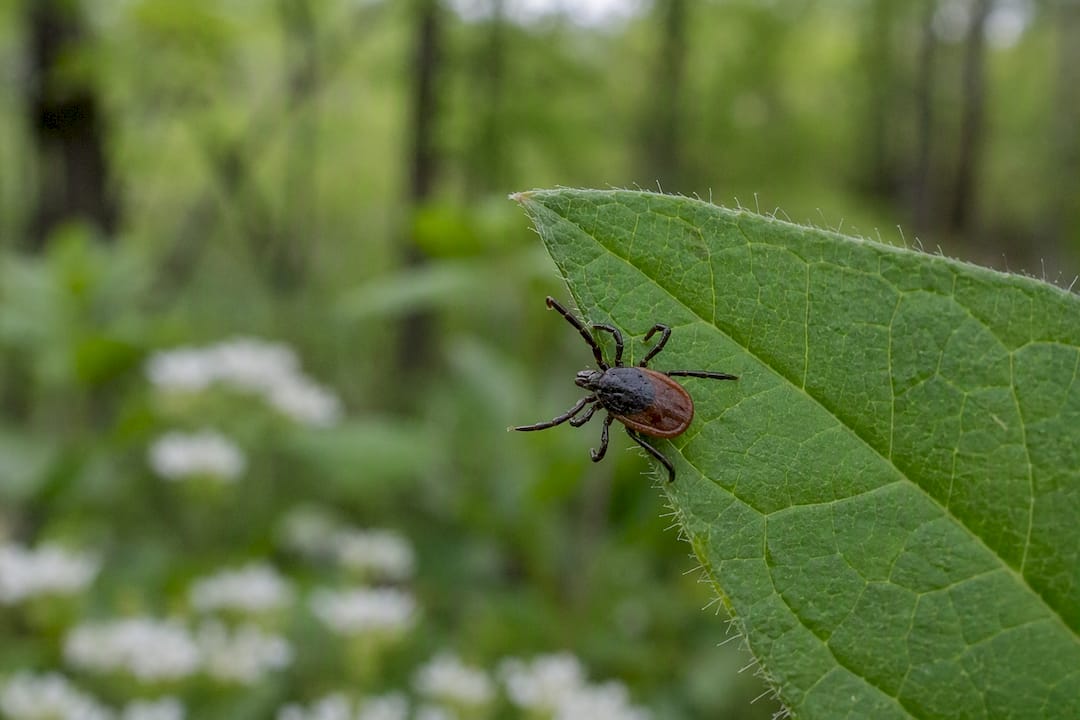
Nymphs are active primarily during late spring to mid-summer, are roughly the size of a poppy seed, and are responsible for many Lyme disease cases transmitted to people, according to state health department data. Adults are sesame-seed sized, easier to spot, and follow a two-peak pattern: spring (March through May) and a stronger fall surge (September through November).
Check the hairline, behind the ears, armpits, waistband, groin, and behind the knees. These are the spots nymphs favor, and they’re also the spots people check last.
Pro Tip: If you find a nymph attached and can’t tell how long it’s been there, note the date and location on your body. That detail matters if symptoms show up in the following weeks.
What Should You Do Each Month to Prevent Tick Bites?
Prevention works best when it matches the calendar instead of reacting to a bite you’ve already gotten.
Early spring (March, April): Clear leaf litter and tall grass from your yard’s edges before adult ticks fully activate. This is also the month to pull your protective clothing out of storage and check repellent supplies.
Mid-spring into peak season (May through July): Start daily tick checks on yourself, your kids, and your pets. Wear an EPA-registered repellent and consider tucking pants into socks or wearing mesh clothing that creates a physical barrier without chemicals.

Late summer into fall (August through November): Keep checks going even as nymph activity fades, since adult ticks are ramping back up. Yard work, leaf raking, and hunting trips are high-exposure activities this window.
Daily habits that cut exposure year-round:
- Mow lawns short and keep woodpiles away from the house
- Create a mulch or gravel barrier between lawn and wooded areas
- Shower within two hours of coming indoors
- Toss trail clothes straight into a hot dryer for 10 minutes
Your equipment checklist before any hike, garden session, or camping trip:
- Lightweight, tick-blocking pants or a full mesh layer
- EPA-registered repellent
- Fine-tipped tweezers or a tick removal tool
- A small mirror for checking hard-to-see spots
Pro Tip: Kids and pets encounter ticks at ground level far more than adults do. Check them first, check them twice, and pay extra attention to hairlines and paw pads where nymphs go unnoticed.
What Should You Do If You Find a Tick?
Speed and technique both matter here.
- Grab fine-tipped tweezers and grip the tick as close to your skin as possible.
- Pull straight up with steady, even pressure. Don’t twist or jerk.
- Clean the bite area and your hands with rubbing alcohol or soap and water.
- Note the date, and if your local health department recommends testing, save the tick in a sealed bag.
Watch for a rash (with or without the classic bullseye shape), fever, fatigue, or joint pain over the following 30 days. The CDC’s after-bite guidance recommends contacting a clinician if any of these appear, and in some high-risk regions, a single dose of prophylactic antibiotics is appropriate within 72 hours of removal.
Does every tick bite need a doctor visit? Not necessarily. But any bite in a high-Lyme region, or one where the tick was attached more than 24 hours, deserves a call to your healthcare provider.
Should I get the tick tested? Local guidance varies; ask your state or county health department before assuming testing is available or useful.
This is general guidance. Talk to your healthcare provider about your specific exposure and symptoms.
When Are Pets Most at Risk From Ticks?
Pets follow the same seasonal curve people do, but they’re closer to the ground, brushing through grass and brush where nymphs and larvae wait. That means dogs and outdoor cats often pick up ticks before you notice any on yourself.
- Check your pet daily during peak tick activity months, typically in late spring through mid-summer and again in fall.
- Ask your veterinarian about tick preventives suited to your region and your pet’s health history
- Avoid letting pets roam through leaf litter or tall grass during high-risk stretches
- Watch for lethargy, joint swelling, or appetite loss in the weeks after a known bite, and call your vet if any appear
Why Is Tick Season Getting Longer Each Year?
Milder winters let more ticks survive into spring, and climate research from UC Davis Health points to earlier spring emergence and later fall activity as a direct result. The practical upshot: the traditional off-season is shrinking, so precautions that used to stop in November now need to stretch further into the calendar.
Why Month-by-Month Guidance Actually Changes Behavior
I’ve noticed that vague warnings (“tick season is here”) rarely change what people do. A specific month with a specific action does. Knowing that July demands daily nymph checks, while October calls for post-hike inspections after raking leaves, turns abstract risk into a habit you can actually keep. That’s the same thinking behind the resources Bugawaygear puts out for hikers and gardeners: less generic fear, more “here’s what to check this week.”
How Bugawaygear Fits Into Your Monthly Prevention Routine
Repellents wear off, get missed on exposed skin, and need reapplying every few hours. A physical barrier doesn’t have that problem. Bug Away Pants for Men and Bug Away Pants for Women use ultra-fine mesh to block ticks and insects without a single chemical, which makes them a solid layer to add during peak nymph season or any fall hunting or raking trip.

Pair your pants with the Bug Away Tick Removal Kit so you’re ready the moment you spot something attached, fine-tipped tools included, no scrambling through a junk drawer. For gardeners, there’s a dedicated gardening line built for the same edge-habitat exposure that makes yard work risky in spring and fall. Every Bugawaygear product ships with a 30-day money-back guarantee, so trying a mesh layer for your next hike or weekend in the yard carries no real downside. Browse the full lineup and add a physical barrier to your checklist before your next peak-season outing.
Where to Find More Tick Season Information
- CDC: Ticks
- CDC: Lyme Disease
- New York State Department of Health: Be Tick Free
- Minnesota Department of Health: Ticks
- EPA: Insect Repellents
- Check your own state department of health for region-specific tick data.
Frequently Asked Questions
What months are considered tick season? Tick season generally spans March through November in most of the U.S., with peak nymph risk in late May through July and a second adult peak from September through November.
When are ticks most active during the day? Some species favor dawn and dusk, but others, like the lone star tick, stay active throughout the day whenever temperatures allow.
Do ticks die in winter? Adult ticks can survive winter and will quest on any day the ground warms above roughly 45°F, so activity never fully stops in milder regions.
Is tick season the same in every state? No. The Northeast and Upper Midwest see a sharp bimodal pattern, while the Southeast and Pacific Coast often have longer, less defined seasons tied to local climate.
How long after a tick bite do symptoms appear? Symptoms like rash or fever typically show up within 30 days of a bite; contact a clinician promptly if either appears.
This article is general information, not a substitute for advice from a qualified doctor. Consult a qualified healthcare professional about your own circumstances before acting on anything here.
Sources
- Be Tick Free - A Guide for Preventing Lyme Disease (New York State Department of Health)
- Ticks (CDC)
- When Do Ticks Come Out? Peak Months by Species - ScienceInsights
- Insect Repellents (EPA)