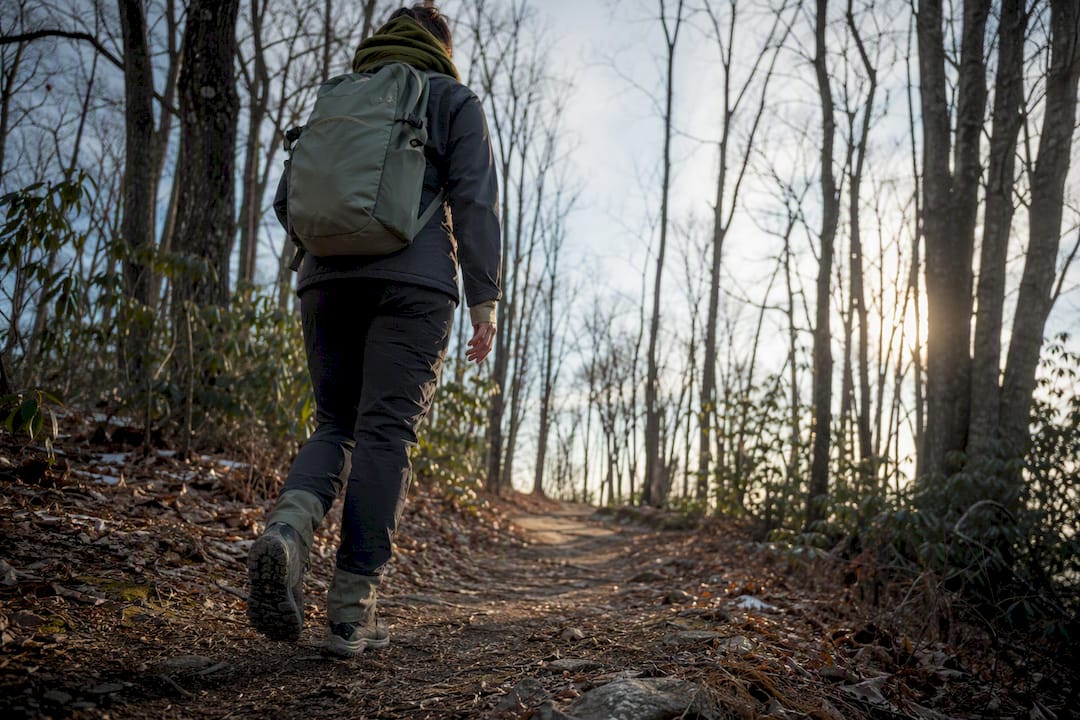
Chemical-free mesh clothing works as winter tick protection when it fits right and covers the gaps ticks target most: ankles, wrists, and waistbands. Ticks don’t hibernate the way most people assume. Once temperatures climb above roughly 3 to 4°C (about 38 to 40°F), they can quest again, so a sealed physical barrier plus a body check after every outing does more for winter safety than most people realize. Bugawaygear’s mesh sets are built around exactly that barrier.
TL;DR:
- Ticks can quest and stay active in winter once temperatures exceed 38 to 40°F, especially in leaf litter or near brush, even during snow cover.
- Mesh clothing with sealed seams and ankle coverage effectively blocks tick access, providing a chemical-free physical barrier that works in cold weather.
- Post-hike routines, including hot dryer cycles for clothing and careful tick checks, significantly reduce the risk of winter tick bites and prevent pathogen transmission.
- Tick-borne illnesses can develop symptoms like fever and rash up to a month after exposure, so awareness of winter activity is essential for timely medical care.
- Chemical repellents’ effectiveness diminishes in cold air, while well-fitted mesh layers deliver a consistent physical barrier for winter outdoor protection.
Table of Contents
- Why Winter Doesn’t Guarantee Tick Safety
- How Mesh Clothing Blocks Ticks Where It Counts
- Your Winter Tick Protection Checklist for Any Outing
- What to Do With Clothing and Gear After You Come Inside
- Safe Removal of Ticks Found on Skin During Winter
- Symptoms of Tick-Borne Illness to Watch for in Winter
- When a Winter Tick Bite Needs a Doctor’s Attention
- Do Winter Tick Repellents Actually Work?
- Where Ticks Hide in Winter and How to Steer Clear
- Why We Built Mesh Clothing for Cold-Weather Protection
- Shop Bug Away: Find Your Winter Fit
- Sources
Why Winter Doesn’t Guarantee Tick Safety
The idea that cold weather clears ticks off the landscape is one of the most persistent myths in outdoor safety, and it’s wrong often enough to matter. Ticks are cold-tolerant arthropods, not insects that die at the first frost. They slow down, but they don’t shut off.
Field data backs this up in a way that should change how you think about winter hikes. Collections have recorded ticks questing at temperatures as low as 2.77°C, and researchers working in the Central Midwestern United States documented winter questing across four separate species, including the lone star tick and the blacklegged tick, during months most people assume are tick-free.
Snow actually works against you here. Rather than killing ticks, a layer of snow insulates the leaf litter underneath it, and the Cary Institute’s long-term monitoring shows ticks routinely overwinter in that leaf litter, reactivating the moment a warm spell arrives. Some research even points to activity near 10°C for several medically significant species, with warming winters extending the questing season further into the calendar year.
What that means practically:
- A 45°F afternoon in January is not a “safe” hiking day just because it’s winter.
- Thicket edges, brush piles, and leaf litter stay riskier than open, mowed trails even in cold months.
- Regional variation is real. Milder climates and mixed forest habitat sustain tick activity longer than open plains.
Winter tick activity threshold: Ticks can resume questing once ground-level temperatures pass roughly 38 to 40°F, a bar that mild winter days clear more often than most hikers assume.
How Mesh Clothing Blocks Ticks Where It Counts
A physical barrier works on a simple principle: ticks can’t bite through what they can’t reach. They don’t jump or fly. They climb up from the ground or low vegetation and crawl until they find skin, usually starting at the ankle. That’s why the fit of a barrier matters as much as the fabric.
Bugawaygear’s mesh clothing is woven at a pore size fine enough to stop a questing tick from passing through, with sealed seams that remove the stitching gaps loose garments leave open. The bigger upgrade is at the ankle. Tucking pants into socks works but rarely holds up on a real hike once you’re climbing over logs or crouching in a garden bed. Integrated foot coverage solves that by removing the tuck step entirely, so there’s no gap to reopen mid-trail.
What to check when evaluating any mesh layer for cold weather:
- Ankle seals that sit over or inside your boot collar, not loose around it
- Sealed seams at the waist, cuffs, and hood
- Enough room to layer a thermal base underneath without stretching the mesh thin
- Breathable weave that won’t trap sweat against skin during active layering
Pro Tip: Pair mesh with a thin, moisture-wicking base layer rather than a heavy fleece. Bulky mid-layers push the mesh outward and can create loose pockets right where ticks are most likely to search for an entry point.
Bugawaygear builds every set from chemical-free materials, backs it with a 30-day money-back guarantee, and has heard from more than 500 customers reporting zero tick bites while wearing it.
Your Winter Tick Protection Checklist for Any Outing
Getting dressed for a winter hike, garden session, or family walk takes about five extra minutes once you have the right layers. Here’s the order that actually works:
- Start with a moisture-wicking base layer. Thermal, snug, no cotton.
- Add your mesh outer layer. Jacket and pants go on next, sealed at every cuff.
- Handle the ankle gap. Either rely on integrated foot coverage or tuck pants into socks and seal with a gaiter.
- Choose closed footwear. Boots or closed-toe shoes only, no sandals even on warm winter afternoons.
- Cover head and neck if you’re in dense brush. A hood or buff closes the last exposed skin.
- Check kids’ fit last. Elastic cuffs need to stay snug when they crouch, climb, or run, not just when they’re standing still.
On the trail itself, small habits matter more than gear alone. Stick to the center of cleared paths instead of brushing through grass or low branches. Gravel or mulch paths carry less tick activity than overgrown edges. Take thirty seconds during rest breaks to glance at pant cuffs and shoe tops. Bugawaygear’s guide to hiking tick prevention walks through more on-trail habits if you’re planning a longer route.
Family outings need a slightly different packing list:
- A spare set of socks in case the seal loosens
- A small sealed bag for any clothing item you want to inspect later
- A checklist reminder taped inside a backpack: ankles, waistband, hairline, behind ears
Kids move differently than adults, bending and crouching in ways that open gaps adult-sized clothing wouldn’t. Elastic cuffs and integrated foot coverage need to hold snug through that movement, not just when a child is standing still for a photo.
What to Do With Clothing and Gear After You Come Inside
The ten minutes after you walk back through the door matter almost as much as what you wore outside. Change clothes before you sit down on furniture or hug the dog. Do a full body check under good light, paying attention to the scalp, behind the ears, the waistband, and backs of knees. Shower within two hours if you can. Water alone won’t remove an attached tick, but it helps you spot one you missed.
Laundry is where most people cut corners, and it’s the step with the clearest fix. Running clothing through a hot dryer cycle for 5 to 10 minutes before washing kills ticks that survived the hike. Washing first, especially in cold water, doesn’t reliably do the job. Dry heat does.
A short post-outing routine:
- Strip and bag outerwear before entering common living spaces
- Run everything through a hot dryer cycle first, then wash as usual
- Wipe down boots and check laces, tongues, and the inside collar
- Store kids’ gear in a sealed bin between uses rather than a hall closet
Pro Tip: Keep a dedicated “outdoor gear” hamper by the door. It sounds minor, but it’s the single easiest habit for making sure the hot-dryer step never gets skipped on a busy day.
Safe Removal of Ticks Found on Skin During Winter
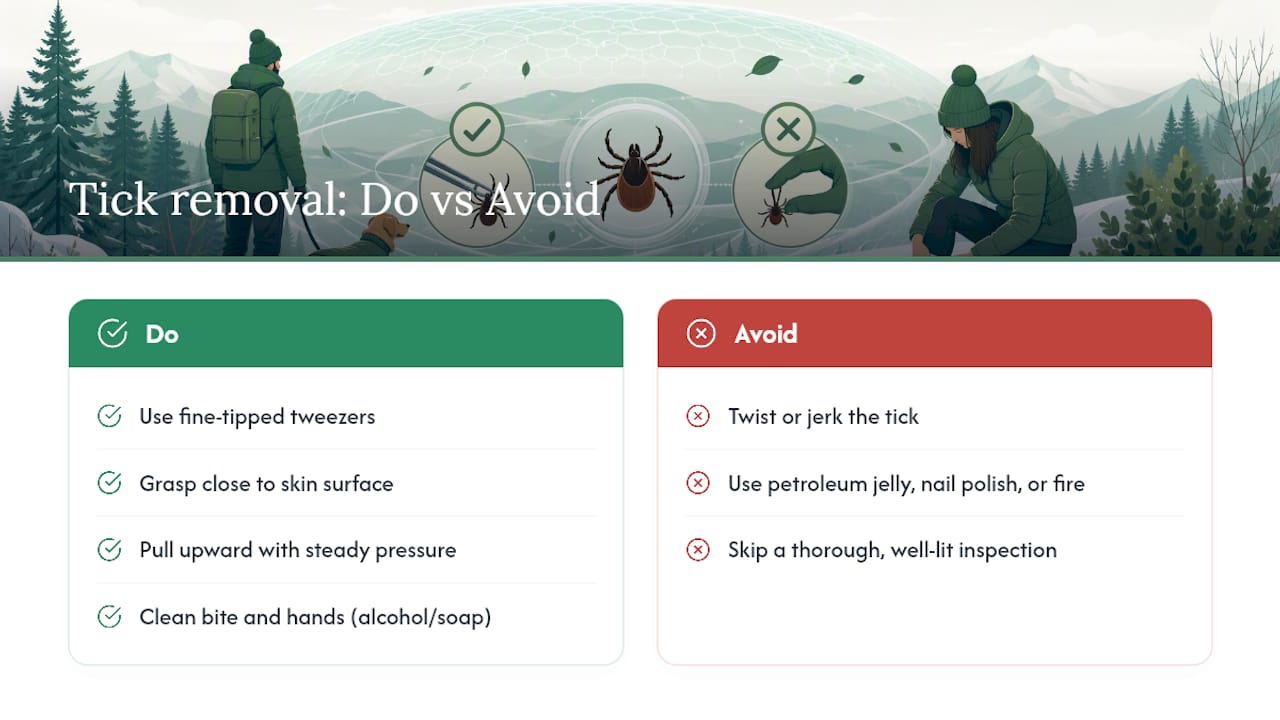
Finding an attached tick in January doesn’t call for a different removal method than summer. Use fine-tipped tweezers, grasp the tick as close to the skin’s surface as possible, and pull upward with steady, even pressure. Don’t twist or jerk. Avoid folk remedies like petroleum jelly, nail polish, or a lit match. They don’t make the tick release faster and can actually increase the risk of it regurgitating fluid into the bite.
After removal, clean the bite area and your hands with rubbing alcohol or soap and water. Save the tick if you can, either in a sealed bag or taped to a card with the date and location of the bite. Some local health departments and clinics will test ticks for pathogens, and having the specimen on hand gives you and a doctor more to work with if symptoms show up later.
Winter cold makes ticks slower to detect movement, but it doesn’t change their attachment behavior. A tick can remain latched for hours before you notice it, especially in hairlines, armpits, or the back of the knee where you’re less likely to look during a quick check. That’s part of why a thorough, well-lit inspection matters more than a fast glance in front of a mirror.
Watch the site for the next few weeks. A small red bump right after removal is normal and usually fades within a day or two. A rash that spreads, especially one forming a bullseye pattern, is not normal and deserves medical attention regardless of the season.
Symptoms of Tick-Borne Illness to Watch for in Winter
Tick-borne diseases don’t read a calendar, and neither do their symptoms. Because most people aren’t expecting a tick bite in January or February, early warning signs can get written off as a winter cold or flu. That delay is where things go wrong.
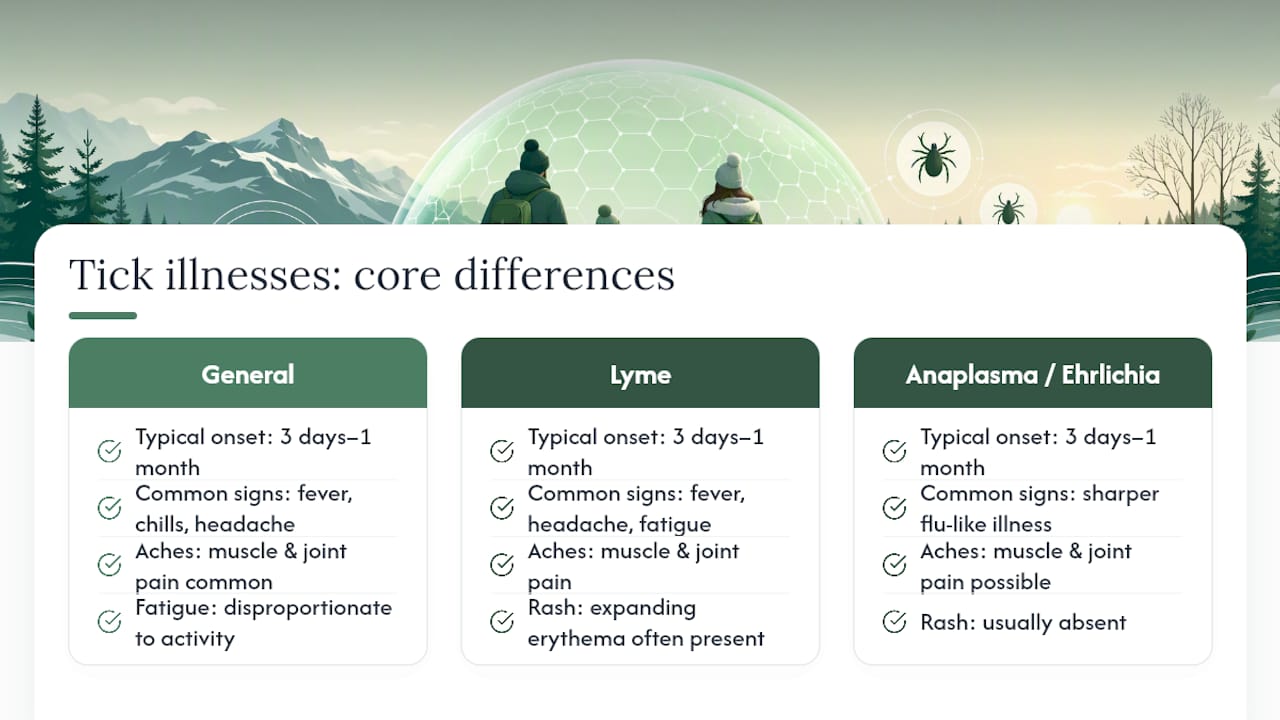
The most common early signs across tick-borne illnesses include fever, chills, headache, muscle and joint aches, and fatigue that feels disproportionate to your activity level. Lyme disease often adds the telltale expanding rash, though it doesn’t appear in every case. Anaplasmosis and ehrlichiosis tend to bring sharper flu-like symptoms without a rash at all, which makes them easy to mistake for a seasonal bug.
Timing is the detail worth remembering. Symptoms from a tick-borne illness typically show up within three days to a month after a bite, meaning a “winter flu” in February could trace back to a hike you barely remember from late December. If you’ve been in tick habitat and develop an unexplained fever weeks later, that connection is worth mentioning to a doctor even if you never found or felt a tick.
Children and older adults are worth watching more closely, since fatigue and joint pain in kids sometimes gets attributed to growing pains or a busy week, and in older adults it can be mistaken for something unrelated to a bite that happened weeks earlier.
When a Winter Tick Bite Needs a Doctor’s Attention
Most tick bites don’t need medical care beyond proper removal and a few weeks of watching the site. A few situations change that calculation.
See a doctor if the tick was attached for more than 24 hours, if you can’t identify the species or aren’t confident it was removed intact, or if a rash develops and spreads outward from the bite site. Fever, chills, or joint pain appearing within a month of a known bite is also worth a call, even if the bite site itself looks fine.
Geography matters here too. If you were bitten in an area with known cases of Lyme disease or other tick-borne illness, mention that specifically, since some doctors may not think to ask about tick exposure during a winter visit. A preventive care visit is also a reasonable time to raise a bite you’re unsure about, even without active symptoms. Bugawaygear’s healthcare partner offers a general guide to preventive care worth a look if you’re due for a checkup and want to bring it up then.
Don’t wait out a fever that shows up after a documented bite, hoping it resolves on its own. Tick-borne illnesses respond well to early treatment in most cases, and the window for that head start is measured in days, not weeks.
Do Winter Tick Repellents Actually Work?
Repellents aren’t off the table in winter, but they come with tradeoffs worth understanding before you rely on one as your main defense. DEET and picaridin remain the most studied synthetic options and work by disrupting a tick’s ability to sense a host, though cold air can reduce how long any spray-on repellent stays effective on exposed skin.
Permethrin, applied to clothing rather than skin, kills ticks on contact and holds up through several washes. It’s the closest chemical option to a physical barrier in terms of durability, but it requires careful application, doesn’t suit every household with young kids or pets, and needs reapplication as its effectiveness fades.
The core limitation with any repellent, chemical or natural, is that it depends on consistent, correct reapplication and even coverage, and a missed spot is a missed spot. A physical barrier like sealed mesh clothing doesn’t wear off partway through a hike or lose potency in cold air. That’s the tradeoff worth weighing: repellents add a layer of chemical deterrence, while a chemical-free mesh barrier removes the guesswork about whether coverage held up over three hours outside.
Where Ticks Hide in Winter and How to Steer Clear
Avoiding tick habitat matters just as much in winter as it does in July, even though the terrain looks different with the leaves down. Ticks concentrate in leaf litter, brush piles, stone walls, and the transition zone where lawn meets woods, which is exactly where a lot of winter yard work and trail walking happens.
Stick to the center of maintained trails rather than the edges, where overhanging brush brushes against your legs. Gravel, mulch, and wood-chip paths carry noticeably less tick activity than grassy or leaf-covered ground. If you’re doing winter garden cleanup, rake and clear leaf litter away from play areas and patios, since that’s the exact microhabitat where ticks shelter through the cold months.
Wider yard management, like clearing brush piles and creating a mulch or gravel buffer between lawn and woods, reduces the number of ticks likely to be present in a given area, though it doesn’t eliminate risk entirely. That’s why personal protection still matters even in a well-maintained yard. One tick bite is all it takes, so habitat avoidance and a solid clothing barrier work best as a pair, not a substitute for each other. Bugawaygear’s guide to tick season by month breaks down how risk shifts across the calendar if you want a fuller seasonal picture.
Why We Built Mesh Clothing for Cold-Weather Protection
We started Bugawaygear because spraying kids with chemical repellent every time they wanted to play outside in the yard felt like the wrong tradeoff, and winter didn’t change that math. It just changed the excuse people use to skip protection altogether.
More than 500 customers have told us they got through a full season, including cold-weather outings, without a single tick bite.
Mesh clothing isn’t a replacement for good judgment. It’s the piece that makes the rest of your winter routine actually reliable. Sealed ankles plus a thirty-second post-hike check beats any single product working alone.
— Thomas
Shop Bug Away: Find Your Winter Fit
Bugawaygear is the direct alternative to relying on sprays that wear off mid-hike or loose layers that leave your ankles exposed. Every set is built from the same chemical-free mesh, sized differently for how men, women, and kids actually move outdoors.
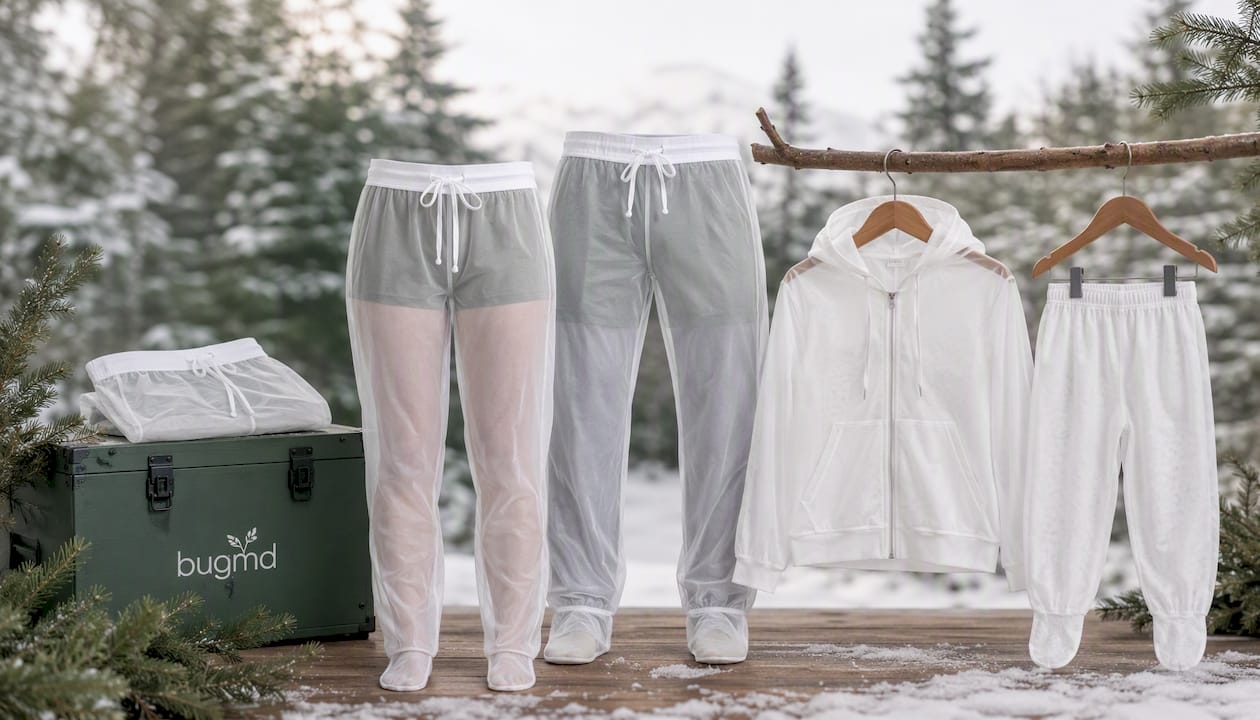
The Bug Away Pants for Women are cut for a closer fit through the leg, which helps under a mesh jacket without bunching at the knee during hikes or garden work. The Bug Away Pants for Men run a slightly roomier cut through the thigh, built for longer strides on uneven winter trails. For families, the Bug Away Kids Set with Jacket and Pants pairs elastic cuffs with integrated foot coverage, so a crouching, climbing kid stays sealed at the ankle without you checking every ten minutes.
Size up slightly if you plan to layer a thermal base underneath for cold mornings, and check the ankle seal against your usual boots before heading out. If the fit is off, the 30-day money-back guarantee covers a return or exchange, no complicated process required. Pick your set and get outside without the spray bottle.
Sources
- Winter Tick Activity – TickEncounter
- Unexpected winter questing activity of ticks in the Central Midwestern United States — PLOS
- Ticks in the winter: Your questions answered — Cary Institute