The single most effective approach to tick prevention for kids combines four layers: protective clothing, a properly applied EPA-registered repellent, a post-play shower and tick check, and a high-heat dryer run for clothes. Add yard-level habitat control and you cut exposure at nearly every point of contact. DEET and picaridin are safe for most children with age-appropriate concentrations, but permethrin belongs on clothing, never on skin. Chemical-free mesh clothing, like what Bugawaygear makes, can serve as a physical barrier layer that fits neatly into this routine.
TL;DR:
- Wearing long-sleeved, tucked-in clothing in light colors reduces tick contact and makes spotting them easier before attachment.
- Using EPA-registered repellents with DEET or picaridin offers hours of protection, but they should be applied correctly and never on children under three for certain ingredients.
- Post-play routines including showering within two hours, full-body checks, and high-heat drying of clothes significantly decrease the risk of tick-borne diseases.
- Maintaining yard hygiene by mowing grass short, clearing leaf litter, and creating barriers between lawn and wooded areas suppresses tick populations around homes.
- Mesh clothing provides a chemical-free physical barrier that remains effective after multiple washings and is suitable for overgrowth areas or yard play.
Table of Contents
- Getting Kids Ready Before They Head Outdoors
- Which Repellents Are Safe for Children?
- What Should Kids Do While They’re Playing Outside?
- The Post-Play Routine That Matters Most
- Making Your Yard Less Hospitable to Ticks
- How Chemical-Free Mesh Clothing Fits the Plan
- A Practical Checklist Worth Keeping on the Fridge
- Bugawaygear Makes the Layered Plan Easier to Stick To
- Sources
- FAQ
Getting Kids Ready Before They Head Outdoors
What a child wears before stepping outside matters more than most parents realize. Ticks climb up from grass and brush, so clothing that closes off gaps at the ankles and wrists blocks a lot of contact before it happens.

Dress kids in long sleeves and long pants, tucked into socks, with closed-toe shoes instead of sandals. Light-colored fabric makes a crawling tick easier to spot before it finds skin. Some parents choose permethrin-treated pants and shirts for extra protection on fabric; others prefer chemical-free mesh clothing that creates a barrier without any treatment at all, which matters if a child has sensitive skin or you’d rather skip repeated product applications.
Before you walk out the door, pack:
- An EPA-registered repellent labeled for ticks
- Fine-tipped tweezers or a tick-removal tool
- A couple of zip-top bags for isolating clothing later
- A lint roller for a quick pre-car-ride sweep
Pro Tip: Keep a dedicated “tick kit” in the car or by the back door so you’re never digging through drawers when someone needs a fast check after a hike.
For deeper guidance on outfitting kids specifically for tick season, see this guide to what to wear for ticks.
Which Repellents Are Safe for Children?
DEET, picaridin, IR3535, and oil of lemon eucalyptus (OLE) are the four EPA-registered ingredients recommended for tick protection, and they’re not interchangeable in strength or age suitability. DEET concentrations between 10% and 30% are typical for children, with 10% giving roughly two hours of protection and 30% stretching closer to five, according to NPIC’s repellent guidance. OLE and its derivative PMD should never go on children under 3.
A few application rules make a real difference:
- Apply sunscreen first, then repellent, waiting a few minutes between products
- Spray onto your own hands first, then rub it onto your child’s face, avoiding eyes and mouth
- Never let kids apply repellent themselves
- Skip “natural” sprays like citronella for serious tick risk. They wear off fast and lack the verified efficacy data that EPA-registered products carry
Permethrin is a different category entirely. It treats clothing and gear, never skin, and it kills ticks on contact through several washings. You can buy pre-treated shirts and pants or treat your own with a spray kit, following label instructions exactly.
Lyme disease alone accounts for an estimated 476,000 diagnosed and treated infections in the U.S. each year, which is reason enough to take repellent choice seriously rather than grabbing whatever’s on the shelf. For a closer look at how permethrin-treated gear compares to skin repellents, read this permethrin safety breakdown.
What Should Kids Do While They’re Playing Outside?
Most tick encounters happen closer to home than parents expect. Ticks live in leaf litter, tall grass, and brush at trail edges, and plenty of exposure happens in backyards, not just deep woods.
A few habits keep exposure low without ruining the fun:
- Stick to the center of trails and steer clear of tall grass and leaf piles
- Supervise rougher play like rolling in leaves or crawling through brush
- Do a quick clothing check with a lint roller before kids climb into the car
- Teach kids to stay out of dense brush on their own and to pull off shoes at the door if they’re visibly dirty
None of this requires constant vigilance. It’s a handful of small course corrections repeated throughout the day.
The Post-Play Routine That Matters Most
What happens in the two hours after outdoor play matters as much as anything done beforehand. Here’s the sequence:
- Shower within two hours of coming inside. This washes off ticks that haven’t attached yet and gives you a natural moment to look everywhere.
- Run a full-body check. Focus on the scalp, behind the ears, underarms, the back of the knees, the waistband, and between the legs. Ticks favor warm, hidden spots.
- Bag the clothes and run the dryer on high for 10 minutes. Heat kills ticks reliably, sometimes more effectively than washing alone.
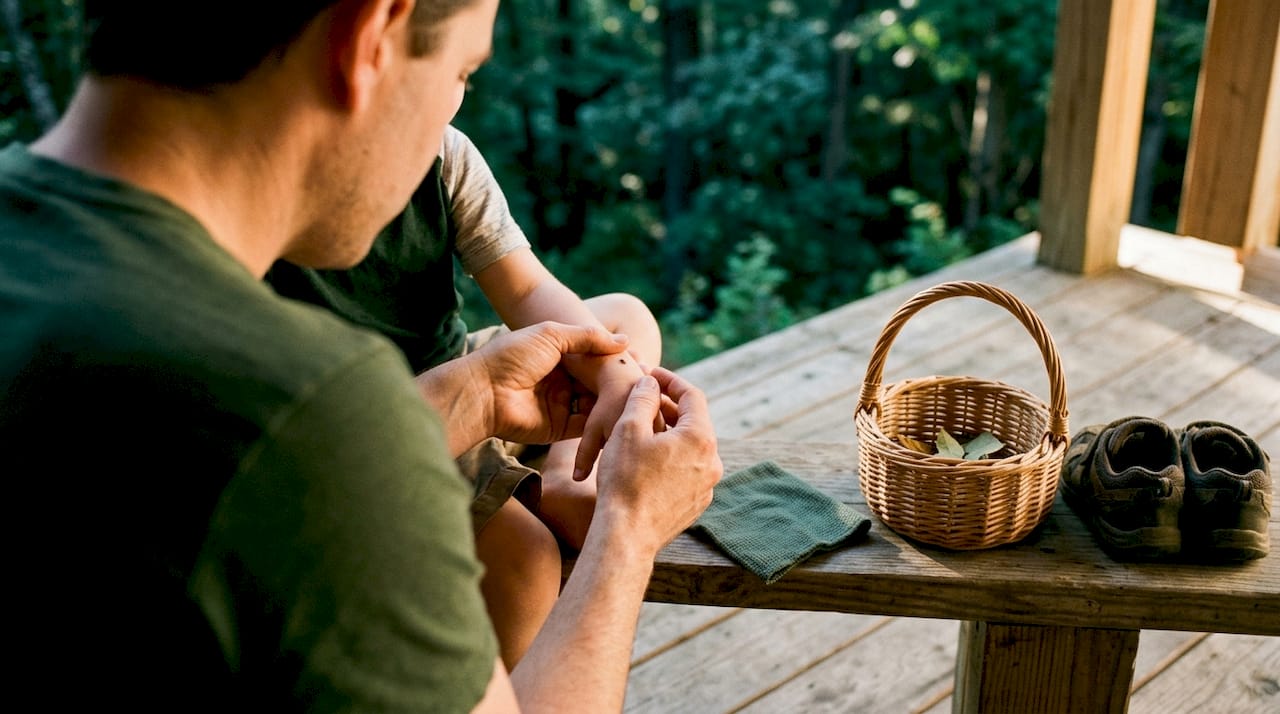
If you find an attached tick, grip it with fine-tipped tweezers as close to the skin as possible and pull straight up with steady pressure. Don’t twist. Clean the area with soap and water or rubbing alcohol afterward.
Pro Tip: Snap a photo of the tick before disposing of it. If symptoms show up later, your pediatrician may want to know what it looked like.
The CDC’s tick bite prevention guidance confirms this shower-and-dry combination is one of the most effective defenses against tick-borne illness available to families right now.
Making Your Yard Less Hospitable to Ticks
A tick’s favorite habitat isn’t the trailhead. It is the shady, damp edge where lawn meets woods. Making that zone less comfortable does more for tick safety for children than most parents assume.
Keep grass mowed short and clear leaf litter, especially near swing sets, sandboxes, and patios. Trim back brush and overgrown shrubs along fence lines. A 3-foot-wide barrier of wood chips or gravel between your lawn and any adjacent woods or brush meaningfully reduces tick migration into the yard.
- Place play equipment and seating areas away from tree lines, not tucked against them
- Store firewood off the ground and away from the house
- Keep bird feeders farther from play areas, since they attract the rodents ticks feed on
If your property backs up to woods or you’ve had ticks despite these changes, a licensed pest control service can treat the perimeter. Keep expectations realistic: pesticide treatments reduce tick numbers, they don’t eliminate them, and clothing and repellent still matter even after a yard treatment. For general seasonal upkeep, this garden pest control guide covers related yard maintenance worth pairing with tick-specific steps.
How Chemical-Free Mesh Clothing Fits the Plan
Mesh clothing works on a different principle than repellents or permethrin. Instead of repelling or killing ticks, it physically keeps them from reaching skin in the first place, which is the appeal for parents who’d rather skip chemical exposure altogether.
Some companies build their clothing with ultra-fine mesh dense enough to block ticks and insects while still allowing breathability. That’s a meaningful contrast to sprays, which wear off, and permethrin, which needs reapplication after enough washes. A mesh layer doesn’t degrade the same way.
Practical ways families use it:
- Over a base layer at the playground, where kids sit in grass and mulch all afternoon
- On hikes, especially through overgrown or brushy sections of trail
- During yard work or gardening days when kids tag along
None of that replaces a repellent on exposed skin for high-risk areas. It’s a layer, not a substitute. More on the barrier approach is available in this non-toxic tick prevention guide.
A Practical Checklist Worth Keeping on the Fridge
Reasoning through years of outdoor gear reviews and prevention research turns up the same pattern every time: parents who succeed at this treat it as a routine, not a one-time decision.
Six things worth checking every time before and after outdoor play:
- Clothing: long sleeves, tucked pants, closed shoes
- Repellent applied correctly to exposed skin
- In-field behavior: trail centers, no brush, quick lint-roller pass
- Immediate post-play shower and full-body check
- Laundry run on high heat for 10 minutes
- Call a clinician if a rash, fever, or fatigue shows up in the days after a bite
Thomas has spent years covering outdoor safety gear and translating public health guidance into steps families can actually follow without a checklist app or a chemistry degree.
— Thomas
Bugawaygear Makes the Layered Plan Easier to Stick To
Chemical-free mesh clothing provides an alternative to spraying kids down every time they walk outside, as the mesh barrier does not wear off, wash out, or need reapplying after a swim or a sweaty hike.

The Bug Away Kids Set, a jacket and pants combo, is built for exactly the playground and backyard scenarios covered above. Parents can layer it over regular clothes on cooler days or wear it alone in summer heat. Adults have their own options too: women’s pants and men’s pants work the same way for the grown-ups doing the yard work or leading the hike.
For sizing, run slightly loose so the mesh doesn’t pull tight at the knees or ankles, and check the accessories page for gaiters that seal the gap between pants and shoes. Every order carries a 30-day money-back guarantee, so there’s no risk in trying a set before committing the whole family’s summer wardrobe to it.
FAQ
What Can I Put on My Kids to Keep Ticks Away?
Dress them in long sleeves and pants tucked into socks, then apply an EPA-registered repellent with DEET, picaridin, IR3535, or OLE (skip OLE under age 3) to exposed skin. Chemical-free mesh clothing adds a physical barrier layer without any product application at all.
What Is the Best Tick Repellent for Kids?
There’s no single “best” option. DEET in the 10% to 30% range gives two to five hours of protection, while picaridin at 20% can last 8 to 12 hours, making it a strong pick for a full day outdoors.
Are Ticks Going to Be Bad This Year?
Tick activity depends heavily on local weather and moisture, and severity varies by region and year rather than following one national trend. Ticks are consistently most active from April through September, so treating that window as peak season is the safer bet regardless of yearly forecasts.
Does My Child Need Antibiotics After a Tick Bite?
Not automatically. Most tick bites don’t transmit disease, and antibiotics are typically only considered after a confirmed high-risk bite or if symptoms like a rash, fever, or fatigue appear. Contact a pediatrician if you notice any of those signs in the days or weeks following a bite.