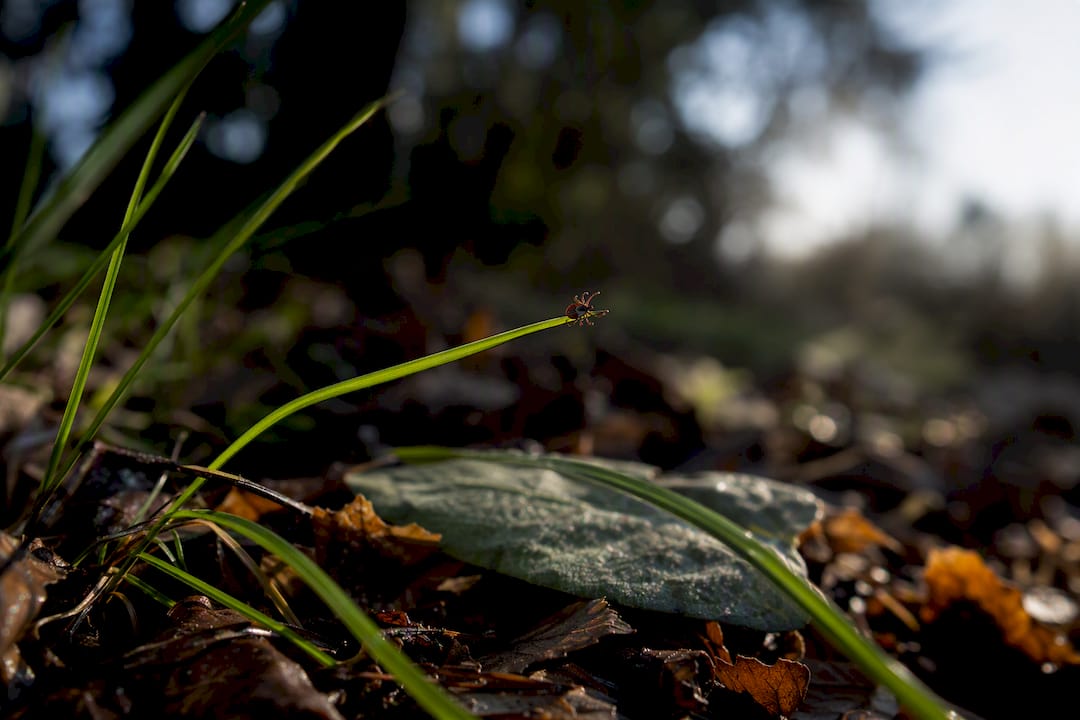
Tick nymph season tends to peak in late spring through summer across most of the United States, and this stretch matters more than any other part of the year because nymphs, not adult ticks, cause the majority of Lyme disease infections. They’re the size of a poppy seed, easy to miss on skin, and dangerous mainly because transmission takes roughly 36 to 48 hours of attachment, which means fast checks and quick removal are your best defense.
TL;DR:
- Nymphs are most active from late spring to early fall, with regional timing varying based on climate and weather; prevention should start in April.
- Their small size and hidden attachment spots make them difficult to notice, increasing the risk of Lyme disease transmission within 36 to 48 hours of attachment.
- Moist, humid conditions in mornings and evenings heighten nymph activity, especially when vegetation and leaf litter are wet.
- Combining repellents, treated clothing, and thorough checks offers the most effective defense against tick bites during peak season.
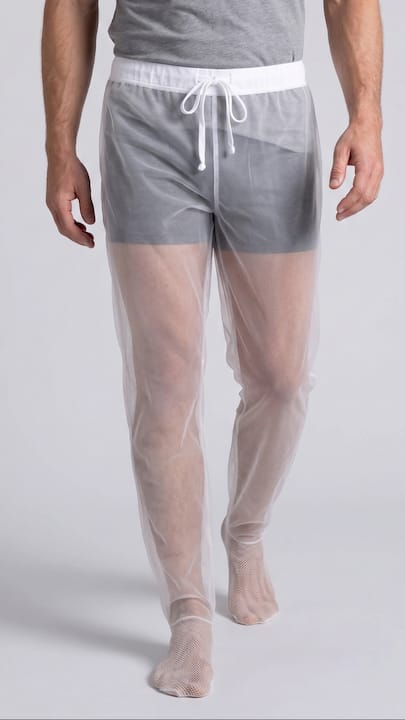
- Wearing physical barrier clothing like bug-proof pants minimizes skin exposure and reduces the risk of nymph attachment in high-risk areas.
Table of Contents
- When Is Tick Nymph Season, and Does It Shift by Region?
- Why Do Nymphs Cause Most Lyme Disease Cases?
- Where and When Does Tick Exposure Peak During the Day?
- What Actually Works to Prevent Tick Bites During Nymph Season?
- How Do You Check for and Remove a Tick Nymph Safely?
- What Should You Do After a Tick Bite?
- What Diseases Do Nymph Ticks Actually Spread?
- How Do Nymph Ticks Behave, and When Are They Most Active?
- A Publisher’s View on Getting Through Nymph Season Safely
- Bug Away Pants: A Chemical-Free Layer for Nymph Season
- Sources
When Is Tick Nymph Season, and Does It Shift by Region?
Most of the country sees nymphs ramp up in mid to late spring, peak during early to mid-summer, and taper off by late summer. The CDC’s tick and Lyme disease guidance ties June and July directly to the highest number of confirmed human Lyme cases each year, which lines up almost exactly with when nymphs are questing hardest.
Regional timing varies more than people expect:
- Northeast and upper Midwest: peak activity runs late May through July, tracking closely with the humid, mild weeks after spring rains.
- Southern states: the window often opens earlier, sometimes in April, and can stretch into September because winters rarely get cold enough to force a long dormancy.
- Pacific coast regions: activity is more spread out, with milder, wetter microclimates keeping nymphs active across a broader stretch of the year.
Temperature and humidity drive nymph behavior more than the calendar does. A nymph doesn’t check a date. It responds to warmth and moisture, and a warm, wet spring can pull the season forward by weeks. Rutgers Tick Lab surveillance has flagged a real trend here: tick seasons are lengthening year over year, with some regions reporting nymph activity well outside what used to be considered “normal” months. For a fuller month-by-month breakdown of how this plays out, our tick season guide walks through it region by region.
The practical move: start prevention habits in April, before the expected peak, and keep them up through late August if your area is still running warm.
Why Do Nymphs Cause Most Lyme Disease Cases?
Size and stealth. A blacklegged tick nymph measures about 1.5 millimeters, roughly a poppy seed, which makes it far easier to miss than an adult tick during a routine skin check. Nymphs have already fed once, as larvae, often on small mammals like mice that carry Lyme-causing bacteria. That single earlier meal is enough to make them infectious the second time around, when they bite a person.
The 36 to 48 hour window: Pathogen transmission from an infected tick to a human generally requires the tick to stay attached for 36 to 48 hours. Remove it before that window closes, and the odds of infection drop sharply.
That timing explains a pattern the CDC has tracked for years: June and July consistently show the highest count of confirmed Lyme disease cases nationwide. It’s not a coincidence. It’s nymph season lining up with outdoor season.
A few reasons nymphs slip past notice more often than adults:
- They’re translucent to light brown and blend into skin, freckles, and hair.
- They often attach in hidden spots: behind knees, in the groin, along the scalp line.
- People associate “tick” with the larger, dark adult stage and don’t scan carefully enough for something smaller.
Where and When Does Tick Exposure Peak During the Day?
Nymphs don’t chase you down. They quest, which means they climb to the tip of a blade of grass or a leaf edge and wait, front legs extended, for something warm to brush past. The CDC’s guidance on tick habitats confirms they concentrate in leaf litter, low vegetation, and the brushy edges of trails, and that they cannot jump or fly. They only grab on through direct contact.
A few patterns worth knowing before you head out:
- Warm, humid days push activity up. Nymphs dry out easily, so they quest hardest when moisture keeps them from dehydrating, typically mornings and evenings on hot days.
- Cool, dry conditions slow them down. A dry afternoon with low humidity gives you a lower risk window, though never a zero risk one.
- Certain activities raise your odds more than others. Hiking off trail, yard work near brush piles, and kids’ outdoor camps that run through wooded areas all put you closer to questing height.
- Legs and feet make contact first. Nymphs attach low, then crawl upward looking for thinner skin, so that’s where your checks and your clothing coverage should start.
Because of that upward crawl, integrated foot and lower-leg coverage is one of the more practical, evidence-aligned defenses you can wear, catching nymphs before they migrate to harder-to-check areas.
What Actually Works to Prevent Tick Bites During Nymph Season?
Public health guidance doesn’t point to one silver bullet. It points to layers, and each layer catches what the others miss. The CDC’s prevention guidance recommends stacking repellents, treated or barrier clothing, and regular checks rather than relying on any single method.
Here’s what that stack looks like in practice:
- EPA-registered repellents, applied per the label, on exposed skin.
- Permethrin-treated clothing for chemical-based protection, or physical-barrier mesh clothing like Bug Away’s designs for a chemical-free alternative that blocks contact rather than repelling it after contact. If you’re weighing the two, our breakdown of permethrin clothing safety covers what to know before treating your own gear.
- Long pants tucked into socks, ideally in light colors so a crawling nymph is easier to spot before it attaches.
- A full-body tick check and a shower within a couple of hours of coming indoors, since a shower can physically dislodge ticks that haven’t attached yet.
- Yard maintenance: clearing brush, keeping a tidy border of gravel or mulch between lawn and woods, and choosing deer-resistant plantings, since deer traffic through a yard brings ticks with it. If deer pressure is part of your problem, this guide to deer-resistant plants for yards is worth a look.
Pro Tip: Treat your socks and cuffs as the front line. Nymphs attach low and climb, so a tucked pant leg or built-in ankle coverage buys you time even before your first full-body check.
None of these layers is complete alone. Repellent wears off, permethrin fades after washes, and checks only catch what your eyes find. Combined, they close most of the gaps that any single method leaves open. Our guide to non-toxic tick prevention walks through how families and hikers typically build this routine season to season.
How Do You Check for and Remove a Tick Nymph Safely?
Run a focused check within an hour or two of coming inside, and don’t skip the small stuff. Because of their size, nymphs hide easily in the areas below.
- Scan systematically. Start at the ankles and work up: behind the knees, groin, waistband, underarms, scalp, and behind the ears.
- Use a bright light and, if needed, a magnifying glass. A poppy-seed-sized nymph is easy to mistake for a freckle or a speck of dirt under normal light.
- Remove with fine-tipped tweezers or a dedicated tick-removal tool. Grip as close to the skin as possible and pull straight up with steady pressure, no twisting.
- Clean the bite site with soap and water or rubbing alcohol once the tick is out.
- If you want it tested, save the tick in a sealed bag or small container with a damp cotton ball, and label it with the date.
Removing an attached tick within 24 hours meaningfully lowers your risk of Lyme disease, and the earlier within that window, the better. If you’re unsure how long it was attached, a plump, engorged nymph suggests longer feeding than a flat one. Our 90-second tick check routine is built for exactly this kind of fast, thorough scan.
What Should You Do After a Tick Bite?
Clean the bite site right away and write down the date, the location on your body, and where you likely picked it up. That record matters more than people think if symptoms show up weeks later.
- Watch the site for erythema migrans, the expanding red rash sometimes described as a bullseye, over the following 3 to 30 days.
- Track for flu-like symptoms: fever, fatigue, joint aches, or headache, even without a visible rash.
- In some cases, a clinician may recommend a single preventive dose of antibiotics based on CDC criteria, particularly when the tick was attached long enough and the region has high Lyme prevalence.
- If anything looks off, contact your clinician or check your state or local health department’s tick-borne disease resources rather than waiting it out.
Prompt removal and good notes are the two things that consistently make follow-up care easier.
What Diseases Do Nymph Ticks Actually Spread?
Lyme disease gets the most attention, but blacklegged nymphs can carry more than one pathogen, and some people get bitten by a tick carrying two at once.
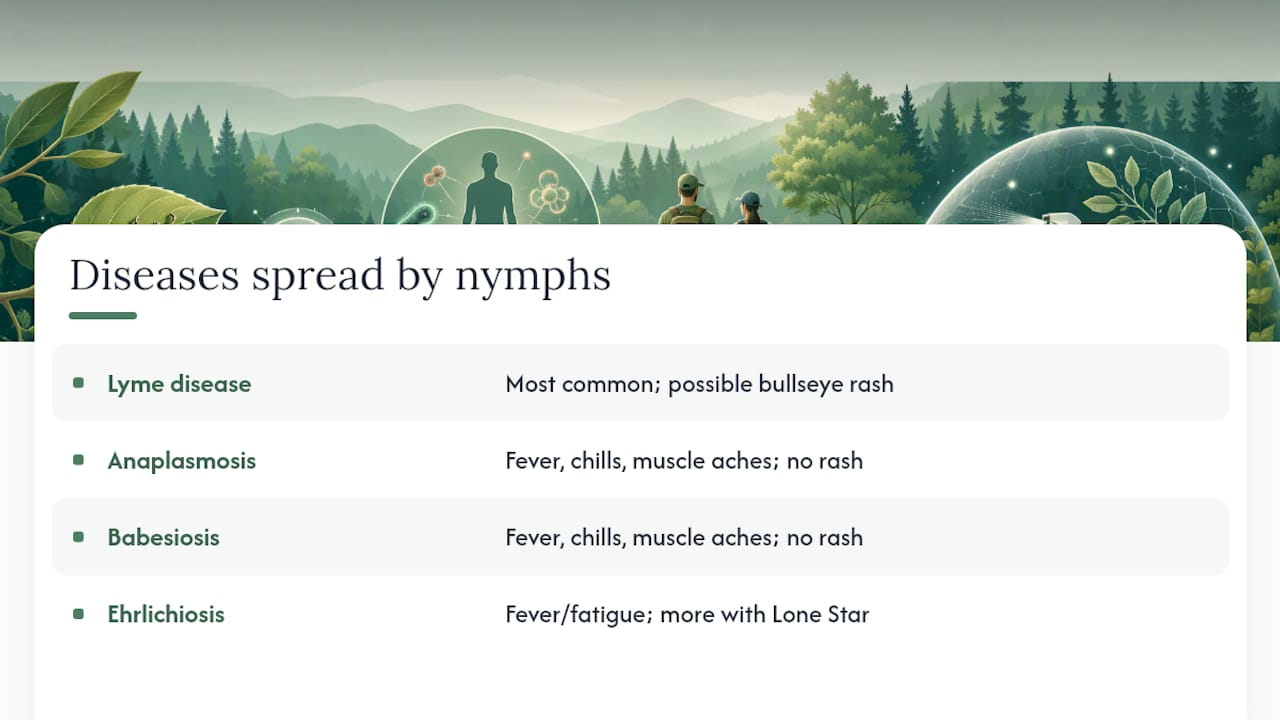
Lyme disease remains the most common, with the telltale (though not universal) bullseye rash, fatigue, and joint pain. Anaplasmosis and babesiosis are both transmitted by the same nymph stage in many of the same regions, and they tend to cause fever, chills, and muscle aches without the rash, which makes them easy to mistake for a summer flu. Ehrlichiosis, more common in areas with Lone Star ticks, produces a similar fever-and-fatigue picture.
The overlap in symptoms is exactly why documenting the bite date and location matters so much. A fever a week after a hike reads very differently to a clinician who knows you pulled a nymph off your leg on a specific date versus one who’s guessing. If you’re in Lone Star tick territory, the symptom picture and prevention steps differ slightly, and our Lone Star tick guide breaks down those regional differences.
None of these infections are exclusive to nymphs. Adult ticks transmit the same pathogens. Nymphs simply account for more human cases because they’re harder to spot and more numerous during peak summer outdoor activity.
How Do Nymph Ticks Behave, and When Are They Most Active?
Nymphs quest low, usually within a foot or two of the ground, perched on grass tips, low shrubs, and the edges of leaf litter along trails. That low questing height is exactly why they attach to legs and feet first before working their way up the body looking for thinner skin.
Activity follows moisture and temperature more closely than clock time. Early morning and early evening, when humidity is higher and the sun is less intense, tend to bring more questing behavior than the driest hours of a hot afternoon. A humid, overcast day can actually see more nymph activity than a bright sunny one, since dry heat pushes them back down into leaf litter to conserve moisture.
They’re patient, not aggressive. A nymph can wait for hours or days for a host to brush past, and it has no interest in chasing anything down. That patience is part of what makes them dangerous: a nymph doesn’t need to actively hunt you, it just needs you to walk through the right patch of grass at the right moment. Urban and suburban yards adjacent to woods or parks aren’t exempt either. Even city dwellers deal with this, as detailed in coverage of ticks turning up in New York City parks and yards.
A Publisher’s View on Getting Through Nymph Season Safely
Every prevention checklist tells you to do the same three things: repel, treat, check. What most checklists skip is that families and hikers rarely stick with a routine that feels like a chore every single time they step outside. That’s the real gap, not a lack of information, but a lack of habits people will actually keep up in July when it’s 90 degrees and nobody wants to reapply spray every two hours.
Physical-barrier clothing solves a specific piece of that problem. It doesn’t wear off, doesn’t need reapplication, and doesn’t rely on you remembering anything mid-hike. Physical-barrier clothing provides a solution that works because it removes the “did I reapply” variable entirely. It’s not a replacement for checks or repellents. It’s the layer that keeps working when you forget the other two.
— Thomas
Bug Away Pants: A Chemical-Free Layer for Nymph Season
Bug Away Pants give you a physical barrier that costs nothing to maintain once you put them on, unlike sprays that fade by lunchtime or permethrin treatments that wash out after a handful of launders.
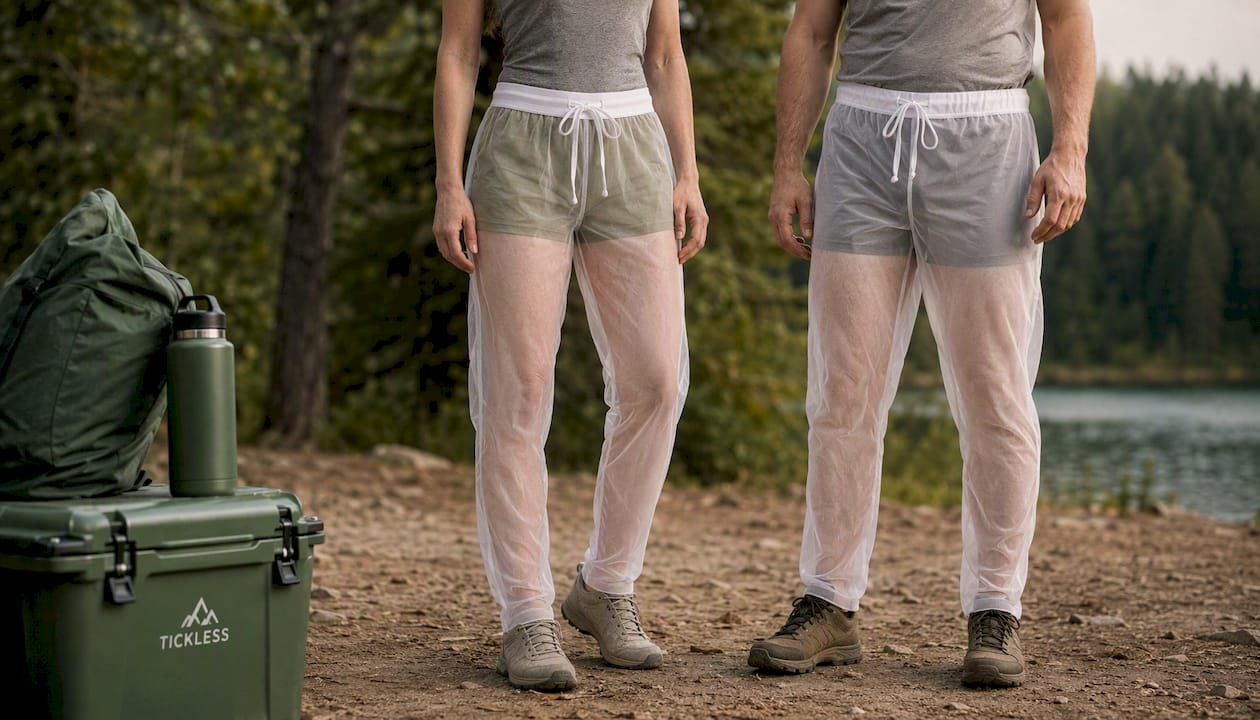
The mesh is ultra-fine and breathable enough for a summer hike, with integrated lower-leg coverage built specifically for the spot where nymphs attach first. That matters more than it sounds, since most bite prevention advice focuses on skin exposure and forgets that a nymph has to climb before it ever finds skin. Wear the pants as your base layer, then add repellent on any exposed skin and keep up your post-hike checks. The three together cover far more ground than any one alone. Customers can test these pants on a real hike to decide if they stay in their gear rotation. The Bug Away Pants for Women and Bug Away Pants for Men are both available now, sized for the kind of long summer days when nymph season is at its worst.
Sources
- CDC — How Lyme disease spreads
- Rutgers Tick Lab — surveillance and season trends (2026 observations)
- Ohioline — Blacklegged (deer) tick fact sheet