The most effective approach is layered: a fine-mesh, chemical-free physical barrier as your base layer, with permethrin-treated outer layers or an EPA-registered topical repellent added on exposed skin when marsh mosquitoes are at their worst. Neither alone is bulletproof. Together, they close almost every gap a salt marsh mosquito can exploit.
Before you head out, run through this:
- Wear a full-coverage mesh jacket and pants that block the proboscis, not just loose cotton.
- Choose light-colored, loose-fitting layers over tight or dark fabric.
- Add a head net or hood during major hatches, especially at dawn and dusk.
- Apply an EPA-registered topical repellent to any skin the mesh doesn’t cover.
- Treat outer layers with permethrin only when mosquito pressure is extreme, and never apply it to skin.
For most trips, a chemical-free mesh layer like Bug Away is the right starting point. It’s the one piece of gear you don’t have to reapply, rewash on a schedule, or worry about wearing next to skin.
Key Takeaways
Salt marsh mosquito protection works best when a chemical-free mesh barrier serves as the base layer, backed by permethrin-treated outerwear or topical repellent on exposed skin during peak pressure.
| Point | Details |
|---|---|
| Layer, don’t choose one method | Combine physical mesh, treated outerwear, and topical repellent rather than relying on a single defense. |
| Permethrin protects fabric, not skin | It kills mosquitoes on contact but only covers treated areas, so exposed skin still needs repellent. |
| Combination protection wins decisively | A field study found roughly 2 bites with treated clothing plus DEET, versus 54 with clothing alone. |
| Tight weave and loose fit matter most | Dense mesh blocks the proboscis, and loose fabric prevents bite-through on contact points. |
| Bug Away is the chemical-free baseline | Its mesh jackets, pants, and combo sets provide physical-barrier coverage with a 30-day money-back guarantee. |
Table of Contents
- Why Salt Marsh Mosquitoes Demand a Different Approach
- How Permethrin-Treated Clothing Works, and Where It Falls Short
- Chemical-Free Mesh: Why Bug Away Is the Right Baseline for Marsh Trips
- Fabric, Weave, Color, and Fit: What Actually Reduces Bites
- The Field Protocol: Combining Clothing and Repellents the Right Way
- Keeping Treated Gear Effective Wash After Wash
- When to Upgrade to Head Nets or Full-Coverage Suits
- What to Check Before You Buy Protective Clothing
- Natural-Fiber and Tightly Woven Options Worth Considering
- A Dawn Patrol on the Marsh: What Actually Held Up
- How Bug Away Fits Into Your Salt Marsh Kit
- Frequently Asked Questions
- Sources
Why Salt Marsh Mosquitoes Demand a Different Approach
Salt marsh mosquitoes aren’t like the ones that bother you on a suburban patio. Species such as Aedes taeniorhynchus bite aggressively, hunt in daylight when disturbed, and hatch in numbers that can turn a calm evening walk into a swarm within minutes. Coastal park guidance puts their seasonal activity at its highest roughly from May through September, with peak biting at dawn and dusk.
That timing matters more than most visitors realize. A marsh that feels mosquito-free at noon can turn hostile the moment the sun drops, because these mosquitoes key in on the cooling, humid air near dusk. Large hatches can also follow lunar cycles, giving experienced marsh-goers a rough sense of when to expect the worst nights. Once mosquito density crosses a certain threshold, avoidance behavior alone (staying still, staying covered) stops being enough, and clothing choice becomes the deciding factor.
How Permethrin-Treated Clothing Works, and Where It Falls Short
Permethrin isn’t a repellent in the way DEET is. It’s an insecticide bound to fabric fibers that incapacitates or kills mosquitoes on contact, rather than masking your scent or irritating their sensors before they land. That distinction explains both its strength and its weakness: it acts after contact, not before.
The EPA registers permethrin for factory treatment of clothing and reports that some factory-treated garments hold their protection through roughly 70 launderings. That’s a meaningful number if you’re outfitting a whole season of fieldwork, but it only applies to the fabric it’s bonded to. Treated pants do nothing for your neck, wrists, or ankles.
Factory-treated vs. spray-on: Factory treatment is more even and longer-lasting; spray-on kits let you treat gear you already own but wear off faster and require careful reapplication. Either way, the EPA is clear that permethrin should never touch skin or underwear, and treated items should be dried outdoors and washed apart from other laundry.
Where permethrin-treated clothing struggles is bite-through on thin or tight-fitting fabric, and the simple fact that a mosquito has to land and linger long enough to absorb a lethal dose. Consumer Reports testing found treated garments reduced landings and knocked down many mosquitoes, but results varied by garment, and none matched a shirt sprayed directly with DEET.
Quick rules worth following:
- Do treat outer layers, not base layers worn against skin.
- Do re-treat or replace gear once you notice fading or reduced knockdown effect.
- Don’t apply permethrin to skin under any circumstance.
- Don’t rely on treated clothing alone for exposed hands, face, or ankles.
Pro Tip: If you’re treating your own gear with a spray-on kit, do it the night before your trip. Permethrin needs several hours to bind and dry fully, and rushing the process cuts into its effectiveness.
Chemical-Free Mesh: Why Bug Away Is the Right Baseline for Marsh Trips
A tightly woven, ultra-fine mesh creates a physical barrier a mosquito’s proboscis can’t get through, no insecticide required. That’s the entire premise behind Bug Away’s clothing line, and it’s why it belongs as the first layer you put on before you even think about repellent.
The mesh is built specifically for the conditions that make salt marshes brutal: high humidity, sustained heat, and mosquito densities that make you want to move fast without cooking inside your own gear. A few features matter more here than anywhere else you’d wear this clothing:
- Ultra-fine breathable mesh that blocks bites without trapping heat the way heavier treated fabrics can.
- Integrated foot and ankle coverage, since ankles and lower legs take the worst of it when you’re wading through marsh grass.
- Sizing for men, women, and kids, so a family outing doesn’t leave the smallest member exposed.
- Zero insecticide, meaning no washing restrictions, no drying-outdoors rule, and no concern about skin contact.
Pro Tip: Layer Bug Away mesh over a moisture-wicking base layer on hot days. The airflow through the mesh does most of the cooling, and you avoid the clammy feel of treated synthetic fabric sitting directly on skin.
Bug Away is backed by a 30-day money-back guarantee, which matters if you’re buying sight-unseen for a trip you can’t reschedule. You’ll find the full range across men’s pants, women’s pants, and men’s jackets. For genuinely extreme hatches, a permethrin-treated outer shell or a topical repellent on any uncovered skin still earns its place. The mesh is the baseline, not necessarily the entire answer on the worst nights.

Fabric, Weave, Color, and Fit: What Actually Reduces Bites
At a glance, look for tight weave density, loose fit, and light-colored fabric. Those three factors do more work than any label claim about “advanced technology.”
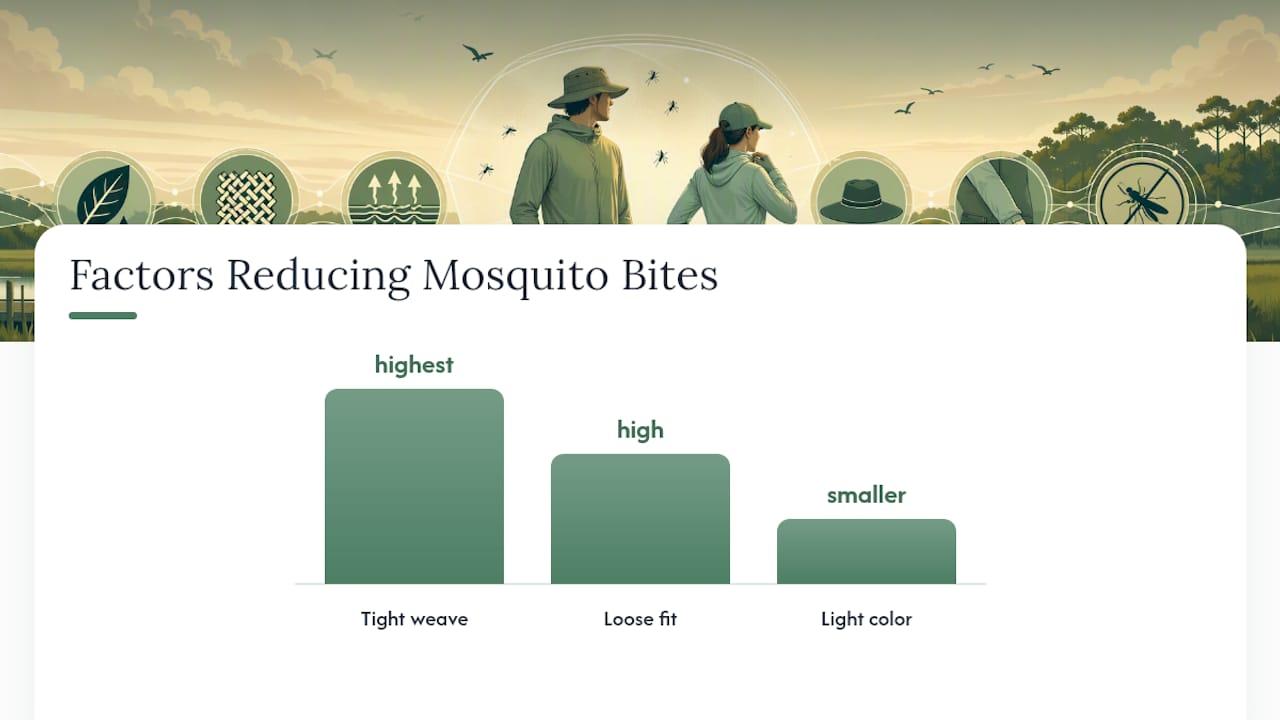
Weave density determines whether a mosquito’s proboscis can physically reach skin. A tight enough weave stops it cold regardless of what the fabric is treated with. Fit matters almost as much: a mosquito landing on tight leggings or a snug shirt can bite straight through fabric pressed against skin, which is exactly the bite-through problem Consumer Reports flagged in its testing. Loose fabric creates an air gap the proboscis can’t cross. Color plays a smaller but real role, since mosquitoes are drawn more to dark colors and certain contrasts than to light, neutral tones.
Run new gear through this checklist:
- Weave tight enough that light barely passes through when held up.
- Loose, non-clinging fit through the arms, legs, and torso.
- Light or neutral color rather than navy, black, or dark green.
- Full coverage at ankles, wrists, and neckline, where gaps open easily.
Pro Tip: Denser weaves trade a little breathability for bite resistance. On a scorching marsh afternoon, that trade-off is worth it. Don’t downgrade to a looser mesh just to feel cooler when mosquito density is high; you’ll pay for it in bites.
The Field Protocol: Combining Clothing and Repellents the Right Way
The order of operations matters. Start with Bug Away mesh as your primary layer. Add a permethrin-treated outer layer or a topical repellent on any exposed skin as your secondary defense. Reserve a head net or full suit for the worst hatches, when density alone overwhelms both.
Here’s the routine that holds up in practice:
- The night before: Check your gear for tears or worn mesh, and treat any outer shells with permethrin if you’re expecting heavy pressure.
- Before you leave: Put on Bug Away mesh first, apply EPA-registered repellent to hands, neck, and face, then add treated outerwear if conditions call for it.
- Mid-trip: Reapply topical repellent per the label if you’re out past the reapplication window, and tuck cuffs and pant legs if you’re wading through dense grass.
- End of day: Rinse off, check for stray bites on uncovered skin, and hang treated gear to dry away from other laundry.
The evidence for combining layers isn’t theoretical. A field study on salt marsh mosquitoes found that combining permethrin-treated clothing with topical DEET produced about 2 bites over nine hours of exposure, compared with 54 bites wearing treated clothing alone and 99 bites using DEET alone. That gap is the entire argument for layering instead of picking one method and hoping it’s enough. The CDC lists permethrin-treated clothing alongside topical repellents as complementary, not competing, tools.
One safety note: treated outerwear and repellent both add heat load. Hydrate before you feel thirsty, and take breaks in shade if you’re working, not just hiking, in marsh conditions.
Keeping Treated Gear Effective Wash After Wash
Follow the label. That’s the whole answer, but it’s worth breaking down because small mistakes shorten a garment’s protective life fast. Factory-treated items can hold up through roughly 70 washes according to EPA data, but that number assumes correct care, not just any wash cycle.
Wash treated garments separately from regular laundry, skip fabric softener (it degrades the bond between permethrin and fiber), and air-dry rather than tumble-dry when the label recommends it. If you’re re-treating gear yourself with a spray-on kit, spray outdoors, never on worn clothing, and let items dry fully before packing them.
Signs it’s time to re-treat or retire a garment:
- Visible fading or thinning of the fabric.
- Mosquitoes landing and staying longer than they used to.
- More bites through fabric than you experienced when the gear was new.
- Torn mesh or seams on chemical-free barrier clothing, since even small gaps let mosquitoes through.
When to Upgrade to Head Nets or Full-Coverage Suits
Most marsh trips don’t need a full suit. But extreme hatches, prolonged exposure, or working (not just walking) in dense marsh grass changes the math.
- Head net: Best for short exposure during a heavy hatch, especially at dusk, when face and neck bites are the main risk.
- Full-coverage suit: Worth it for extended fieldwork, surveying, or camping through a known high-density window.
- Treated outerwear over mesh: The middle ground for moderate to high pressure that doesn’t call for full PPE.
A simple rule of thumb: if you can see mosquitoes landing on your clothing within seconds of standing still, upgrade your coverage. Heat stress is the real risk in heavier PPE, so build in shade breaks and drink water on a schedule rather than waiting until you’re thirsty.
Pro Tip: Keep a head net in your pack even on trips where you don’t expect to need one. Marsh hatches can spike faster than the forecast suggests.
What to Check Before You Buy Protective Clothing
Not every product marketed for mosquito protection actually holds up in marsh conditions. Before you buy, run through these filters:
- Coverage area: Does it protect ankles, wrists, and neck, or just torso and legs?
- Mesh density: Is the weave tight enough to block a proboscis, not just visible insects?
- Breathability: Can you wear it for hours in humid heat without overheating?
- Wash instructions: Does it require special care, or can it go through a normal wash?
- Warranty or return policy: Is there a guarantee if the fit or performance doesn’t work for you?
Ask sellers directly: does this block bites physically, or does it rely on a chemical treatment that wears off? Is it genuinely chemical-free, or just marketed that way? How many washes before protection starts to drop? For salt marsh trips specifically, prioritize physical barrier options first and treat permethrin-treated outer layers as a supplement for the highest-pressure days, not your everyday gear.
Natural-Fiber and Tightly Woven Options Worth Considering
Not every chemical-free option is created equal, and this is where a lot of buyers get misled by marketing language. A loosely knit cotton shirt marketed as “breathable outdoor wear” offers almost no protection against a determined salt marsh mosquito. The weave gaps are simply too large.
What actually works: tightly woven natural fibers like ripstop cotton blends or engineered mesh fabrics with a weave count high enough to block a proboscis. Ripstop weaves resist tearing in marsh grass and brush, which matters as much for durability as bite protection. Ultra-fine polyester mesh, the kind used in Bug Away’s jackets and pants, achieves the same density goal while staying lighter and more breathable than heavier woven cotton.
The trade-off between natural fiber and engineered mesh comes down to weight and heat management. Natural fibers breathe well but can absorb moisture in humid marsh air, adding weight and clamminess over a long day. Fine synthetic mesh sheds moisture faster and dries quicker, which is part of why it’s become the standard for dedicated insect-protection clothing rather than repurposed hiking or gardening gear; to understand how such fabric maintains its performance, see how UV resistance affects tactical gear durability.
If you’re evaluating any garment marketed for mosquito protection, hold it up to light. If you can see daylight easily through the weave, a marsh mosquito can find its way through too. Tight weave density, not fabric type alone, is what determines whether a “natural” or “chemical-free” claim actually means something in the field.
A Dawn Patrol on the Marsh: What Actually Held Up
Early one morning last season, checking a stretch of salt marsh right at first light, the mosquito pressure was noticeably heavier than expected for the hour. Mesh pants and jacket went on before leaving the truck, with repellent added to hands and neck since gloves weren’t part of the kit that day. Through nearly two hours of standing and walking in dense grass, exposed skin took a handful of bites, but nothing landed through the mesh itself.

The biggest surprise was comfort, not protection. Airflow through the fabric kept heat manageable even as humidity climbed, and there was no need to reapply repellent until well past the hour mark. A head net stayed in the bag the entire trip, but it would have gone on fast if the hatch had picked up.
How Bug Away Fits Into Your Salt Marsh Kit
Bug Away mesh is built for exactly the conditions described above: breathable, chemical-free coverage that holds up through hours of heat, humidity, and heavy mosquito pressure without a single application of spray or insecticide.
The lineup covers every situation a marsh trip throws at you. Men’s pants and women’s pants give you integrated ankle coverage where mosquitoes hit hardest. The women’s jacket and men’s jacket pair with those pants for full upper-body protection on heavier hatch days. If you’d rather buy once and skip mixing pieces, the men’s combo set and women’s combo set bundle jacket and pants together. Families heading out together shouldn’t leave kids in cotton and hope for the best. The kids set covers jacket and pants in sizes built for smaller frames.
Every order carries a 30-day money-back guarantee, so if the fit or feel isn’t right for your next marsh trip, you’re not stuck with it. Browse the full lineup at Bug Away and get your gear sorted before the next dawn hatch catches you underdressed.
Frequently Asked Questions
Does mosquito protection clothing actually work in salt marshes? Yes, when it combines tight-weave physical barriers with treated outerwear or topical repellent on exposed skin. Neither element alone performs as well as the combination shown in field testing.
Can mosquitoes bite through mesh clothing? A properly dense weave blocks the proboscis, but loose weaves or tight-fitting fabric pressed against skin can still allow bites. Check weave density by holding the fabric up to light before you buy.
Is permethrin-treated clothing safe to wear? It’s registered by the EPA for factory treatment and considered safe when used as directed, but it should never be applied to skin or underwear, and treated garments should be washed separately.
How long does permethrin-treated clothing stay effective? Some factory-treated garments maintain protection through roughly 70 launderings, according to EPA data, though spray-on treatments wear off faster and need more frequent reapplication.
What’s the best clothing for salt marsh mosquitoes specifically? A fine-mesh, chemical-free garment as your base layer, with a permethrin-treated shell or topical repellent added for exposed skin during peak dawn and dusk activity.
Sources
Every claim about permethrin durability, mosquito behavior, and combination protection in this guide comes from established government and testing sources. Worth bookmarking before your next trip:
- Repellent-Treated Clothing | US EPA
- For Your Safety: Prevent Mosquito Bites - Fire Island National Seashore
Always check local vector-control advisories and product labels before a high-density marsh outing. Conditions and hatch timing shift fast, and the guidance above is the baseline, not the last word for your specific location.