
There is no vaccine or medicine for Powassan virus. The only reliable protection is preventing tick bites in the first place, through EPA-registered repellents, barrier clothing, permethrin-treated gear, daily tick checks, and basic yard and pet management. Skip these steps and you’re relying on luck.
TL;DR:
- Wearing long, light-colored clothing tucked into socks and applying EPA-registered repellents are essential for effective tick prevention during peak risk months.
- Treating outdoor gear with permethrin provides long-lasting protection, and routine high-heat drying kills any ticks on clothing.
- Conducting daily tick checks on yourself, children, and pets significantly reduces the chance of unnoticed bites and subsequent infection.
- Clearing yard brush, installing a dry barrier zone, and keeping play areas away from wooded edges lower the likelihood of tick encounters at home.
- Combining physical barrier clothing with chemical repellents and daily checks offers the most reliable defense against Powassan virus, especially for vulnerable populations.
Table of Contents
- When and Where Are You Most at Risk From Ticks?
- What Repellents and Clothing Actually Block Ticks?
- How Do You Check for Ticks and Remove Them Safely?
- How Do You Reduce Ticks Around Your Home and Protect Pets?
- Who Faces the Highest Risk, and When Should You Seek Care?
- Where Does Chemical-Free Clothing Fit in a Prevention Plan?
- Where Conventional Tick Advice Falls Short
- Where to Get Bug Away Gear and What to Expect
- Sources
When and Where Are You Most at Risk From Ticks?
Ticks that can carry Powassan virus live in brushy, wooded areas and the “edge” zones where a mowed lawn meets tree cover or overgrown brush. That transition strip is where most people actually pick up ticks, not deep in the backcountry.
Ticks become active whenever temperatures climb above freezing, but risk peaks from late spring through mid fall. That window covers gardening season, camping trips, and the months kids spend playing in the backyard, which is exactly why casual exposure near home matters as much as a big hiking trip.
Nymphs, the immature stage of many tick species, cause a disproportionate share of bites. They’re roughly the size of a poppy seed, which makes them nearly invisible on skin or clothing until you know to look for them.
A few patterns worth remembering:
- Wooded and brushy habitats carry the highest tick density
- Edge habitat between lawns and woods is a common bite location, even close to the house
- Activity runs from spring thaw through mid fall, with a peak in late spring and summer
- Nymphs are small, hard to see, and frequently the culprits behind bites that go unnoticed
Knowing this pattern tells you exactly when to layer on repellents, when to wear protective clothing, and when yard cleanup actually pays off.
What Repellents and Clothing Actually Block Ticks?
Start with an EPA-registered repellent: DEET, picaridin, oil of lemon eucalyptus, or IR3535. These are the active ingredients with a track record against ticks, and the EPA’s own search tool will tell you the right concentration and reapplication schedule for your situation. Follow the label exactly. Concentration affects how long protection lasts, not how well it works, and products carry age restrictions, particularly for oil of lemon eucalyptus, which isn’t recommended for children under three.
Clothing matters just as much as anything you spray on. Long sleeves and long pants tucked into socks create a physical barrier a tick has to cross before it reaches skin, and light-colored fabric makes a dark, crawling tick much easier to spot before it bites.
For longer or more frequent outings, treating gear with permethrin adds a layer skin repellents can’t match. Permethrin binds to fabric and keeps working through multiple washes and outings, which cuts down on how often you need to reapply anything. One rule matters above all else: permethrin goes on clothing and gear, never on skin.
Quick reference for personal protection:
- Apply EPA-registered repellent to exposed skin per label directions
- Wear long, light-colored sleeves and pants, tucked into socks or boots
- Treat outer layers with permethrin before the season starts, or buy pre-treated gear
- Reapply skin repellent as the label directs, especially after sweating or swimming
Pro Tip: Permethrin-treated gear can hold up across several outings before it needs retreatment, so it’s worth investing in a dedicated set of hiking or gardening clothes rather than treating whatever you happen to grab that morning.
How Do You Check for Ticks and Remove Them Safely?
A daily tick check takes less time than making coffee, and it’s the single habit that catches problems before they become infections.
- Check immediately after coming indoors, before you sit down or shower.
- Run your hands over your scalp, behind the ears, under the arms, around the waist, behind the knees, and between the legs. These warm, hidden spots are where ticks tend to settle in.
- Check kids and pets the same way. Kids in particular often can’t feel a small tick and won’t mention it.
- If you find an attached tick, grab fine-point tweezers, grasp it as close to the skin as possible, and pull straight up with steady, even pressure. Don’t twist or jerk.
- Clean the bite area and your hands with rubbing alcohol or soap and water afterward.
Then handle the clothes you wore. Tumble-drying on high heat for at least 60 minutes kills ticks clinging to fabric, even ones too small to see. Do this every time you come back from tick habitat, before the clothes go in a hamper or get worn again. If a dryer isn’t available, a hot wash cycle followed by hanging clothes in direct sun for a few hours is a reasonable backup, though it’s less reliably effective than the 60 minute high heat method.
How Do You Reduce Ticks Around Your Home and Protect Pets?
Most tick exposure near home happens at the edge where your lawn meets woods or brush, and that boundary is where landscaping changes pay off fastest. A three-foot strip of wood chips or gravel between lawn and tree line creates a dry barrier ticks are reluctant to cross, since they need humidity to survive.
Beyond that barrier strip, a short list of habits keeps risk down all season:
- Mow the lawn regularly and clear brush and leaf litter, especially along trails and fence lines
- Keep swing sets, sandboxes, and play areas away from the wood line and in sunny, open spots
- Stack firewood neatly and away from the house, since woodpiles attract the rodents ticks feed on
- Talk to your veterinarian about tick prevention appropriate for your dog or cat, and check them after every outdoor session
Pets can carry ticks into the house without ever showing symptoms themselves, which makes a quick check after walks or yard time worth the thirty seconds it takes.
Who Faces the Highest Risk, and When Should You Seek Care?
Older adults, young children, and people with weakened immune systems face a higher risk of severe illness if they contract Powassan virus, which makes prevention especially important for anyone in those groups spending time outdoors.
Early symptoms include fever, headache, vomiting, and general weakness, usually appearing within a week or two of a tick bite. Most infections stay mild or produce no symptoms at all. But confusion, seizures, difficulty breathing, or sudden severe weakness point toward neuroinvasive disease affecting the brain or spinal cord, and any of those signs call for immediate medical evaluation, not a wait-and-see approach.
There’s no antiviral drug for Powassan. Treatment is supportive, meaning hospitals manage symptoms and complications while the body fights the infection on its own. That gap is exactly why prevention carries so much weight.
Where Does Chemical-Free Clothing Fit in a Prevention Plan?
Public health guidance on wearing protective clothing exists because a physical barrier works, independent of any spray or treatment. That’s the same principle behind mesh clothing designed to block ticks before they reach skin, without relying on chemicals at all.
Bugawaygear built its lineup around that idea. The Bug Away Pants — Women and Bug Away Pants — Men give hikers and gardeners a tick-blocking layer for the lower body, while the Bug Away Kids Set covers jacket and pants together for kids who move around too much for a spray to stay effective anyway.
A few ways to use mesh gear well:
- Wear it over a thin base layer, tucked at the ankles and wrist cuffs to close gaps
- Pair it with skin-applied repellent on any exposed skin, like hands or neck
- Run it through the dryer on high heat after outdoor use, the same as any other clothing exposed to tick habitat
Pro Tip: A mesh barrier and a permethrin-treated layer solve the same problem from different angles. Mesh blocks physically; permethrin repels chemically on fabric. Combining approaches on different gear gives you redundancy instead of relying on one method alone.
Where Conventional Tick Advice Falls Short
Most tick-prevention advice treats repellent as the whole solution and clothing as an afterthought. That’s backward. Repellent wears off with sweat, water, and time, and reapplication schedules get forgotten mid-hike. A physical barrier doesn’t wear off. It’s either on your body or it isn’t, which makes it the more dependable of the two, not a nice supplement to it.
The bigger gap, though, is the daily tick check. Public health guidance mentions it, but rarely treats it with the urgency it deserves given that no vaccine exists and treatment is purely supportive once someone gets sick. A 90 second check after every outdoor session should carry the same weight as brushing your teeth, not get treated as optional weekend maintenance.
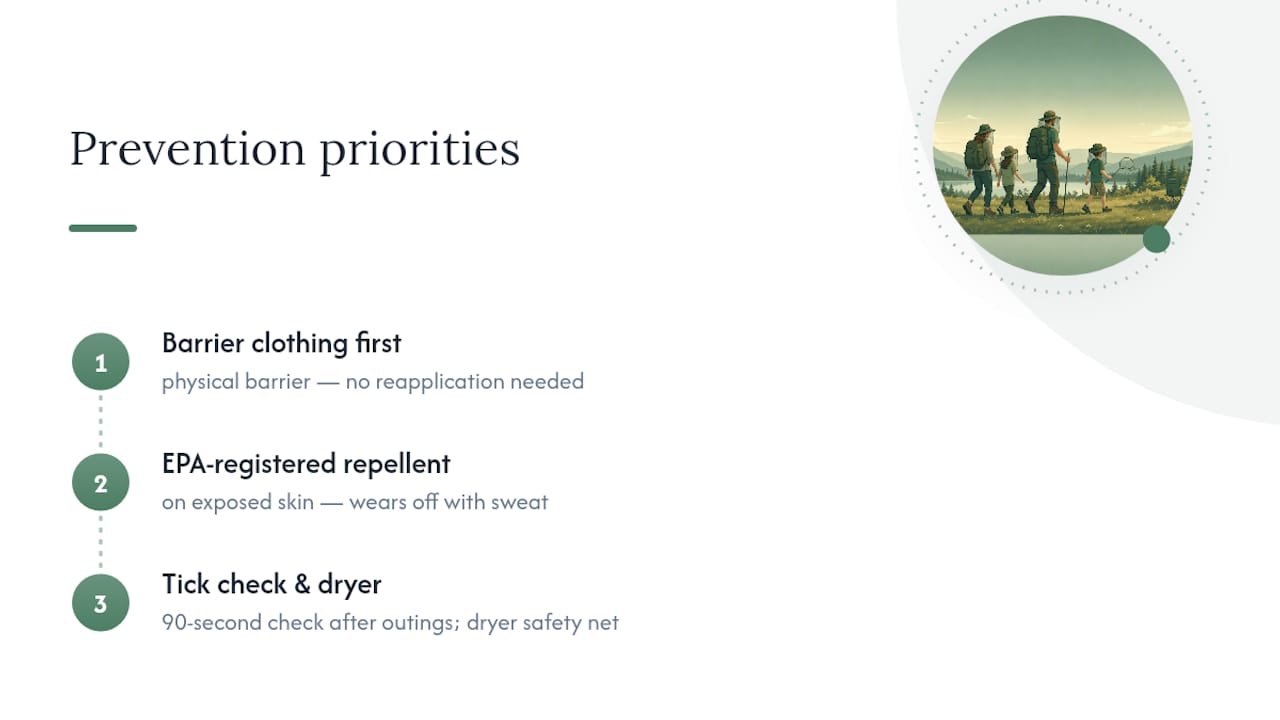
What I’d prioritize first, in order: barrier clothing you don’t have to think about, EPA-registered repellent on exposed skin, then the tick check and dryer routine as the safety net that catches whatever slips through. Skipping straight to spray and skipping the check is the single most common mistake I see in how people actually approach this.
— Thomas
Where to Get Bug Away Gear and What to Expect
Bugawaygear is the alternative to spraying yourself down every few hours: a mesh physical barrier you put on once and forget about for the rest of the hike.
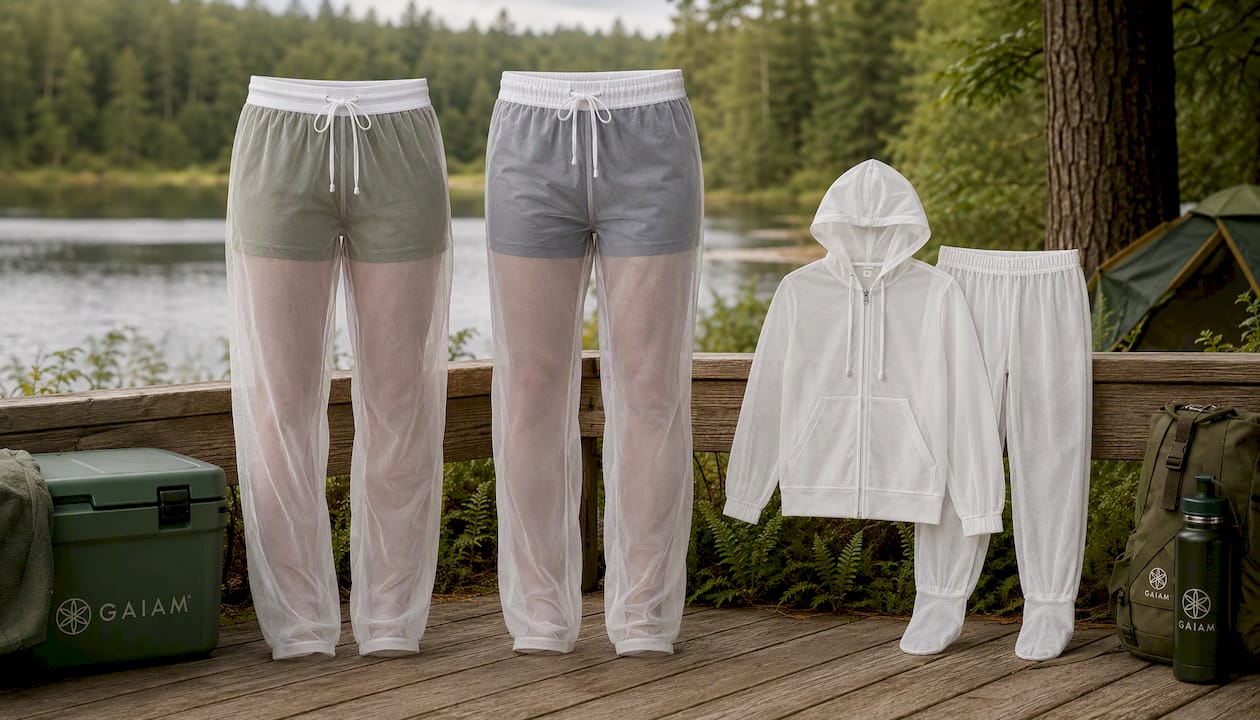
The lineup covers the situations where tick exposure actually happens. The Bug Away Pants — Women and Bug Away Pants — Men work for hiking, gardening, and yard work, while the Bug Away Kids Set covers jacket and pants together for kids who need coverage without a spray routine they’ll fight you on. Every piece is chemical-free mesh, backed by a satisfaction guarantee if the fit or feel isn’t right. Check sizing on the product pages and order the set that matches your next outing before tick season peaks.
Sources
- Treatment and Prevention of Powassan Virus Disease | Powassan Virus | CDC
- About Powassan Virus Disease - MN Dept. of Health
- Mass
This article is general information, not a substitute for advice from a qualified doctor. Consult a qualified healthcare professional about your own circumstances before acting on anything here.