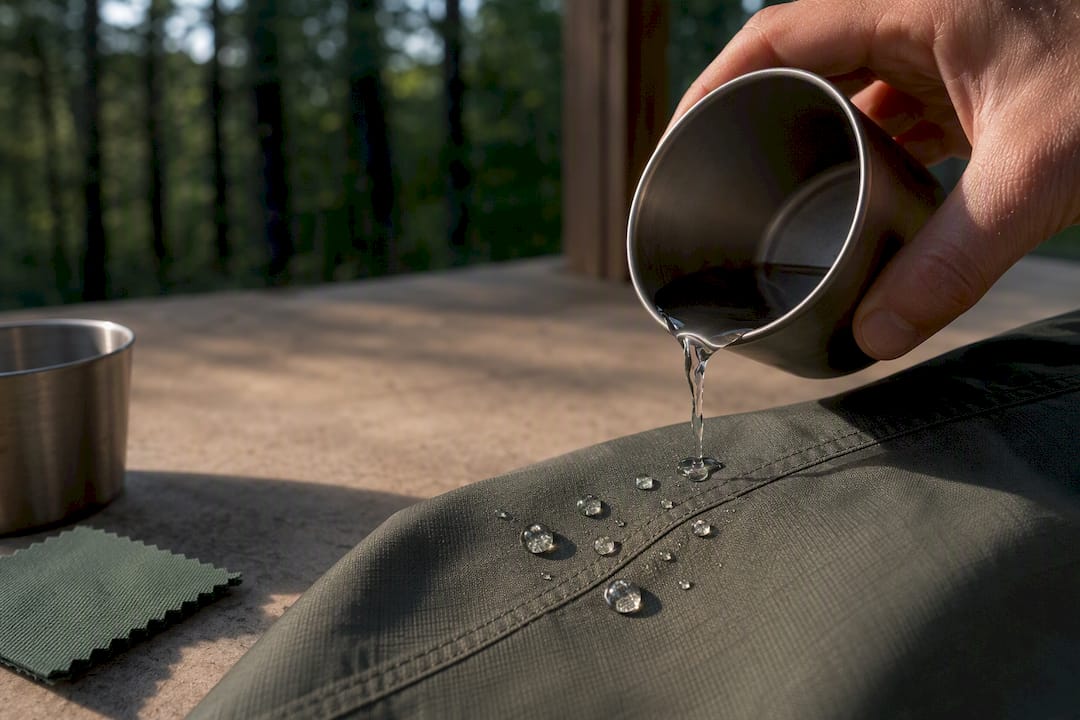
Yes, PFAS have been standard in water and stain resistant outdoor gear for decades, but that’s changing fast. States are banning intentionally added PFAS in apparel, and PFAS-free alternatives now perform close to the old chemistries. Don’t toss working gear over this. Check labels going forward, prioritize PFAS-free options for anything touching your skin, and consider chemical-free physical barriers when avoiding chemicals entirely is the goal.
TL;DR:
- Most PFAS in outdoor gear are found in water-resistant finishes, membranes, taped seams, and trims, which degrade over time through abrasion, UV exposure, and laundering.
- New regulations starting in 2025 prohibit the sale of apparel with intentionally added PFAS in New York, California, and several other states, requiring compliance certifications from manufacturers.
- PFAS-free alternatives like ePE membranes and nonfluorinated DWR finishes now offer performance close to traditional chemistries, though nonfluorinated DWRs may require more frequent reproofing.
- Skin contact with PFAS-treated base layers poses a higher exposure risk than outer shells, especially for those who wear them for prolonged periods or frequently wash their gear.
- Physical barrier clothing made of tightly woven mesh effectively blocks ticks and insects without chemicals, providing a chemical-free approach to outdoor insect protection.
Table of Contents
- What Are PFAS, and Why Did Brands Put Them in Clothing?
- Where PFAS Hide in Your Gear, and How They Get Loose
- Does Wearing PFAS-Treated Clothing Actually Raise Your Exposure?
- What U.S. Regulations Mean for Your Next Gear Purchase
- PFAS-Free Alternatives: What Actually Works Outdoors
- How to Spot PFAS-Treated Gear Before You Buy
- Caring for PFAS-Free Gear (and What to Do With What You Already Own)
- Bug Away’s Chemical-Free Approach to Insect and Tick Protection
- What the Data Actually Supports, and Where Consumer Advice Overcorrects
- Gear Up Chemical-Free with Bugawaygear
- Sources
What Are PFAS, and Why Did Brands Put Them in Clothing?
PFAS stands for per and polyfluoroalkyl substances, a family of roughly 15,000 synthetic compounds built around carbon-fluorine bonds, among the strongest bonds in organic chemistry. That bond strength is exactly why manufacturers loved them and why environmental scientists worry about them. You’ll also see the older term PFCs (perfluorinated chemicals) used interchangeably in some older marketing materials, though PFAS is the broader, more accurate umbrella term used by regulators today.
Outdoor brands used PFAS chemistries because nothing else repelled water, oil, and stains quite as well while staying breathable. A jacket treated with a PFAS-based durable water repellent (DWR) sheds rain in sheets rather than soaking through, and it does that for dozens of washes before performance drops off. That durability made PFAS the default finish on rain shells, boots, tents, and even some base layers for the better part of 30 years.
The EPA’s overview of PFAS explains why that same carbon-fluorine bond is the problem: PFAS resist breakdown in the environment almost indefinitely, which is why they’ve earned the nickname “forever chemicals.” They don’t just sit in a landfill. They travel through soil, water, and air, and some variants bioaccumulate in animal tissue, including human blood.
A few things are worth understanding before you look at your own gear closet:
- PFAS is a class, not a single chemical. Some variants like PFOA and PFOS have been phased out of most consumer manufacturing, while thousands of replacement compounds remain largely unregulated.
- “PFC-free” labels from a decade ago often just meant a brand switched to a different PFAS compound, not that it eliminated the chemical family.
- Persistence is the core issue. Unlike most synthetic compounds, PFAS don’t break down through normal environmental processes like sunlight or microbial action.
- Bioaccumulation means repeated low-level exposure over years matters more than a single contact with a treated jacket.
None of that means every rain shell in your closet is dangerous. It means the chemistry that made your gear so good at shedding water is the same chemistry that doesn’t go away.
Where PFAS Hide in Your Gear, and How They Get Loose
PFAS aren’t confined to one part of a jacket. They show up in several separate components, which is part of why “PFAS-free” claims can be misleading if a brand only treats one layer.
The most common locations:
- DWR finishes sprayed or dipped onto the face fabric, the first line of water resistance you feel when rain beads up and rolls off.
- Waterproof-breathable membranes, like classic ePTFE laminates, which historically relied on PFAS both in the membrane itself and in the coatings that keep it from soaking through.
- Taped seams, where the tape adhesive and backing have sometimes used fluorinated compounds for durability.
- Trim and hardware finishes, including zipper coatings and some printed logos or reflective elements.
Release happens through mechanical and environmental stress, not just disposal. Abrasion from a backpack strap rubbing against a shoulder, repeated flexing at elbows and knees, and UV exposure on long days outside all degrade the DWR layer over time. A peer-reviewed biomonitoring study from South Korea’s National Environmental Health Survey specifically identifies abrasion and UV exposure as mechanisms that detach PFAS compounds from textile fibers, which then settle into household dust or wash out during laundering.
Laundering matters more than most people assume. Older, heavily-washed garments can shed more PFAS than newer ones, because repeated wash cycles break down the factory-applied finish and release compounds that were otherwise bound to the fabric, according to legal and environmental commentary on textile PFAS release. That washwater carries PFAS into municipal wastewater systems, which is a bigger contributor to environmental contamination than most people realize.
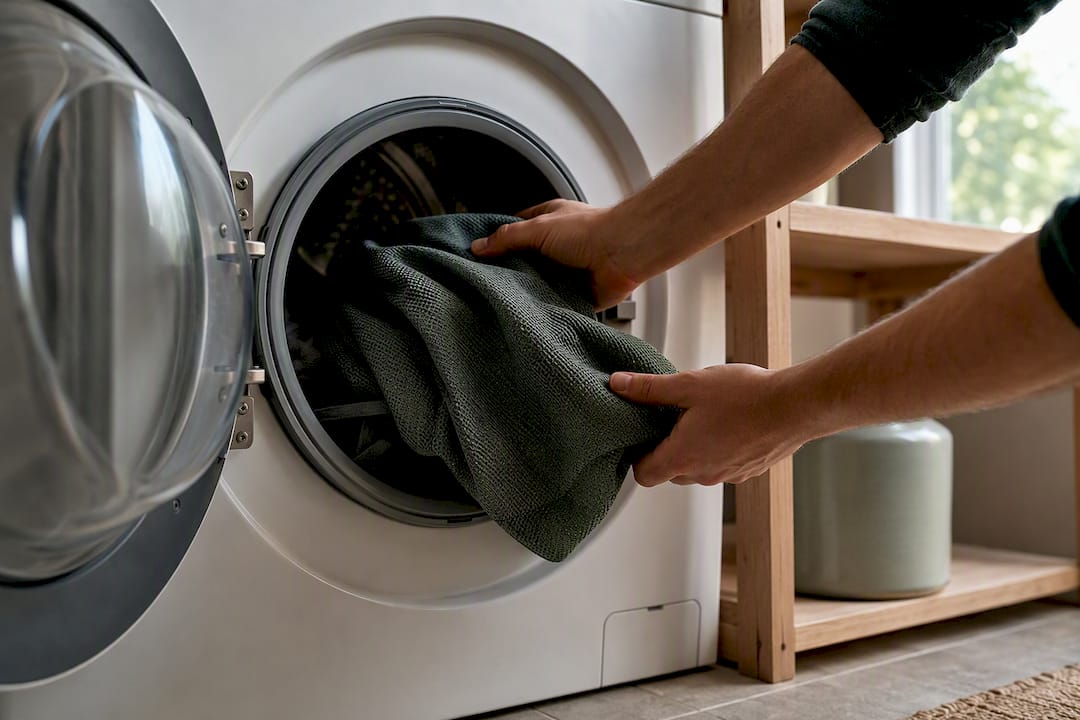
Direct skin contact matters for exposure risk. A PFAS-treated base layer or sock sits against skin for hours at a stretch, while an outer shell only touches skin at the wrists and collar. That distinction shapes where you should prioritize PFAS-free purchases first.
Does Wearing PFAS-Treated Clothing Actually Raise Your Exposure?
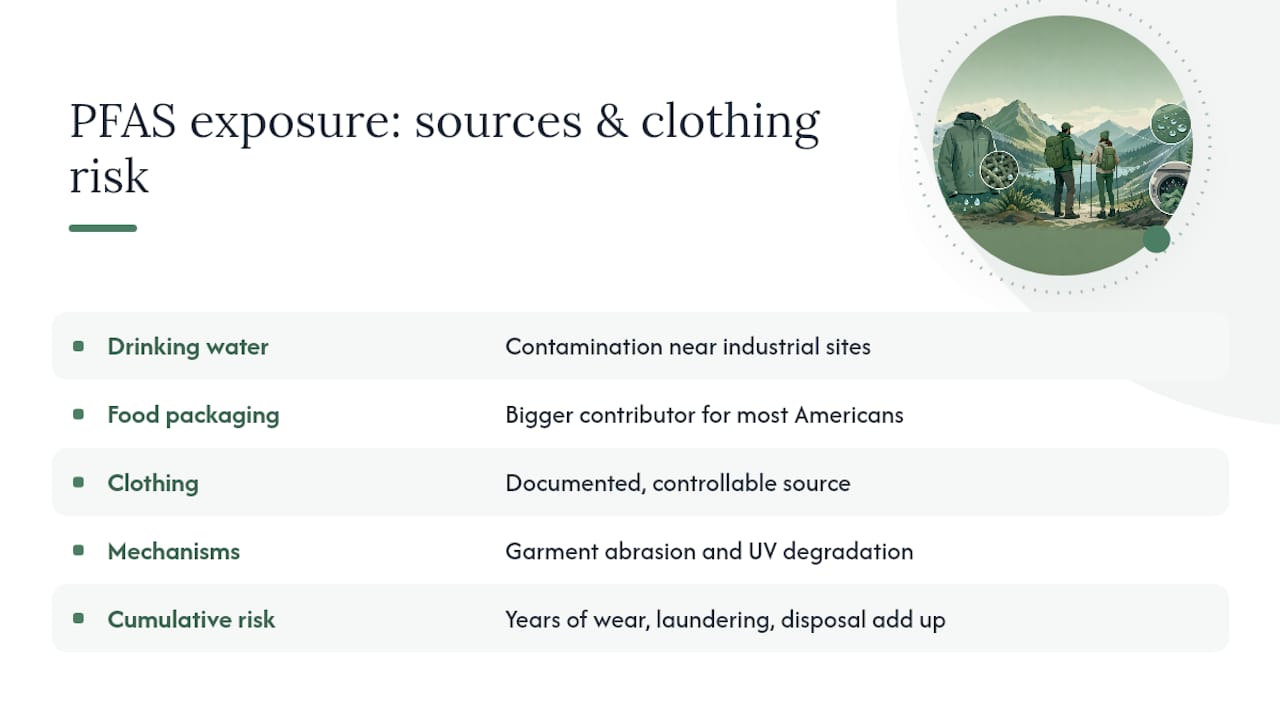
The evidence connecting clothing to measurable PFAS exposure is real, though it’s not the only or even the largest source in most people’s lives. Drinking water contamination near industrial sites and certain food packaging remain bigger contributors for most Americans, but clothing is a documented, controllable piece of the puzzle.
A national biomonitoring study of South Korean adults found a statistically measurable association between outdoor clothing use and elevated serum PFAS levels, identifying garment abrasion and UV degradation as plausible release mechanisms that let PFAS migrate from fabric into the body and environment.
That finding, published through the Korean National Environmental Health Survey, doesn’t prove that everyone who owns a rain jacket has elevated PFAS levels. It shows a population-level pattern strong enough to warrant attention, particularly for people who wear treated outdoor apparel frequently and for extended periods, like guides, landscapers, and serious hikers.
Many Americans have detectable PFAS in their blood, reflecting decades of cumulative exposure from various sources including water, food packaging, household products, and textiles, not clothing alone.
Dermal absorption through intact skin is the piece scientists are still working out. PFAS molecules are relatively large and don’t cross skin barriers as easily as they move through ingestion or inhalation, so the direct skin-contact risk from wearing a treated jacket for an afternoon hike is lower than, say, drinking contaminated well water daily. The bigger practical concern is cumulative: years of wear, laundering, and disposal adding to a body burden that’s already coming from multiple directions.
The NIEHS PFAS health overview notes that garments in direct, prolonged skin contact pose a different risk profile than outer shells that mostly protect against weather. That’s a useful mental model: a PFAS-treated base layer worn against skin for a 12-hour trail day is a more relevant exposure pathway than a rain shell that spends most of its life folded in a pack.
Certain groups warrant extra caution, and considering antibacterial natural fabrics for babies can be a safer choice for sensitive individuals. Pregnant women, young children, and anyone with an existing thyroid or immune condition are frequently flagged in PFAS health literature because fetal development and children’s smaller body mass make them more sensitive to bioaccumulative chemicals. That’s less a reason for panic and more a reason to be selective about which specific garments in your closet you replace first.
What U.S. Regulations Mean for Your Next Gear Purchase
The regulatory picture changed dramatically starting in 2025, and it’s worth understanding the actual dates rather than the vague “PFAS are getting banned” headlines circulating online.
New York moved first and set the pace other states are following. Under ECL 37-0121, New York’s apparel law, the sale of new apparel containing intentionally added PFAS became prohibited starting January 1, 2025. A second phase specifically targets outdoor apparel marketed for severe wet conditions, which doesn’t take effect until January 1, 2028, giving technical rainwear makers extra runway to reformulate without sacrificing the waterproof performance that category depends on.
California has pursued a parallel track through its own textile legislation. Bills including AB 1817’s amendments to California’s PFAS restrictions extend similar intentionally-added-PFAS prohibitions to textiles sold in the state, part of a broader wave of state action. Legal trackers following this space count multiple state legislatures introducing PFAS restrictions across product categories, with apparel and textiles named as a specific target sector.
A few practical points worth knowing before you shop:
- “Intentionally added” is the legal standard, not “zero detectable.” Trace contamination from shared manufacturing equipment can still show up even in compliant products.
- The 2028 severe-wet-conditions exemption exists because high-performance rain gear needed more time to transition without a performance cliff.
- Manufacturers selling into New York or California now need compliance certifications documenting that PFAS wasn’t intentionally added during production.
- These laws apply to point of sale, so gear you already own isn’t affected retroactively, and secondhand sales fall into murkier territory depending on the state.
What this means at the register: ask retailers directly whether a specific jacket or pant complies with New York’s or California’s textile PFAS standards, even if you don’t live in either state. National retailers increasingly standardize formulations across their whole catalog rather than making state-specific versions, so a New York-compliant product is often PFAS-free everywhere it’s sold.
PFAS-Free Alternatives: What Actually Works Outdoors
The good news for anyone shopping for a new shell or pair of pants right now: PFAS-free technology has caught up faster than most outdoor consumers realize.
ePE membranes (expanded polyethylene) have emerged as the leading PFAS-free replacement for traditional ePTFE laminates. Independent testing referenced in industry press shows ePE-based membranes hitting genuinely competitive water-resistance scores, in one comparative test reaching 9.4 out of 10, close to the performance ceiling PFAS-based membranes had occupied for years, according to reporting on PFAS-free membrane availability. That’s a meaningful shift. A few years ago, PFAS-free waterproofing meant a real performance trade-off. It mostly doesn’t anymore, at least for everyday hiking and backpacking conditions.
Nonfluorinated DWR finishes are the other half of the equation, replacing the sprayed-on surface treatment rather than the membrane underneath. These wax-based or silicone-based chemistries repel water effectively at the outset, but they generally wear out faster than PFAS-based DWRs did, which means more frequent reproofing. Retailer and manufacturer guidance quoted in outdoor media recommends washing after several significant uses and reproofing roughly every three to five washes to keep nonfluorinated DWRs performing, per reporting from Outside on forever chemicals in gear. That’s more maintenance than the “wash it once a season and forget it” habit a lot of PFAS-gear owners developed.
Physical barrier approaches sidestep the chemistry question entirely. Fine, tightly woven mesh fabric blocks insects and ticks through sheer physical structure rather than any chemical treatment, which means there’s no DWR to wear off and no reproofing schedule to maintain. This is the category Bugawaygear works in specifically for insect and tick protection, using mesh weave density rather than any coating.
Here’s how these three approaches stack up for different needs:
- ePE-membrane shells suit backpackers and rain-heavy climates who need genuine waterproof breathability across long trips.
- Nonfluorinated DWR softshells work well for day hikes and variable weather where light water resistance, not full waterproofing, is the goal.
- Chemical-free mesh is the right call specifically for tick and insect protection, where the job isn’t repelling rain at all, it’s creating a barrier bugs can’t bite through.
Pro Tip: Don’t assume “waterproof” and “PFAS-free” are the same claim on a hangtag. Ask specifically which membrane and DWR chemistry a jacket uses. A shell can be genuinely PFAS-free and still perform poorly if the DWR wasn’t reapplied recently, and that’s a maintenance issue, not a chemistry failure.
How to Spot PFAS-Treated Gear Before You Buy
Labels alone won’t always tell you the full story, which is exactly why greenwashing has become such a problem in this category. Here’s a practical sequence for vetting a purchase.
- Look past the marketing language. “Eco-friendly,” “sustainable,” and “green” mean nothing specific about PFAS content. Look for explicit phrases like “PFAS-free” or “fluorine-free DWR” instead.
- Ask about the membrane, not just the DWR. A brand might tout a fluorine-free surface spray while the waterproof membrane underneath still uses PFAS. Component-level disclosure is the real test.
- Check for state compliance language. Products meeting New York’s or California’s textile standards typically state so directly, since retailers want that verified for legal reasons, not marketing ones.
- Ask about trims and tape, too. Seam tape and zipper coatings are easy to overlook and were historically PFAS-heavy even on jackets that had switched their main DWR.
- Treat vague sustainability certifications with skepticism unless they specifically reference PFAS or fluorochemical content. Broad “sustainable materials” certifications often address recycled content or water use, not chemical safety.
Red flags worth taking seriously: a brand that won’t answer a direct question about membrane chemistry, a product listing with no fabric technology details at all, or marketing that leans hard on words like “natural” and “clean” without naming a single specific chemical class avoided.
Caring for PFAS-Free Gear (and What to Do With What You Already Own)
PFAS-free DWR finishes need more attention than the old chemistry did, but the routine isn’t complicated.
- Wash after roughly five to seven significant outings, using a technical cleaner rather than regular detergent, which can leave residue that blocks water repellency.
- Reapply a water-based, PFAS-free reproofer, the kind of treatment Nikwax popularized, every three to five washes to restore beading performance.
- Skip fabric softener entirely. It coats fibers and actively defeats DWR treatments, PFAS-based or not.
- Air dry when possible, since some nonfluorinated DWRs respond better to heat reactivation in a dryer on low, so check the specific product’s care tag.
For gear you already own that still contains PFAS: don’t rush to replace it. Manufacturing a new jacket carries its own environmental cost, and experts in textile lifecycle analysis generally recommend repairing and continuing to use functional gear rather than discarding it prematurely, a point raised in legal analysis of new PFAS regulations. Wash it less frequently rather than more, since each wash cycle releases some bound PFAS into wastewater.
Pro Tip: If you’re replacing worn-out base layers or socks that see direct, prolonged skin contact, prioritize those for a PFAS-free swap first. Save your outer shell replacement for when it actually wears out.
Bug Away’s Chemical-Free Approach to Insect and Tick Protection
Not every outdoor risk is a chemistry problem, and tick and insect protection is where a genuinely different approach makes sense: skip the chemical question entirely by using a physical barrier the bugs can’t get through.
Bugawaygear builds lightweight mesh clothing designed to block ticks and biting insects through fabric structure alone, no sprays, no PFAS-based treatments, no insecticide-embedded fibers. The Bug Away Kids Set pairs a jacket and pants for families who want children covered during hikes or backyard play without spraying repellent on their skin. For adults, the Bug Away Pants for women and Bug Away Pants for men use the same ultra-fine mesh weave, built for gardeners, anglers, and hikers spending long stretches in tick-heavy terrain.
Here’s a quick way to decide which category actually fits your situation:
| Your priority | Better fit |
|---|---|
| Staying dry in sustained rain | PFAS-free shell with ePE membrane |
| Blocking ticks and biting insects without chemicals | Chemical-free mesh clothing |
| Light water resistance on variable-weather day hikes | Nonfluorinated DWR softshell |
| Gardening or yard work in tick season | Chemical-free mesh pants |
Rain gear and bug gear solve different problems, and the smartest outdoor kit often includes both rather than expecting one shell to do everything.
What the Data Actually Supports, and Where Consumer Advice Overcorrects
The conventional advice on this topic swings too hard in one direction: either “PFAS are everywhere so nothing you do matters” or “throw out everything you own immediately.” Neither holds up against the actual research.
What matters most is prioritization. Base layers, socks, and anything against skin for hours deserve a PFAS-free swap sooner than an outer shell that mostly sits in a pack. What’s overrated is the panic around casual outdoor gear use. The biomonitoring research showing associations between clothing and serum PFAS levels is real and worth taking seriously, but it doesn’t mean your existing rain jacket is an emergency. Manufacturing a replacement carries its own cost, and repair beats replacement in most cases.
Where I’d push back on standard advice: people fixate on shell chemistry while ignoring that tick and insect protection doesn’t need to involve chemicals at all. A physical barrier sidesteps the entire PFAS debate for that specific use case. That’s not a compromise. It’s arguably the cleaner solution.
— Thomas
Gear Up Chemical-Free with Bugawaygear
If the PFAS conversation has you rethinking what touches your skin outdoors, Bugawaygear gives you a way to handle tick and insect protection without adding another chemical question to your gear closet. Instead of choosing between a spray-on repellent and a treated fabric, you get a physical mesh barrier that does the job through weave density alone.
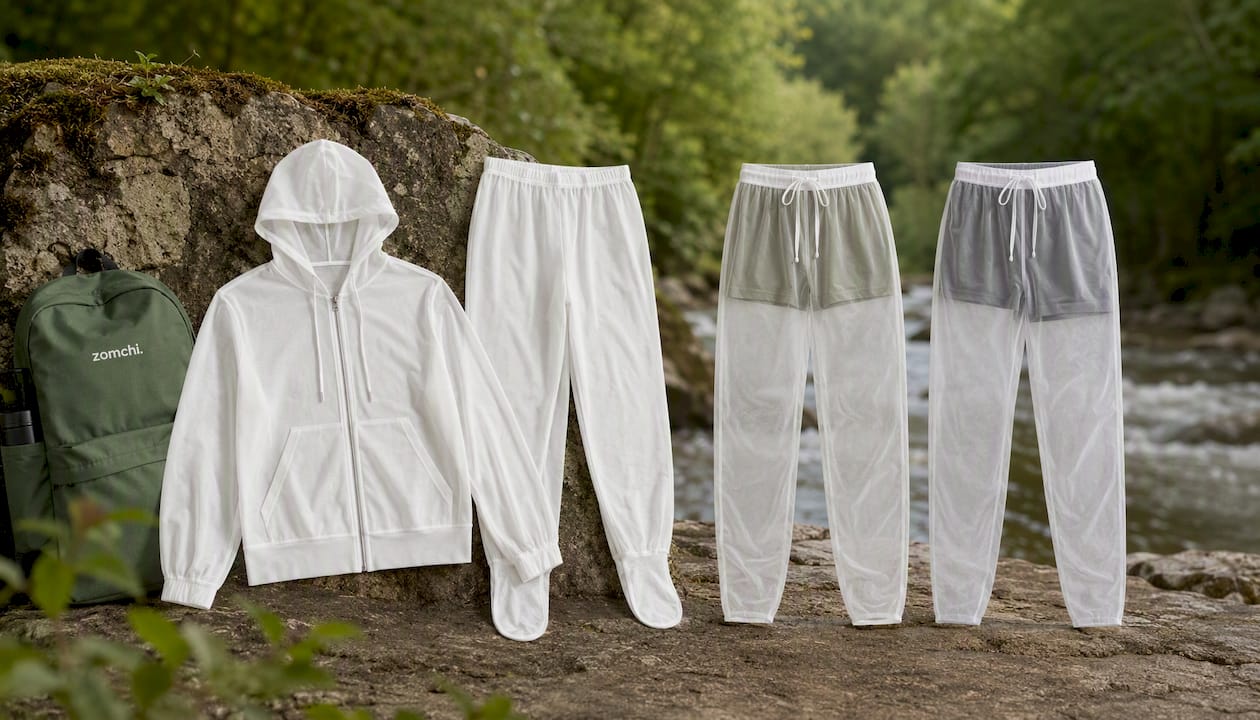
That matters most for the people spending real time in tick habitat: gardeners working through summer, anglers standing in brush along a riverbank, and families who want kids protected without spraying anything on their skin before they head outside. Every piece is backed by a 30-day money-back guarantee, so you can test it on an actual outing before deciding it’s staying in your rotation.
Start with the Bug Away Kids Set if you’re outfitting the whole family, or check the women’s Bug Away pants and men’s Bug Away pants if you’re covering your own next hike. If you’re also weighing chemical safety questions around treated hiking apparel generally, Bugawaygear’s guide to permethrin clothing safety is worth reading next.
This article is general information, not a substitute for advice from a qualified doctor. Consult a qualified healthcare professional about your own circumstances before acting on anything here.
Sources
A few primary sources are worth bookmarking if you want to track this issue as it evolves:
- PFAS In Apparel Law - NYSDEC
- PFAS explained | EPA
- Association between outdoor clothing use and serum perfluoroalkyl substances (PFAS): Korean National Environmental Health Survey cycle 4
- PFAS - NIEHS