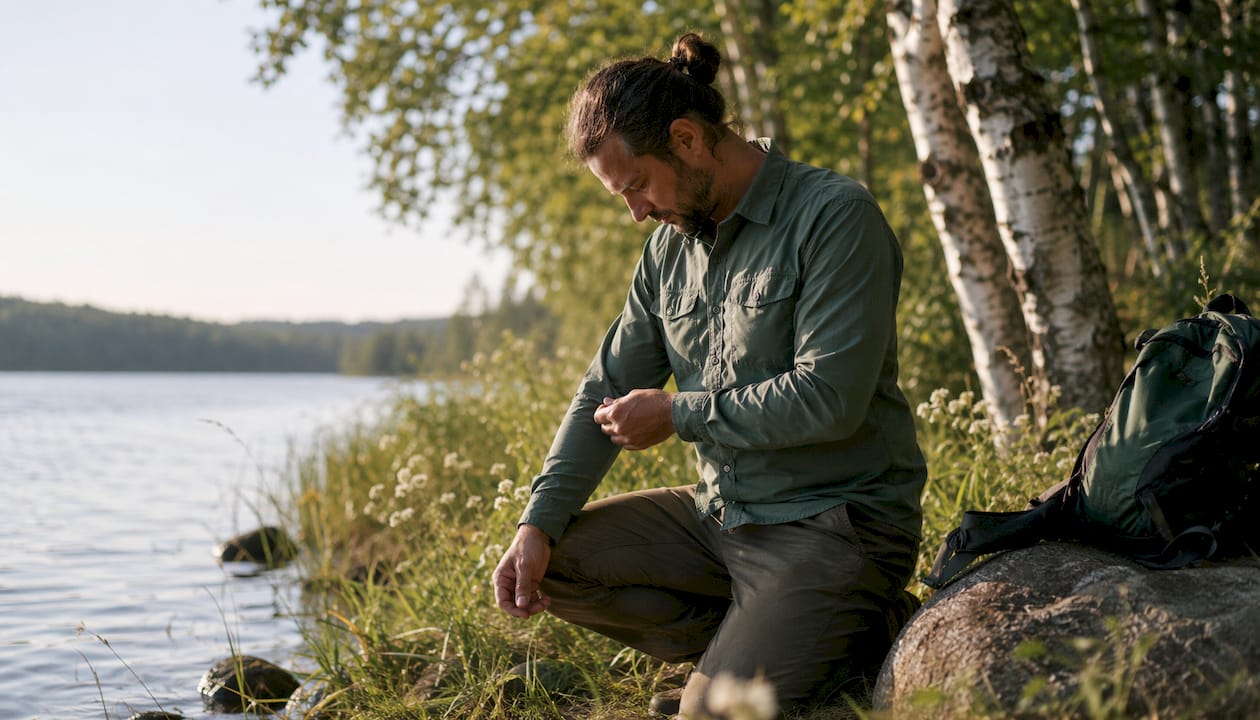
Permethrin-treated clothing is generally considered safe by the EPA when worn according to label guidelines, including by toddlers and military personnel in daily use. That said, “generally safe” is not the same as “safe for everyone in every situation.” Pregnant women, young children, and cat owners face real considerations that most gear reviews gloss over. Here is what the research actually shows, and where chemical-free mesh clothing fits into the picture:
- Permethrin-treated clothing repels and kills ticks and insects on contact, with factory-treated garments lasting up to 70 washes before protection fades.
- Systemic exposure from wearing treated clothing is low because permethrin binds tightly to fabric fibers and is poorly absorbed through skin.
- Sensitive groups, particularly pregnant women and young children, should minimize exposure and reserve treated clothing for high-risk environments.
- Permethrin is highly toxic to cats when wet; treated clothing must dry completely before any contact with pets.
- Chemical-free mesh clothing, like Bugawaygear’s Bug Away line, physically blocks ticks and insects without any chemical exposure, making it the cleaner option for sensitive users or everyday outdoor activity.
- No single method covers every scenario. Layering protection strategies, including mesh clothing, topical repellents, and environmental controls, gives you the most reliable defense.
Table of Contents
- What permethrin is and how it ends up on your clothing
- Who should be cautious about permethrin-treated clothing
- How chemical-free mesh clothing protects you without the trade-offs
- Practical safety tips for using either type of clothing effectively
- Zero chemicals, zero compromise: Bugawaygear’s approach to tick protection
- Key Takeaways
What permethrin is and how it ends up on your clothing
Permethrin is a synthetic pyrethroid insecticide modeled after the natural compounds found in chrysanthemum flowers. On treated fabric, it works by disrupting the nervous systems of ticks and mosquitoes on contact, either repelling them or killing them before they can bite. It is the only EPA-approved insecticide registered specifically for clothing treatment, and the U.S. military has relied on it for over 20 years.
Two application methods exist. Factory pre-treatment bonds permethrin deeply into fabric fibers during manufacturing, which is why those garments can hold up through numerous washes. At-home spray treatments using 0.5% permethrin products are a cheaper alternative, but the protection typically lasts only a few washes before it drops below effective levels. The difference in durability is significant if you are counting on consistent protection through a full hiking season.
Key points on application and function:
- Apply permethrin only to clothing and gear, never directly to skin.
- Allow treated garments to dry completely before wearing; wet permethrin transfers more readily.
- Factory-treated clothing offers substantially longer protection than DIY sprays.
- Permethrin works differently from skin-applied repellents like DEET: it kills or incapacitates insects on contact with the fabric rather than masking your scent.
- The CDC recommends treating boots, pants, socks, and camping gear, not just shirts, for comprehensive coverage.
Who should be cautious about permethrin-treated clothing
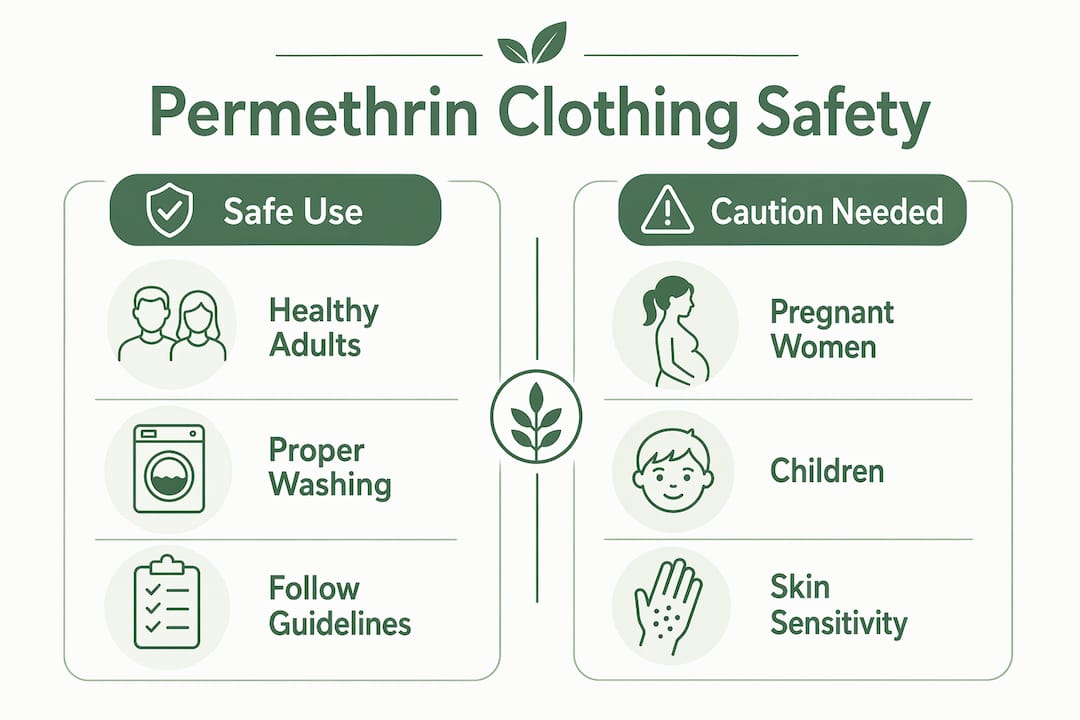
The safety profile of permethrin garments is solid for most healthy adults, but a few groups deserve a closer look. Dr. Michael Hansen, a scientist cited by Consumer Reports, notes that permethrin may act as an endocrine disruptor at levels below current regulatory limits. His recommendation: pregnant women and young children should minimize exposure and use treated clothing only when the tick or mosquito risk is genuinely high.
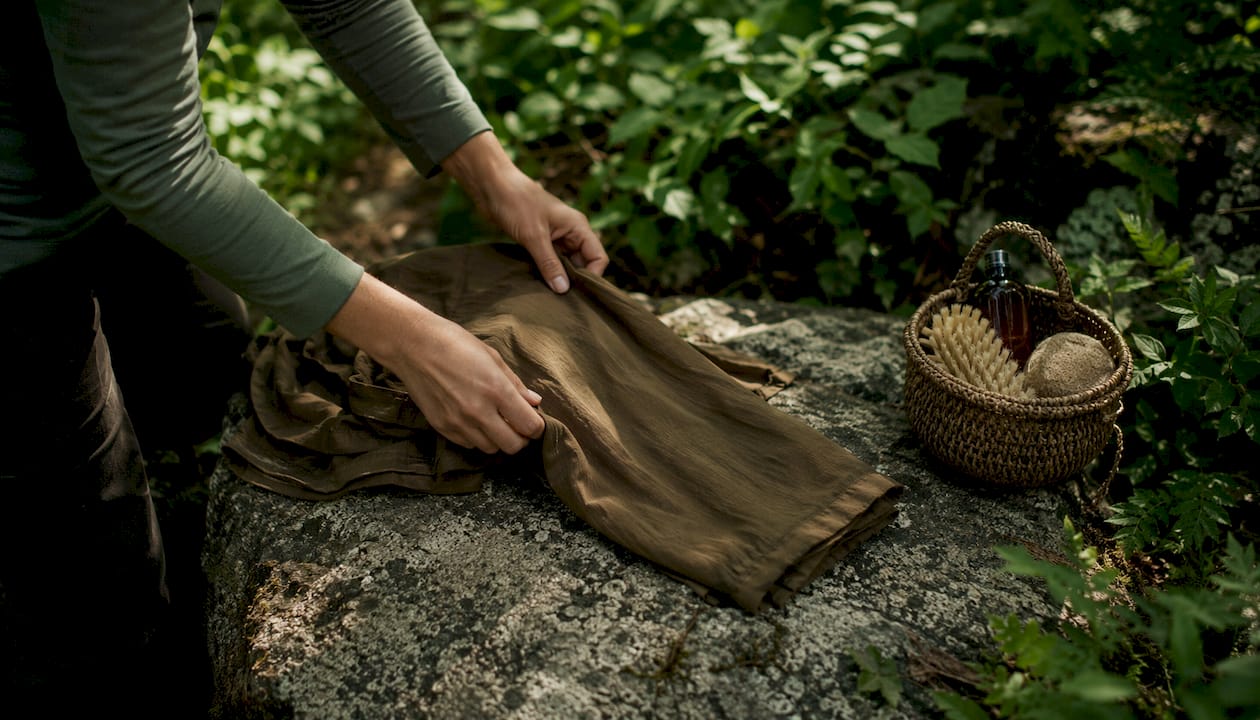
Skin irritation from permethrin-treated fabric is uncommon, but it does happen. Public health experts advise a short test period before committing to full-day wear, especially if you have reactive skin. Washing treated clothing separately from other laundry also reduces incidental transfer. If you use sensitive-skin detergents, check that they are free of harsh laundry ingredients that could degrade the fabric or interact with residual permethrin.
Cat owners face the most concrete hazard. Permethrin is highly toxic to cats when wet; a cat grooming itself after contact with damp treated fabric can ingest a dangerous amount. Full drying before any pet contact is non-negotiable.
- Pregnant women and young children: use treated clothing only in high-exposure situations; prefer chemical-free alternatives for routine outdoor activity.
- Sensitive skin: test a small area of treated clothing for 30–60 minutes before extended wear.
- Cat owners: never allow cats near wet treated clothing; store dried garments away from pets.
- Aquatic environments: permethrin is toxic to fish and aquatic invertebrates, so avoid spraying near water sources or rinsing treated clothing in streams.
- Long-term users: after a year of regular use, protection levels drop significantly; monitor and re-treat or replace garments as needed.
Pro Tip: If you wash permethrin-treated clothing, skip fabric softeners and bleach entirely. Both degrade the permethrin bond and shorten the effective life of the treatment. A gentle, fragrance-free detergent and line drying in the shade will preserve protection far longer.
How chemical-free mesh clothing protects you without the trade-offs
Physical barrier clothing works on a completely different principle. Instead of killing insects chemically, ultra-fine breathable mesh fabric simply does not let them through. No insecticide, no residue, no drying time, no concerns about endocrine disruption or pet toxicity.
Bugawaygear’s Bug Away line is built around this approach. The mesh is fine enough to block ticks and biting insects while remaining lightweight and breathable for hiking, gardening, and camping. Garments are available for both men and women, with integrated foot coverage and eco-responsible materials throughout. Over 500 customers report zero tick bites while wearing Bug Away products, which is a meaningful data point for anyone who has pulled a tick off themselves after a supposedly “protected” hike.
Chemical-free mesh clothing fits naturally into a layered protection strategy:
- Use mesh clothing as the primary layer for routine outdoor activity, especially in lower-to-moderate risk environments.
- Pair with topical repellents on exposed skin (face, hands, neck) for comprehensive coverage in high-risk areas.
- Mesh clothing requires no drying time, no special storage, and no re-treatment schedule.
- Eco-conscious hikers and gardeners avoid contributing permethrin to soil and water runoff by choosing physical barriers.
- Children and pregnant women can wear chemical-free mesh without the precautions required for permethrin-treated garments.
Practical safety tips for using either type of clothing effectively
Whether you choose permethrin-treated gear, chemical-free mesh, or a combination, a few habits make a real difference in how well your protection holds up over a season.
For permethrin-treated clothing:
- Read the label before the first use and follow drying instructions precisely; this is where most exposure incidents originate.
- Combine treated garments with a DEET or picaridin repellent on exposed skin. Permethrin covers the fabric; a topical repellent covers the gaps.
- Wash treated clothing separately, in cool water, without bleach or fabric softeners, and line dry in shade to preserve efficacy.
- After a year of regular use, test effectiveness or re-treat. Consumer Reports research found that after extended use, permethrin levels in outdoor workers’ pants often dropped below the threshold needed to kill a significant proportion of ticks.
- Keep treated clothing away from cats and away from water sources during application or rinsing.
Pro Tip: Sunscreens and other topical products can increase skin absorption of permethrin if they contact treated fabric. Apply sunscreen first, let it absorb, then put on treated clothing to minimize that interaction.
For chemical-free mesh clothing:
- Check the fit around cuffs, ankles, and collar; a physical barrier only works where the fabric actually covers skin.
- Pair with a hat or head net in dense brush where ticks drop from overhead vegetation.
- Wash according to care instructions; mesh clothing does not require special detergents or separate laundering.
- Use mesh clothing as your default layer and reserve permethrin-treated gear for extended backcountry trips where tick density is highest.
Zero chemicals, zero compromise: Bugawaygear’s approach to tick protection

If the permethrin safety considerations above give you pause, or if you simply prefer not to manage re-treatment schedules and drying protocols, Bugawaygear offers a direct alternative. The Bug Away Pants for Men and Bug Away Pants for Women use ultra-fine breathable mesh to physically block ticks and insects, with no insecticide involved at any stage. That means no endocrine-disruption concerns, no pet hazards, no wash-cycle countdown, and no waiting for fabric to dry before you can put them on.
The garments are lightweight enough for all-day hiking and breathable enough for summer gardening. They are sized for men and women, built from eco-responsible materials, and backed by a 30-day money-back guarantee. More than 500 customers have reported zero tick bites while wearing Bug Away products. For families, pregnant hikers, or anyone who spends regular time outdoors in tick country, that track record matters.
Browse the full Bug Away collection and find the fit that works for your outdoor routine.
Key Takeaways
Chemical-free mesh clothing eliminates permethrin exposure risks entirely while delivering reliable physical tick and insect protection for outdoor enthusiasts.
| Point | Details |
|---|---|
| Permethrin safety baseline | EPA reviews find no significant health hazards from wearing factory-treated clothing for most healthy adults. |
| Factory vs. DIY durability | Factory-treated garments last up to 70 washes; DIY spray treatments typically last about six washes. |
| Sensitive groups | Pregnant women, young children, and cat owners should minimize permethrin exposure and consider chemical-free alternatives. |
| Effectiveness over time | After a year of regular use, permethrin levels in outdoor workers’ pants often drop below the threshold needed to kill 30% or more of ticks. |
| Bugawaygear alternative | Bug Away mesh pants for men and women physically block ticks and insects with zero chemicals, no re-treatment, and a 30-day money-back guarantee. |