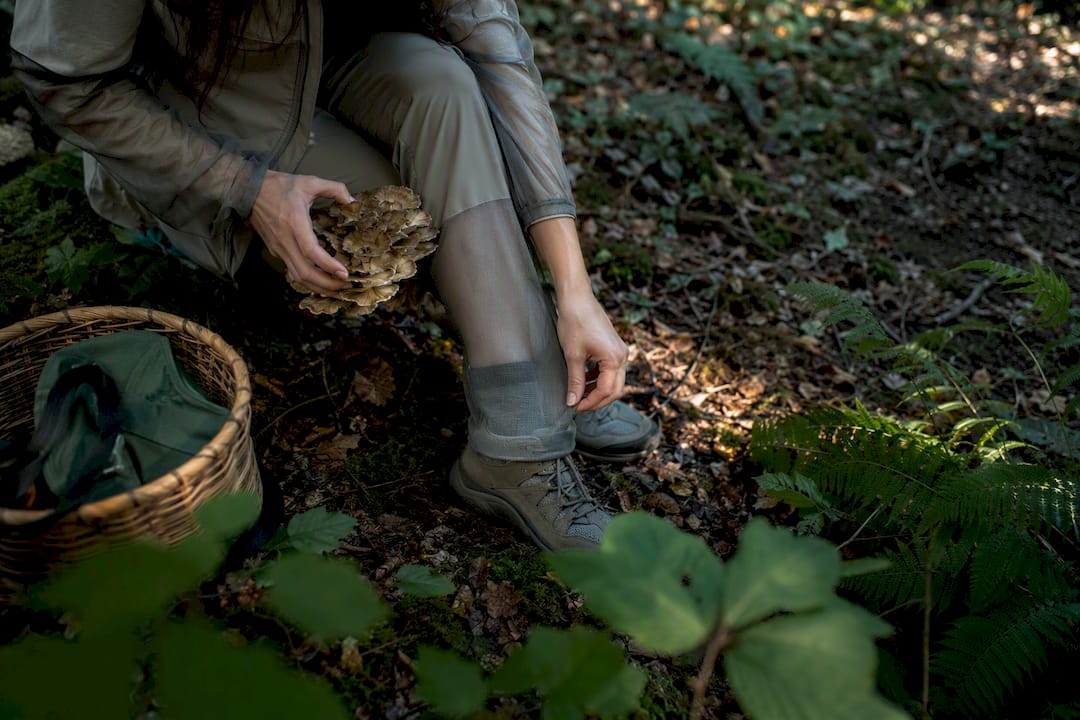
The most effective way to cut tick risk while mushroom foraging is a layered routine: wear protective clothing with the gaps sealed, add an EPA-registered skin repellent plus permethrin-treated layers or a physical mesh barrier, run quick field checks every hour or so, then follow a strict post-foray shower and high-heat dryer cycle. If a tick attaches anyway, pull it straight out with fine-tipped tweezers and watch the bite site for two weeks.
TL;DR:
- Ticks are most likely to latch onto skin at gaps around ankles, waist, and wrists, making sealing clothing edges crucial for protection.
- Physical mesh garments like Bug Away Pants provide a chemical-free barrier that remains effective through multiple washes without reapplication.
- EPA-registered repellents containing DEET, picaridin, IR3535, or oil of lemon eucalyptus offer varying durations of protection for skin, with DEET being the most established.
- Moving through high-risk areas such as brushy edges and creek banks should be delayed until after initial mushroom finds to reduce exposure.
- A thorough post-foray routine, including showering within two hours and high-heat drying of clothes, significantly reduces the risk of tick attachment and illness.
Table of Contents
- What Should You Wear to Avoid Ticks While Foraging?
- Which Repellents Actually Work Against Ticks?
- Where Do Ticks Concentrate on a Foraging Trip?
- What’s the Right Post-Foray Routine?
- When Should You See a Doctor After a Tick Bite?
- How Bug Away’s Mesh Clothing Fits Your Protection System
- Enjoying the Hunt Without Letting Ticks Win
- Gear Up Before Your Next Hunt
- Sources
What Should You Wear to Avoid Ticks While Foraging?
Long pants and long sleeves aren’t optional if you’re pushing through leaf litter after morels or chanterelles. Light colors matter too: ticks show up faster against tan or white fabric than against dark green or black, which means you catch them before they find skin. Closed-toe boots round out the base layer, since ticks often climb from ground level rather than dropping from above.
The gaps at your ankles, waist, and wrists are where most ticks get through. Tuck pants into your socks or wear gaiters, and cinch your waistband and cuffs so there’s no loose fabric funneling a tick toward skin.
From there you’re choosing between two approaches:
- Permethrin-treated clothing kills ticks on contact and stays effective through several washes, but it’s a chemical treatment that needs reapplication and careful label-following.
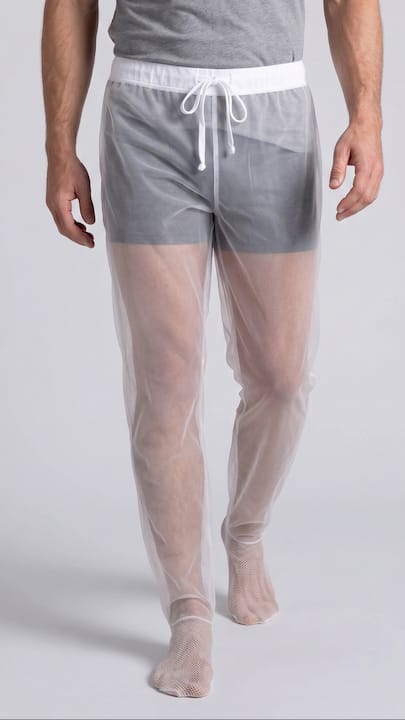
- Physical-barrier mesh garments, like the Bug Away Pants, block ticks mechanically with tight-weave fabric, so there’s no spray, no reapplication schedule, and nothing to wash off mid-season.
Layer for the weather without sacrificing the seal. A breathable mesh under a light rain shell still closes the same gaps a permethrin shirt would, just without the chemical step.
Pro Tip: Check your waistband seal before you start walking, not after you’ve already knelt in the leaf litter three times looking for hen-of-the-woods.
Which Repellents Actually Work Against Ticks?
The EPA recommends EPA-registered repellents containing DEET, picaridin, IR3535, or oil of lemon eucalyptus for skin, and reserves permethrin for clothing only, never skin. Each active ingredient differs mainly in how long it lasts and how it feels on skin over a full day of foraging:
- DEET offers the longest field-tested track record and works at concentrations from 10% to 30%, with higher percentages lasting longer, not working harder.
- Picaridin feels less greasy and has a similar duration to DEET at comparable concentrations.
- IR3535 suits shorter trips and sensitive skin.
- Oil of lemon eucalyptus is a plant-based option but needs more frequent reapplication.
Permethrin works differently. It’s sprayed or factory-applied to fabric, not skin, and it stays active through multiple wash cycles once it’s dried fully, usually 24 hours before first use. Check the label before treating anything a child might chew on or press against bare skin for long stretches.
That’s exactly where a physical-barrier garment earns its place. Mesh clothing lowers your dependence on repellents because the tick simply can’t get through the weave, though a skin repellent on exposed hands, neck, and face still closes the gap mesh alone can’t cover. The EPA’s repellent finder tool can help match an active ingredient to your trip length.
Where Do Ticks Concentrate on a Foraging Trip?
Ticks cluster in shaded, moist transition zones, and the CDC specifically flags brushy trail margins, creek banks, and deep leaf litter as high-risk; for practical tips on protecting yourself during outdoor activities, consider practical layered-protection guidance from an outdoor-safety blog. That’s uncomfortable news for foragers, because those same edges and damp pockets are exactly where morels, chanterelles, and hen-of-the-woods tend to fruit.
You don’t have to avoid those spots, but you can move through them smarter:
- Favor open timber first, and save the dense brush edges for when you’ve already found productive ground nearby, so you spend less total time in the highest-exposure zones.
- Slow your search pattern near creek banks rather than pushing through fast. A deliberate, methodical scan actually finds more fungi while keeping fewer high-risk kneeling moves.
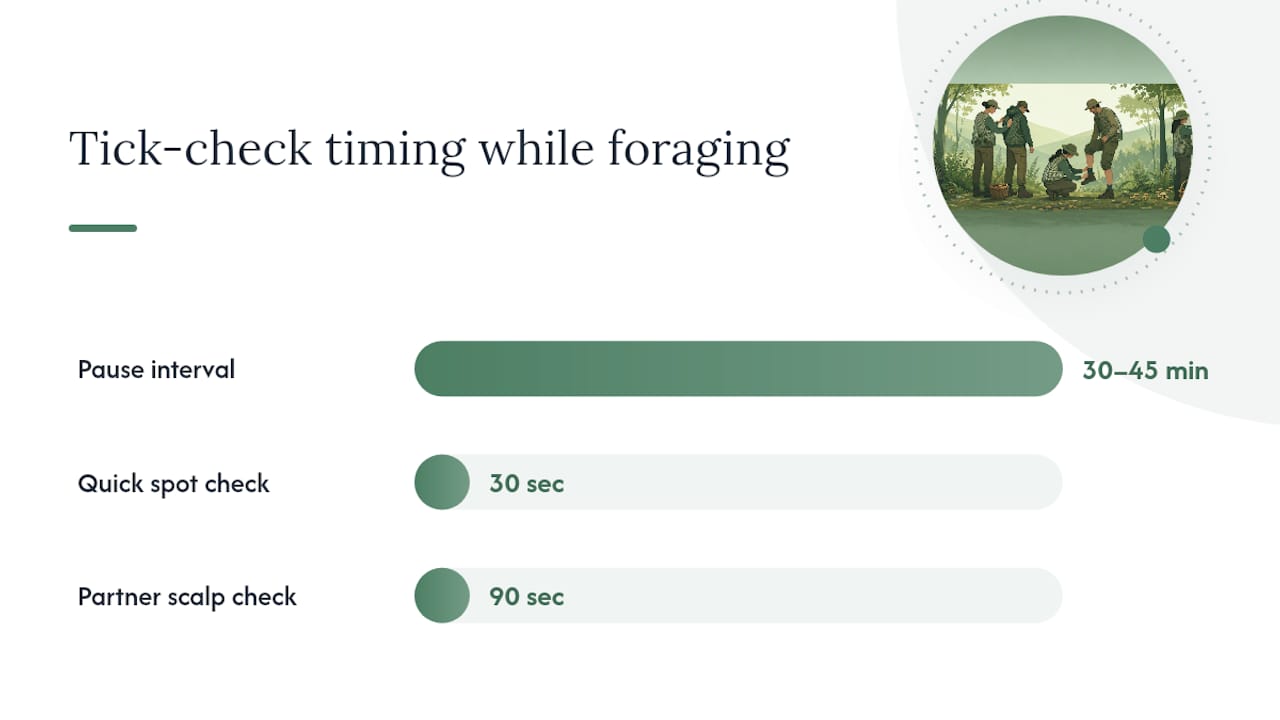
- Pause every 30 to 45 minutes for a 30 second check of sock lines, cuffs, and pack straps, where ticks tend to gather before climbing higher.
- Use a foraging partner for scalp and ear checks you can’t do yourself; a 90-second tick check routine works well for this.
- Wipe down baskets, dogs, and gear before loading them into the vehicle, since ticks hitchhike on fabric and fur just as readily as on skin.
What’s the Right Post-Foray Routine?
The sequence matters as much as the individual steps. Public health guidance recommends showering within two hours of coming indoors, performing a full-body check, and running clothing through a hot dryer cycle for 10 to 15 minutes before you wash anything.
- Strip off field clothes at the door, before they touch furniture or carpet.
- Shower and inspect your whole body, paying close attention to the scalp, ears, armpits, groin, behind the knees, and belly button.
- Toss clothes in the dryer on high heat for 10 to 15 minutes; damp fabric may need longer, since washing alone doesn’t reliably kill ticks.
- Check boots, pack straps, and basket handles for stragglers before storing gear.
If you find an attached tick during your check:
- Note the date and location of the foray.
- Photograph the bite site before and after removal.
- Watch the area for two weeks for a rash or other symptoms.
When Should You See a Doctor After a Tick Bite?
Most tick bites resolve without incident, but certain signs mean it’s time to call a clinician rather than wait it out. A thorough symptom check for hikers and outdoor workers covers this in more depth, but the core red flags are:
- Fever or chills appearing days to weeks after a known bite.
- An expanding rash, especially one with a bullseye pattern (erythema migrans).
- Severe headache, stiff neck, or unexplained muscle and joint aches.
- Flu-like fatigue that shows up out of proportion to your activity level.
Bring the approximate bite date, where you were foraging, how you removed the tick, and any photos you took. That timeline helps a clinician narrow down which tick-borne illness, if any, is worth testing for.
How Bug Away’s Mesh Clothing Fits Your Protection System
A physical barrier does something repellents can’t: it stops the tick before it ever reaches skin, no reapplication needed. That’s the logic behind Bug Away’s ultra-fine mesh clothing, and it pairs naturally with the rest of your routine. Wear it as a base layer under a permethrin-treated shell for extra coverage, or on its own with a skin repellent on your hands and neck.
Three options cover most foraging situations:
- Bug Away Pants — Women, built for the repeated kneeling and creek-edge crouching that morel and chanterelle hunting demands.
- Bug Away Pants — Men, same integrated foot coverage and sealed-cuff design in a men’s fit.
- Bug Away Kids Set — Jacket + Pants, for family foraging trips where kids are just as likely to be kneeling in leaf litter as the adults.
Tuck the ankle cuffs over your boots or add gaiters for creek crossings, and machine wash on a normal cycle; no permethrin refresh required.
Enjoying the Hunt Without Letting Ticks Win
Risk here is manageable, not something to fear your way out of the woods over. Public health guidance frames tick exposure as an environmental hazard you handle with consistent habits, not panic, and that’s the right mindset for foraging too.
The three pillars hold up trip after trip: seal your clothing gaps, run quick checks while you’re out, and treat the post-foray shower and dryer cycle as non-negotiable as cleaning your knife. Do those three things every time, and the mushrooms are the only surprise you’ll bring home.
— Thomas
Gear Up Before Your Next Hunt
There is an alternative to spraying yourself down every time you head out for mushrooms: a physical barrier that keeps working all day without reapplication, sweat-off, or chemical smell clinging to your gear bag.
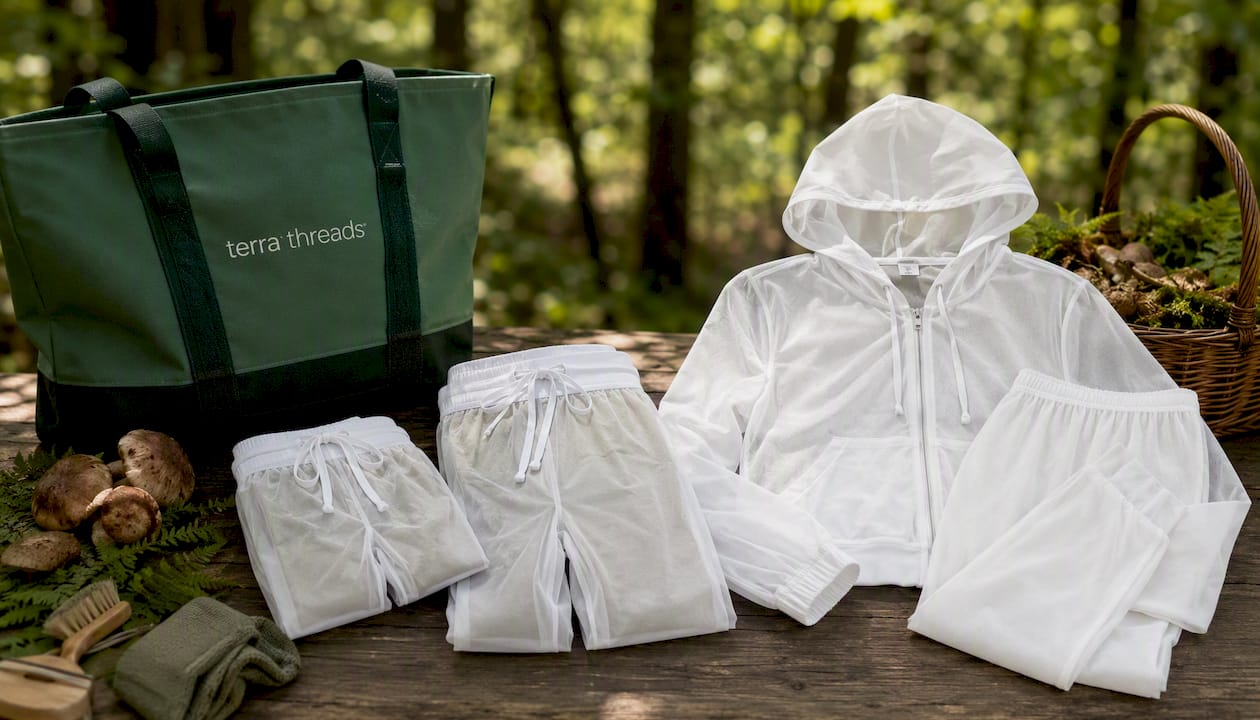
If you’ve been relying on repellent alone, or you’re tired of treating clothing every few washes, mesh built specifically to block ticks and insects solves that without adding a single spray to your routine. It’s chemical-free and suited to hikers, gardeners, and families who want to move through brush and creek banks without a second thought. Check sizing and grab a pair of Bug Away Pants before your next trip into the woods, or outfit the whole family with the kids’ jacket and pants set so everyone’s covered on the same hunt.