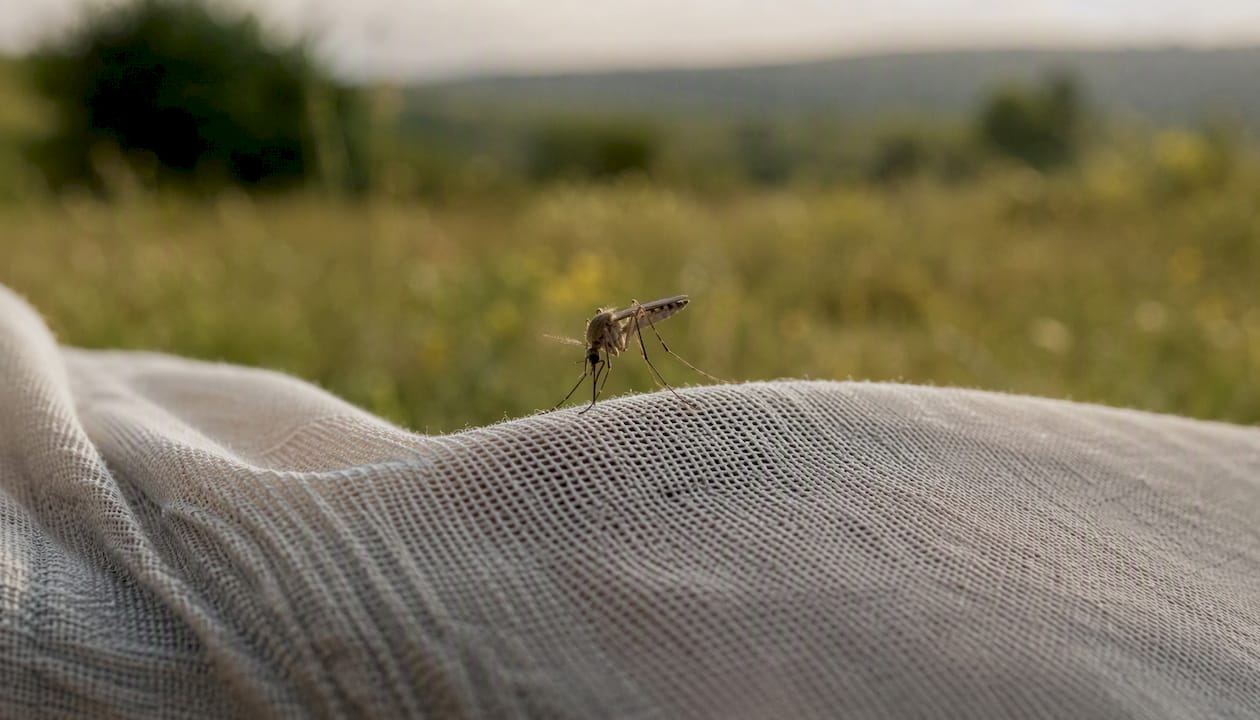
Yes, mosquitoes can and do bite through leggings. The fabric is typically too thin and fits too tightly against your skin to stop a probing proboscis. Your fastest fix: swap to loose, tightly woven pants, apply an EPA-registered repellent like picaridin or DEET to any exposed skin, and consider a permethrin-treated outer layer or a physical-barrier mesh pant for high-risk outdoor time.
Right now, before you head outside:
- Switch to loose, midweight woven pants (denim, canvas, ripstop nylon) if you have them
- Apply an EPA-registered repellent containing picaridin or DEET to exposed ankles, wrists, and neck
- Tuck pants into socks or boots to close the gap at the ankle
- If you’re staying in leggings, treat an outer layer with 0.5% permethrin or wear a mesh overpant
The bottom line: leggings cover your skin but they do not protect it.
Key Takeaways
Mosquitoes bite through leggings because the thin, stretchy fabric presses directly against skin, eliminating the air gap that tightly woven, looser clothing maintains as a physical barrier.
| Point | Details |
|---|---|
| Leggings don’t protect | Thin spandex and athletic tights press against skin, giving mosquitoes direct probing access. |
| Fabric and fit both matter | Loose, tightly woven pants (denim, ripstop nylon) block bites; tight fabrics of any weight perform worse. |
| Layer your defenses | Combine EPA-registered repellent on exposed skin with permethrin-treated or mesh outer layers for best results. |
| Permethrin wash-life varies | Factory-treated garments last significantly longer than home-sprayed items; follow care labels to preserve effectiveness. |
| Bugawaygear mesh option | Chemical-free mesh pants from Bugawaygear create a physical barrier with no insecticide exposure and no re-treatment schedule. |
Table of Contents
- Why mosquitoes can bite through leggings
- Which fabrics and fits let mosquitoes through and which block them
- How to protect your legs when you want to wear leggings
- Permethrin-treated clothing, how it works, and chemical-free mesh alternatives
- How to care for permethrin-treated clothing and mesh so protection lasts
- If you do get bitten: care steps and warning signs
- What outdoor experience actually teaches you about leggings and bug protection
- Skip the chemicals: Bugawaygear mesh clothing for full leg protection
- Sources
Why mosquitoes can bite through leggings
The answer comes down to two things: a needle-thin proboscis and fabric that offers no real gap between the weave and your skin.
A mosquito’s proboscis is roughly 1.5–2 mm long with a diameter on the order of tens of micrometers. That’s thinner than a human hair. It doesn’t need to punch through fabric the way a needle punches through leather. It probes, flexes, and threads through gaps in the weave, especially when the fabric is pressed flat against your skin.
Leggings fail on both counts. The weave in most spandex and athletic polyester blends is open enough at the microscopic level to allow probing. Worse, the stretch removes the air gap that would otherwise force the proboscis to travel farther than it can reach. When fabric sits directly on skin, even a modest weave gap becomes a direct path.
Mosquitoes also don’t probe randomly. They follow CO2 plumes and visual contrast to locate a host, then probe the closest warm surface. Tight-fitting clothing concentrates that surface right at skin level.
The two mechanical failure modes in leggings:
- Open weave: Gaps in the knit are wide enough for a proboscis to thread through without resistance
- Zero air gap: Stretch eliminates the buffer distance that thicker, looser fabric maintains between weave and skin
- Thin fabric: Most athletic leggings are quite thin, generally less than 1 millimeter thick, offering minimal physical resistance
- Skin-tone contrast: Dark leggings can still signal a warm body surface to a searching mosquito
Which fabrics and fits let mosquitoes through and which block them
Fabric choice matters more than most people realize. Thin, stretchy fabrics like spandex leggings and yoga pants are frequently penetrated, while denim and tightly woven materials resist mosquito probing reliably.
Fabrics that mosquitoes regularly bite through:
- Spandex and elastane blends (standard leggings, yoga pants)
- Thin athletic polyester (most running tights)
- Silk and gauze
- Loosely knit cotton jersey
Fabrics that reliably block bites:
- Denim (midweight and heavier)
- Canvas and duck cloth
- Ripstop nylon (especially tighter weaves)
- Midweight woven cotton
- Heavyweight wool
- Tightly woven technical microfibers marketed specifically for insect protection
Fit changes the equation just as much as fabric type. A loose pair of midweight cotton chinos outperforms skin-tight leggings made from the same material weight, because the air gap forces the proboscis to travel farther than it can reach. Loose clothing also makes it harder for a mosquito to stabilize against your skin long enough to probe effectively.
Pro Tip: Hold the fabric up to a light source and try to push a single human hair through the weave. If it passes through easily, a mosquito proboscis will too. If the weave resists the hair, you have meaningful physical protection. Layering a loose woven pant over leggings adds both an air gap and a second weave barrier.
How to protect your legs when you want to wear leggings
You have real options even if you’re not ready to give up leggings entirely. Ranked by effectiveness:
- Swap to loose, tightly woven pants. A pair of ripstop nylon hiking pants or midweight chinos worn loosely eliminates both failure modes at once. This is the single highest-impact change.
- Add a treated outer layer. A permethrin-treated windshirt or overpant worn loosely over leggings gives you chemical protection at the fabric surface plus the air gap leggings alone can’t provide.
- Tuck pants into socks or boots. Mosquitoes exploit the ankle gap aggressively. Tucking eliminates that entry point regardless of what fabric you’re wearing.
- Wear gaiters. Lightweight trail gaiters close the ankle-to-boot gap and add a second fabric layer over the lower leg, where bites concentrate near ground level.
- Apply EPA-registered repellent to exposed skin. The CDC recommends EPA-registered repellents on exposed skin as a primary prevention measure. Picaridin (20%) and DEET (20–30%) are both effective; picaridin is odorless and gentler on synthetic fabrics.
- Spray repellent on clothing, not just skin. Applying picaridin or DEET to the outside of leggings adds a chemical deterrent at the fabric surface. DEET, however, can degrade certain synthetic fabrics, so NPR’s reporting on repellent trade-offs notes picaridin as a safer choice for synthetics.
- Choose light-colored clothing. Mosquitoes orient visually toward dark surfaces. Light gray, tan, or white leggings reduce visual contrast, though this is a secondary factor.
Pro Tip: Apply repellent to the outside of your socks and the top of your shoes. Mosquitoes that can’t reach your leg through fabric will probe the ankle gap instead.
Caution: DEET can dissolve or weaken spandex, nylon, and other synthetic fibers. Apply it to skin only when wearing synthetics, or switch to picaridin, which carries no fabric-damage risk.
Permethrin-treated clothing, how it works, and chemical-free mesh alternatives
Permethrin is a synthetic insecticide applied directly to fabric. A typical concentration used is around half a percent, which repels and kills mosquitoes on contact before they can probe the weave. It works differently from skin repellents: a mosquito that lands on treated fabric is deterred or incapacitated at the surface rather than being kept away from your body entirely.
Factory-treated vs. home-sprayed:
- Factory-treated garments bond permethrin into the fiber during manufacturing. Consumer Reports testing shows these typically maintain effectiveness through more wash cycles than home-applied treatments, though durability varies by brand and care method.
- Home-sprayed clothing uses 0.5% permethrin aerosols or pump sprays applied to dry fabric and allowed to cure. Effectiveness is real but wash-life is shorter, usually lasting several washes versus many more for some factory-treated items.
Safety notes for permethrin-treated clothing:
- Follow label instructions exactly; permethrin is toxic to cats and aquatic life
- Keep treated garments away from children’s hands until fully dry
- Wash treated clothing separately from untreated items
- Check the care label for drying instructions; high heat can degrade the treatment faster
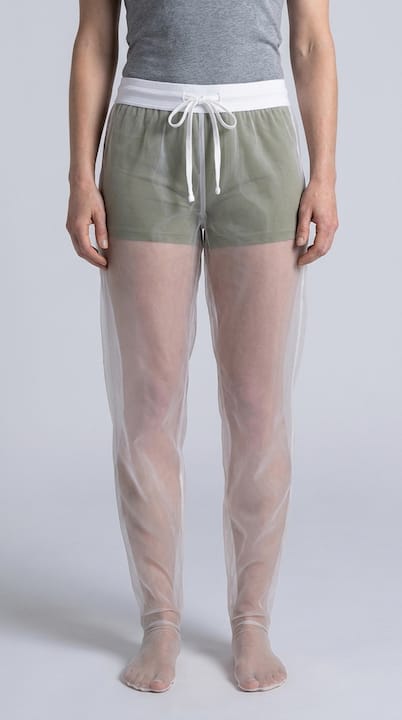
For readers who want protection without any insecticide exposure, ultra-fine mesh clothing works as a physical barrier. The mesh weave is fine enough to block mosquitoes mechanically while remaining breathable. Unlike permethrin-treated fabric, mesh protection doesn’t degrade with washing and carries no chemical exposure risk. Field reports from outdoor users confirm that physical-barrier garments perform well when the fabric isn’t pulled tight against the skin, which is why mesh overpants worn loosely outperform tight athletic tights in real conditions.
Pro Tip: For high-risk settings like wetlands, dusk hikes, or travel to mosquito-heavy regions, combine strategies: wear a permethrin-treated outer layer or mesh overpant, apply picaridin to exposed skin, and tuck everything in. No single layer is as effective as two working together.
How to care for permethrin-treated clothing and mesh so protection lasts
Treated clothing and mesh both need specific care to stay effective.
For permethrin-treated garments:
- Wash on a gentle or delicate cycle in cold water; hot water accelerates permethrin breakdown
- Line dry when the label allows; tumble drying on high heat shortens wash-life
- Store in a cool, dry place away from direct sunlight, which degrades the treatment over time
- Re-treat home-sprayed garments every 5–6 washes or when you notice increased bite activity
- Replace factory-treated garments when the manufacturer’s stated wash-life is reached, typically marked on the label or product page
For mesh clothing:
- Machine wash on gentle in cold water; mesh fibers are durable but sharp folds can stress the weave over time
- Inspect for small tears before each use; a pinhole in mesh is a direct entry point for mosquitoes
- Store flat or loosely rolled rather than tightly folded to avoid permanent creases that stress the weave
- Patch small tears promptly with mesh repair tape or a fine-weave patch kit
Pro Tip: Keep a small sewing kit or mesh repair tape in your pack. A tear the size of a fingernail is enough for mosquitoes to exploit, and a two-minute field repair is far easier than dealing with bites for the rest of the trip.
Signs that a treated garment’s protection is failing: you notice bites through fabric that previously stopped them, or the permethrin smell (faint, if present at all) has completely disappeared. At that point, re-treat or replace.
If you do get bitten: care steps and warning signs
Most mosquito bites are uncomfortable but minor. A few are not.
Immediate care:
- Wash the bite area with soap and water
- Apply a cold compress for 10 minutes to reduce swelling
- Use an over-the-counter topical hydrocortisone cream (1%) or calamine lotion to control itching
- Take an oral antihistamine like cetirizine or diphenhydramine if itching is severe
- Avoid scratching; broken skin invites bacterial infection
Seek medical care if you notice:
- Spreading redness, warmth, or pus around the bite (signs of infection)
- A large local reaction covering several inches of skin
- Hives, difficulty breathing, or throat tightening (signs of a severe allergic reaction; call 911)
- Fever, joint pain, headache, or a rash appearing within two weeks of bites in a mosquito-active area
That last point matters in the US context. West Nile virus, Eastern equine encephalitis, and locally transmitted dengue are all present in parts of the United States. The CDC advises contacting a clinician promptly if you develop fever or neurological symptoms after significant mosquito exposure, particularly after travel to high-risk regions or during active outbreak periods.
Note: This article provides general information, not medical advice. Contact a healthcare provider for diagnosis or treatment of any symptoms following mosquito bites.
What outdoor experience actually teaches you about leggings and bug protection
The conventional wisdom says “cover up.” That’s right, but it misses the more important half of the sentence: cover up with the right fabric and fit. Leggings technically cover your legs. They do not protect them.
What actually works in the field is a layered approach that treats fabric as one component, not the whole solution. Physical-barrier mesh worn loosely, a permethrin-treated outer layer, and picaridin on exposed skin together create overlapping defenses that no single layer can match. Outdoor users who rely on mesh overpants report a meaningful difference compared to treated tights, precisely because the air gap does the work that chemistry alone can’t.
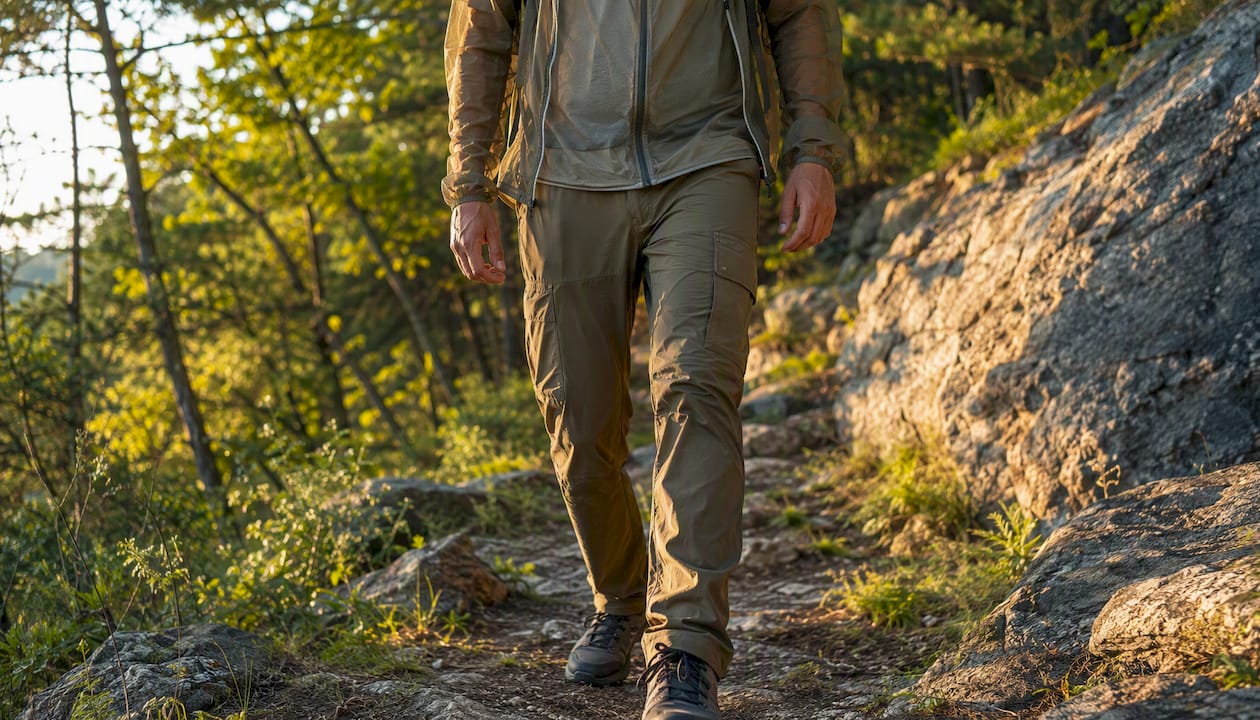
The trade-off worth naming honestly: mesh and woven pants are warmer than leggings in summer heat. That’s real. But the discomfort of a few degrees is easier to manage than a week of itching or, in the worst case, a mosquito-borne illness. Light-colored, loose-fitting ripstop nylon is about as close to a compromise as the category offers: it breathes reasonably well, blocks bites, and doesn’t trap heat the way denim does.
One thing most guides understate: fit matters as much as fabric. A loose pair of thin cotton pants often outperforms tight leggings made from heavier material, because the air gap is doing more protective work than the fabric weight. That insight changes how you shop.
Skip the chemicals: Bugawaygear mesh clothing for full leg protection
If you’d rather not manage permethrin wash schedules or worry about DEET damaging your gear, Bugawaygear’s chemical-free mesh pants give you a physical barrier that works every time you put them on, with no re-treatment required.
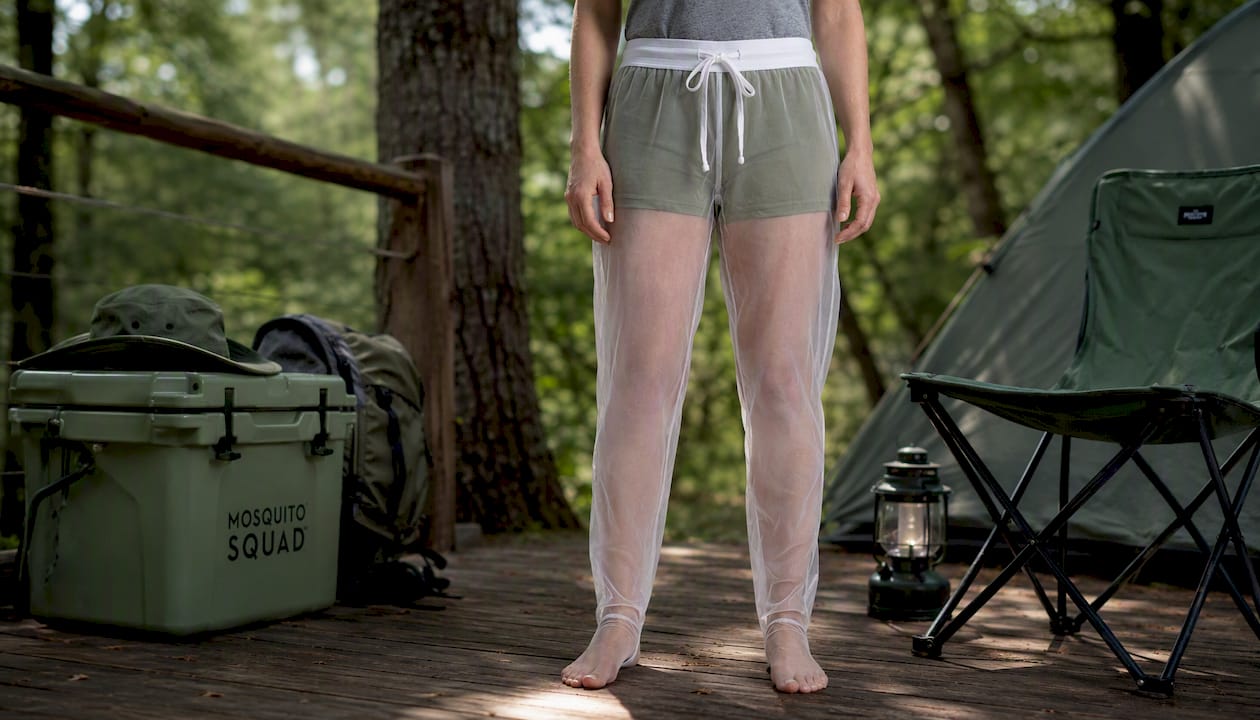
The ultra-fine breathable mesh blocks mosquitoes mechanically, not chemically. Sizes cover men, women, and kids, and the integrated foot coverage closes the ankle gap that leggings leave wide open. The kids’ set is particularly useful for parents who want protection without applying DEET or permethrin to young skin.
Core benefits at a glance:
- 100% chemical-free physical barrier
- Ultra-fine breathable mesh: blocks insects without trapping heat
- Integrated foot coverage: no ankle gap
- Sizes for men, women, and kids
- 30-day money-back guarantee
Browse the full range at Bugawaygear and find the right fit for your next outdoor trip.
Sources
- Preventing Mosquito Bites While Traveling | Mosquitoes | CDC
- PubMed — study on mosquito mouthparts
- Permethrin-treated clothing and mosquito bites | Consumer Reports
- Can Mosquitoes Bite Through Clothing? Yes — What to Wear | Anchor Pest Services
This article is general information, not a substitute for advice from a qualified doctor. Consult a qualified healthcare professional about your own circumstances before acting on anything here.