
Chemical-free mesh clothing does protect against midges, no-see-ums, and most small biting insects — provided the mesh density, fit, and coverage are right. The short version: pull on a mesh jacket with an integrated face shield, seal the cuffs, and you’ve cut your exposure dramatically without a single spray. Bugawaygear’s lineup is built exactly for this, with 100% chemical-free materials, a money-back guarantee that allows risk-free testing before committing., and many customers reporting zero tick bites.
The single most important thing you can do right now: Cover your face, neck, and ankles before you step outside. Those three zones are where most bites happen, and mesh clothing that seals at the cuffs and hood closes all three gaps at once.
Table of Contents
- Does midge protection clothing actually work?
- Who benefits most from chemical-free mesh gear?
- How to choose the right mesh garment for your needs
- How to care for your mesh clothing
- When mesh alone isn’t enough
- Key Takeaways
- The case for going chemical-free
- Ready to order chemical-free bug protection in the U.S.?
- Useful sources and further reading
Does midge protection clothing actually work?
Yes, when the mesh pore size is fine enough and the garment seals properly. “Midge protection clothing” refers to lightweight mesh or tightly woven garments designed to create a physical barrier between your skin and biting insects. Unlike permethrin-treated fabrics or DEET sprays, these garments use no chemicals at all. The protection comes entirely from the structure of the fabric.
The key variable is mesh holes per square inch. Midges and no-see-ums are tiny, roughly 1–3 mm in body length, and they can slip through mesh that is too coarse. Commercial midge jackets commonly use around 600 holes per square inch as a practical baseline for stopping very small biters while keeping the garment breathable. Higher densities block more, but they also trap more heat.
| Mesh density (holes/sq. in.) | What it blocks | Breathability |
|---|---|---|
| — | Mosquitoes, larger flies | High |
| 600 | Gnats, sandflies, most midges | Moderate–high |
| 600 | No-see-ums, midges, most small biters | Moderate |
| Over 1,000 | Nearly all small insects | Lower airflow |
Tightly woven fabrics (think a dense nylon weave) can also block insects, but they sacrifice almost all airflow. Permethrin-treated fabrics add a chemical kill layer but require reapplication and carry handling precautions. Fine mesh sits in the middle: breathable, chemical-free, and effective when the fit is right.
Fit is the failure point, not the fabric. Secure closures — elastic cuffs, zipped necklines, fitted hoods — matter as much as mesh density. A 600-hole-per-square-inch jacket with a loose collar is still a gap midges will find.
Who benefits most from chemical-free mesh gear?
Mesh clothing earns its keep in specific situations. Anglers, gardeners, and walkers who spend extended time outdoors during peak insect season get the clearest benefit. So do families camping near marshes, hikers at dawn or dusk when midge activity peaks, and anyone working in tall grass where ticks and gnats are constant.
A few scenarios where mesh is the primary defense:
- Marsh and wetland hiking — high midge density, prolonged exposure, no easy escape.
- Dawn and dusk outings — biting insect activity spikes at these times regardless of season.
- Gardening in tall grass or dense plantings — ticks and gnats are a persistent hazard.
- Camping with children — kids touch everything and rarely hold still for repellent reapplication.
- Fishing from a stationary position — you can’t move away from swarms; mesh lets you stay focused.
People with severe insect allergies should treat mesh as one layer of a broader strategy, not a standalone solution. The same goes for anyone in heavy tick country — mesh pants reduce exposure significantly, but ticks on exposed skin at the ankle or wrist still require attention.
Pro Tip: Pair your mesh layer with a light-colored, tightly woven base layer underneath. Horseflies and stable flies can bite through thin fabrics, and the extra layer adds a meaningful barrier without adding much weight.
How to choose the right mesh garment for your needs
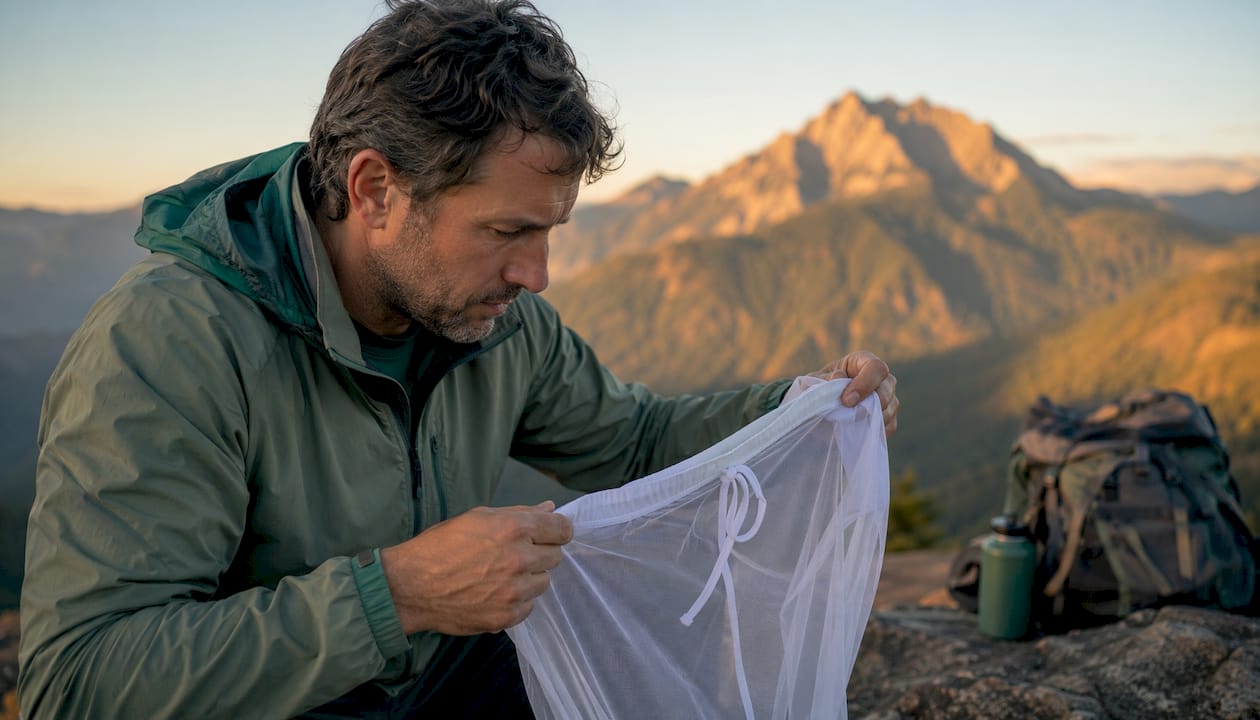
A garment that looks like midge protection clothing isn’t always one. Use this checklist before you buy.
- Mesh density: Look for a mesh density range proven effective to block very small biting insects. for no-see-um and midge protection. Anything coarser won’t stop the smallest biters.
- Coverage zones: Hood and face shield, neck seal, wrist cuffs, and ankle closures. If any zone is open, insects will find it.
- Integrated foot coverage: Pants that tuck into socks or have integrated ankle cuffs close the gap ticks exploit most.
- Closures: Elastic cuffs and zipped necklines are the minimum. Velcro or snap closures at the wrist are a secondary option but less reliable.
- Detachable face shield: A detachable face shield lets you switch between full coverage and open air without removing the jacket.
- Fit: The mesh should sit slightly away from skin. If it presses against your face or wrists, insects can bite through it.
- Weight and packability: a lightweight jacket that is easy to carry and pack. and stuffs into its own pocket is one you’ll actually carry.
For kids, size up slightly so the mesh doesn’t press against skin. Check that the hood fits snugly without restricting vision, and confirm the cuffs seal at the wrist rather than mid-forearm.
- Fishing: Prioritize a full face shield and long sleeves; pants matter less if you’re wading in boots.
- Gardening: Pants with ankle cuffs are the priority; a lightweight jacket handles the rest.
- Hiking: A combo set covering both upper and lower body gives the most consistent protection across varied terrain.
Pro Tip: Before ordering, check the return policy. A 30-day money-back guarantee lets you test the garment in real field conditions — not just in your backyard — before committing.
How to care for your mesh clothing
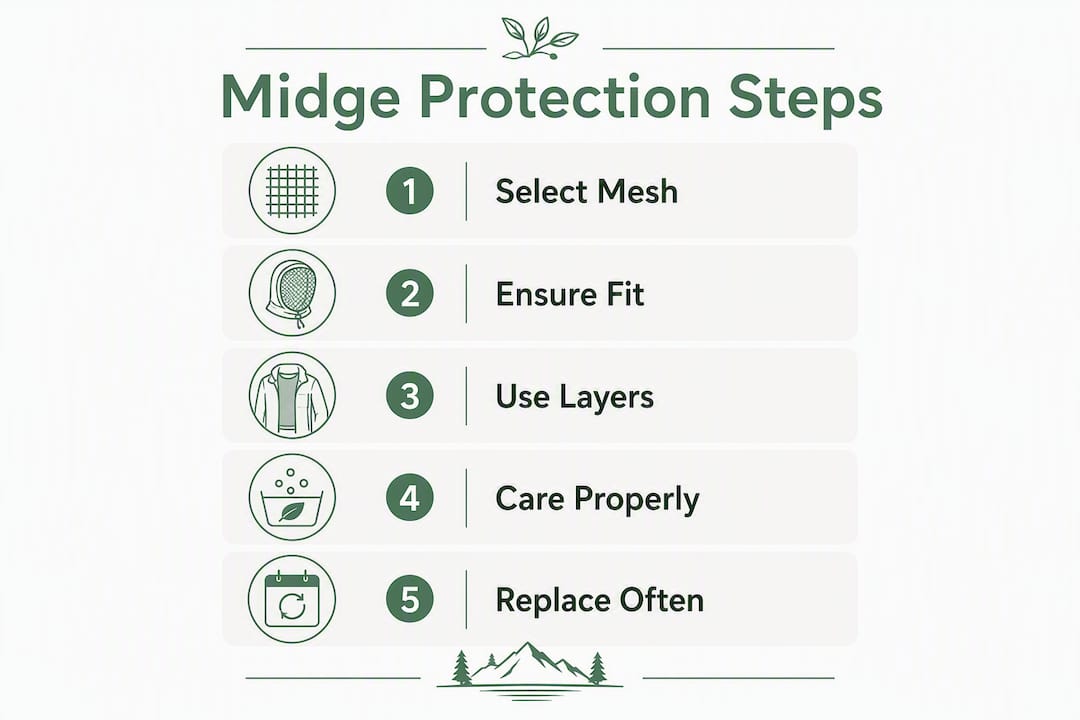
Ultra-fine mesh is durable but not indestructible. A few habits extend its life considerably.
- Washing: Use a gentle cycle or hand wash in cold water with a mild detergent. Avoid bleach — it degrades mesh fibers and widens pore size over time.
- Drying: Air dry only. High heat from a dryer can warp or melt synthetic mesh, permanently enlarging the pores.
- Storage: Fold loosely or hang. Stuffing mesh tightly into a bag for months at a time creates permanent creases and can stress the weave at fold points.
- Repairs: Small runs or holes can often be patched with a fine mesh repair kit. A small breach is repairable; a large tear across a coverage zone means the garment needs replacing.
- Inspection: Before each season, hold the jacket up to light and check for enlarged pores or thinning areas, especially at the elbows and cuffs where abrasion is highest.
Pro Tip: Turn the garment inside out before washing. This protects the outer mesh surface from friction against the drum or other clothing in the load.
Heavy use, abrasion against brush, and repeated washing all gradually widen mesh pores. A garment used weekly through a full hiking season will show more wear than one pulled out a few times a year. Inspect annually and replace when pore integrity is visibly compromised.
When mesh alone isn’t enough
Mesh handles midges, gnats, sandflies, and no-see-ums well. It has real limits with larger, more aggressive biters.
- Horseflies and deer flies: These can bite through thin mesh or find gaps at movement points. Light-colored, tightly woven clothing plus repellents is the recommended strategy for these insects, with mesh as a supplementary layer.
- Ticks on exposed skin: Mesh pants reduce tick contact significantly, but any exposed skin at the ankle or wrist remains a risk. Tuck pants into treated socks and check skin after every outing.
- Heavy rain: Saturated mesh loses some of its standoff distance from skin, which can allow contact biting. A light rain shell over the mesh layer solves this.
When you need to supplement mesh, these are the practical options:
- Permethrin-treated outer layers: EPA-registered permethrin treatments can remain effective through many washes, with some products rated for up to 70 washes. Apply to clothing and gear only, never directly to skin. For more on safe use, Bugawaygear’s guide on permethrin clothing safety covers the key precautions.
- Topical repellents for exposed skin: DEET or picaridin on face and hands covers zones mesh can’t reach.
- Gaiters: For tick-heavy terrain, gaiters over the ankle close the last gap mesh pants leave open.
Pro Tip: If you or a family member has a history of severe insect sting or bite reactions, carry an epinephrine auto-injector regardless of how well your clothing covers you. Mesh reduces exposure; it doesn’t eliminate every risk.
Key Takeaways
Chemical-free mesh clothing works against midges and small biters when mesh density sits at around 600 holes-per-square-inch, closures seal every gap, and you supplement with tightly woven layers for larger biters.
| Point | Details |
|---|---|
| Mesh density matters | Target a mesh density proven effective to block very small biting insects, notably midges and no-see-ums, without sacrificing airflow. |
| Closures are the failure point | Elastic cuffs, zipped necklines, and fitted hoods prevent insects from reaching skin through gaps. |
| Supplement for larger biters | Horseflies and deer flies need tightly woven base layers and repellents alongside mesh. |
| Care extends protection | Hand wash cold, air dry, and inspect pores annually to maintain mesh integrity. |
| Bugawaygear for U.S. orders | 100% chemical-free mesh sets with a money-back guarantee that allows risk-free testing before committing., available to order in the U.S. |
The case for going chemical-free
Most people reach for a spray can before they think about what they’re wearing. That reflex made sense when mesh clothing was heavy, hot, and hard to find. The category has changed. Today’s fine-mesh garments weigh roughly what a light fleece weighs, pack into a jacket pocket, and provide coverage that no topical repellent can match — because repellent wears off, sweats off, and misses spots.
Many customers have reported zero tick bites while using Bugawaygear’s products. using Bugawaygear’s products aren’t outliers. They’re people who stopped relying on chemistry and started relying on physics. A physical barrier doesn’t expire, doesn’t require reapplication, and doesn’t raise questions about what’s absorbing into your skin or your child’s skin.
The one honest caveat: mesh is not a universal solution. Horseflies laugh at fine mesh. Ticks on bare ankles don’t care about your jacket. The right approach layers mesh for small biters with tightly woven fabric and targeted repellents for the larger, more aggressive ones. That combination covers nearly every scenario a hiker, gardener, or camping family will encounter.
Ready to order chemical-free bug protection in the U.S.?
Zero chemicals. Zero compromises on coverage. Bugawaygear’s mesh clothing gives families and outdoor enthusiasts a physical barrier against ticks and biting insects that works every time you put it on — no reapplication, no skin contact with insecticides.
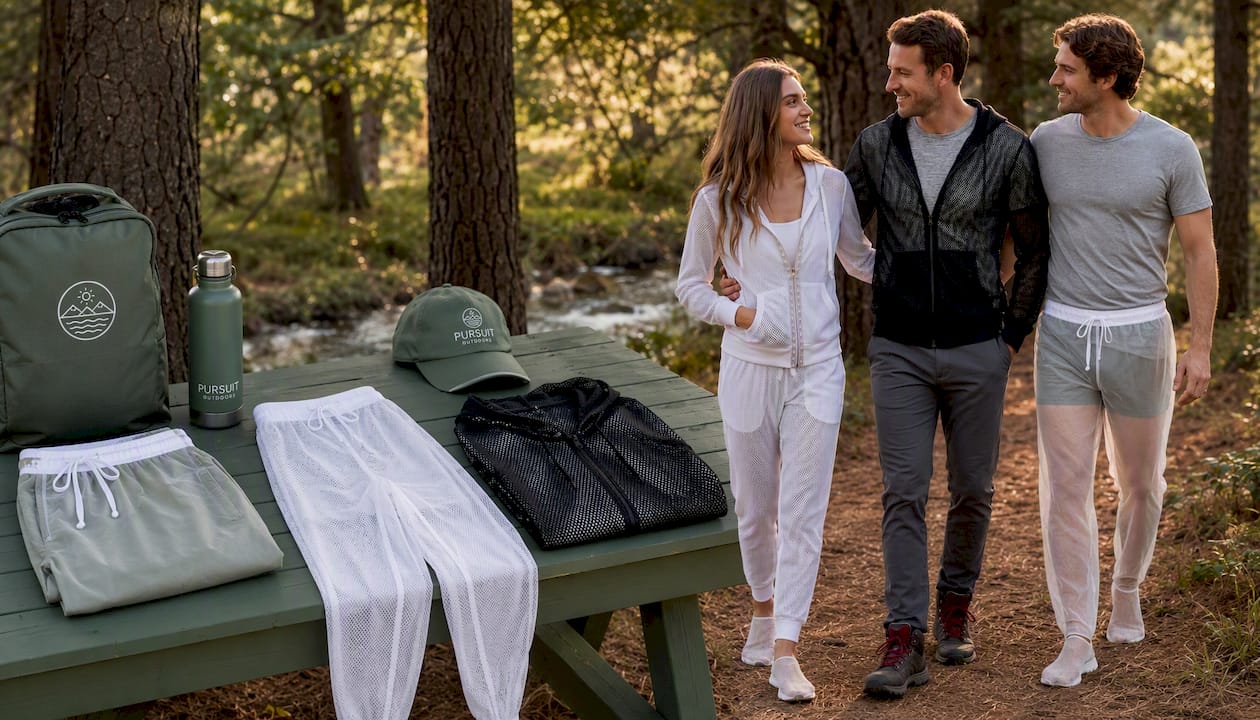
Three options cover most needs. The Bug Away Pants — Men and Bug Away Pants — Women are the right starting point for gardeners and hikers who already have a jacket and want lower-body tick protection. For full-body coverage, the Bug Away Combo Set Men — Jacket + Pants bundles both pieces at once — the practical choice for camping trips and high-exposure outings. Every order ships to U.S. customers and comes with a money-back guarantee that allows risk-free testing before committing., so you can test the gear in real conditions before you commit.
Useful sources and further reading
- No-See-Um Protection: Chemical-Free Gear That Works — Bugawaygear’s own guide to mesh specs, use cases, and chemical-free protection for hikers and families.
- No See Um Mesh Size: What Actually Blocks Them — Technical breakdown of mesh sizing and how pore dimensions map to insect body size.
- Permethrin Clothing Safety — Safe use guidance for permethrin treatments when supplementing mesh in high-risk environments.
- Can Mosquitoes Bite Through Clothing? — Explains how insects interact with different fabric types and when clothing provides reliable protection.
- Chigger Bite Prevention: A Chemical-Free Guide — Covers ground-dwelling biters and when gaiters or additional layers are needed alongside mesh.
- Isle of Mull Horsefly Guide — Practical guidance on clothing strategy and repellents for larger, aggressive biting flies.
- Horseflies: Facts and Prevention Tips (WebMD) — Background on horsefly behavior and bite risk during summer months.