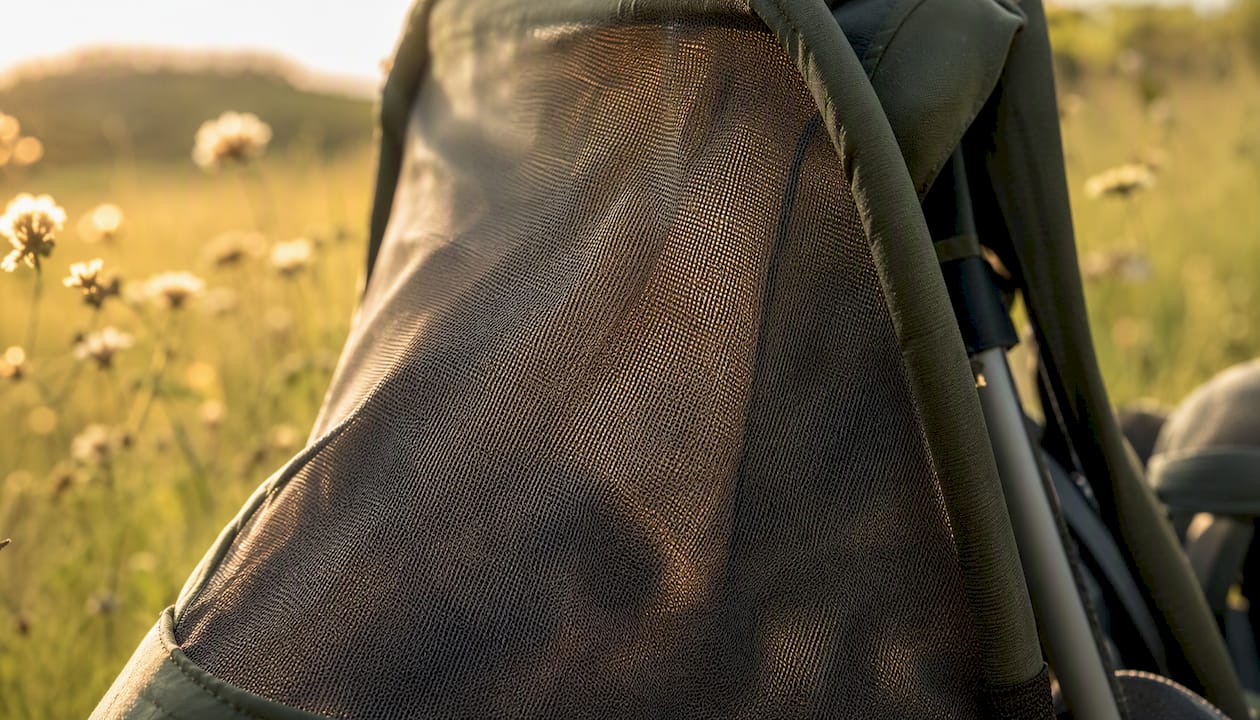
A chemical-free, ultra-fine mesh garment sized for infants is the safest first-line option for protecting your child from ticks and biting insects during carrier use. Harvard Health experts confirm that long clothing and physical coverage are effective preventive strategies for children, and they lower disease risk without daily topical exposure. For most parents doing routine outdoor activities, the Bug Away Kids Set is the practical starting point.
Three quick wins to act on right now:
- Wear the mesh. Put the infant mesh garment on before stepping outside, not after.
- Seal the openings. Check ankles, wrists, neckline, and any harness pass-throughs for gaps.
- Do a post-outdoor check. Inspect the child’s skin and the carrier straps before coming inside.
Pro Tip: When securing mesh over a structured carrier harness, thread the shoulder straps through the garment’s built-in slots before buckling. Then run your fingers along each seam junction to feel for drafts. A gap you can feel is a gap a tick can use.
Key Takeaways
Chemical-free, ultra-fine mesh clothing sized for infants is the safest, lowest-friction first-line protection for carrier use in most outdoor settings.
| Point | Details |
|---|---|
| Physical barrier first | Ultra-fine mesh blocks ticks and insects without topical chemicals or age-limit restrictions. |
| Seal every opening | Check ankles, wrists, neckline, and harness slots before every outing to eliminate gaps. |
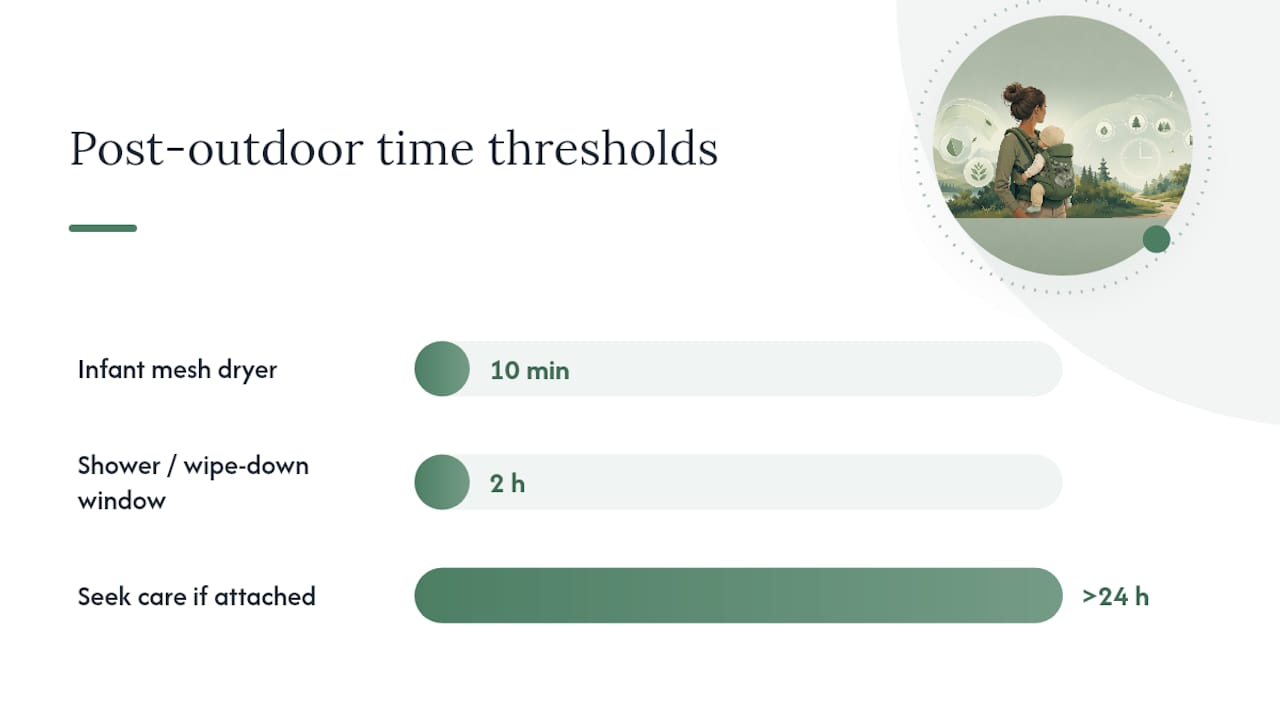
| Dryer kills ticks | Tumble-dry mesh clothing on high heat for 10 minutes after each outdoor trip per CDC guidance. |
| Post-outdoor check matters | Inspect armpits, behind knees, scalp, and groin on the child after every tick-habitat outing. |
| Bugawaygear Kids Set | 100% chemical-free, carrier-compatible, backed by 500+ zero-tick-bite testimonials and a 30-day guarantee. |
This article is general information, not a substitute for advice from a qualified doctor. Consult a qualified healthcare professional about your own circumstances before acting on anything here.
Table of Contents
- What is chemical-free infant mesh protection and how does it work?
- When should you use chemical-free mesh versus other approaches?
- How do you choose the right infant mesh for a baby carrier?
- How do you wash and maintain infant mesh garments?
- Post-outdoor tick-check routine for parents
- What types of infant bug protection products are available?
- What does chemical-free infant mesh clothing cost?
- What parents say about real-world effectiveness
- Why chemical-free protection is the right call for infants
- Bugawaygear’s chemical-free kids’ mesh is worth trying
- Sources
What is chemical-free infant mesh protection and how does it work?
Standard mesh fabrics marketed for outdoors often have pore sizes large enough for larval and nymph ticks to pass through. Effective infant carrier bug protection uses ultra-fine, tightly woven mesh with small enough pores to physically obstruct those crawlers before they reach skin. No spray, no chemical finish, no permethrin. The fabric itself is the barrier.
CDC tick-prevention guidance notes that ticks crawl upward from ground level, which means sealing at ankles, wrists, and neckline is critical. A garment that leaves the ankle exposed or gaps at the carrier harness slot gives a tick a clear path upward. That is why integrated foot and leg coverage matters more than it might look on a product page.
Parents should look for these core attributes:
- Ultra-fine mesh weave with an explicit tick-proof or tested-density claim
- Integrated foot and leg coverage so no skin is exposed below the carrier seat
- Harness pass-through slots aligned with common carrier designs
- Soft, flat seams that won’t irritate infant skin during long carries
- 100% chemical-free materials with no PFAS or antimicrobial finishes
That last point matters more than most parents realize. Consumer Reports has flagged that some synthetic outdoor gear carries chemical finishes that can transfer to a baby’s skin. Choosing verified chemical-free fabric removes that exposure entirely.
When should you use chemical-free mesh versus other approaches?
Chemical-free infant mesh is the right first choice for everyday yard play, short hikes, gardening sessions, and carrier use in low-to-moderate tick and mosquito risk areas. It requires no age calculation, no skin contact, and no timing around application windows.
The picture shifts in higher-risk situations. When tick density is heavy or a mosquito-borne outbreak is active in your area. Layering strategies become worth considering:
- Everyday yard play or garden visits: infant mesh alone, well-fitted
- Moderate-length hikes in tick habitat: mesh on the child, permethrin-treated outer layers for adult caregivers
- Camping overnight in high-risk areas: mesh plus EPA-registered repellent on any exposed skin for age-appropriate children, per CDC guidance
- High-risk tick hotspots: consult your pediatrician; mesh remains the infant layer, but adult protective layers and daily checks become non-negotiable
CDC guidance is explicit that permethrin is for clothing and gear only, never for direct skin application, and specifies 0.5% permethrin as the treatment concentration for non-infant items. The AAP at HealthyChildren.org adds that OLE/PMD-based repellents should not be used on children under 3, and that any repellent applied to a child should go on the outside of clothing, not skin. Chemical-free mesh sidesteps all of those age-limit calculations for the infant wearing it.
For a deeper look at how physical barriers compare to permethrin and DEET, Bugawaygear’s comparison page lays out the trade-offs clearly.
How do you choose the right infant mesh for a baby carrier?
Start with the fit, not the features. A garment that leaves exposed skin at the ankles or gaps at the carrier harness slot fails at its core job, regardless of how fine the mesh is.
Before you order, take these measurements on your carrier:
- Measure the distance between the two shoulder strap bases at the front panel.
- Note the width of each strap where it exits the waist belt.
- Check whether the carrier has a chest clip and where it sits relative to the child’s torso.
- Measure your child’s inseam and ankle circumference.
- Check the neckline height of the carrier’s hood or headrest against your child’s collar.
Then match those numbers against the garment’s harness slot placement and sizing chart. The Bug Away Kids Set and Bug Away Pants — Kids are sized for children and designed with harness compatibility in mind. When evaluating any infant mesh garment, look for:
- Adjustable closures at wrists and ankles
- Breathable panels that won’t trap heat during warm-weather carries
- Stretch fabric that moves with the child rather than bunching at the knees
- Harness slots positioned to align with standard structured carrier strap spacing
Pro Tip: After dressing the child and buckling into the carrier, do a seated pinch test: pinch the mesh at each seam junction and at the ankle cuffs. If you can pull the fabric more than half an inch away from the skin, tighten or adjust before heading out.
How do you wash and maintain infant mesh garments?
Machine wash on a gentle cycle with a mild, fragrance-free detergent. Skip fabric softener entirely — it can coat the mesh fibers and reduce the tightness of the weave over time. After washing, tumble-dry on high heat.
| Care step | Specification | Source |
|---|---|---|
| Dryer tick kill (dry clothing) | High heat, 10 minutes minimum | CDC Lyme prevention |
| Permethrin for treated gear (non-infant) | 0.5% concentration, clothing/gear only | CDC travel guidance |
The dryer step is worth making a habit even when you don’t see any ticks. Ticks can ride in on the mesh undetected, and high heat kills them on dry clothing in 10 minutes.
For storage, keep garments in a breathable cotton bag rather than a sealed plastic bin. Long-term compression in a tight space can deform ultra-fine mesh and create micro-gaps. Before each use, hold the garment up to light and check seams and harness slots for any small holes or fraying.
Pro Tip: Inspect the garment after every third wash. Hold it up to a window and look for any spots where light passes through more easily than the surrounding mesh. Those thin spots are where protection degrades first.
Replace the garment when you find holes, significant thinning, or seam separation. A garment that has lost its weave integrity is no longer doing its job.
Post-outdoor tick-check routine for parents
Follow these steps every time you come in from a tick-prone area:
- Remove the child from the carrier before undressing either of you.
- Unfasten the harness and set the carrier aside on a hard surface, not upholstered furniture.
- Remove the infant mesh garment and place it directly into the dryer on high heat for 10 minutes.
- Inspect the child thoroughly: armpits, behind the knees, scalp, groin, and the back of the neck.
- If feasible, give the child a shower or wipe-down within two hours of coming inside.
- Inspect the carrier straps, seams, and buckle creases for any ticks before storing it.
The CDC recommends daily full-body tick checks after any time spent outdoors in tick habitat, with particular attention to the armpits, behind the knees, and in the hair. Ticks can be as small as a poppy seed at the nymph stage, so a visual check alone isn’t enough — run your fingertips slowly across the skin.
If you find an attached tick, remove it with fine-tipped tweezers or a dedicated tick removal tool, pulling straight upward without twisting. The Bug Away Tick Removal Kit is worth keeping in your outdoor first-aid bag for exactly this moment. After removal, clean the bite site with rubbing alcohol. Seek medical care if a rash develops, the child develops a fever, or the tick was attached for more than 24 hours. Save the removed tick in a sealed bag in case your provider recommends testing.
Pro Tip: Run a lint roller over the carrier straps and waist belt after every outdoor trip. Ticks cling to fabric creases and can survive for days waiting for a new host.
What types of infant bug protection products are available?
The market for protecting young children from insects and ticks falls into a few distinct categories, each with real trade-offs.
Ultra-fine mesh clothing (sized for children) is the category Bugawaygear occupies. These garments create a physical barrier with no topical exposure, no age-limit calculations, and no reapplication schedule. The limitation is fit: a poorly sized garment leaves gaps, and the protection is only as good as the seal at every opening.
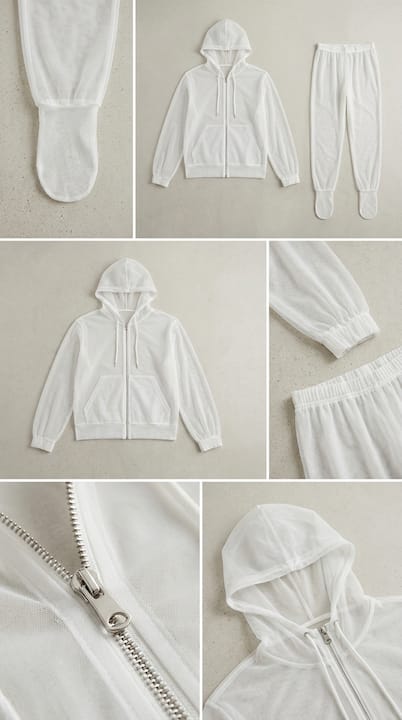
It works well as an outer layer for adult caregivers in high-risk areas.
EPA-registered topical repellents (DEET, picaridin, IR3535) are effective on exposed skin for age-appropriate children but come with application rules, age restrictions, and the need to avoid eyes, mouths, and hands. OLE/PMD products are off-limits for children under 3 per AAP guidance.
Insect-shield treated accessories (hats, gaiters, bandanas) can supplement a full coverage strategy but don’t replace full-body coverage for an infant in a carrier.
For most parents doing regular outdoor activities, chemical-free mesh clothing is the lowest-friction, highest-coverage option for the infant. Layering in other strategies makes sense as risk level rises.
What does chemical-free infant mesh clothing cost?
Chemical-free mesh garments sized for children typically run in the range of purpose-built outdoor kids’ clothing. A full kids’ set (top and bottoms) from Bugawaygear is priced to be accessible as a one-time purchase rather than a recurring expense like repellent sprays. Unlike topical products that require restocking, a well-maintained mesh garment lasts through a full outdoor season and beyond.
When comparing costs, factor in what you’re replacing: a summer’s worth of spray repellent, plus the time and stress of applying it to a moving infant before every outing. A single mesh set eliminates that routine entirely for the child wearing it.
Adding the Bug Away Tick Removal Kit as a bundle with the Kids Set keeps your total starter investment modest while covering both prevention and response. For families who garden or hike frequently, that combination covers the two most common tick-exposure scenarios in one purchase.
What parents say about real-world effectiveness
Bugawaygear has collected testimonials from over 500 customers who report zero tick bites while using their mesh clothing. That signal is consistent across the most common use cases: hiking with children in carriers, backyard gardening sessions, and camping trips.
Parents highlight two things most often: the fit around carrier harnesses and the breathability during warm-weather outings. The ultra-fine mesh allows airflow while maintaining coverage, which matters when a child is pressed against a caregiver’s body for an hour or more. Several parents note that their children tolerate the garment without fussing, which is a practical consideration that doesn’t show up in lab tests.
The 30-day money-back guarantee means the first outing is essentially a risk-free trial. If the fit doesn’t work with your specific carrier model, you can return it.
Why chemical-free protection is the right call for infants
The conventional wisdom in outdoor parenting circles tends to default to DEET or permethrin as the serious options, with physical barriers treated as a nice-to-have backup. That framing gets it backwards for infants.
Infants can’t tell you when a repellent is stinging their eyes or when a chemical finish is irritating their skin. The age restrictions on OLE/PMD, the skin-only prohibition on permethrin, and the application rules for DEET all exist because topical chemicals carry real risks for young children. A physical barrier that requires no skin contact, no age calculation, and no reapplication window isn’t a compromise. For infants in carriers, it’s the cleaner solution.
The CDC and AAP guidance both point toward physical coverage as the foundation, with topical repellents as a supplement for exposed skin on age-appropriate children. Bugawaygear’s approach builds from that foundation rather than treating chemicals as the default and physical barriers as optional.
Bugawaygear’s chemical-free kids’ mesh is worth trying
Zero tick bites across 500+ customer testimonials is a number worth taking seriously. The Bug Away Kids Set gives infants and young children full-body mesh coverage sized for carrier use, with harness pass-through slots, integrated foot coverage, and 100% chemical-free materials. No sprays, no age-limit math, no reapplication mid-hike.
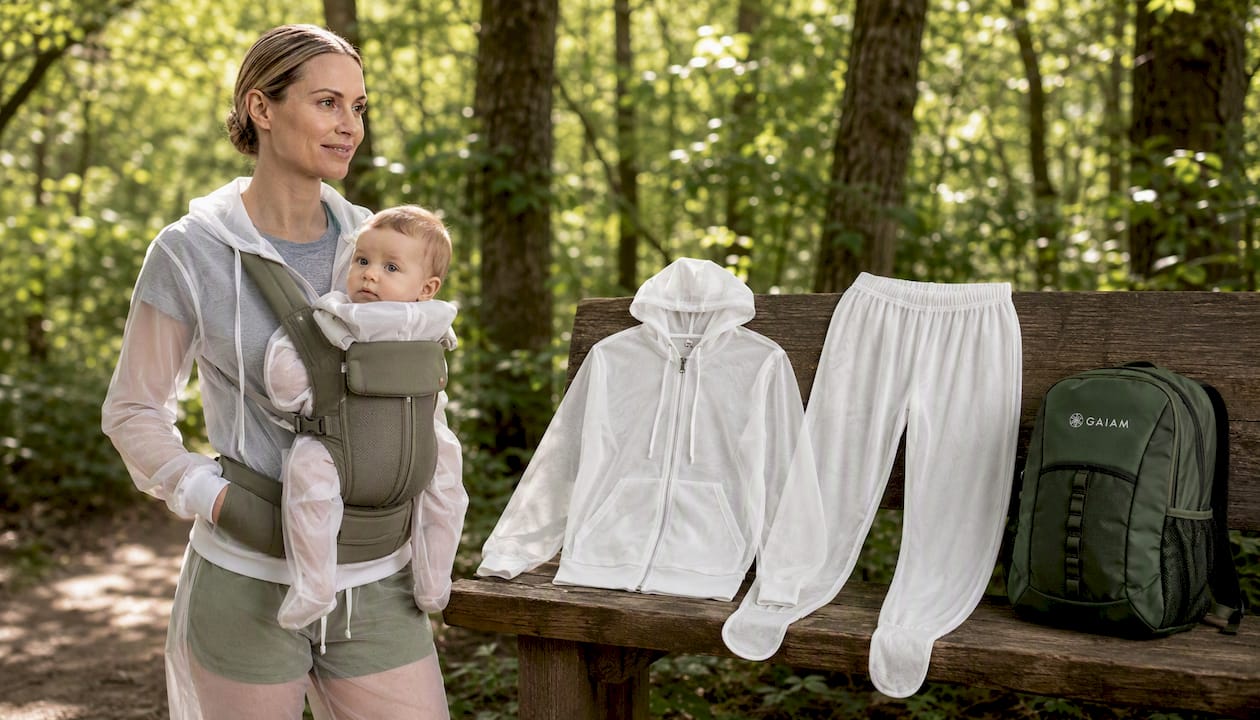
For families who want an optional topical layer for older children’s exposed skin, the Bug Away Natural Insect Repellent pairs cleanly with the Kids Set. A strong starter bundle: Kids Set plus the Bug Away Tick Removal Kit for first-aid readiness. Every order comes with a 30-day money-back guarantee, so if the fit doesn’t work with your carrier, you’re not stuck with it. Browse the full kids and families collection to find the right size and configuration for your child.
Sources
- Preventing Tick Bites | Ticks | CDC
- Preventing Lyme Disease | Lyme Disease | CDC
- Bugs are biting: Safety precautions for children - Harvard Health