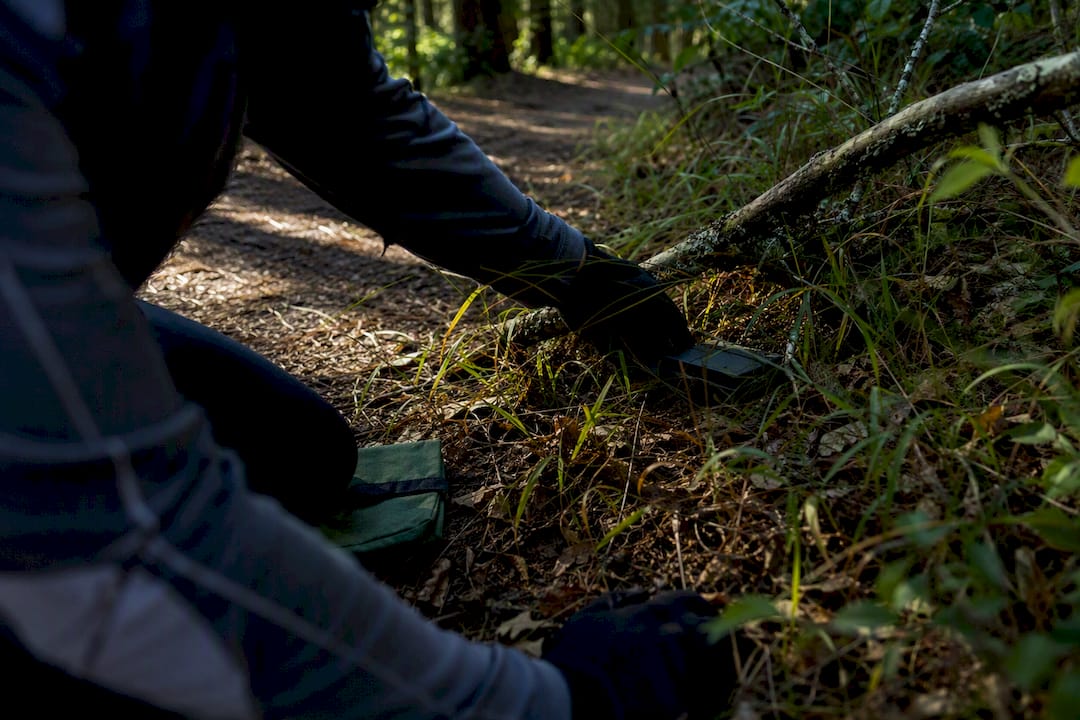
Before you drive to your next cache, wear barrier or permethrin-treated clothing, apply an EPA-registered repellent on any exposed skin, and plan to shower and check your body within two hours of getting home. Tumble-dry your clothes on high heat afterward to kill any hitchhikers. If you’d rather skip the chemicals altogether, Bugawaygear’s mesh clothing gives geocachers a physical barrier that pairs well with the rest of this routine.
TL;DR:
- Using both EPA-registered repellents and permethrin-treated clothing significantly reduces tick bites during geocaching, especially in wooded or tall grass areas.
- Tucking pants into socks, wearing light-colored, protective clothing, and staying on the trail lower tick exposure more effectively than relying solely on chemical repellents.
- Showering within two hours and performing full-body checks after outdoor activity greatly decrease the chances of tick attachment and disease transmission.
- Barrier mesh clothing provides chemical-free tick protection, eliminating the need for reapplication or special treatment schedules, ideal for families or those avoiding chemicals.
- Practice consistent habits like checking for ticks every 15 to 20 minutes and avoiding brushy edges to minimize exposure more reliably than chemical treatments alone.
Table of Contents
- Geocaching Tick Protection Checklist: Before, During, and After
- Why Layering Repellents, Clothing, and Habits Works Better Than One Fix
- Clothing and Gear That Actually Reduces Tick Contact
- How to Safely Treat Clothing With Permethrin (or Skip It Entirely)
- On-Trail Tactics That Cut Down Tick Exposure Without Missing the Cache
- Tick Checks and Removal: Doing It Right in the Field and at Home
- Protecting Kids and Pets During a Family Caching Trip
- When Symptoms Mean It’s Time to Call a Doctor
- Environmental Tick Control Around Camp and at Home
- Recognizing Tick-Borne Disease Symptoms Early
- What Actually Matters Once You’re Out There
- Gear Up With Chemical-Free Protection for Your Next Cache Hunt
- Sources
- FAQ
Geocaching Tick Protection Checklist: Before, During, and After
Ticks don’t wait for you to get to the cache site. Most bites happen in the first few minutes off the trail, when you’re pushing through brush to line up a bearing or kneeling to check under a rock ledge. A tight routine before, during, and after your outing closes most of the gaps that lead to bites.
Before you leave the house:
- Apply an EPA-registered repellent to exposed skin, following the label’s reapplication window.
- Put on protective clothing. Tucked-in, light-colored layers or a barrier mesh set both work.
- Pack a fine-tipped tick removal tool and a small adhesive lint roller in your geocaching bag.
While you’re in the field:
- Stay near the center of the trail instead of brushing through the edges where ticks wait on tall grass and low branches.
- Tuck pant legs into socks and shirts into waistbands, especially when a cache pulls you off-trail.
- Do a 15 to 20 second visual check of your legs and waist every time you stop to log a find.
- Run a lint roller over your clothes before you get back in the car. It picks up ticks that haven’t attached yet.
Once you’re home:
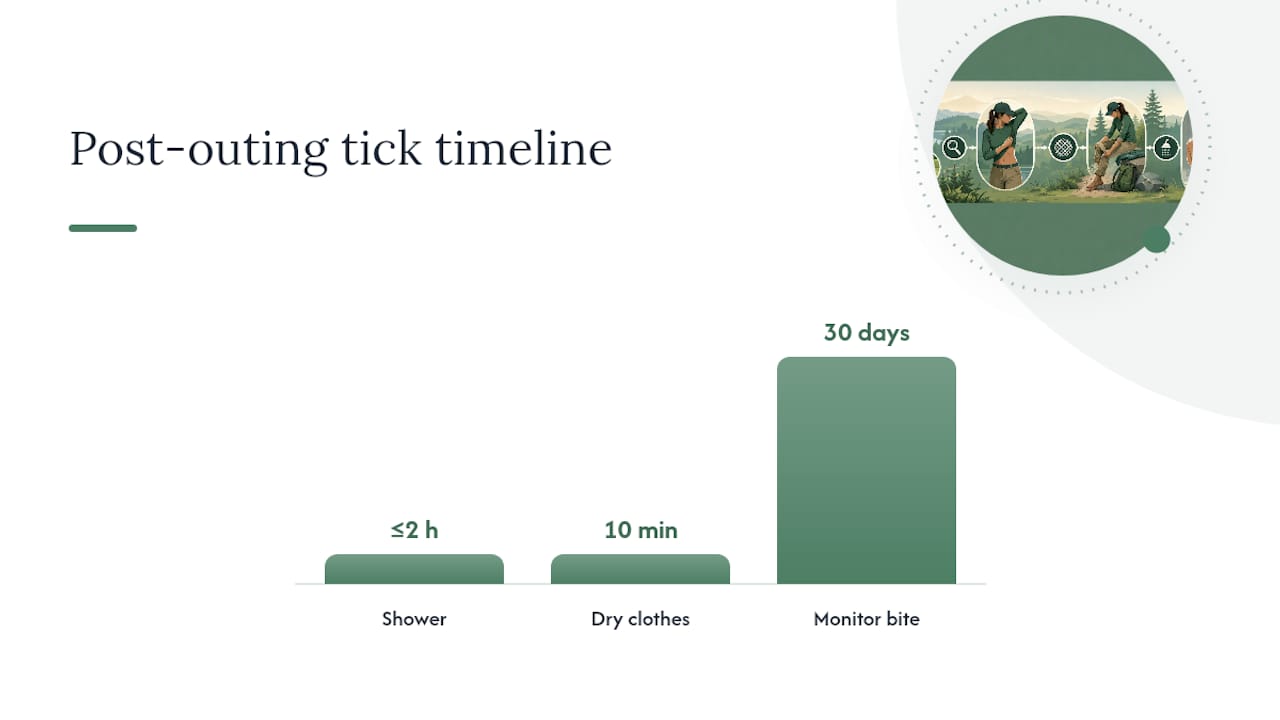
- Shower within two hours of coming indoors. This is one of the CDC’s core recommendations, since it washes off unattached ticks before they find skin to bite.
- Do a full-body check, paying attention to the scalp, ears, armpits, waistband, and behind the knees.
- Toss your field clothes straight into the dryer on high heat for at least 10 minutes. Washing alone, even in hot water, doesn’t reliably kill ticks; the dryer’s heat does.
- If you find an attached tick and your local health department recommends it, save it in a sealed bag or container in case testing becomes relevant later.
None of this takes more than a few extra minutes per outing. The habit is what protects you, not any single product.
Why Layering Repellents, Clothing, and Habits Works Better Than One Fix
No single product stops every tick. That’s the whole logic behind a layered approach, and it’s why public-health agencies keep pushing it instead of endorsing one silver-bullet spray or fabric.
The CDC’s guidance calls for combining EPA-registered skin repellents with clothing treated in 0.5% permethrin, which kills ticks on contact and stays effective through several washings. Skin repellents and treated clothing attack the problem at different points. A repellent on exposed skin deters a tick that’s already crawling toward you. Permethrin on fabric kills ticks that land on your clothes before they ever reach skin. Wear both, and you’ve covered the two most common entry points at once.
Layering isn’t about redundancy for its own sake. It’s about covering the specific gap each individual measure leaves open. A repellent on your ankles does nothing for the tick that drops onto your shoulder from an overhanging branch. Treated clothing does nothing for the strip of exposed neck above your collar. Together, they close both gaps.
On concentration and duration, Consumer Reports testing found that EPA-registered repellents containing DEET, picaridin, or oil of lemon eucalyptus (OLE) can provide multiple hours of protection, with DEET-based formulas generally performing best in their tests. Lower concentrations work but need more frequent reapplication, which matters if you’re out for six hours chasing a multi-cache trail rather than a quick lunchtime park-and-grab.
For a short trip, say under two hours near a paved trailhead, a single application of repellent plus tucked-in clothing usually covers you. For a full-day trip through wooded terrain or tall grass, that’s where treated or barrier clothing earns its place.
The tick math on why this matters: Lyme disease is the most common tickborne illness in the country, with roughly 476,000 cases treated annually. That volume isn’t limited to deep wilderness. Suburban parks, greenbelts, and the scrubby edges around geocache hides in city parks all carry risk.
A peer-reviewed review of personal protection measures found that while protective clothing, repellents, and permethrin-treated fabric are widely recommended, actual usage rates among outdoor recreationists vary a lot, and the evidence for lightweight summer clothing specifically is thinner than for heavier treated garments. That’s a fair limitation to flag. It’s also an argument for picking the layer that you’ll actually wear every single time, not just the one that tests best on paper. A comparison of DEET versus picaridin for outdoor use is worth reading if you’re deciding between the two for repeated daily application.
Consistency beats perfection here. A moderately effective routine you follow on every outing outperforms a maximal routine you only remember half the time.
Clothing and Gear That Actually Reduces Tick Contact
What you wear does more work than most geocachers give it credit for. Ticks climb from ground level upward, questing for a host, so the clothing that blocks their path at the ankle and waist stops most of them before they ever reach skin.
Start with the basics: tuck pant legs into your socks, tuck your shirt into your waistband, and wear light-colored fabric so a crawling tick shows up before it finds a fold to hide in. Detailed clothing recommendations for tick-prone terrain cover fit and fabric choices in more depth if you want a full packing list.
Beyond clothing itself, a few small pieces of gear pull real weight:
- Gaiters close the gap between boot and pant leg, which is the single most common entry point for ticks questing from low brush.
- Tall socks worn over pant cuffs create a barrier a tick has to climb over in the open, where you’re more likely to spot it.
- An adhesive lint roller kept in the car catches ticks on clothing before you sit down, and it takes about ten seconds to use.
- A basic tick removal kit with fine-tipped tweezers means you’re never trying to pull a tick off with your fingers on the trail.
The trade-off between barrier mesh and permethrin-treated fabric comes down to what you’re optimizing for. Barrier mesh clothing, like Bugawaygear’s designs, works as a physical block. There’s no chemical to wear off, no reapplication schedule, and no concern about a toddler chewing on a sleeve. Permethrin-treated garments kill ticks on contact rather than just blocking them, which some hikers prefer for dense brush terrain, but the treatment does fade with washing, and it’s a genuine chemical exposure consideration for households with young kids or cats. Neither option is wrong. It’s a question of whether you want a physical barrier or an active kill mechanism, and how much you want to manage a treatment schedule.
Pro Tip: In hot weather, skip heavy layers entirely and go with a thin mesh layer over a breathable base. You keep the physical barrier without trapping heat, and a mesh layer makes it easier to spot a tick crawling on the outside before it ever finds a seam to work into. Pair that with quick 15-second checks every hour instead of one heavy layer you’re tempted to take off by noon.
How to Safely Treat Clothing With Permethrin (or Skip It Entirely)
Permethrin is effective, but it comes with rules that matter for anyone geocaching with kids or pets in tow.
The CDC’s guidance is specific: treat clothing and gear with 0.5% permethrin, never skin. It’s formulated to bond with fabric fibers and kill ticks on contact, and it stays effective through multiple wash cycles. Applied to skin, it doesn’t work the same way and isn’t labeled safe for that use. It’s also worth knowing that permethrin is toxic to cats specifically, so households with an indoor or outdoor cat need to keep treated gear away from where the cat sleeps or grooms itself, and never treat pet bedding with a product labeled for clothing.
If you’re treating clothing yourself, a few basics keep it safe and effective:
- Treat garments outdoors or in a well-ventilated garage, never in a closed bathroom or bedroom.
- Let treated clothing dry completely, generally two to four hours, before wearing or storing it.
- Store treated items separately from untreated clothing and away from pet areas.
- Reapply according to the product label. Most sprays hold up through roughly six washes before needing another treatment.
- Never apply permethrin products directly to skin, and keep treated items out of reach of pets during the drying window.
If DIY treatment feels like one more chore on your gear checklist, pre-treated clothing and professional treatment services exist and remove the guesswork. Some outdoor retailers offer factory-treated shirts and pants that carry their protection for the life of the garment through dozens of washes. A breakdown of permethrin clothing safety covers the specifics if you’re weighing that option against buying pre-treated gear.
The chemical-free alternative is barrier mesh clothing, which sidesteps the entire treatment question. Bugawaygear’s mesh pants and jackets create a physical block ticks can’t get through, which means no application schedule, no drying window, and no pet-safety concerns to manage. That doesn’t replace the value of a skin repellent for exposed hands and neck. It just means the clothing layer of your protection plan requires zero chemical management, which matters if you’re outfitting a family for a weekend of caching and don’t want to treat five sets of kids’ clothes every few weeks.

On-Trail Tactics That Cut Down Tick Exposure Without Missing the Cache
Where you walk and how you search for a cache matters almost as much as what you’re wearing. Ticks don’t roam the middle of a maintained trail. They wait on the tips of grass blades and low branches at the trail’s edge, questing for anything warm that brushes past.
Staying near the center of the trail, even when the GPS arrow is pointing you into the brush, cuts your exposure significantly. Behavioral controls like staying on-trail and avoiding brushy edges are a low-cost, effective complement to clothing and repellents, and they cost nothing extra to practice. A trekking pole works well for parting tall grass or brush ahead of you rather than pushing through it with your legs first.
Cache searches themselves create risk that’s specific to the hobby. Kneeling in leaf litter to check under a rock, or sitting on a fallen log to log a find in the app, puts you directly in tick habitat for minutes at a time rather than seconds. A few adjustments help:
- Use a stick or trekking pole to check leaf litter and low brush before you kneel in it.
- If you’re caching with a partner, have one person hold packs and gear off the ground while the other searches, rather than setting bags down in vegetation.
- Log your find standing when possible, and save the sit-down break for a cleared, mowed area instead of the cache site itself.
- During peak tick season (generally late spring through midsummer in most regions), favor caches along maintained, mowed trails over ones tucked deep in unmaintained brush, especially with kids along.
None of this means avoiding difficult hides or sticking only to easy park caches. It means recognizing that the search itself, not just the walk to get there, is where a lot of exposure happens, and adjusting how you search accordingly.
Tick Checks and Removal: Doing It Right in the Field and at Home
A tick has to be attached for a while before disease transmission becomes likely, which is exactly why fast, thorough checks matter so much.
In the field, run a 2 to 3 minute check at natural stopping points: after logging a find, before getting back in the car, or during a snack break. Focus on ankles, waistband, and collar first, since those are the most common entry points from brushing through vegetation. A lint roller run over clothing before you get back in the car catches unattached ticks before they find a way to your skin.
When you find one attached, here’s the process:
- Grab a pair of fine-tipped tweezers or a dedicated tick removal tool.
- Grip the tick as close to the skin’s surface as possible, not by the body.
- Pull straight up with steady, even pressure. Don’t twist or jerk.
- Clean the bite site and your hands with rubbing alcohol or soap and water.
- If your local health department recommends it, save the tick in a sealed bag or container with the date.
Skip the folk remedies. Burning a tick with a match or smothering it in petroleum jelly doesn’t make it release faster and can actually cause it to inject more saliva into the bite, raising infection risk rather than lowering it.
After removal, shower within two hours if you haven’t already, and watch the bite site for the next 30 days. Given that Lyme disease alone accounts for roughly 476,000 treated cases annually in the United States, that follow-up window isn’t a formality. Toss your field clothes in the dryer on high heat for at least 10 minutes to kill anything you missed. A full walkthrough of the 90-second tick check routine covers the exact spots most people miss, particularly the scalp and behind the ears.
Protecting Kids and Pets During a Family Caching Trip
Kids and pets need the same layered approach adults do, adjusted for their specific risks.
For children, choose an EPA-registered repellent labeled appropriate for their age. Most labels specify a minimum age for products containing DEET or picaridin, so check the packaging rather than assuming a lower concentration is automatically fine for a toddler. Kids are also far less likely to notice or mention a crawling tick, so an adult needs to do the check, not just remind them to do it themselves.
For dogs joining the hunt, veterinarian-recommended tick preventives (oral chewables or topical treatments made specifically for pets) are the right call, not a product labeled for treating clothing. Permethrin sprays meant for human clothing are not formulated for direct application to a dog’s coat and skin, and they’re genuinely dangerous to cats. Check your dog’s ears, paws, and belly before it comes back inside, the same way you’d check a family member.
A short packing list makes the family version of this routine easier to actually follow:
- Spare clothing for kids in case a tick is spotted mid-outing and a quick change feels safer.
- Alcohol wipes for a fast cleanup after tick removal, without waiting until you’re home.
- A separate towel for the dog, since ticks can transfer from pet fur to hands or car seats during a post-hike toweling-off.
- A chemical-free clothing option for young kids removes one more thing to manage when you’re already juggling snacks, water, and a GPS unit.
When Symptoms Mean It’s Time to Call a Doctor
Most tick bites don’t lead to illness, but a handful of symptoms are worth acting on quickly rather than waiting them out.
Watch for an expanding red rash, particularly one with a clear or bullseye pattern, along with fever, chills, joint pain, or unusual fatigue in the weeks after a bite. Facial drooping on one side is a less common but serious sign worth immediate medical attention. The general monitoring window most clinicians recommend is about 30 days after a bite, since symptoms of tickborne illness can take days to weeks to show up.
In some regions and situations, a clinician may consider a single dose of doxycycline as prophylaxis shortly after a high-risk bite, but that decision depends on the tick species, how long it was attached, and local disease prevalence, so it rests entirely with a medical professional rather than something to self-prescribe. If you do seek care, bring the date of the bite and, if you saved it, the tick itself. That single detail can speed up diagnosis considerably. When in doubt about local risk or what to watch for, your county or state health department is a faster resource than searching symptoms online.
Environmental Tick Control Around Camp and at Home
Personal protection only covers you in the moment. Reducing the tick population in the areas you camp, park, or return to repeatedly deals with the problem at its source.
Tick tubes, cardboard tubes filled with permethrin-treated cotton, work by giving mice material to line their nests with. Mice are a primary host for young ticks, and when they carry treated cotton back to their nests, it kills the ticks feeding on them before those ticks mature and start looking for a bigger host like you. Placed around a backyard, campsite perimeter, or a frequently visited trailhead parking area (with landowner permission), tick tubes can meaningfully reduce local tick density over a season, though they work on a delay since they target the tick population’s next generation, not the ticks already active.
Simple landscape adjustments help too. Keeping grass mowed short around camping areas, clearing leaf litter and brush piles, and creating a mulch or gravel barrier between wooded edges and mowed lawn all reduce the humid, shaded microhabitat ticks need to survive. None of this replaces personal protection on the day of a hunt, since ticks from neighboring untreated land can still migrate in. But for geocachers who return to the same regional trail systems or campgrounds repeatedly, treating the environment around a home base compounds with personal protection over a season rather than starting from zero every trip.
This is a longer-term investment compared to the clothing and repellent choices covered elsewhere, and it’s most worth considering for property you control or visit often, not a one-off cache run in an unfamiliar park.
Recognizing Tick-Borne Disease Symptoms Early
Catching a tickborne illness early makes treatment dramatically simpler, and the signs to watch for are fairly consistent across the most common diseases.
Lyme disease often starts with a rash at the bite site, sometimes but not always in the classic bullseye pattern, along with fatigue, headache, muscle and joint aches, and a low fever within three to thirty days of the bite. Left unaddressed, it can progress to more serious joint, heart, or nervous system involvement, which is exactly why the 30-day monitoring window matters so much.
Other tickborne diseases carry overlapping but distinct signs. Fever, chills, and severe headache without a rash can point toward diseases like anaplasmosis or ehrlichiosis. A sudden high fever with a rash that starts on the wrists and ankles suggests something different from Lyme entirely and warrants prompt medical attention regardless of the specific diagnosis.
The pattern worth remembering is this: any unexplained fever, rash, or flu-like illness within a month of a known or suspected tick bite deserves a call to your doctor, even if the bite itself seemed minor or the tick was removed quickly. Mentioning the tick exposure specifically, rather than just describing symptoms, helps a clinician connect the dots faster than symptoms alone would.
What Actually Matters Once You’re Out There
Most tick prevention advice reads like it was written for someone standing still in a backyard. Geocaching isn’t that. You’re kneeling in leaf litter, reaching into stone walls, and pushing through brush that a normal hiker would walk around. That changes the calculus.
The conventional advice, spray once and forget it, undersells how much the search itself matters. A geocacher who nails the repellent and clothing but skips the habitat awareness (staying off brushy edges, checking before kneeling) is still leaving the door open. The habit that actually prevents bites is the boring one: check your ankles every time you stop, not just when you remember.
If there’s one place where conventional wisdom oversells itself, it’s chemical treatment as the default. Permethrin works, but it’s not the only path, and for families managing multiple sets of kids’ clothing, a chemical-free barrier is a legitimate first choice rather than a fallback. Prioritize the habit first. Pick your clothing and repellent strategy second. The gear matters less than whether you’ll actually do the check every single time.
— Thomas
Gear Up With Chemical-Free Protection for Your Next Cache Hunt
Mesh clothing offers geocachers a physical tick barrier with no spray to reapply and no chemical treatment schedule to track, which matters most for families managing gear for multiple kids or anyone who’d rather not layer permethrin onto everything they own.

Products are built from ultra-fine mesh designed to block ticks and insects on contact, and some come with a money-back guarantee if they don’t work for your outings. Solo hikers chasing a full day of caches will get the most out of the men’s Bug Away pants or women’s Bug Away pants, while families outfitting kids for weekend trips can grab the Bug Away kids’ jacket and pants set in one bundle. Rounding out a kit with gaiters and other accessories closes the gap at the boot line where most ticks make their first attempt. Check the sizing charts on each product page, and pick the set that matches your next trail.
Sources
- Preventing tick bites (CDC)
- Personal protection measures to prevent tick bites in the United States: Knowledge gaps, challenges, and opportunities (PMC)
- Best insect repellents for ticks (Consumer Reports)
This article is general information, not a substitute for advice from a qualified doctor. Consult a qualified healthcare professional about your own circumstances before acting on anything here.
FAQ
What Do the Amish Use for Tick Repellent?
There’s no single documented Amish tradition for tick repellent, and reliable sourcing on this is thin. What’s consistently effective across any community is the same layered approach the CDC recommends: protective clothing, checking skin regularly, and repellents with proven active ingredients.
Is Geocaching Still a Thing in 2026?
Yes. Geocaching remains an active, widely practiced outdoor hobby with millions of hidden caches worldwide and an ongoing community of players logging finds daily.
How Did Native Americans Keep Ticks Off?
Historical records on specific tick-avoidance practices among Native American communities are limited and vary widely by region and tribe, so no single documented method applies broadly. Modern layered protection, covering skin, treating clothing, and checking thoroughly, remains the best-supported approach today.
What Are the Worst States for Ticks?
Tick density and disease risk vary by region and season rather than a fixed yearly ranking, but the Northeast, Upper Midwest, and Mid-Atlantic consistently report the highest Lyme disease case counts in CDC surveillance data. Check state or county health department pages for current local risk before a trip.
Does Bug Away’s Clothing Replace the Need for Repellent?
No. Barrier mesh clothing blocks ticks from reaching covered skin, but exposed areas like hands, neck, and face still benefit from an EPA-registered repellent as part of a complete layered strategy.