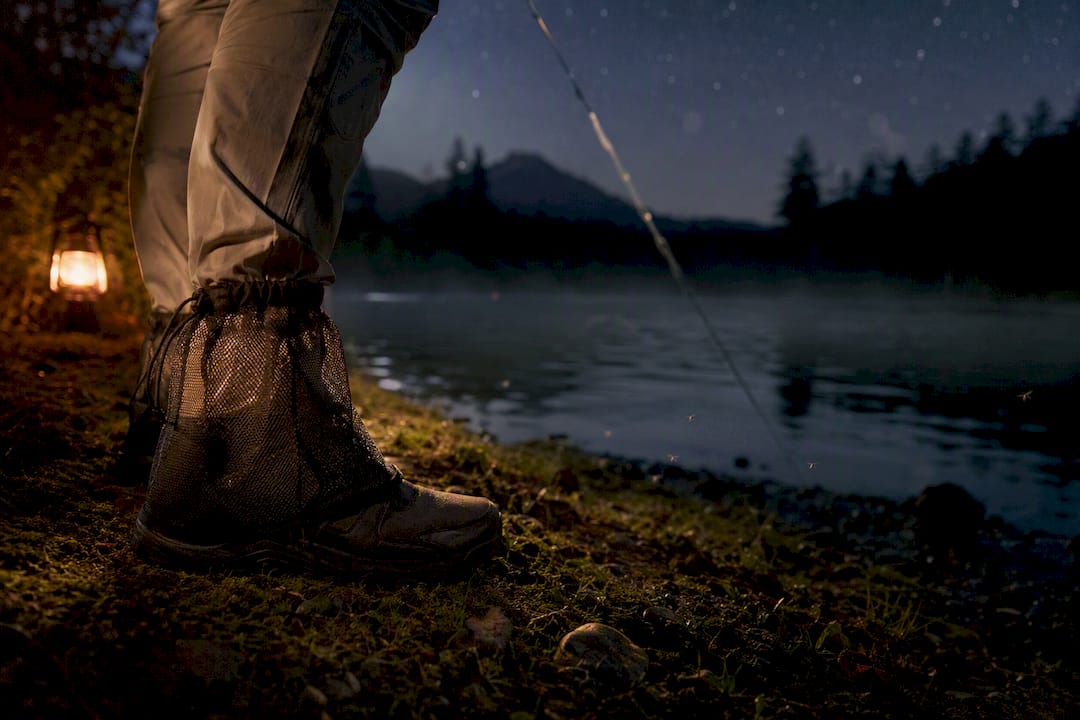
For most night fishing, wear full-coverage long sleeves and long pants made of either permethrin-treated fabric or a tight, chemical-free mesh, then apply a topical repellent to whatever skin stays exposed, like your hands, neck, and face. Mosquitoes bite most aggressively in the hour after sunset and keep hunting until dawn, and they target bare skin first because that is where they can land, probe, and feed fastest. Full coverage removes most of that target area before you ever open a repellent bottle.
Before you head to the water, run through this:
- Long sleeves, snug at the wrist or with a thumb loop
- Long pants tucked into socks or boots
- Closed-toe shoes and higher socks, not sandals
- A hat with a head net for swarm conditions
- Repellent (DEET or picaridin) on hands, neck, and face
Key Takeaways
Full-coverage clothing, either permethrin-treated or tight chemical-free mesh, combined with topical repellent on exposed skin, is the most reliable defense against night-biting insects while fishing.
| Point | Details |
|---|---|
| Cover skin first | Long sleeves, long pants, closed shoes, and a head net remove most bite targets before repellent is even needed. |
| Permethrin has limits | Treated fabric loses effectiveness after repeated washes and only protects the area it covers. |
| Mesh needs the right weave | Tight, consistent weave density determines bite resistance more than any marketing label. |
| Seal the gaps | Wrist, ankle, and collar closures stop the swarm entry points anglers forget most often. |
| Bug Away offers a chemical-free route | Its jackets, pants, combo sets, and kids set use mesh alone to block bites, backed by a 30-day guarantee. |
Table of Contents
- Fishing at Night Bug Protection Clothing: The Complete Kit
- Permethrin-Treated Clothing vs. Chemical-Free Mesh: How Each One Works
- Design Features That Actually Matter for Night Anglers
- How to Wash and Store Bug Protection Clothing Safely
- Outfit Combos by Night-Fishing Condition
- Bug Away’s Chemical-Free Mesh for Night Anglers
- Ready Your Kit With Bug Away’s Night-Fishing Line
- Sources
Fishing at Night Bug Protection Clothing: The Complete Kit
Getting dressed for a night session isn’t complicated, but the order you build your outfit in matters. Skip a layer and mosquitoes find the gap within minutes.
- Base top: a tight-weave or mesh long-sleeve shirt, light-colored so you can spot ticks and see bites forming.
- Base bottom: long pants in the same fabric, cut roomy enough to move but not baggy enough to snag on rocks or line.
- Footwear: closed shoes or boots with tall socks pulled over the pant cuff, not under it.
- Head coverage: a wide-brim hat, and a fold-down head net for marshy or wooded spots where swarms get thick.
- Hands: thin gloves or a repellent applied directly to the backs of hands, since anglers expose them constantly while casting and handling bait.
- Ankle and cuff seal: gaiters or a simple rubber band around the pant cuff to close the one gap almost every angler forgets.
For exposed skin, CDC and EPA guidance points to DEET or picaridin as the two repellents with the most consistent field performance. DEET concentrations commonly provide protection for several hours outdoors, and picaridin offers a similar duration with less odor and a lighter feel on skin, which matters if you’re gripping a rod for several hours straight.
Pro Tip: Ankle gaiters solve more bites than any other single accessory. Mosquitoes swarm low near grass and water, and a bare inch of skin between your sock and pant cuff is exactly where they land while you’re focused on your line.
Permethrin-Treated Clothing vs. Chemical-Free Mesh: How Each One Works
Permethrin-treated fabric works by carrying a synthetic insecticide directly on the fibers. The EPA states permethrin is the only repellent registered for factory treatment of clothing, and every treated garment sold legally must carry a pesticide-use hang-tag with label directions. A mosquito that lands on treated fabric and stays in contact long enough absorbs a dose that disrupts its nervous system, either killing it or driving it off before it can bite through.
Chemical-free mesh takes the opposite approach: no insecticide, just a tight physical weave that a mosquito’s proboscis can’t reliably penetrate. The tighter and more consistent the weave, the harder it is for an insect to find purchase and drive its mouthparts through to skin. This is the mechanism behind Bug Away’s fishing-specific mesh line, and it’s also why fit matters as much as fabric, since a loose weave stretched tight across skin (think a sleeve pulled taut at the elbow) gives a mosquito more of a foothold than a weave with slack fabric hanging away from the body.
Both approaches have real limits worth knowing before you buy:
- Permethrin only protects the fabric it’s applied to. Bare hands, neck, and face still need topical repellent.
- Washing degrades permethrin over time, and most factory-treated garments lose effectiveness after a set number of wash cycles listed on the hang-tag.
- Tight-fitting fabric of any kind, treated or not, increases bite-through risk since skin contact against the weave gives insects more time to find a gap.
- Neither option is a complete substitute for skin-applied repellent on exposed areas.
Consumer Reports tested permethrin-treated shirts against a DEET-sprayed shirt and found the treated garments reduced bites on covered skin, but performed less consistently than direct DEET application across their trials. Their recommendation lines up with what most entomologists suggest: treat the clothing as your base layer of defense, then close the gap on skin with a topical product.
Design Features That Actually Matter for Night Anglers
Not all “bug-proof” clothing performs the same way once you’re standing in tall grass at dusk with a rod in your hand, and understanding why bass boat graphics require unique design can similarly help anglers select gear that complements both protection and boating needs. A few features separate gear that holds up from gear that looks good on a hanger.
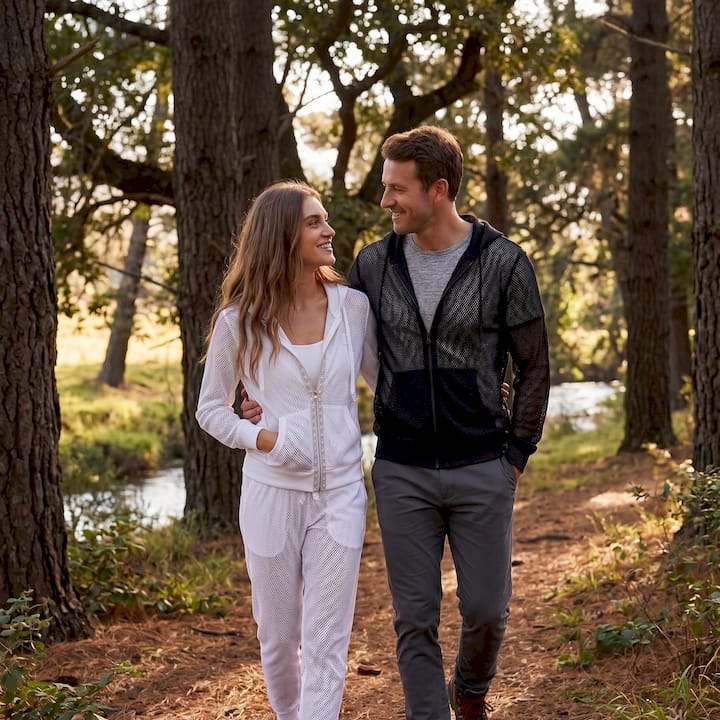
Fit and closures. Loose-fitting garments create a small air gap between fabric and skin, and that gap slows a mosquito’s proboscis down long enough for repellent or permethrin to work, or for you to simply notice and brush it off. Tight cuffs at the wrist and ankle close the entry points without making the whole garment restrictive. Look for elastic or drawstring closures rather than fabric that just hangs open.
Fabric properties. Mesh pore size is the number that actually determines bite resistance, and manufacturers rarely advertise it clearly, so check product descriptions for language about weave density rather than trusting marketing terms like “insect-proof” at face value. Breathable, moisture-wicking construction matters just as much on a humid night as it does at noon, and a UPF rating protects you during the dusk hours before the sun fully drops.
Angler-specific details. Pockets that seal instead of gape open, a hood or collar built to pair with a head net, and vents that close rather than stay permanently mesh-open all make a difference when you’re moving between casting and sitting still for long stretches. Some outdoor brands now build integrated net systems directly into hoods, which cuts down on separate head-net fumbling in the dark.
Durability markers. Reinforced stitching at stress points (elbows, knees, cuffs) tells you a garment was built for repeated outdoor use rather than a single season. Check whether the fabric’s protective property, treated or physical, is described as wash-durable or a one-time application.
- Snug wrist and ankle closures, not just long sleeves
- Fabric described with specific weave or pore density, not vague “bug-proof” claims
- UPF rating alongside insect protection
- Sealed vents and pockets
- Reinforced seams at high-wear points
Pro Tip: Check the tag before you check the price. A garment with a real pesticide-use hang-tag and listed wash-cycle rating tells you far more about actual performance than a product photo of someone smiling in a swamp.
How to Wash and Store Bug Protection Clothing Safely
Treated and mesh clothing both lose effectiveness if you handle them wrong, and the fixes are simple once you know them.
Every factory-treated garment ships with an EPA-mandated pesticide-use hang-tag that lists application details, wash-cycle limits, and first-aid information. Read it before the first wear, not after the first wash. The label is the actual legal document governing that garment’s chemical treatment, and skipping it is the most common mistake anglers make.
- Wash treated garments separately from untreated clothing to avoid uneven residue transfer.
- Skip fabric softener and dryer sheets, since both coat fibers in a way that can shorten permethrin’s effective life.
- Air dry when the label recommends it, since heat cycles accelerate breakdown of the treatment.
- Store clothing away from direct sunlight for the same reason.
Permethrin-treated clothing isn’t right for everyone. People with known pesticide sensitivities, infants, and anyone advised by a doctor to avoid insecticide exposure should lean toward chemical-free mesh instead, and that conversation is worth having before a trip rather than after a reaction. Our guide to permethrin clothing safety covers the specifics in more depth.
If a factory-treated garment has aged past its listed wash-cycle count, consumer permethrin sprays exist for re-treating fabric at home, but they carry their own label instructions and should never be applied indoors without ventilation or used on garments that will touch a baby’s or toddler’s skin.
Outfit Combos by Night-Fishing Condition
Different water, different bugs, different outfit. Here’s how to build for four common scenarios.
- Warm, humid marsh nights. Lean fully into chemical-free mesh here, since heat and humidity make treated fabric feel heavier over long sessions. Pair a lightweight mesh long-sleeve and pants with a head net and thin moisture-wicking socks. This combo keeps you cool while closing off the swarm zones where salt marsh mosquitoes hunt hardest at dusk.
- Cool lakeside evenings. A midweight permethrin-treated jacket and pants combo holds up well once temperatures drop, since you’re less likely to sweat through the treatment and the extra warmth is welcome. Add gaiters at the ankle, where cool-night mosquitoes still congregate near shoreline grass.
- Variable weather, shore to boat. Build in layers: a treated or mesh base layer topped with a quick-don outer shell that seals at the wrist, waist, and ankle. This setup lets you add or shed a layer as temperature swings through the evening without ever leaving skin exposed.
- Family trips with kids. Keep it simple: a full-coverage mesh set that a child can put on and take off without help, paired with a head net for younger kids who tend to sit still near lanterns where bugs cluster. Skip permethrin treatments for younger children unless a pediatrician has specifically approved it.
Whichever combo you land on, the same rule applies across all of them: close the gaps at wrist, ankle, and collar first, then worry about everything else.
Bug Away’s Chemical-Free Mesh for Night Anglers
Bug Away’s fishing line was built around a simple problem: most anglers don’t want to spray insecticide on their skin or their kids’ skin every time they head out after dark. The mesh fabric blocks mosquitoes and ticks through weave density alone, no permethrin, no spray-on chemicals, and no hang-tag warnings to read before you can wear it.
The lineup covers most night-fishing scenarios directly:
- Bug Away Jacket and Bug Away Pants (men’s and women’s) for anglers who want to build their own layered combo.
- Bug Away Combo Set (men’s and women’s) for full jacket-and-pants coverage in one purchase.
- Bug Away Kids Set for family trips where a simple, chemical-free option matters more than anything else.
Bug Away’s approach solves a specific problem for a specific angler: someone who wants full-coverage protection without adding another chemical layer to their skin or their kid’s skin every single trip out. The mesh does the work permethrin does, just without the pesticide.
Bug Away fits best for anglers with sensitive skin, parents outfitting kids for evening trips, and anyone who’d rather avoid insecticide-treated fabric altogether. The brand backs every product with a 30-day money-back guarantee and has collected reports from more than 500 customers describing zero tick bites while wearing the gear. Read more about the mesh technology behind the fishing line.
How I pick clothing for a night session
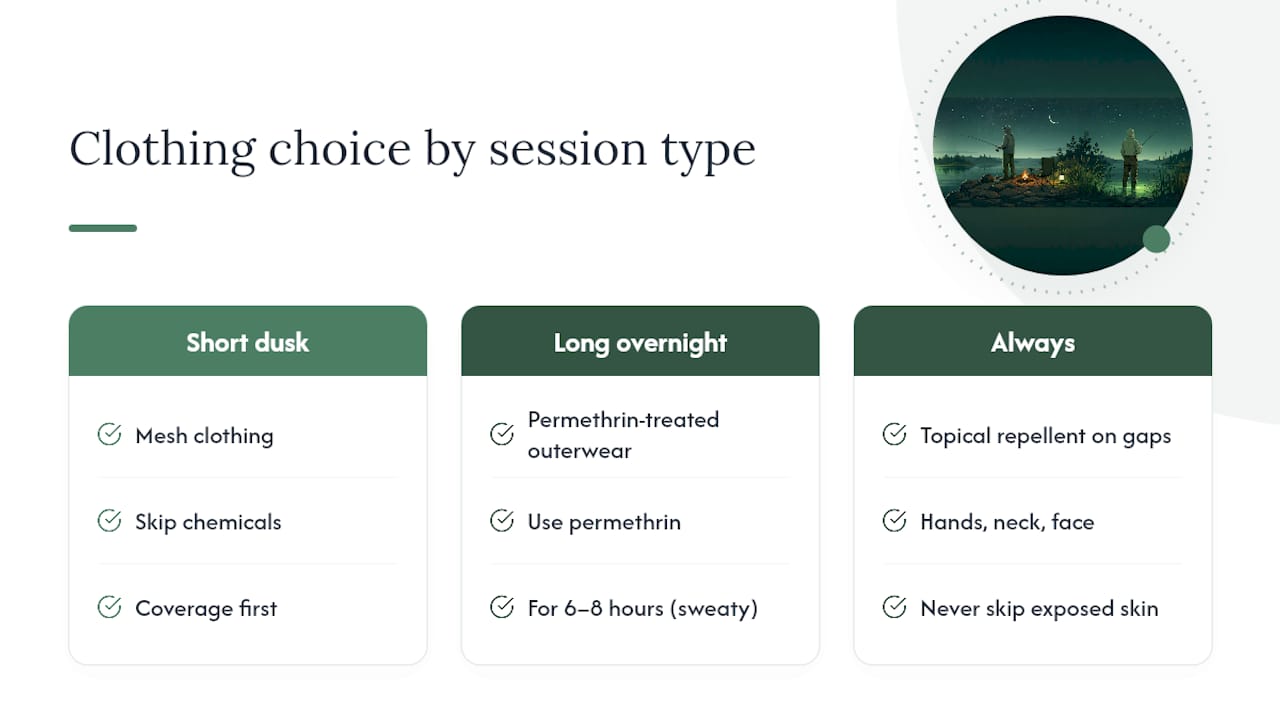
Every angler eventually learns the hard way that a single mosquito bite on the back of the hand at 9 p.m. can ruin the next three hours of a trip. That lesson shapes how I think about gear now: coverage first, chemicals second, and never skip the exposed skin.
My rule of thumb is simple. For a short dusk session or anything where I want to skip chemicals entirely, mesh wins. For a long, stationary overnight sit where I know I’ll be sweating through layers for six or eight hours, permethrin-treated outerwear earns its place. Either way, hands, neck, and face get a topical repellent no matter what the rest of the outfit is doing. That combination approach, physical coverage as the base and topical repellent on the gaps, beats betting everything on one method.
— Thomas
Ready Your Kit With Bug Away’s Night-Fishing Line
Skip the permethrin label-reading and the re-treatment schedule altogether. Bug Away gives anglers a chemical-free mesh option that does the coverage work of treated clothing without a pesticide hang-tag to track or a wash-cycle countdown to watch.
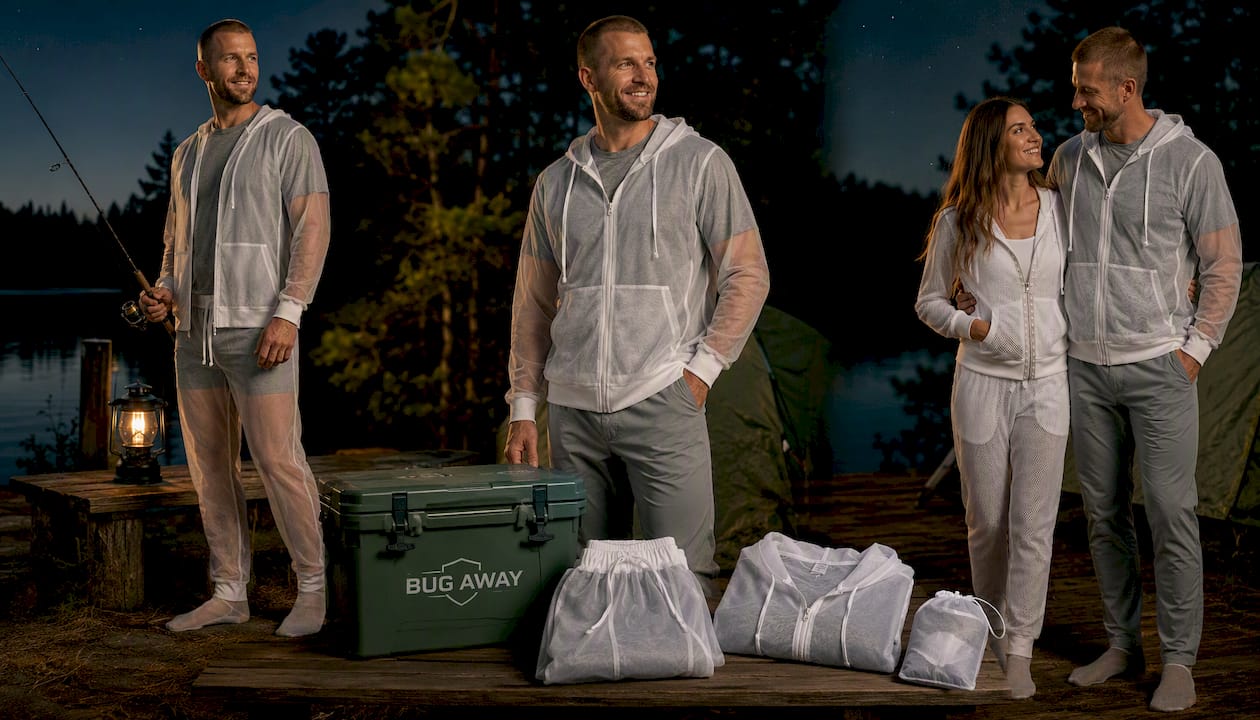
If you’re outfitting yourself for regular trips, the Bug Away Pants for Men or Bug Away Pants for Women work well as a standalone leg layer over whatever base you already fish in. For full coverage in one order, the Bug Away Combo Set for Men and Bug Away Combo Set for Women pair a jacket and pants built from the same mesh. Bringing the family? The Bug Away Kids Set gives younger anglers the same chemical-free protection without any sizing guesswork.
Every order carries a 30-day money-back guarantee, so there’s no risk in trying the fit and coverage for your next trip out. Browse the full fishing lineup and pick the set that matches how you fish.