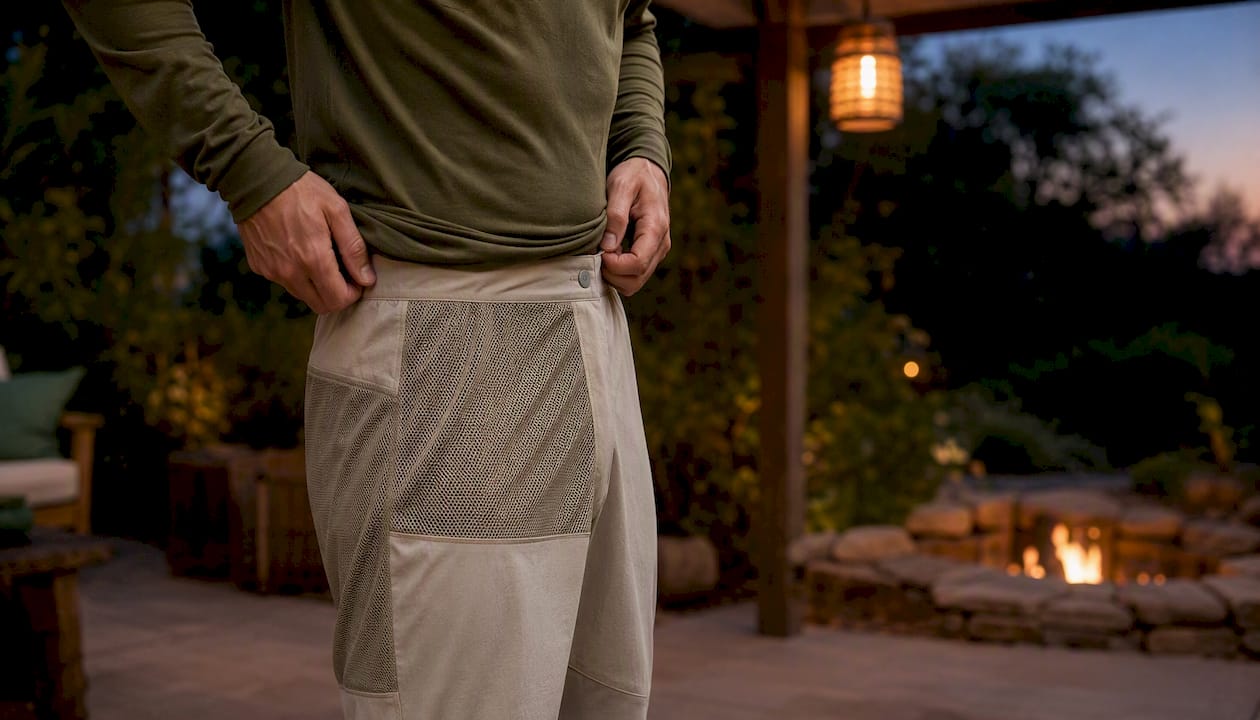
At dusk, wear loose, light-colored, tightly woven long sleeves and pants, tuck them into closed-toe shoes and socks, and apply an EPA-registered repellent to every inch of exposed skin. That combination works because the fabric barrier and the skin repellent cover two different weak spots: fabric stops bites through the weave, repellent stops bites where skin is still showing.
Your night-of checklist:
- Loose, tightly woven long sleeves and pants in white, khaki, or pale colors
- Pants tucked into socks, socks into closed-toe shoes, cuffs and collars closed
- DEET, picaridin, or oil of lemon eucalyptus repellent on hands, neck, and face
Permethrin belongs on clothing and gear only. Never spray it on skin. Save skin repellents for exposed areas.
Key Takeaways
Dusk mosquito protection works best as a layered system: tightly woven loose clothing blocks bites through fabric, and an EPA-registered repellent covers whatever skin is still showing.
| Point | Details |
|---|---|
| Fit beats fabric alone | Loose, tightly woven long sleeves and pants create the air gap that stops a mosquito’s proboscis. |
| Cover entry points | Tuck pants into socks, close cuffs, and wear closed-toe shoes to protect ankles and wrists. |
| Treated clothing has limits | Factory treatments last roughly 70 washes but still need repellent on exposed skin to close gaps. |
| Pair, don’t substitute | Apply DEET, picaridin, or oil of lemon eucalyptus to skin even when wearing treated garments. |
| Chemical-free option | Bugawaygear’s mesh clothing physically blocks bites without permethrin or sprays, with integrated foot coverage for ankle protection. |
Table of Contents
- How Clothing Stops Mosquito Bites
- What to Wear at Dusk for Mosquito Protection
- Permethrin-Treated Clothing: What It Does and How Long It Lasts
- Pairing Treated Clothing With Skin Repellent
- A Quick Dressing Checklist Before You Head Outside
- What the Evidence Actually Shows
- Deciding Whether Treated Clothing Is Worth Buying
- Comfort Is What Makes Protection Stick
- A Chemical-Free Way to Close the Gaps
- Frequently Asked Questions
- Sources
How Clothing Stops Mosquito Bites
Clothing blocks bites when the weave is tight enough and the fit loose enough to keep a mosquito’s mouthparts away from your skin. A mosquito’s proboscis measures roughly 1.5 to 2 millimeters long and 40 to 100 micrometers wide. That is thin enough to slide through a loose knit or stretched spandex but not through a tightly woven cotton or ripstop nylon.
Fit changes the equation as much as fabric does. A mosquito that lands on fabric pressed flat against your skin, like a tight legging on a calf, can still reach through because there is no air gap to stop the proboscis from making contact. The same fabric worn loose creates a buffer zone the insect cannot cross, a distinction field practitioners point to as one of the most overlooked failure points at dusk, especially around ankles and waistbands where fabric tends to gap or cinch.
Color plays a secondary role. Mosquitoes find you first by carbon dioxide, then use sight and heat to close in, and darker colors like black, red, and navy tend to draw more attention once they are hunting visually.
Pro Tip: Hold a shirt up to a bright window. If you can easily see light through the weave, a mosquito’s proboscis can probably get through it too. Swap it for something denser before dusk.
What to Wear at Dusk for Mosquito Protection
The right dusk mosquito protection clothing comes down to four choices: fabric, fit, color, and coverage.
Fabrics that work:
- Tightly woven cotton or cotton-blend shirts
- Ripstop nylon or midweight technical microfiber
- Denim (heavy but effective for gardening or yard work)
Fabrics to skip:
- Thin knits and jersey tees
- Leggings and spandex
- Anything sheer enough to see through easily
Fit matters as much as material. Choose clothing loose enough to create an air gap between fabric and skin. Anything that clings works against you, no matter how dense the weave.
For color, stick to white, khaki, pale blue, or pale green. Skip black, red, and orange, which tend to draw more attention from mosquitoes already homing in on your CO2 trail.
Coverage closes the gaps mosquitoes exploit. Tuck your shirt into your pants, tuck your pants into your socks, and close cuffs and collars. Wear closed-toe shoes with socks that reach at least mid-calf, since ankles are one of the most commonly bitten areas outdoors.
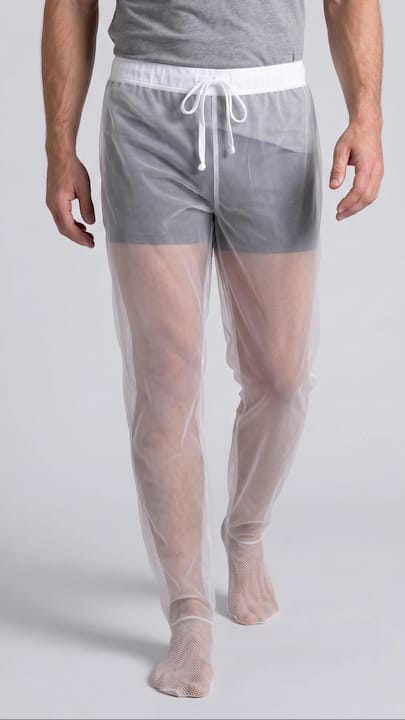
None of this works if it’s too hot to wear. For warm evenings, look for lightweight tightly woven fabrics or sun shirts with mesh ventilation panels under the arms, which keep you cool without opening a gap in protection.
Pro Tip: For a patio dinner, a loose linen shirt and pants beat shorts and a tank every time. For an evening run, choose a lightweight woven long-sleeve with underarm vents. For camping, layer a treated outer shell over a breathable base and tuck everything in before the sun drops.
Permethrin-Treated Clothing: What It Does and How Long It Lasts
Permethrin-treated clothing works as an insecticide bonded to fabric fibers. It doesn’t repel mosquitoes the way a skin product does. Instead, it incapacitates or kills insects that land on or crawl across the treated fabric.
Factory-treated garments and do-it-yourself sprays are not the same product. Factory treatments bond permethrin to fibers using a process that typically holds up through around 70 launderings, depending on the manufacturer’s testing. A DIY spray applied at home wears off much faster, often lasting only a handful of washes or a few weeks before it needs reapplication. If you’re treating clothing you’ll wear regularly, factory-treated gear holds its value far longer than a spray bottle from the hardware store.
Wash-life at a glance: factory treatments last roughly 70 washes; DIY sprays last closer to 6 washes or 6 weeks.
Even a well-treated garment isn’t flawless. Consumer Reports testing found permethrin-treated shirts reduced bites but performance varied by product and mosquito species, and in some trials a shirt sprayed with DEET prevented all bites while a factory-treated shirt did not. Treat permethrin clothing as one strong layer, not a guarantee.
Safety rules matter here. Permethrin is for fabric and gear only, never skin. Let treated clothing dry completely before wearing it, follow the product label exactly, and if you’re applying a home treatment, do it outdoors and away from pets, especially cats, which are highly sensitive to permethrin. For more on handling and reapplication, Bugawaygear’s guide to permethrin clothing safety walks through the details.
To get the most from treated garments:
- Let new treatments cure and dry fully before the first wear
- Wash treated items separately, in cold water, without fabric softener
- Store treated clothing folded in a sealed bag away from direct sunlight
Pairing Treated Clothing With Skin Repellent
Always apply an EPA-registered skin repellent to any exposed skin, even when you’re wearing treated clothing. This is the pairing that actually closes the gap, since no amount of treated fabric covers your hands, neck, and face.
The EPA lists DEET, picaridin, IR3535, and oil of lemon eucalyptus (PMD) as approved active ingredients for skin-applied repellents. For a few hours at dusk, EPA-registered repellents like DEET and picaridin at recommended concentrations provide effective coverage with proper application and reapplication.
A few application rules matter more than people expect:
- Apply repellent to skin only, never underneath clothing
- Reapply according to the label, not by guesswork
- Avoid eyes, mouth, and any cuts or irritated skin
- Check label guidance carefully before using on children, and consult a doctor if pregnant
Never apply permethrin to skin. It’s built for fabric, and skin-applied repellents are a completely different category of product. Keep the two jobs separate: permethrin guards the fabric, DEET or picaridin guards the skin underneath and around it.
A Quick Dressing Checklist Before You Head Outside
- Put on a loose, tightly woven long-sleeve shirt in a light color
- Choose loose pants in a matching light color, not tight leggings
- Tuck your shirt into your pants
- Tuck your pants into knee-high or mid-calf socks
- Put on closed-toe shoes
- Apply repellent to hands, neck, ears, and face
- Check for gaps at the waist, wrists, and ankles before you walk out the door
Different activities call for different minimums. A patio dinner might only need a light long-sleeve and pants with repellent on hands and neck. An evening run calls for a breathable woven long-sleeve, ankle socks, and repellent on any skin left uncovered. Gardening at dusk means heavier fabric like denim, gloves, and full ankle coverage since you’re kneeling near grass and soil. Camping adds a treated outer layer on top of your base clothing for the hours around sunset when mosquito activity peaks.
Comfort isn’t optional here. If the outfit is too hot to keep on, you’ll take it off, and that defeats the entire plan.
What the Evidence Actually Shows
Public health guidance is consistent on one point: clothing and skin repellent are not substitutes for each other. The EPA specifically warns against what it calls the “invincibility trap”, where wearing treated clothing leads people to skip repellent on exposed skin, leaving ears, face, and hands unprotected.
Independent lab testing backs up the layered approach. Consumer Reports found that treated garments reduce bites but don’t outperform a properly applied skin repellent in every scenario, with results shifting by product and mosquito species.
Treated clothing plus skin repellent beats either measure alone, in every test that separates the two.
Timing adds another layer of risk. Culex mosquitoes, the species most associated with West Nile virus, feed heavily from dusk through dawn, which is exactly why public health guidance singles out the hour after sunset for extra precaution.
Deciding Whether Treated Clothing Is Worth Buying
If you’re outside at dusk daily or weekly, in a wooded area, near wetlands, or gardening most evenings, permethrin-treated clothing earns its cost. The wash-life numbers favor factory treatments for anyone using the gear regularly, since a garment good for around 70 washes outlasts a season or more of steady use.
If dusk exposure is occasional, a walk here, a barbecue there, untreated protective layers paired with a solid skin repellent cover you just as well without the extra spend or laundering rules.
Budget and maintenance matter too. Treated clothing needs separate washing and eventual retreatment or replacement, while untreated layers just need the same laundry routine as everything else in your closet.
Pro Tip: Before buying a full treated wardrobe, fix your worst exposure points first. Most bites land on ankles and wrists. A pair of tucked socks and a pants cuff that actually closes will do more for you than an expensive shirt you rarely wear.
Comfort Is What Makes Protection Stick
The best dusk outfit is the one you’ll actually keep on for the whole evening. I’ve seen plenty of good advice fail simply because the recommended layers were too hot, too stiff, or too itchy to survive a real barbecue or a real hike.
Clothing is one part of a stack. Timing your outdoor hours around dusk peaks, draining standing water nearby, and picking breathable fabric all add up together. If you’re only going to spend money and attention on one thing, spend it closing the gaps at your ankles and wrists first. Those small areas cause a disproportionate share of bites, and they’re the cheapest fix in the whole system.
A Chemical-Free Way to Close the Gaps
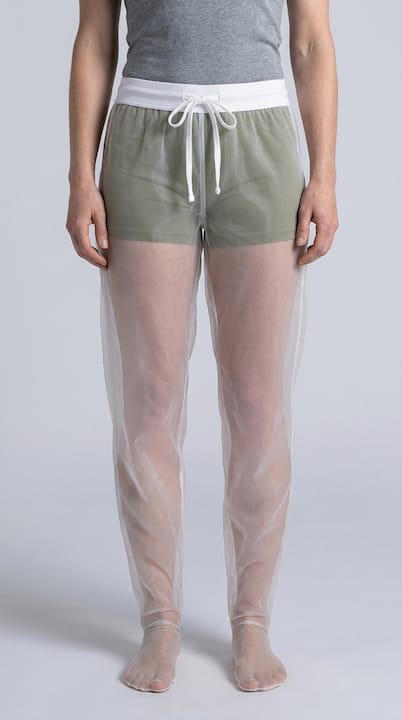
If you’d rather skip permethrin altogether, Bugawaygear builds an ultra-fine mesh barrier that physically blocks mosquitoes and ticks without any insecticide on the fabric.
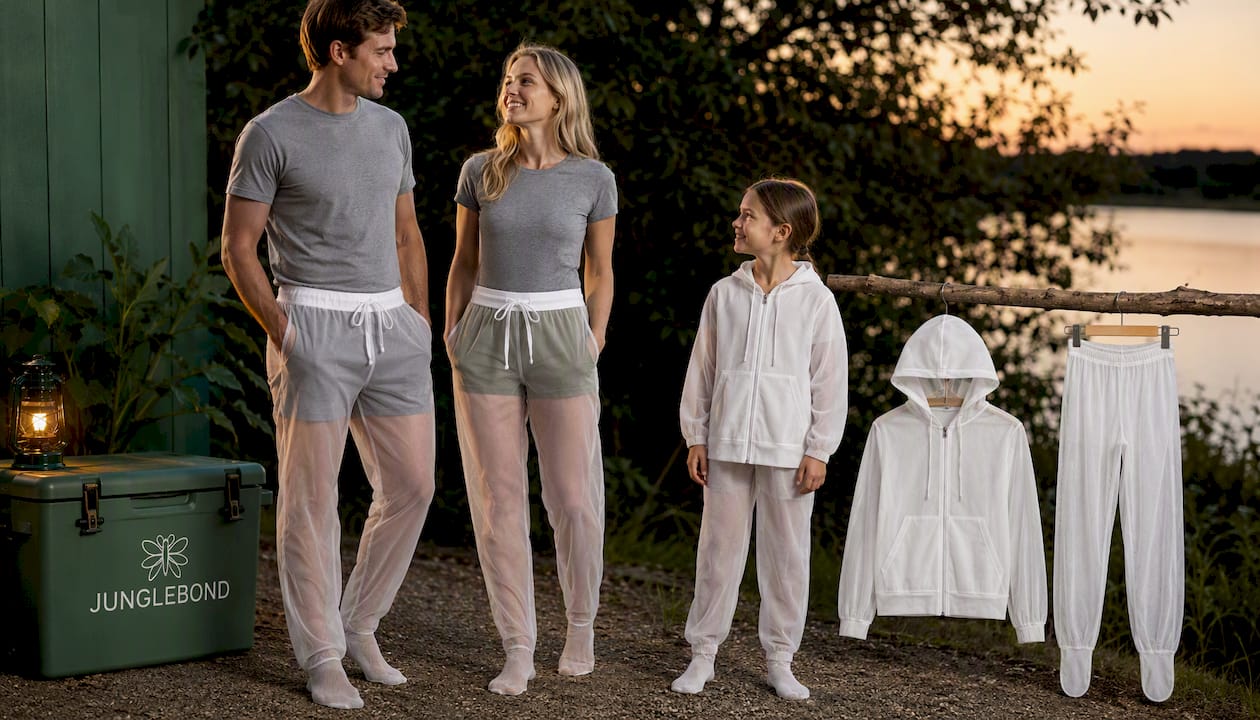
The mesh weave is dense enough to stop a mosquito’s proboscis on contact, and the fit is designed loose enough to keep that protective air gap in place without trapping heat, which solves the exact comfort problem that makes people shed their protective layers halfway through the evening. Integrated foot coverage handles the ankle gap that causes so many bites, and the breathable mesh means you can wear it through a warm evening without sweating through your shirt by sunset. For readers who’d rather not deal with treatment schedules, wash restrictions, or wondering how many launderings are left on a factory-treated garment, Bugawaygear’s pants for men and pants for women offer a permanent physical barrier instead of a chemical one that fades over time. Check sizing and availability on the shop page before your next evening outdoors.
Frequently Asked Questions
Does dark clothing really attract more mosquitoes at dusk? Yes, once a mosquito has already located you through carbon dioxide, darker colors like black and red tend to hold its attention more than pale colors such as white or khaki.
Can mosquitoes bite through jeans or thick fabric? Tight jeans pressed against skin can still allow bites in spots where fabric hugs the leg. Loose denim performs better because it keeps the fabric off your skin.
How often do I need to reapply permethrin to clothing? Factory-treated garments hold up through roughly 70 washes. DIY sprays need reapplication after about 6 washes or 6 weeks, whichever comes first.
Is it safe to spray permethrin directly on skin? No. Permethrin is registered for clothing and gear only. Use a separate EPA-registered skin repellent like DEET or picaridin on exposed skin.
What’s the single most effective thing I can do for dusk protection? Combine loose, tightly woven clothing with closed entry points (tucked pants, closed shoes) and an EPA-registered repellent on exposed skin. Skipping either half of that pairing leaves a gap mosquitoes will find.
This article is general information, not a substitute for advice from a qualified doctor. Consult a qualified healthcare professional about your own circumstances before acting on anything here.
Sources
- Does bug-repellent clothing really work? | Utah State University Extension
- Skin-applied repellent ingredients | U.S. EPA
- Permethrin treated clothing & mosquito bites | Consumer Reports
- Can Mosquitoes Bite Through Clothing? | Anchor Pest Services
- West Nile Virus prevention | RepelTheBugs
Follow product labels closely and check local public-health alerts if mosquito-borne illness activity is elevated in your area.