
Washing alone will not reliably kill a tick. Cold and warm cycles let most survive, and even a hot wash only works if the water hits 130°F, which many home machines never reach. The action that matters most is heat: dry clothes on high for at least 10 minutes, and if you have time, skip the wash entirely and dry them first. Strip down as soon as you’re back indoors and get everything into the dryer before it touches a hamper.
TL;DR:
- Washing clothes at home is unreliable for tick removal unless water reaches 130°F and clothes are dried on high heat for at least 10 minutes.
- Drying should be the primary method for tick decontamination, as it penetrates fabric quickly and effectively kills ticks within six to ten minutes.
- Ticks often hide in seams and fabric folds, making them resistant to water, detergent, and submersion; heat exposure is the most dependable solution.
- Treating outdoor gear with permethrin or wearing mesh clothing creates physical barriers that prevent ticks from reaching skin or hiding in fabric folds.
- Storing and inspecting clothes and gear properly after drying reduces the chance of tick survival and return, while laundry alone is insufficient for complete decontamination.
Table of Contents
- Does Washing Kill Ticks? What the Research Says
- The Right Order: Dry First, Then Wash
- Showers, Body Checks, and Permethrin: The Other Half of the Plan
- Myths That Don’t Hold Up: Flushing, Soaking, and Detergent Alone
- How Bug Away Mesh Clothing Cuts Out the Laundry Guesswork
- Storing Washed Clothes So Ticks Don’t Come Back
- Why the “Just Wash It” Advice Keeps Failing People
- Skip the Laundry Guesswork With Bug Away Gear
- Sources
Does Washing Kill Ticks? What the Research Says
The short answer is no, not consistently. A study on tick survival in automatic washers found that cold and warm wash cycles left most nymphs and adult ticks alive. Only hot water at or above a certain high temperature killed every tick tested, and plenty of residential water heaters are set well below that to avoid scalding risk, which means a “hot” setting at home may not actually reach the number that matters.
Ticks are also better at surviving submersion than most people assume. They can shelter in the folds and seams of a shirt collar or pant cuff, where fabric layers block water and detergent from reaching them directly. USDA researchers documented this seam-hiding behavior after finding ticks still alive following a full wash cycle. Agitation dislodges some, but it doesn’t drown the ones tucked into a seam.
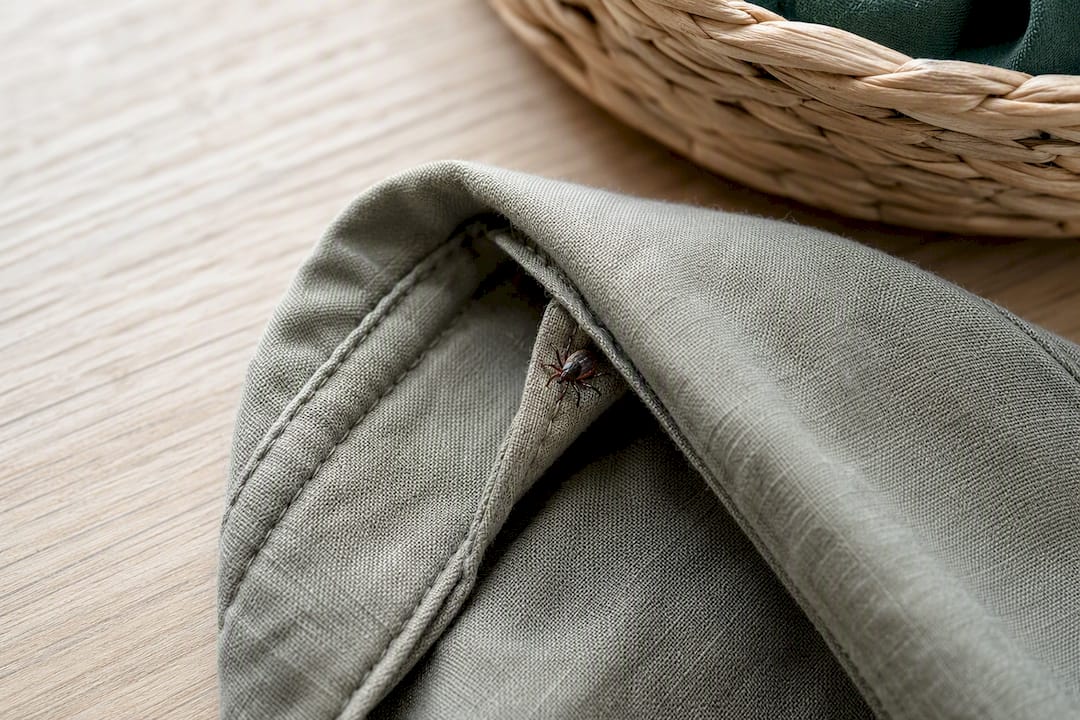
The dryer tells a different story. Heat penetrates fabric fast when there’s no water buffering the temperature, and tests on residential dryers found that placing clothes directly on high heat killed ticks in as little as six minutes in some trials. The CDC recommends tumble drying on high for a full 10 minutes, a more conservative window that accounts for different dryer models and fabric loads.
Two things explain the gap between washing and drying results:
- Wet, freshly washed clothes take longer to heat through because moisture buffers the internal fabric temperature, even when the dryer air is hot.
- Species matter too. Blacklegged ticks (the ones tied to Lyme disease) and lone star ticks don’t respond identically to heat exposure, so a method that clears one species with room to spare might need extra time for another.
The number that matters most: dry clothes on high heat for 10 minutes minimum, straight out of the closet, before they ever touch a washer.
The Right Order: Dry First, Then Wash
Most people default to washing first because that’s the normal laundry order. Flip it. Drying dry clothes on high heat works faster and more reliably than any wash cycle, because there’s no water slowing down how fast the fabric heats up.
Here’s the sequence that actually works, based on TickEncounter and CDC guidance:
- Strip outdoors or in a mudroom, not the bedroom. Ticks that fall off clothing can crawl onto carpet or bedding, so get changed before you’re deep in the house.
- Put clothes straight into the dryer on high heat, dry, for at least 10 minutes. Don’t wash first. If the clothes are already dry from the hike, this step alone is often enough to kill anything hitching a ride.
- If clothes are damp or sweaty, add time. Moisture buffers heat, so give damp loads several extra minutes beyond the standard 10.
- Wash after drying, if you want the clothes clean. Once the heat exposure is done, a normal wash cycle is fine for actually cleaning the fabric.
- If you must wash first, use water at 130°F (54°C) or higher. Check your water heater setting if you’re relying on this step, because most units default lower for safety.
- Adjust for dryer type. TickEncounter notes that gas dryers tend to run hotter than electric models, so add extra time if you’re using an electric machine, which may run cooler than gas dryers.
Boots, backpacks, and other gear that can’t go in a dryer need a different plan. Air them out in direct sunlight, inspect the seams and straps by hand, and brush off anything visible. Sealing gear in a plastic bag left in full sun for a day can raise the interior temperature enough to stress ticks, but it’s an inconvenient backup option, not a dependable substitute for direct heat, and it depends heavily on how hot and sunny the day actually is.
Pro Tip: Keep a mesh laundry bag by the door during tick season. Toss worn clothes straight into it, then transfer the whole bag to the dryer without touching the fabric. It cuts down on ticks dropping onto floors or furniture during the walk from trailhead to laundry room.
Showers, Body Checks, and Permethrin: The Other Half of the Plan
Laundry only handles what’s on your clothes. Ticks that have already crawled onto skin need a different response, and the CDC recommends showering within two hours of coming indoors. A shower rinses off ticks that haven’t attached yet and gives you a chance to spot ones that have.
A body check takes less time than most people think. Focus on the spots ticks prefer: behind the knees, around the waistband, in and behind the ears, along the hairline, and in the armpits. An unattached tick will look like it’s just resting on skin and brushes off easily. An attached one is embedded at the mouthparts and needs to be pulled straight out with fine-tipped tweezers, not twisted or yanked.
A few habits make the difference between catching a tick early and finding it days later:
- Check kids and pets separately from adults, since ticks tend to migrate toward warm, hidden spots on smaller bodies faster.
- Run a hand over scalp and hairline even if you didn’t feel anything, since a tick bite itself often produces no sensation.
- Recheck 24 hours later, since a tick that was too small to notice on day one can be obvious once it’s fed and swollen.
Permethrin is the other tool worth knowing about. You can treat your own gear or buy pretreated clothing, and it’s worth reading up on permethrin clothing safety before applying it yourself, since concentration and application method both matter.
Physical-barrier clothing works on a different principle entirely: it keeps ticks from ever reaching skin, which matters because USDA research notes that a mesh barrier removes the seam-hiding advantage ticks rely on to survive laundering in the first place. Pairing physical-barrier clothing with permethrin on boots and pack straps covers both the parts of your outfit designed to block ticks and the parts that aren’t.

Pro Tip: Do your tick check before you shower, not after. Water can wash small, unattached ticks into places you won’t think to check again, like the folds of a towel.
Myths That Don’t Hold Up: Flushing, Soaking, and Detergent Alone
Flushing a tick down the toilet feels satisfying, but it’s not a reliable way to kill one. Ticks can survive several hours fully submerged in fresh water, and a toilet bowl doesn’t generate anywhere near the heat or pressure needed to guarantee death. The same logic applies to soaking clothes in a sink or bucket before washing. It might dislodge a tick, but dislodging isn’t the same as killing.
Detergent gets too much credit here too. Ticks aren’t insects with soft, permeable exoskeletons that break down in soap. Their outer shell is built to resist moisture loss, which is part of what lets them survive underwater for hours in the first place. Detergent doesn’t touch that defense. Temperature does.
A few points worth remembering when you’re deciding how careful to be:
- Cold and warm wash cycles routinely leave the majority of ticks tested alive, based on controlled trials.
- Low-heat or air-only dryer settings show the same pattern: some tests found ticks surviving unheated cycles while a full hour of high heat killed all of them.
- A tick’s survival time depends on load composition. Ticks trapped inside a bundled sweatshirt sleeve behave differently than ones sitting loose in an open mesh bag, since heat and moisture penetrate a tightly folded garment more slowly.
How Bug Away Mesh Clothing Cuts Out the Laundry Guesswork
None of this laundry protocol matters if a tick never gets a foothold on your clothes to begin with. That’s the logic behind a physical barrier: instead of relying on heat after the fact, ultra-fine mesh keeps ticks from reaching skin or burrowing into seams in the first place, which sidesteps the entire wash-versus-dry debate.
Bugawaygear builds its lineup around that principle, with sizing and cuts for different outdoor activities:
- Bug Away Jacket — Men and Bug Away Jacket — Women: lightweight, breathable mesh layers built for hiking and long days outside.
- Bug Away Pants — Men and Bug Away Pants — Women: full-leg coverage with integrated foot protection, suited to gardening, trail work, and brushy terrain.
- Bug Away Combo Set Men — Jacket + Pants: matched top and bottom for full-body coverage in one order.
- Bug Away Kids Set - Jacket + Pants: sized for kids who need the same barrier protection during outdoor play without a chemical treatment.
| Situation | What matters most | Where mesh clothing fits |
|---|---|---|
| Day hike in tick habitat | Physical barrier plus a post-hike dry cycle | Jacket and pants combo, worn the whole trip |
| Gardening or yard work | Repeated exposure over a season | Pants with integrated foot coverage |
| Kids playing outdoors | Avoiding chemical treatments on skin | Kids set, no permethrin needed |
| Backpack or gear only | Can’t rely on clothing barrier | Permethrin treatment on straps and boots |
For gear that mesh clothing doesn’t cover, like boots and pack straps, permethrin treatment still fills the gap. The two approaches aren’t competing; they cover different parts of your outfit.
Storing Washed Clothes So Ticks Don’t Come Back
A dryer cycle that kills every tick on your clothes doesn’t help if the clean laundry sits next to the gear bag you never emptied. Ticks that dropped off a backpack or hiking boots onto a nearby surface can just as easily migrate onto a folded shirt sitting a few inches away.
Store clean, dried clothes away from packs, boots, and outdoor gear until that gear has been inspected and treated on its own. A closed hamper or a dedicated bin works better than an open shelf, especially in a mudroom or garage where outdoor items pile up together.
Before folding anything away, run a quick visual check over collars, cuffs, and waistbands, the same seam-heavy spots ticks prefer to hide in during a wash cycle. It takes seconds and catches anything that survived the dryer or clung on through the whole process.
If you’re storing gear for the season rather than for the week, seal boots, gaiters, and packs in a bin separate from clothing. Damp, dark storage spaces are exactly the environment ticks tolerate best, so anything not laundered on high heat first should go into storage as a suspect item, not a clean one. A five-minute check now beats finding an unwelcome hitchhiker on laundry day next month.
Why the “Just Wash It” Advice Keeps Failing People
The conventional wisdom treats laundry as a single decontamination step, and that’s the core mistake. Washing and drying are not interchangeable, and most advice online blurs them together as one generic “do laundry” instruction. The research doesn’t support that. Water, even hot water, struggles to reach ticks tucked into seams, while dry heat gets there fast because there’s no moisture slowing down the transfer.
If I had to rank priorities for someone coming back from tick habitat, drying on high comes first, body checks come second, and washing comes a distant third, mostly for hygiene rather than tick control. People also underestimate how much prevention beats cleanup. A physical barrier that stops a tick from ever reaching skin or fabric folds removes the entire problem this article addresses. Laundry is damage control. Mesh clothing is the fix upstream of the damage. Treat the dryer as your primary tool, not the washer, and treat clothing choice as the decision that determines how much laundry triage you’ll need in the first place.
— Thomas
Skip the Laundry Guesswork With Bug Away Gear
This gear is designed for moments like the walk back from a hike, garden bed, or campsite before you know whether anything hitched a ride. Instead of betting on a wash cycle hitting 130°F or a dryer run reaching every seam, you wear a physical barrier that keeps ticks off skin and out of fabric folds in the first place, so there’s less laundry triage waiting for you at the door.

The lineup covers the situations outdoor families actually deal with: Bug Away Pants for men and Bug Away Pants for women for trail work and gardening, a men’s combo set for full coverage in one order, and a kids’ jacket and pants set for families who’d rather skip chemical treatments on children’s clothing entirely. If you’re heading into tick habitat again this season, shop the full Bug Away lineup and get the barrier on before the exposure happens, not the laundry after.
This article is general information, not a substitute for advice from a qualified doctor. Consult a qualified healthcare professional about your own circumstances before acting on anything here.
Sources
- Survival of nymphs of two species of ticks among clothes laundered in an automatic washer
- Preventing tick bites | Ticks | CDC
- Tip #1: Dry clothes first, then wash — TickEncounter Resource Center
- Ticks don’t come out in the wash — USDA ARS