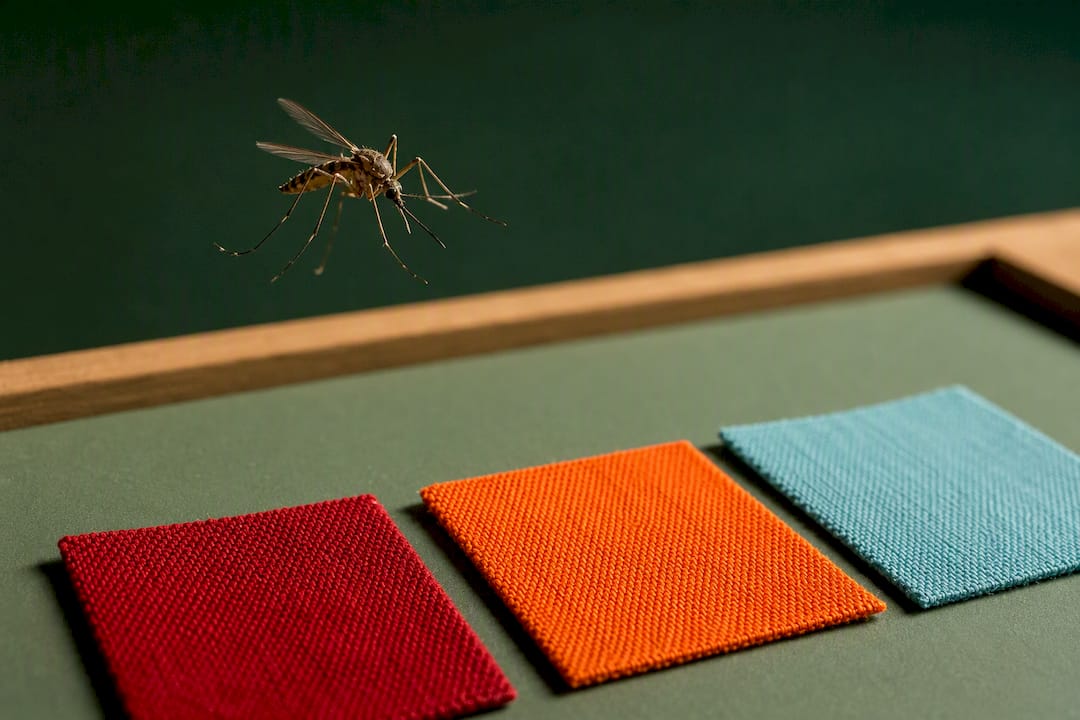
Red, orange, black, and cyan draw mosquitoes toward you; white, light pastels, green, blue, and purple mostly get ignored. That said, color only kicks in after a mosquito has already smelled you through your carbon dioxide, so pairing lighter clothing colors with repellent and physical coverage matters more than picking the “perfect” shirt.
TL;DR:
- Wearing light-colored, breathable, and tightly woven clothing reduces mosquito attraction by reflecting less heat and visual contrast, especially against high-contrast backgrounds.
- Mosquito species differ in preference, with Aedes mosquitoes more attracted to red and black, while Culex species show weaker color bias.
- Mosquitoes primarily detect CO2 first, then rely on heat, scent, and finally visual cues like color for the final approach.
- Color can influence mosquito behavior mainly when they are actively hunting near your face or exposed skin, especially at dawn or dusk.
- Combining physical barriers such as mesh clothing with insect repellent provides more reliable protection than relying on clothing color alone.
Table of Contents
- Which Colors Attract Mosquitoes, According to Research
- Why Some Colors Barely Register With Mosquitoes
- When Color Actually Matters to a Hunting Mosquito
- What to Wear Outside, Based on the Evidence
- Building a Full Defense, Not Just a Color Strategy
- Why Physical Barriers Beat Betting on Color Alone
- Wear the Barrier, Not Just the Right Shade
- Sources
Which Colors Attract Mosquitoes, According to Research
The clearest evidence comes from a Nature Communications study that tracked mosquito flight paths in wind tunnels and small cages. Once researchers puffed carbon dioxide into the chamber, mosquitoes swung hard toward red, orange, and cyan targets. Filter out those long wavelengths from a swatch mimicking human skin, and the attraction disappeared. That’s a strong signal the mosquitoes weren’t just chasing warmth or shape. They were chasing color.
Human skin, regardless of pigmentation, reflects a strong red-orange signal in that same wavelength range, which is likely why the pattern holds up across different research subjects.
A separate lab comparison sharpens the picture further, scoring color attraction using a metric called MPI (mosquito preference index). Results for two common species tell you almost everything you need for wardrobe planning:
- Black: had the highest preference indices among tested colors for both Aedes albopictus and Culex pipiens.
- Red: also showed very strong attraction, comparable to black.
- Green: elicited moderate preference.
- White and yellow: were among the least attractive colors.
Statistic Callout: In the PubMed lab comparison, black and red scored roughly triple the preference index of white and yellow. That gap is large enough to shape a real clothing decision.
University of Washington researchers who ran the wind-tunnel work concluded the effect is strongest in Aedes aegypti and Aedes albopictus, the species behind most mosquito-borne disease research in the US. Evidence for other species is thinner, so treat the guidance as a strong pattern, not a universal law.
Why Some Colors Barely Register With Mosquitoes
Blue, green, purple, and white sit at the bottom of nearly every color-preference study, and the wavelength explanation is straightforward: mosquito vision appears tuned to pick out the longer wavelengths in the red-orange-cyan range, the same range human skin reflects strongly. Shorter wavelengths like blue and green just don’t trigger the same visual pull once a mosquito is primed to look for a host.
Dark clothing complicates this a little. Black isn’t a long wavelength in the way red and orange are, yet it still ranks near the top of every preference study. The likely reason is contrast and heat rather than hue alone. Dark fabric creates a sharp visual outline against most backgrounds, and it absorbs more heat, which may add a thermal cue on top of the visual one.
A few other variables shift the picture:
- Species matter. Aedes mosquitoes, which bite mostly during the day, show different preference intensities than Culex species, which are more active after dark.
- Ambient light changes visibility. A color that reads as high-contrast at noon may barely register at dusk.
- Lab conditions aren’t the backyard. Controlled wind tunnels remove variables like wind, competing scents, and multiple people standing around, so field results can differ.
Pro Tip: If you’re choosing between two light colors and neither is red or black, don’t overthink the decision. The gap between, say, white and light blue is small compared to the gap between white and red.
When Color Actually Matters to a Hunting Mosquito
Color isn’t the first thing a mosquito notices. It’s closer to the last. Researchers behind the Nature Communications paper describe a layered system, and understanding the order helps you know when your outfit choice is doing real work.
- Carbon dioxide comes first. Mosquitoes detect the CO2 in your breath from many yards away, and that’s usually what starts the hunt.
- Heat and body odor add detail. As they get closer, skin temperature and scent compounds refine the search.
- Color becomes the closing move. Once CO2 has been detected, mosquitoes swing their visual system toward long-wavelength colors and lock onto that target for the final approach.
Without CO2 in the air, the same mosquitoes show almost no color preference at all, according to the Nature Communications findings. That’s the practical takeaway: your shirt color matters most when you’re actively exhaling near a hunting mosquito, which is exactly the dawn-and-dusk scenario most people already associate with getting bitten. Indoors, or in situations where a strong repellent scent overwhelms the CO2 plume, color has far less to work with.
What to Wear Outside, Based on the Evidence
Translating lab data into a closet decision is simpler than it sounds. Stick to light neutrals and soft pastels. Skip red, orange, and black, especially for anything close to skin. Steer clear of high-contrast patterns too. Mosquitoes appear to respond to the visual edge a color creates against the background, so a stark black-on-white stripe can still stand out even if neither color alone is a top offender.
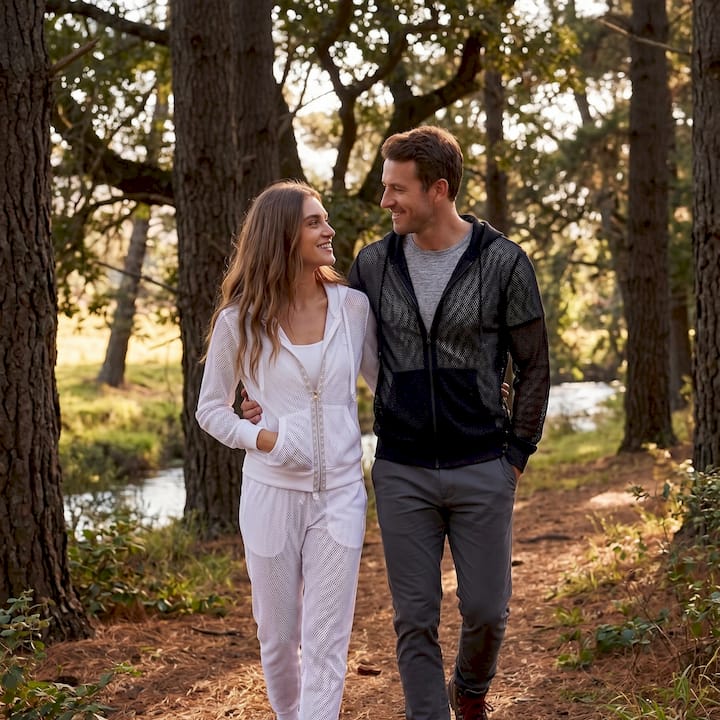
Shade matters for a second reason beyond color preference: light fabric reflects more heat than dark fabric. Since mosquitoes also use thermal cues, a light-colored, breathable garment does double duty, cutting the visual signal and keeping your skin cooler in direct sun.
Beyond color, coverage does the heaviest lifting. Long sleeves and long pants in a tightly woven or fine mesh fabric physically block a bite, no matter what color the mosquito was chasing. That’s the entire logic behind mesh clothing built to stop insects from reaching skin in the first place.
A quick dressing checklist for common situations:
- Evening in the backyard: Light-colored long sleeves and pants, tucked at the ankles and wrists.
- Morning hike: Breathable light-toned layers, since mosquito activity often peaks at dawn as much as dusk.
- Gardening midday: Loose, light fabric over exposed limbs. Heat and sweat build fast, and both feed the scent cues mosquitoes rely on.
Pro Tip: Light doesn’t mean thin. A tightly woven light-colored fabric blocks bites just as well as a dark one, so you’re not trading protection for the smarter color choice.
Building a Full Defense, Not Just a Color Strategy
Color choice trims your risk. It doesn’t eliminate it. For real protection, especially in high-density mosquito areas or before travel to a region with active disease transmission, layer your defenses:
- Wear light-colored, long-coverage clothing as the baseline, ideally in a fine mesh that mosquitoes can’t bite through.
- Add an EPA-registered repellent to exposed skin for the added scent-masking effect color alone can’t provide.
- Time your outdoor exposure around dawn and dusk, when many mosquito species are most active, and increase protection specifically during those windows.
A backyard barbecue at 7 p.m. calls for light long sleeves plus repellent on hands and neck. A backcountry hike calls for the same layered approach, scaled up with tighter cuffs and a hat.
Why Physical Barriers Beat Betting on Color Alone
Color guidance is genuinely useful, but I wouldn’t build a whole defense around a shirt shade. The research is clear that CO2 does most of the initial work, and color only closes the deal once a mosquito is already hunting you. That’s why Bugawaygear builds its clothing around a physical barrier instead of relying on hue or chemical treatment. Chemical-free mesh, backed by a 30-day money-back guarantee and feedback from more than 500 customers, does what a color choice alone can’t: it stops the bite regardless of what a mosquito’s vision is doing.
— Thomas
Wear the Barrier, Not Just the Right Shade
Picking a lighter shirt helps, but it only reduces the odds. Bugawaygear closes the gap those odds leave open. Every garment uses a chemical-free mesh barrier that blocks mosquitoes and ticks from reaching skin, regardless of what color you’re wearing that day, and it does it without a single spray or treated fiber.

The lineup covers real scenarios, not just one generic layer. The Bug Away Jacket for men and Bug Away Jacket for women pair with the Bug Away Pants for men and Bug Away Pants for women for full coverage on a hike or an evening outside. Families can grab the Bug Away Kids Set for the same protection scaled down, or go with a full combo for efficiency: the Bug Away Combo Set for men and Bug Away Combo Set for women bundle jacket and pants together.
Every order carries a 30-day money-back guarantee, backed by feedback from over 500 customers who’ve worn the gear through real tick and mosquito season. If you’re ready to stop relying on wardrobe guesswork alone, shop the full lineup and pick the set that fits your next trip outside.
Sources
- The olfactory gating of visual preferences to human skin and visible spectra in mosquitoes | Nature Communications
- Mosquitoes are seeing red: Why new findings about their vision could help you hide from these disease vectors – UW News
- PubMed listing for color preference study (MPI metrics)