
For most everyday hikes, garden afternoons, and backyard cookouts, engineered mesh clothing works as a chemical-free alternative to bug spray, and it demands far less effort from you. If you’re heading into dense tick habitat for hours or working in a region with active disease outbreaks, pair that clothing with additional precautions rather than relying on fabric alone. A ready-made insect-blocking mesh combo set covers the everyday case well.
TL;DR:
- Engineered mesh clothing provides a physical, chemical-free barrier that is more consistently effective than spray, especially during prolonged outdoor exposure.
- Proper fit is essential; tucking pants into socks and cinching cuffs ensures insects cannot exploit gaps at the ankles and wrists.
- For high-risk or multi-day trips, layering clothing with targeted spray on exposed skin offers the most comprehensive protection.
- Mesh garments are safe for children and sensitive skin and require minimal maintenance, making them a practical long-term solution.
- A trial run with a full outfit can help determine fit and coverage, ensuring maximum insect protection during actual outdoor activities.
Table of Contents
- Clothing vs Bug Spray: How Do They Actually Compare?
- How Do You Get Full Protection From Mesh Clothing?
- When Is Clothing Alone Enough, and When Should You Add More?
- Why Bug Away Is a Practical Chemical-Free Option
- Try Bug Away for Your Next Outdoor Season
- A Field-Tested Recommendation for Outdoor Families
- Sources
- FAQ
Clothing vs Bug Spray: How Do They Actually Compare?
The honest answer is that they solve the problem differently, and that difference shows up the moment you stop paying attention.
Bug spray only works while it’s on your skin and hasn’t worn off, sweated off, or washed off in the rain. The CDC’s Yellow Book is blunt about this: repellent effectiveness depends heavily on correct application and how often you reapply it, and most people underestimate how frequently that needs to happen during a long hike or a full day of yard work. Miss a reapplication window and you’re unprotected without knowing it.
Engineered mesh clothing doesn’t have that failure mode. Once it’s on, the barrier is physical, not chemical, and it stays consistent for as long as you’re wearing it. A textile physics study on insecticide-free fabrics found roughly three times greater bite resistance compared to insecticide-treated alternatives in controlled testing. That’s a meaningful gap, and it comes down to fabric geometry rather than any chemical doing the work.
Here’s how the two stack up on the factors that actually matter to someone deciding what to wear tomorrow:
- Protective effectiveness: Well-engineered mesh blocks probing insects at the fabric level; sprays repel but don’t physically stop contact.
- User dependence: Clothing works passively once worn; sprays require you to remember timing, coverage, and reapplication.
- Duration: A garment protects for the entire outing; a spray’s protection window shrinks with sweat, water, and time.
- Skin and environmental safety: Mesh clothing puts nothing on your skin or into runoff; sprays introduce active chemicals to both.
- Comfort and activity fit: Breathable mesh suits sustained movement; sprays can feel sticky or need reapplication mid-activity.
- Cost and reusability: A garment is a one-time purchase reused for seasons; spray is a recurring cost you buy again every trip.
For families managing sensitive skin, or anyone tired of sticky repellent residue, that maintenance gap alone often settles the decision.
How Do You Get Full Protection From Mesh Clothing?
Chemical-free clothing only works as well as it fits. A loose cuff or an untucked pant leg gives insects exactly the opening they’re looking for, so fit isn’t a cosmetic detail here, it’s the whole mechanism.
- Tuck pants into socks or boots to close the ankle gap where ticks climb aboard most often.
- Cinch cuffs and collars using the garment’s closures so sleeves don’t ride up during activity.
- Layer a light base layer under the mesh in cooler weather, or wear the mesh alone over swimwear or shorts in heat.
- Add gaiters when you’re pushing through brush, tall grass, or overgrown trail edges.
- Wash on a gentle cycle and air dry when possible. Heat and harsh detergents can degrade the fine mesh weave over time.
- Inspect seams and pore structure each season for stretching or tears, since pore size and fabric thickness are what block insects while keeping the weave breathable.
- Store folded, not crushed, to keep the mesh structure from warping between trips.
Humid weather calls for one adjustment: rotate two sets if you’re out for consecutive days, since damp mesh takes longer to dry between wears. For long treks through thick brush, a jacket paired with matching pants gives more continuous coverage than a jacket alone. Our layered defense guide for backpacking covers multi-day strategies in more detail, and our tick-focused guide breaks down the same fit principles for hikers and families.
Pro Tip: Do a five-minute “gap check” before you head out. Stand in front of a mirror and look for any skin visible at the wrists, ankles, and waistband. If you can see skin, an insect can reach it too.
When Is Clothing Alone Enough, and When Should You Add More?
Not every outing carries the same risk, and matching your protection to the actual situation beats defaulting to maximum coverage every time.
Everyday, low-risk outings — a garden afternoon, a neighborhood trail, a picnic in a mowed park. Well-fitted mesh clothing alone is typically sufficient here. You’re not in dense habitat, exposure time is short, and reapplying spray every couple hours isn’t realistic for most people anyway.
Long or high-risk exposure — all-day treks through brush, known tick-endemic regions, or multi-day camping. Review evidence on tick-borne disease prevention consistently finds that no single protective measure performs reliably across every study, so this is where layering makes sense: clothing as your base, with repellent applied to any remaining exposed skin (face, hands) according to the product label.
Children and skin-sensitive family members — clothing becomes the preferred primary method here specifically because it avoids putting active chemicals on skin that reacts easily or absorbs more per body surface area than an adult’s.
A few quick heuristics to sort which category you’re in:
- How many hours will you actually be outdoors, and in what habitat?
- Is this open field or dense brush where ticks quest from vegetation?
- Can you realistically reapply spray on schedule, or will you forget?
- Is this a known tick-active region this season?
The safe layering rule holds up well across all three cases: clothing first, repellent second, and only on skin the clothing doesn’t cover. That order keeps chemical exposure to a minimum while still giving you a backup for the situations clothing alone wasn’t designed to handle. Public health guidance backs this combined approach rather than betting everything on one method, and it’s worth pairing with basic habits like a daily tick check routine regardless of what you’re wearing.
Why Bug Away Is a Practical Chemical-Free Option
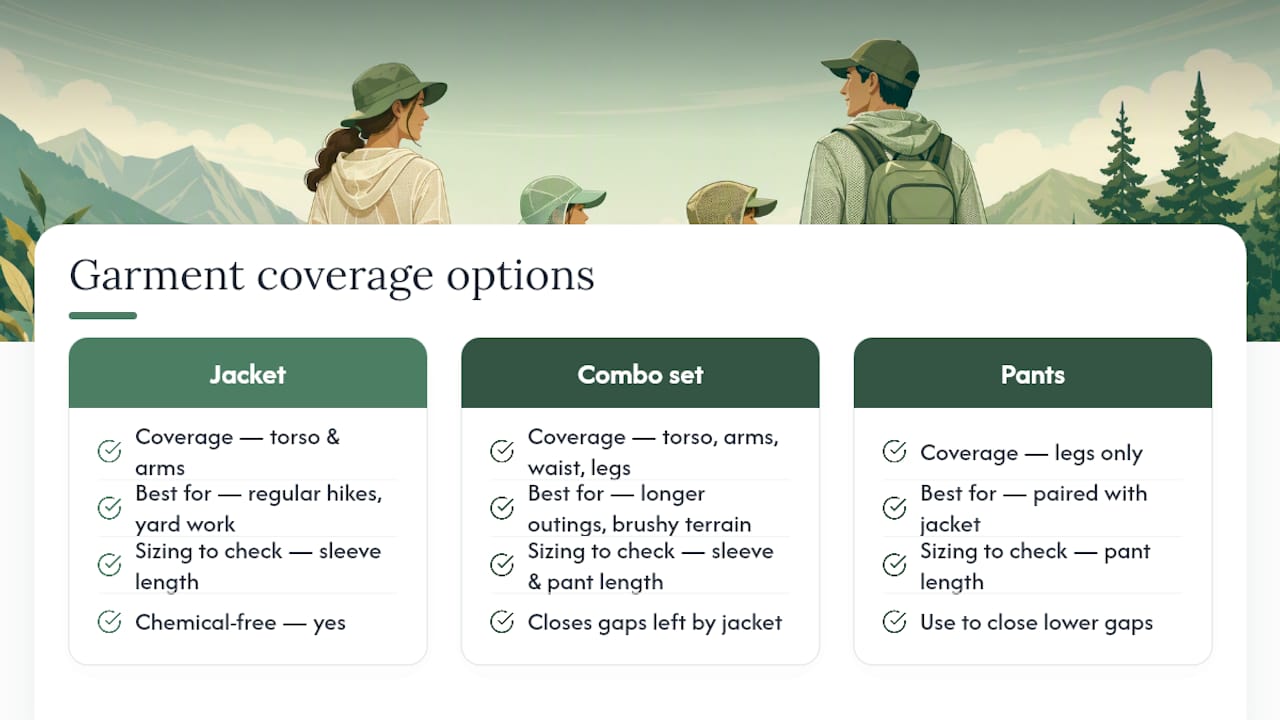
Lightweight mesh jackets, pants, and combo sets are built specifically to block ticks and insects without any insecticide treatment, available in sizing for men, women, and kids. The fabric does the work a chemical would otherwise be doing, which is the whole point.
Every garment is made from 100% chemical-free materials, backed by a 30-day money-back guarantee if the fit or coverage doesn’t work out for your household. Many customers have reported wearing this gear with zero tick bites, aligning with the purpose of engineered bite-resistant textiles.
If you’re outfitting one person for regular hikes or yard work, a single women’s jacket covers the torso and arms, the zones most exposed when you’re bending over garden beds or brushing past trailside branches. If you need full-body coverage for longer outings or brushy terrain, a combo set pairing jacket and pants closes the gaps a jacket alone leaves at the waist and legs. When you check sizing, look at sleeve and pant length specifically. Coverage only works when the mesh actually reaches your wrists and ankles, not just close to them.
Try Bug Away for Your Next Outdoor Season
Bug Away is the chemical-free route to bite protection that doesn’t ask you to remember anything once you’re dressed. No reapplication schedule, no residue, no mid-hike scramble to find the spray bottle. Just fabric that keeps working for as long as you’re wearing it, season after season, unlike a can of repellent you buy again every few trips.
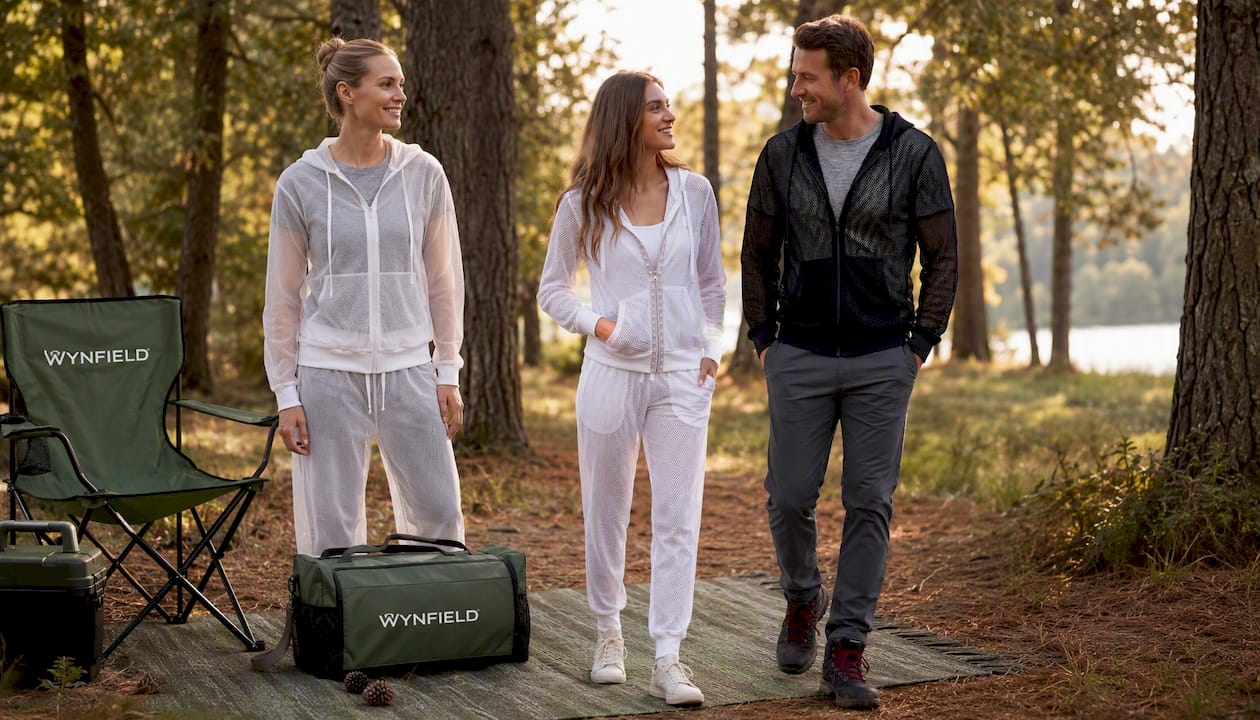
For most households, the Bug Away Combo Set Women or Bug Away Combo Set Men covers the widest range of activities, from garden work to trail hikes, with matched jacket and pants sizing. If you only need upper-body coverage, the women’s jacket is the lighter option. Every order carries the 30-day money-back guarantee, so if the fit isn’t right or the coverage doesn’t match your needs, you have a clear path to return it. Browse the full mesh clothing lineup or check out gaiters and head nets if you want to extend coverage to your neck and ankles. Pick your size, order the set that matches your typical outing, and get outside without the spray bottle.
A Field-Tested Recommendation for Outdoor Families
If your household is deciding between spray and clothing, start with a combo set and treat the first outing as a trial run. Take it on a day hike, pay attention to how the seams and cuffs hold up under real movement, and check for gaps at the wrists and ankles once you’re back. That single test tells you more than any spec sheet. For care routines and tips on humid climates, our dusk mosquito protection guide and permethrin clothing safety breakdown are worth a read before your next trip.
— Thomas
FAQ
Can Clothing Fully Replace Bug Spray?
For most everyday outdoor activities, well-fitted mesh clothing works as a chemical-free stand-in for spray, since it creates a physical barrier rather than relying on repellent chemistry. For long exposure in high-risk tick regions, pairing clothing with repellent on exposed skin follows the layered approach public health guidance recommends.
Is Insect-Proof Clothing Actually More Effective Than Spray?
Controlled testing on engineered, insecticide-free fabrics found roughly three times greater bite resistance compared to insecticide-treated fabric alternatives. Spray effectiveness, by contrast, depends heavily on correct, consistent reapplication, which most people don’t maintain over a full day outdoors.
Does Bug Away’s Clothing Use Any Chemicals?
No. Bug Away garments are made from 100% chemical-free mesh that blocks insects through fabric structure alone, not insecticide treatment. Every set also comes with a 30-day money-back guarantee if it doesn’t fit your needs.
When Should I Still Use Bug Spray Instead of Clothing?
Spray still has a place on exposed skin, like hands and face, during long or high-risk exposures in dense tick habitat. Review evidence shows no single protective method performs reliably on its own, so combining clothing with targeted repellent use covers more ground than either method alone.
Is Engineered Mesh Clothing Safe for Kids?
Yes, and it’s often preferred for kids specifically because it avoids putting chemical repellents directly on their skin. Bug Away offers sizing for children alongside its men’s and women’s lines, so the whole family can wear the same chemical-free approach.