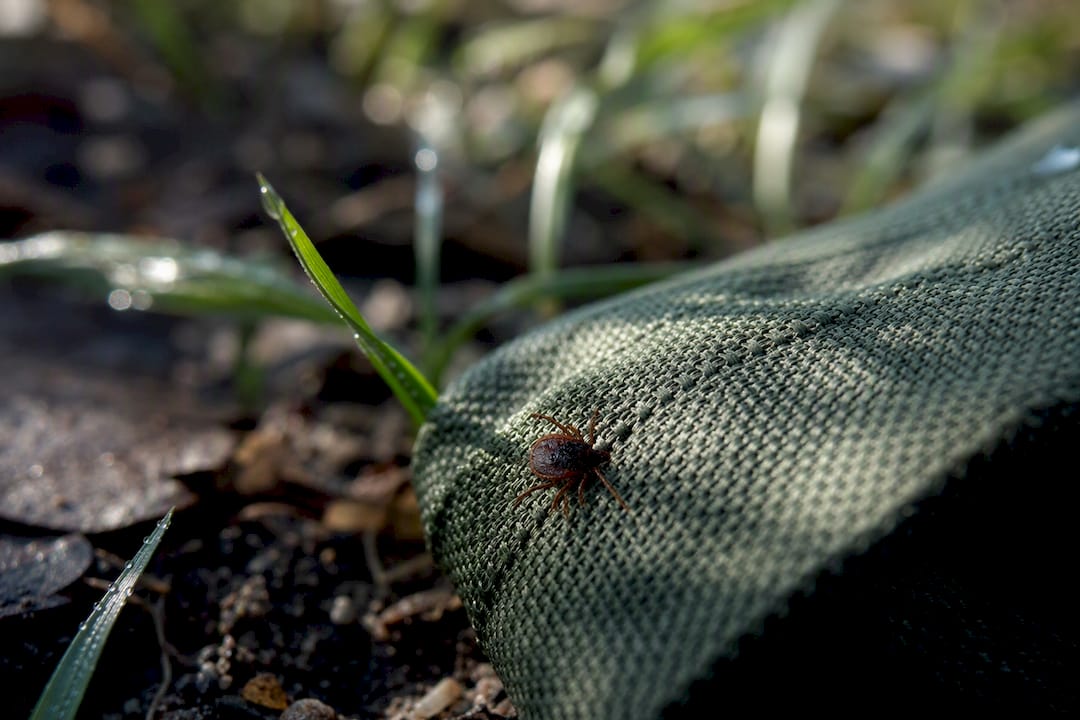
Chiggers are larval mites that inject digestive enzymes into your skin, causing intense, localized itching. Ticks are blood-feeding arachnids that can transmit serious diseases during a bite that often lasts hours or days. That single distinction drives what you do next.
- If you find an attached tick: remove it right away with fine-tipped tweezers and watch the site for a rash or fever over the following weeks.
- If you have itchy welts in a cluster or line, especially near your sock line or waistband: wash the area, apply a cold compress, and treat the itch. Chigger bites rarely carry disease risk in the U.S.
Key Takeaways
Chiggers cause intense, clustered itching from a brief larval feeding, while ticks pose the real disease risk through prolonged blood feeding.
| Point | Details |
|---|---|
| Different threats | Chiggers cause itchy welts, and ticks carry disease risk through extended attachment. |
| Bite pattern is the key clue | Clustered or lined welts point to chiggers; a single attached arthropod points to a tick. |
| Remove ticks fast | Pulling an attached tick out within 24 hours sharply lowers disease transmission risk. |
| Layer your prevention | Combine mechanical barrier clothing, permethrin or DEET, and post-outing skin checks. |
| Physical barriers help daily | Bugawaygear’s chemical-free mesh pants block crawling pests before they reach skin, backed by a money-back guarantee. |
Table of Contents
- Chiggers vs Ticks: A Quick Comparison Checklist
- How to Identify Chiggers and Ticks on Skin and Clothing
- Which Bites Need Medical Attention?
- Preventing Chiggers and Ticks Before They Bite
- Removing Ticks and Treating Chigger Bites
- Symptoms That Tell Chigger Bites and Tick Bites Apart
- When Do Symptoms Show Up After Exposure?
- Sources
Chiggers vs Ticks: A Quick Comparison Checklist
Before you dig into biology or treatment, here’s what to look for right now, whether you’re checking your skin, your kid’s ankles, or the cuffs of your hiking pants.
- Size and visibility: Adult ticks are usually visible to the naked eye, ranging from small to moderately sized once engorged. Chigger larvae are nearly microscopic, so you’ll almost never spot the mite itself, just the aftermath.
- Bite pattern: Chigger bites tend to show up in clusters or lines near clothing seams, elastic bands, or skin folds. Tick bites are typically a single red mark at one attachment point.
- Feeding duration: Chiggers feed for a few hours to a couple of days at most, then drop off. Ticks stay attached for hours to several days if undisturbed.
- Disease risk: Ticks are the bigger concern for transmitting illness. Chiggers are not a significant disease vector in the United States.
- Habitat cues: Chiggers cluster in tall grass, brush, and shaded weedy areas, especially in late summer. Ticks favor wooded edges, leaf litter, and tall grass nearly year round in milder climates.
How to Identify Chiggers and Ticks on Skin and Clothing
Ticks go through three feeding stages: larva, nymph, and adult. Nymphs are the size of a poppy seed and easy to miss, while adults are large enough to spot on skin or clothing before they attach. An attached tick looks like a small dark bump with legs visible around the edges, often swelling slightly as it feeds.
Chiggers are different. The larval mite that bites you is roughly 0.4 millimeters across, invisible without a magnifier, so what you actually see is the reaction it leaves behind: a raised, intensely itchy red welt. You’re diagnosing the lesion, not the parasite.
To sort out what bit you:
- Check for lines or clusters of small welts around your waistband, sock line, or armpits, a classic chigger pattern.
- Look for a single attached arthropod with visible legs anywhere on the body, which points to a tick.
- Use your phone’s macro camera or a small magnifier to inspect anything questionable before deciding on removal or treatment.
- Note the timing: chigger itching often builds over the following day, while a tick bite may look and feel like nothing at all until you spot it attached.
Pro Tip: Never squeeze or scratch at a suspicious bump before you’ve identified it. Squeezing an attached tick can push infected fluid back into the wound, and scratching chigger welts raises your risk of a secondary skin infection.
Why Chiggers Itch and Ticks Spread Disease
The biology behind these two pests explains everything about the risk difference. Chiggers are the parasitic larval stage of mites in the Trombiculidae family; they feed by injecting enzymes that break down skin cells, then suck up the liquefied tissue through a hardened feeding tube called a stylostome. Once fed, the larva drops off, usually within a couple of days.
- Chiggers do not burrow under your skin, despite the popular myth.
- Ticks feed on blood at every life stage, from larva through adult, and it’s that prolonged blood meal that allows pathogens to move from the tick into your bloodstream.
- Common species involved include Eutrombiculid mites like Eutrombicula alfreddugesi in the eastern U.S., alongside regional tick species that vary by state.
Which Bites Need Medical Attention?
Tick bites deserve more vigilance because ticks in the U.S. can carry Lyme disease, Rocky Mountain spotted fever, and other illnesses. Watch for fever, fatigue, joint pain, or an expanding rash (sometimes a bullseye pattern) in the days or weeks after a bite.
Timing matters more than most people realize. Removing an attached tick within 24 hours markedly cuts the risk of transmission for several common tick-borne diseases, since many pathogens need extended attachment time to move into your system.
Chigger bites, by contrast, cause plenty of misery but rarely lead anywhere dangerous in the U.S. The real risk with chiggers is a secondary bacterial infection from scratching broken skin. If a bite site turns warm, swollen, or starts oozing, that’s an infection concern, not a chigger-specific one. If you remove a tick, seal it in a container or zip bag. A clinician may want it for identification if symptoms develop.
Preventing Chiggers and Ticks Before They Bite
Prevention beats treatment every time with these pests, and the most reliable layer is one you’re already wearing: your clothes. Mechanical barrier clothing, meaning tightly woven or fine-mesh fabric, works because both chiggers and ticks have to crawl across fabric before reaching skin. A weave they can’t get through stops the problem before it starts, which is the whole logic behind chemical-free barrier clothing.

Repellents add a second layer. DEET applied to exposed skin is effective against chigger larvae, and permethrin treated onto clothing (never skin) works against both ticks and chiggers, retaining effectiveness through multiple washes depending on the product. Extension entomologists specifically recommend combining mechanical prevention with repellents rather than relying on one method alone, since neither approach is foolproof by itself.
Simple habits round out the strategy:
- Tuck pants into socks or boots when walking through tall grass or brush.
- Stick to the center of trails and avoid brushing against overhanging weeds.
- Launder clothes in hot water after time outdoors, and do a full skin check, paying close attention to the waistband, ankles, and armpits.
- Check kids and pets too. Both groups tend to pick up more bites in grassy, low areas.
Pro Tip: Layering matters more than any single product. Barrier clothing plus a permethrin treatment plus a post-hike skin check catches what any one measure alone would miss, a point echoed by pest management guidance on layered prevention.
Removing Ticks and Treating Chigger Bites
Once a bite has happened, technique matters. Here’s what actually works for each.
For tick removal:
- Grasp the tick with fine-tipped tweezers as close to the skin as possible.
- Pull straight up with steady, even pressure. Don’t twist or jerk.
- Clean the bite site and your hands with soap and water or rubbing alcohol.
- Save the tick in a sealed container if you want it identified or tested later.
Skip the folklore. Burning a tick, coating it in petroleum jelly, or dabbing it with nail polish doesn’t make it release faster and can actually increase the risk of it regurgitating fluid into the wound.
For chigger bites, wash the area with soap and water as soon as you notice welts, apply a cold compress to cut the itching, and use an over-the-counter hydrocortisone cream. Oral antihistamines help with more severe or widespread reactions. See a doctor if you develop fever, a rash spreading beyond the bite sites, or signs of infection, and bring details on timing, location, and whether you saved a tick.

Symptoms That Tell Chigger Bites and Tick Bites Apart
Beyond how they look, the way each bite feels over time is often the clearest tell. Bite pattern is the single most reliable field cue for telling the two apart, but the sensation profile backs it up.
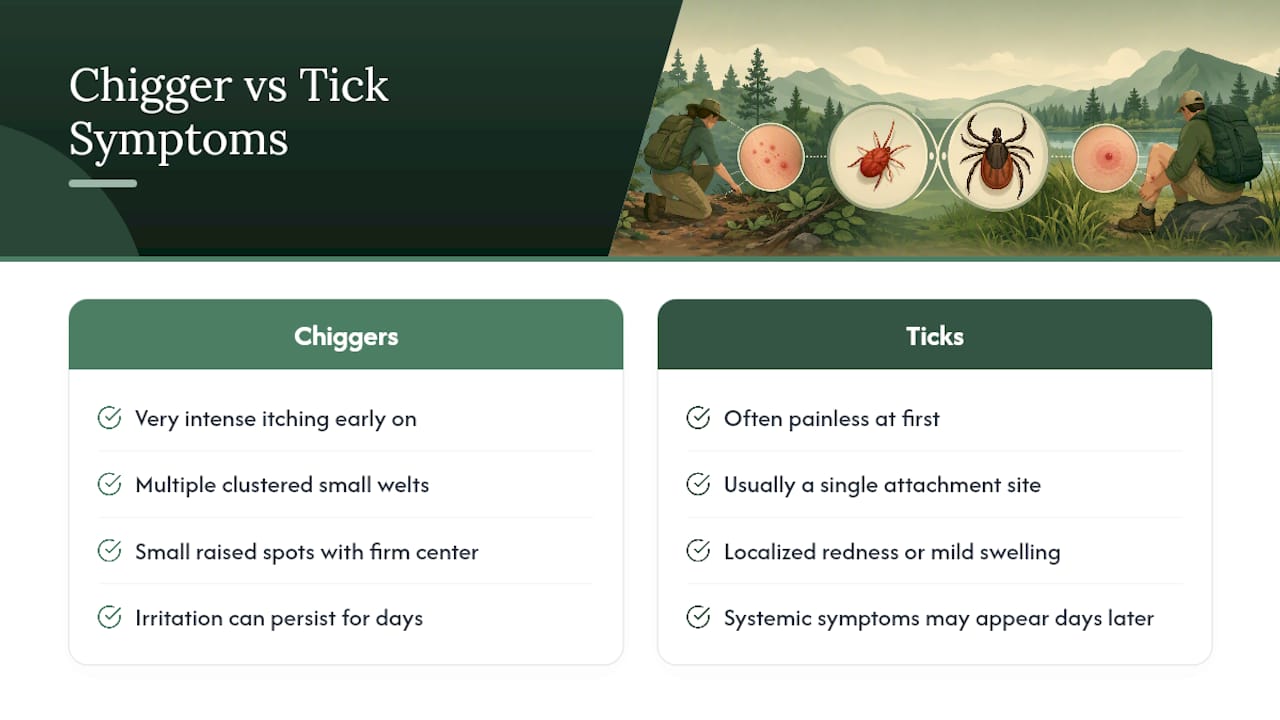
Chigger bites are defined by itching, often described as some of the most intense itching people experience from any insect or mite encounter. The welts are typically small, red, and raised, sometimes with a tiny blister or hard, pimple-like center at the middle of each spot. That firm center is actually the stylostome, the feeding tube the larva leaves behind, and it can keep the area irritated for days after the mite itself is long gone.
Tick bites, on the other hand, are often close to symptom-free at first. Many people never feel the bite happen at all. If a reaction does develop, it’s usually a small, localized area of redness or mild swelling right at the attachment point, without the widespread itching chiggers produce. The bigger warning signs from ticks show up later and look different entirely: fever, fatigue, muscle aches, or a rash that expands outward from the bite over days, sometimes into the recognizable bullseye pattern associated with Lyme disease.
If you’re trying to sort out an unexplained bite days after the fact, ask yourself two questions: was it intensely itchy from early on, and did it appear alongside several similar bites in a cluster? Two “yes” answers point toward chiggers. A single bite that develops a rash or flu-like symptoms days later points toward a tick.
When Do Symptoms Show Up After Exposure?
Timing separates these two pests almost as clearly as appearance does. Chigger bite symptoms typically start within a few hours of exposure and build to peak itching around 24 to 48 hours later, since the reaction depends on your immune response to the enzymes injected while the larva feeds. The itching commonly persists for several days to over a week, even though the chigger itself detached long before the discomfort fades.
Tick bite symptoms follow a completely different timeline, and that’s part of what makes ticks harder to catch early. The bite itself often produces no immediate sensation, which is why people frequently discover an attached tick hours after it started feeding rather than at the moment of attachment. Localized redness, if it appears at all, tends to show up within a day or two of removal.
The symptoms that actually matter for your health, fever, joint pain, fatigue, or an expanding rash, follow a slower and more serious timeline. These can take anywhere from a few days to a few weeks to appear after a tick bite, depending on the specific pathogen involved. That delayed onset is exactly why the 24 hour attachment window for removal matters so much: by the time disease symptoms would show up, the transmission window has usually already closed or opened, and it happened silently while the tick was still attached.
This is the practical takeaway on timing: don’t wait for symptoms to decide whether a bite is worth acting on. Check for attached ticks the same day you’ve been outdoors, and treat chigger welts as soon as you notice them rather than waiting to see if they’re “something worse.”
Why Physical Barriers Are the Prevention Layer I Trust Most
Repellents wash off, wear thin, and need reapplying. A tightly woven mesh barrier doesn’t have that problem. That’s why chemical-free clothing deserves a serious look alongside DEET and permethrin, not instead of them. For the deeper mechanics, our tick clothing guide walks through what to look for.
— Thomas
A Physical Barrier Worth Adding to Your Kit
If everything above tells you one thing, it’s that prevention beats treatment, and clothing is the layer most people skip. The Bug Away Pants for Women use fine, breathable mesh built to physically block chiggers and ticks before they ever reach your skin, no sprays, no chemical treatment required.

That doesn’t replace good habits like tucking pants into socks or checking your skin after a hike. Clothing is one layer in a stack that should also include repellents and post-outing checks. But it’s the layer that works whether or not you remember to reapply anything. Check sizing and availability on the women’s pants page before your next trip outdoors.
Sources
- Chiggers and Related Mites (NCBI Bookshelf)
- Chigger bites (Cleveland Clinic)
- Dowling Lays Out the Facts About Chiggers and Ticks (Arkansas Research)
- Chigger bites vs. flea/bed bug/tick/mosquito bites (PestWorld)