
What are the best natural bug spray alternatives?
The most effective bug spray alternatives fall into two categories: plant-based repellents you apply to skin, and physical barriers that block insects entirely. If you want one natural ingredient that actually delivers, oil of lemon eucalyptus (OLE) is it. Applied at 40–75% concentration, it performs comparably to DEET 20–40% for mosquito protection. The CDC endorses OLE and its active compound PMD as the only plant-derived ingredients suitable for disease-endemic areas.
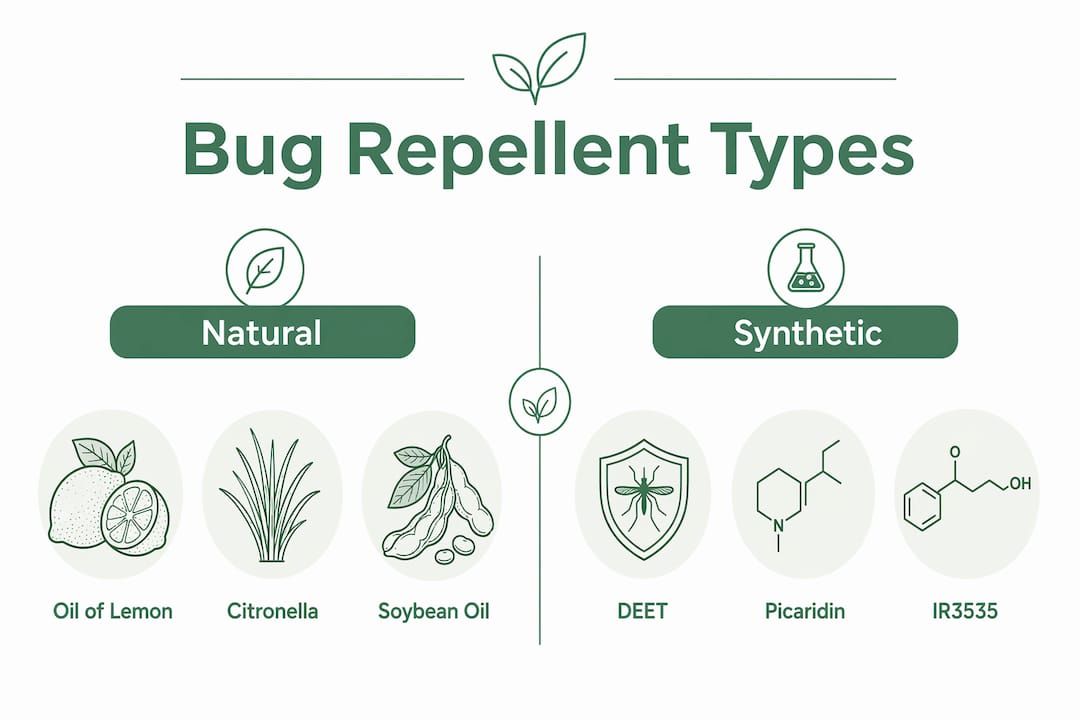
Beyond OLE, your best options include:
- Oil of lemon eucalyptus (OLE): 1–5 hours of mosquito protection; the strongest natural repellent available
- Citronella oil: Short-lived but EPA-registered; works best with vanillin added to slow evaporation
- Patchouli oil in lotion: Recent lab research shows it matched DEET in a controlled 3-hour mosquito exposure test
- Soybean oil blends: Up to 1.5 hours of protection, comparable to low-concentration DEET
- Bug Auwe: A plant-based repellent combining aloe vera, witch hazel, and essential oils, priced from $8.55 to $13.99, safe for kids and adults
- Physical barrier clothing: Products like Bugawaygear’s mesh apparel block insects without any chemical contact
No natural spray matches high-concentration DEET for duration. But for everyday outdoor use where disease risk is low, several of these options hold up well.
How do common natural ingredients actually perform?
Natural repellent ingredients vary widely in how long they work and how safe they are on skin. Understanding the differences saves you from reapplying every 20 minutes.
Oil of lemon eucalyptus stands apart from other plant-based options. At 40–75% concentration, it provides protection comparable to DEET 20–40% for mosquito bites, lasting 1–5 hours. That gap versus DEET’s 5–6 hours matters on a long hike, but for a backyard evening it’s more than enough.

Citronella is the most familiar name in natural repellents, but 10% citronella oil lasts less than 20 minutes. The oils evaporate fast. Adding vanillin (5%) to a citronella formula can extend protection time considerably by slowing the release of volatile compounds. Encapsulation technology achieves the same effect at a molecular level.
Soybean oil at 2% concentration protects against mosquitoes for up to 1.5 hours, which Health Canada considers equivalent to low-concentration DEET products. No evidence supports tick protection from soybean oil alone.
| Ingredient | Typical concentration | Protection duration | EPA registered? | Key caution |
|---|---|---|---|---|
| Oil of lemon eucalyptus | 40–75% | 1–5 hours | No (PMD is CDC-endorsed) | Not for children under 3 |
| Citronella oil | 5–10% | Less than 20 minutes | Yes (5% or less) | Skin sensitivity at higher doses |
| Soybean oil blend | 2% | Up to 1.5 hours | No | No tick protection |
| Patchouli oil in lotion | Not standardized | Up to 3 hours (lab) | No | Skin irritation risk |
| Neem oil | Variable | Up to 2 hours | No (pesticide only) | Dermatitis if undiluted |
| Catnip oil | 7–15% | Up to 7 hours | Yes | Limited product availability |
Neem oil deserves a note: field studies from India show strong results, but lab findings are mixed, and the EPA has not registered it as a topical repellent. Skin irritation is a real risk if you apply it undiluted.
Pro Tip: Dilute any essential oil in a carrier oil or unscented lotion before applying to skin. Direct application of concentrated oils like neem or patchouli can cause contact dermatitis, especially in sunlight.
How did Native Americans and traditional cultures repel insects?
Long before DEET existed, people developed effective insect deterrents from what grew around them. Native American tribes burned cedar, sage, and sweetgrass to create protective smoke around living and sleeping areas. The aromatic compounds in these plants are genuinely repellent to mosquitoes and other biting insects, not just a folk belief.
Topical application of plant oils was equally common. Aromatic plant materials were rubbed directly onto skin, functioning much like modern essential oil formulas. Physical barriers were also standard: woven coverings, animal hides, and early forms of netting protected sleepers from night-biting insects.
These traditional practices map directly onto modern natural repellent science. Cedar oil appears on the EPA’s 25(b) list of minimum-risk pesticide ingredients. Geraniol, peppermint, and thyme oil all have documented repellency against Aedes aegypti mosquitoes for 60–180 minutes in controlled studies. The knowledge was always there; the lab confirmation came later.
How to repel bugs without using any spray
Physical protection is the most underrated approach in the natural repellent conversation. No spray, no reapplication, no skin contact with any compound.
- Wear tightly woven or mesh barrier clothing: Bugawaygear’s ultra-fine mesh jackets and pants physically block ticks and insects. Over 500 users report zero tick bites while wearing the gear outdoors.
- Use mosquito nets and head nets: Effective in still conditions, especially for sleeping or stationary work in the garden.
- Time your outdoor activity: Mosquitoes peak at dawn and dusk. Shifting a hike to mid-morning cuts exposure without any product.
- Eliminate standing water nearby: Removing breeding sites around your yard reduces the local mosquito population at the source.
- Spatial repellent devices: These work in still air but lose effectiveness when you move. Practical for a porch or tent, not a trail.
- Homemade skin sprays: Combine witch hazel, oil of lemon eucalyptus or lavender essential oil, and distilled water in a glass spray bottle. Reapply every 1–2 hours.
Pro Tip: Combine physical barrier clothing with a natural repellent on exposed skin like hands and face. The clothing handles your body; the repellent covers the gaps. This layered approach gives you chemical-free protection without relying on any single method.
What does recent research say about natural repellent safety and effectiveness?
The 2025 research picture on natural repellents is more nuanced than most product labels suggest. The headline finding: patchouli oil mixed into an unscented lotion protected participants from Aedes aegypti mosquitoes for three hours in a controlled study, matching DEET results with zero bites on treated arms. That’s a meaningful result for a plant-based ingredient.
“These findings suggest that patchouli-based formulations may represent a promising natural alternative for topical mosquito repellents.” — Researchers, published in ACS Omega
Patchouli oil is not EPA-registered as a repellent, and the study used a lab-formulated lotion, not an off-the-shelf product. Whether adding patchouli to a store-bought unscented cream produces the same result is still unknown.
The broader regulatory picture matters here. Most DIY and essential oil repellents are not EPA-registered and lack consistent protection data. The CDC’s guidance makes clear that DEET’s toxicology has been scrutinized far more thoroughly than any natural alternative’s, having been in use since 1946. “Natural” does not automatically mean safer or more effective.
For everyday use in low-disease-risk settings, OLE, catnip oil, and citronella with vanillin are the most defensible natural choices. For travel to areas with active mosquito-borne disease transmission, EPA-registered synthetic repellents remain the standard recommendation. Bugawaygear’s chemical-free mesh clothing sidesteps the entire formulation question by creating a physical barrier with no skin exposure at all.
What are the healthiest bug spray options?
The healthiest repellent options minimize skin absorption while still delivering real protection. OLE and PMD-based products top this list: they are CDC-endorsed, have a strong safety record, and avoid the neurotoxicity concerns sometimes raised about high-concentration DEET. Catnip oil at 7–15% is EPA-registered and has shown up to 7 hours of protection in studies, with a low irritation profile.
For people with sensitive skin or young children, plant-based formulas like Bug Auwe that combine aloe vera and witch hazel with essential oils offer a gentler entry point. If you want to avoid skin contact entirely, physical barrier clothing is the healthiest option by definition. No absorption, no irritation, no reapplication. After a bite, natural itch relief options can address inflammation without adding more chemicals to the equation.
How do conventional bug sprays affect the environment?
DEET does not break down easily in water. It persists in aquatic ecosystems after washing off skin or clothing, and studies have detected it in rivers and streams near populated areas. Synthetic repellents like DEET also damage plastic and synthetic gear on contact.
Plant-based repellents and essential oils biodegrade far more quickly. Citronella, geraniol, and lemon eucalyptus oil break down in the environment without leaving persistent residues. Physical barrier clothing like Bugawaygear’s mesh gear produces zero chemical runoff by design, making it the most environmentally neutral option available.
Chemical-free alternatives vs. synthetic repellents: how do they compare?
The honest comparison: synthetic repellents win on duration and tick protection. DEET at 20–30% provides 5–6 hours of protection against both mosquitoes and ticks. No natural spray currently matches that across both insect types.
Where chemical-free options close the gap is in everyday, low-risk use. OLE at high concentration approaches DEET’s mosquito protection for shorter outings. Physical barrier clothing covers ticks and insects without any duration limit. The tradeoff is convenience: natural sprays need more frequent reapplication, and barrier clothing requires wearing an extra layer.
For most American outdoor activities, a layered approach works well. Wear barrier clothing for the body, apply an OLE-based product to exposed skin, and reserve synthetic repellents for high-risk environments or extended backcountry trips.
Protect yourself with Bugawaygear

Bugawaygear’s lightweight mesh clothing is built for exactly this situation: you want real insect protection without putting anything on your skin. The ultra-fine mesh physically blocks ticks and insects, covers the full body including integrated foot protection, and uses 100% chemical-free, eco-responsible materials. It works for hiking, gardening, camping, and outdoor play, with sizes for men, women, and kids.
Over 500 customers report zero tick bites while wearing the gear. It comes with a 30-day money-back guarantee. Explore Bugawaygear’s tick-proof clothing and stop choosing between protection and what goes on your skin.
Key Takeaways
The most effective chemical-free insect protection combines oil of lemon eucalyptus on exposed skin with physical barrier clothing like Bugawaygear’s mesh gear for full-body coverage.
| Point | Details |
|---|---|
| OLE outperforms other natural sprays | At 40–75% concentration, OLE matches DEET 20–40% for mosquito protection, lasting 1–5 hours. |
| Citronella needs vanillin to last | Plain citronella at 10% lasts under 20 minutes; adding 5% vanillin extends protection considerably. |
| Physical barriers need no reapplication | Bugawaygear’s mesh clothing blocks insects without skin contact, chemicals, or a reapplication schedule. |
| “Natural” does not mean EPA-registered | Most essential oil repellents lack EPA registration and consistent efficacy data; OLE and catnip oil are exceptions. |
| Layer for best results | Combining barrier clothing with a plant-based repellent on exposed skin covers the gaps neither method handles alone. |