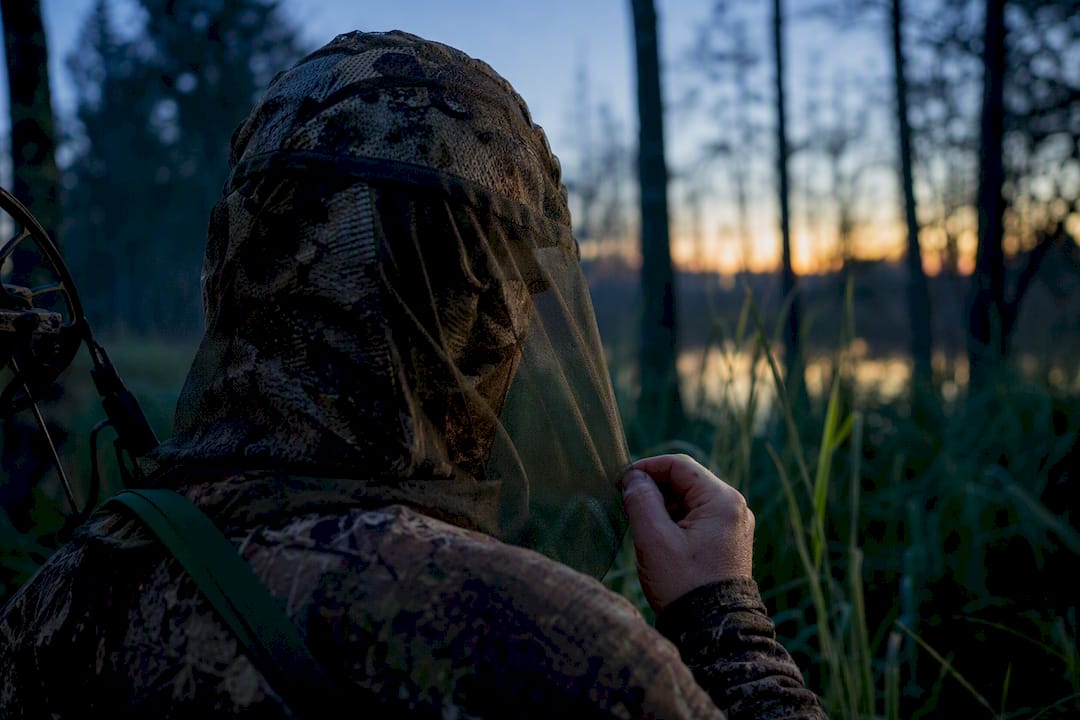
For most bowhunters facing heavy mosquito pressure, the answer is full lower-body coverage paired with a face and neck barrier, not a spray bottle. Chemical-free fine mesh gives you a physical barrier with zero pesticide contact, while permethrin-treated garments offer long-lasting protection with less bulk. Either works, but the real decision points are quietness at full draw, breathability in early-season heat, and whether your ankles and lower legs stay sealed.
TL;DR:
- Full lower-body coverage with sealed gaiters or treated socks is essential for protecting against ticks and mosquitoes in dense, wet terrain.
- Mesh clothing provides an instant, chemical-free physical barrier, while permethrin-treated garments offer long-lasting insect repellent effects through manufacturing bonding.
- Quiet, matte fabrics and proper fit are critical to avoid noise and movement that could spook game or hinder full draw during a hunt.
- Layering should prioritize moisture-wicking base layers, sealed cuffs, and adjustable coverage depending on terrain and conditions for optimal effectiveness.
- Combining physical barriers with targeted chemical treatment or portable repellents offers the most flexible and effective mosquito protection strategy.
Table of Contents
- Bowhunting Mosquito Protection Clothing: How the Main Types Work
- What Should You Look For in Bug-Resistant Hunting Shirts and Pants?
- How Do You Layer Mosquito Protection for a Bowhunt?
- How Do You Care for Insect-Protection Hunting Gear?
- Comparing Approaches by Terrain and Hunting Style
- Why Chemical-Free Mesh Makes Sense for Many Bowhunters
- The Trade-Off Nobody Talks About Enough
- A company offers gear for bowhunters who want no chemical exposure and a physical barrier against insects.
- Sources
- FAQ
Bowhunting Mosquito Protection Clothing: How the Main Types Work
Three approaches dominate the market, and each solves the bite problem differently.
Fine mesh clothing creates a physical barrier too tight for a mosquito’s mouthparts to reach skin. It works the moment you put it on, needs no chemicals, and stays effective wash after wash since there’s no treatment to wear off. Mesh hooded suits worn over your base layer illustrate this well: the netting layer sits away from the body, so mosquitoes land on mesh instead of skin.
Permethrin-treated fabric works differently. The insecticide is bonded into the fibers during manufacturing, and it kills or repels insects on contact rather than blocking them physically. Factory-bonded systems like Insect Shield hold their potency through many wash cycles, which is a real advantage over DIY spray treatments that fade fast.
Topical repellents and devices like Thermacell fill the gaps neither garment covers well, especially hands and face when you’re not wearing a hood.
For a bowhunter, the fabric choice matters less than these three factors:
- Scent control: mesh and most treated fabrics are scent-neutral, but a laundered garment stored with your hunting gear stays cleaner longer.
- Quietness: stiff or crinkly fabric near your draw arm gives away your position at 20 yards.
- Mobility: any garment that binds at the shoulder during a full draw defeats the purpose of wearing it.
Reviewer field tests consistently show treated and mesh garments cut down bites and tick contact compared to bare skin or spray-only setups.
What Should You Look For in Bug-Resistant Hunting Shirts and Pants?
Not every insect-resistant garment is built for a treestand or a stalk. Run through this checklist before you buy:
- Coverage first. Treated or mesh pants paired with gaiters or sealed socks matter more than a treated shirt alone, since ticks and mosquitoes make first contact at the ankles and lower legs.
- Quietness second. Look for matte, thin-woven fabrics. Skip garments with loud zippers, Velcro closures, or stiff panels near the draw shoulder.
- Breathability third. Vented mesh panels and moisture-wicking base layers keep you from overheating during early-season sits when mosquitoes are worst.
- Fit and mobility. You need enough room across the shoulders and back for a full draw without fabric pulling or flapping.
- Packability. A garment that stuffs into a small pouch and goes on fast at the truck or trailhead beats one that requires a change of clothes.
A face and hood option that doesn’t fog your vision or muffle sound is worth the extra ounce in your pack. Reviewers note that the most effective garment is the one you’ll actually wear all day without fighting the fit or overheating.
How Do You Layer Mosquito Protection for a Bowhunt?
Getting dressed in the right order matters as much as the gear itself.
- Start with a thin, moisture-wicking base layer. This keeps sweat off your skin and prevents the outer layer from sticking during a stalk.
- Add treated pants or a mesh suit over that base layer. Mesh suits are designed to go over your regular clothing, so sizing up slightly is normal.
- Tuck pants into gaiters or tall socks and seal the cuffs. This closes the single biggest gap where mosquitoes and ticks get through.
- Choose face and neck protection based on conditions. A mesh hood works better in still, buggy timber; a treated neck gaiter breathes easier if you’re moving a lot and need clearer peripheral vision.
- Vent while walking in, then close up once you’re settled. Unzip or loosen collar and cuff points during the hike to your stand, then seal everything once you’re still and mosquitoes start finding you.
Pro Tip: Keep a compact mesh hood and a pair of treated socks in your pack even if your main system doesn’t need them. Conditions change fast at dusk, and having a five-second fix beats slapping at your neck for the last hour of shooting light.
If you’re stalking through brush versus sitting a stand, adjust which layers stay sealed. A layered approach that adds and removes pieces as conditions shift works better than one fixed outfit for a whole hunt.
How Do You Care for Insect-Protection Hunting Gear?
Washing and re-treatment routines differ by garment type, and getting this wrong shortens the life of expensive gear.
- Factory-bonded permethrin treatments hold up through many wash cycles, but always follow the specific care label rather than assuming standard detergent and heat are fine.
- DIY-sprayed garments lose potency faster and need re-application more often, whether with an aerosol can, a trigger spray, or a professional treatment service.
- Mesh clothing has no chemical to lose, but check seams and hood netting for tears after each season since a single snag defeats the barrier.
- Inspect cuffs, ankle seals, and hood closures before every hunt. A gap that opened during the last wash is where bugs get through this time.
Do a full tick check after every hunt regardless of what you wore. No clothing system, treated or mesh, removes small pockets of exposed skin around the hands, face, or wherever a sleeve rides up.
Comparing Approaches by Terrain and Hunting Style
Swamp and river-bottom hunts call for a different setup than a hot, open field sit, and matching your gear to the ground you’re hunting matters more than brand loyalty.
In wet, brushy terrain where mosquitoes and ticks both thrive, full-barrier coverage wins. That means treated or mesh pants, sealed gaiters, and a hood, because you’ll be pushing through vegetation that puts insects directly against your legs and neck. Coverage matters more than breathability here since you’re often moving slowly or sitting still in shade.
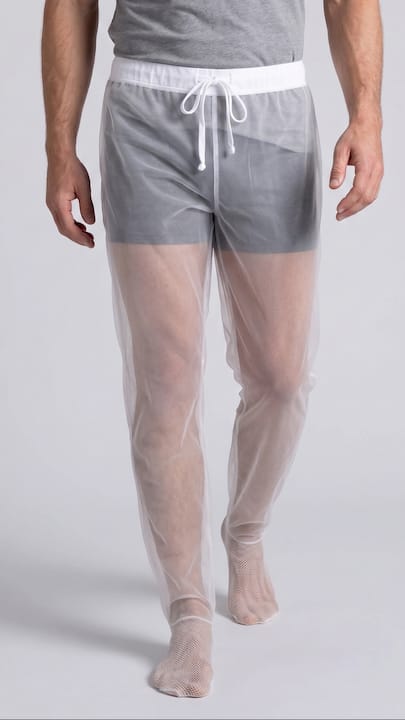
In hot, open fields during early bow season, breathability becomes the priority. Lightweight treated fabrics or ventilated mesh panels let you sit for hours without overheating, and the lower insect density in open ground means you can trade some coverage for airflow.
Here’s how the trade-offs actually break down:
- Coverage: full mesh suits and treated pants plus gaiters win in dense cover; lighter treated shirts suffice in open, breezy terrain.
- Breathability: mesh generally outperforms treated woven fabric in still air; both need venting options for hot afternoons.
- Quietness: thin, matte mesh and treated softshell fabrics both perform well; avoid anything with a plastic-like rustle.
- Care: factory-bonded treated garments need less maintenance over a season; mesh needs seam checks but no re-treatment.
- Cost: treated systems often carry a premium for the bonding process; mesh suits are typically a lower upfront investment with no recurring treatment cost.
The smartest bowhunters blend methods rather than picking one system for the whole season. Wear mesh or treated pants as your barrier, then carry a portable device or treated socks to cover the small gaps neither garment fully closes. Thermacell devices and topical repellents work well as backup for hands and face when you skip the hood for better visibility, though wind direction affects how well they work near your stand.
Why Chemical-Free Mesh Makes Sense for Many Bowhunters
Physical-barrier mesh solves a problem permethrin can’t: it works instantly, with zero chemical exposure, and it doesn’t fade or need re-treatment. That’s a real advantage for hunters near water, for anyone sensitive to permethrin, or for families who want one wardrobe solution that doesn’t require careful chemical handling.
Bug Away’s mesh clothing is built on that same physical-barrier principle. That combination of proof points fits a bowhunter who wants odor-free gear that won’t spook game with a chemical smell, and who doesn’t want to think about re-treatment schedules mid-season.
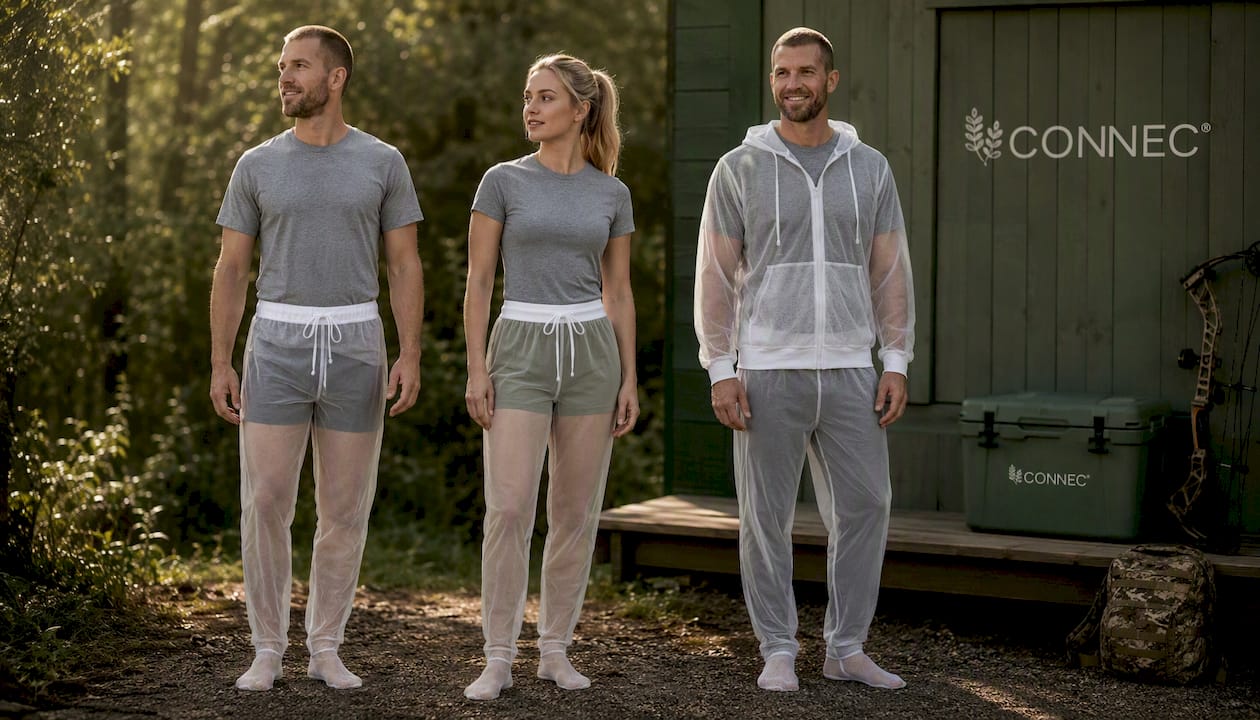
Scenarios where this approach fits especially well: hunters treating water crossings or wetland edges, anyone with permethrin sensitivity, and families who share gear across hikers, gardeners, and hunters alike. When you’re sizing a mesh suit for a hunt, check that the hood seals fully around your face, confirm ankle closures are snug enough to stop crawling insects, and pick a pack size that compresses small enough for a treestand climb.
The Trade-Off Nobody Talks About Enough
Most gear advice treats mosquito protection as a solved problem once you buy the right jacket. It isn’t. The real trade-off in bowhunting is between total coverage and the stillness a bow shot demands, and almost no article addresses that directly.
Here’s the tension: the garment that blocks the most insects, a fully sealed mesh suit with a hood, is also the one most likely to rustle, catch on a riser, or fog your peripheral vision at the worst possible moment. Meanwhile, the quietest, most breathable treated shirt leaves gaps at the wrists and collar that mosquitoes exploit within minutes at dusk.
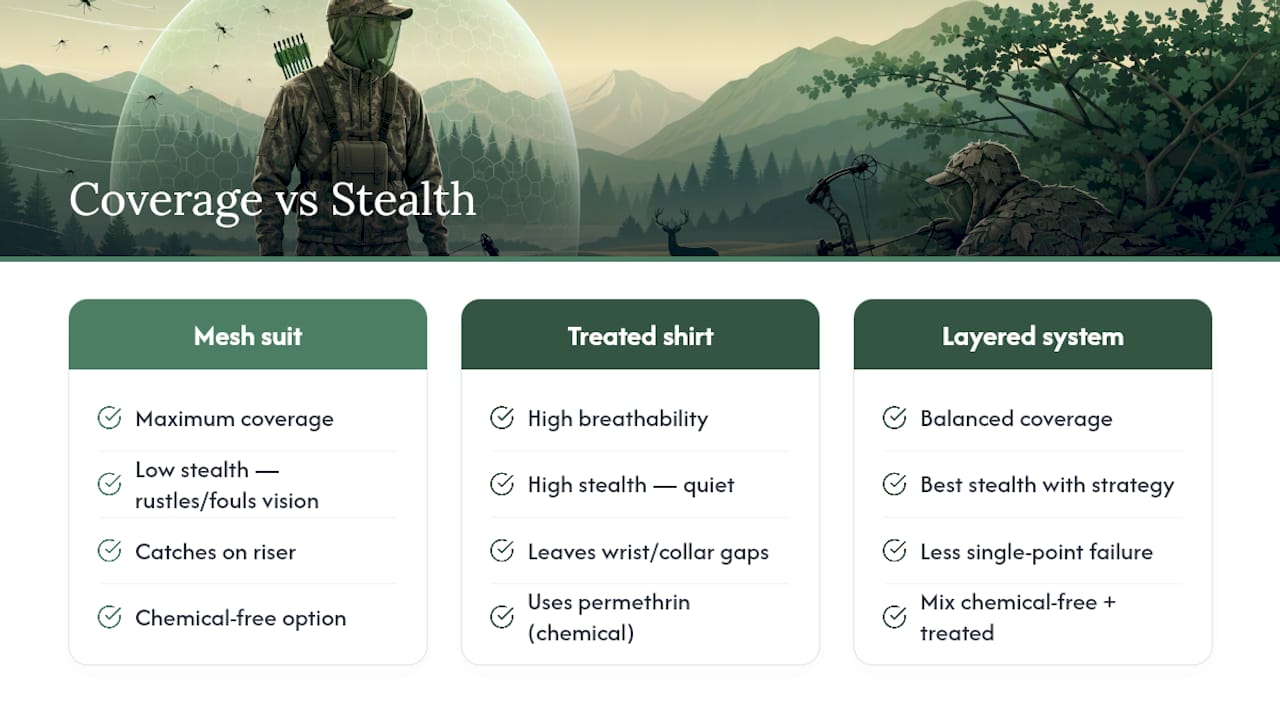
I think the smart move is accepting that no single garment wins on every axis, and building a system instead of hunting for a perfect product. That’s why blending a physical-barrier base, like mesh pants, with a treated top or a portable device for exposed skin beats chasing one all-in-one solution. The permethrin safety questions some hunters raise are legitimate enough that a chemical-free layer for your lower body, paired with targeted treatment where you need durability, often outperforms going all-in on one method.
The gear industry sells certainty. Actual hunting conditions rarely offer it.
— Thomas
A company offers gear for bowhunters who want no chemical exposure and a physical barrier against insects.
Some brands provide gear designed to offer a chemical-free barrier, no re-treatment schedule, and no odor risk near game. If you’ve read this far weighing mesh against treated fabric, the case for going chemical-free comes down to simplicity. One garment, no spray bottle, no bonding process to track over a season.
The Bug Away Pants for men and Bug Away Pants for women cover the lower-body priority this article keeps coming back to, and the Bug Away Jacket for men rounds out a full-coverage system for stands in dense or wet terrain. Every piece is backed by a 30-day money-back guarantee, so sizing for a high draw or testing breathability on a warm sit costs you nothing if it’s not right.
If mosquito-heavy conditions have been cutting your sits short, check sizing against your layering plan and order the pieces that match your terrain before your next hunt.
Sources
- Best Insect-Repellent Clothing for Hunting | Field & Stream
- Sitka Equinox Guard Hoody & Pants Review (Field Tested)
FAQ
Does chemical-free mesh clothing actually stop mosquito bites while hunting?
Yes. Fine mesh creates a physical gap mosquitoes can’t reach across, and field-tested reviews confirm mesh and treated garments both reduce bites compared to untreated clothing.
Is permethrin-treated clothing better than mesh for bowhunting?
Neither is strictly better. Permethrin offers long-lasting protection through many washes, while mesh gives you a zero-chemical barrier that’s ready to wear immediately with no re-treatment.
What part of my body needs the most mosquito protection while bowhunting?
Your ankles and lower legs, since ticks and mosquitoes make first contact there; sealed gaiters or tucked, treated socks close that gap.
Will insect-protection clothing make noise at full draw?
It shouldn’t, if you choose thin, matte-finish fabrics without stiff panels or loud closures near the shoulder and draw arm.
How often do I need to re-treat permethrin clothing?
Factory-bonded treatments last through dozens of washes, but DIY sprays fade faster and need reapplication more often, so check your garment’s care label for specifics.
Is chemical-free mesh clothing suitable for bowhunting in wet terrain?
Yes. Its chemical-free design makes it a strong fit for water crossings, wetland edges, and any hunter who wants a scent-neutral, odor-free barrier near game.