TL;DR:
- The best tick protection for hiking is chemical-free, ultra-fine mesh clothing that physically blocks ticks before they reach the skin. Wearing protective clothing reduces Lyme disease risk by about 40 percent, outperforming skin repellents, and provides lasting protection through repeated laundering. Proper coverage, especially at the ankles and feet, is essential to maximize safety on the trail.
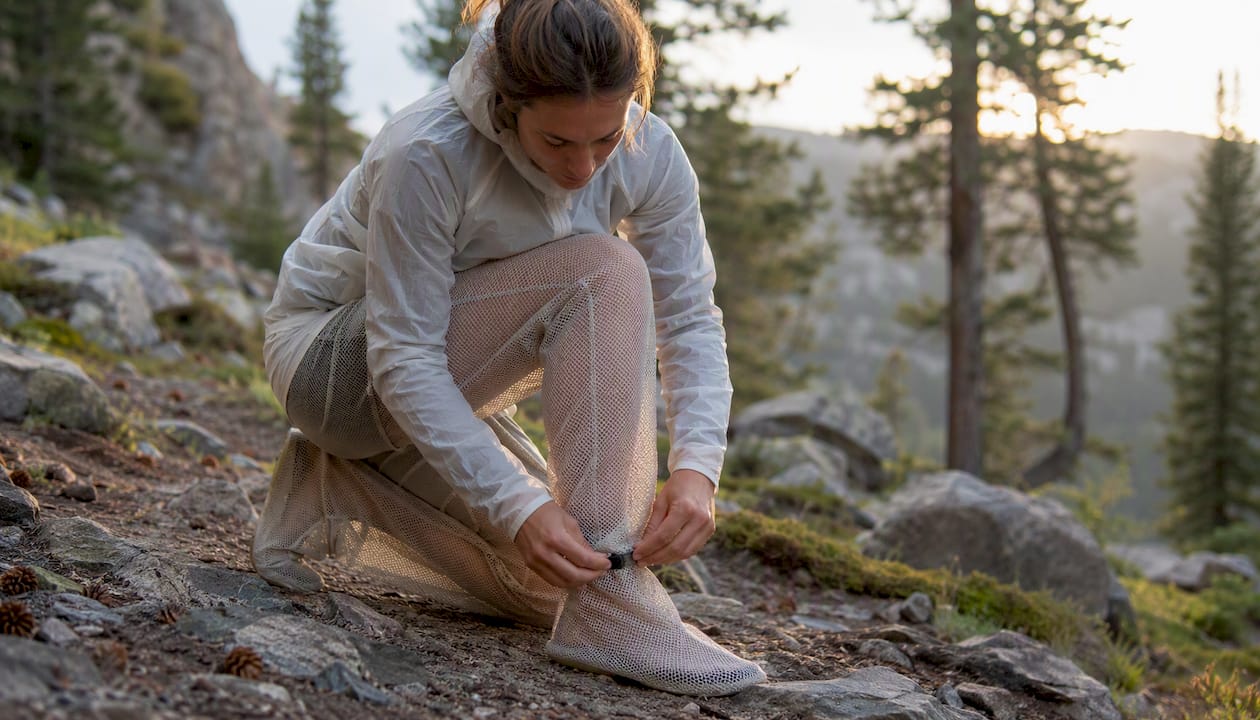
The best tick repellent for hiking isn’t a spray. It’s chemical-free, ultra-fine mesh clothing that physically blocks ticks before they reach your skin. Bugawaygear’s Bug Away Pants are the top recommendation for hikers and families who want real protection without DEET, picaridin, or permethrin. A peer-reviewed case-control study found that protective clothing reduced Lyme disease risk by roughly 40%. That’s a meaningful number, and it’s the strongest evidence base for the barrier-clothing approach. Start with the Bug Away Pants for men or women, add a kid size if you’re hiking with children, and you’re covered before you hit the trailhead.
Table of Contents
- What does science say about clothing and tick bite reduction?
- How do you choose and use tick-blocking clothing for hiking?
- Bug Away Pants: what they are and who they fit
- Quick checklist before you shop or pack
- Key Takeaways
- Why the “repellent” framing misses the point
- Where to get Bug Away Pants for your next hike
- Sources and further reading
What does science say about clothing and tick bite reduction?
Clothing works. The PMC case-control study found protective clothing (long pants, long sleeves) cut Lyme disease risk by approximately 40%. Tick repellents applied to skin showed roughly 20% effectiveness in the same study. That gap matters when you’re choosing how to protect your family on a full-day hike.
CDC guidance on Lyme disease prevention recommends wearing long-sleeved shirts and pants, and checking your body and clothing for ticks during and after outdoor activity. The CDC’s tick prevention page adds that tumble-drying clothing on high heat for 10 minutes kills ticks on dry clothes, and that treating gear with 0.5% permethrin can extend protection through several washes.
For families who want to skip the chemistry entirely, that’s where mesh barrier clothing steps in. CDC guidance on permethrin-treated clothing notes that treated items need 24–48 hours to dry before use and must be reapplied after repeated laundering. Mesh clothing carries no such prep requirement.
| Protection method | Effectiveness (PMC study) | Notes |
|---|---|---|
| Protective clothing (long pants/sleeves) | ~40% reduction in Lyme risk | Observational data; not absolute protection |
| Repellent on skin | ~20% reduction in Lyme risk | Same study; varies by product and application |
| Permethrin-treated clothing | Protective through several washes | Requires prep time; chemical-based |
| Chemical-free mesh barrier | Physical block; no wash degradation | No chemical exposure; permanent barrier |
One honest caveat: the 40% figure comes from observational data. Clothing won’t guarantee zero tick contact, especially if coverage gaps exist. The goal is to layer protection, not rely on a single method.
How do you choose and use tick-blocking clothing for hiking?
What to look for when buying
The features that actually matter, in order of importance:
- Full ankle and foot coverage. Ticks climb from the ground up. Pants that end at the ankle without integrated coverage or gaiter compatibility leave the highest-risk zone exposed. Dutchess County public health guidance specifically recommends tucking pants into socks and considering footwear that reduces tick pickup.
- Kid sizing. If you’re hiking with children, the same coverage rules apply. Hiking with kids tick protection starts with clothing that actually fits small bodies.
How to wear and use it on the trail
- Tuck pants into socks or use integrated foot coverage. Step-by-step tucking guidance shows exactly how to close the gap at the ankle.
- After the hike, tumble-dry on high for 10 minutes before washing. Per CDC guidance, heat kills ticks on dry clothing faster than a wash cycle alone.
Pro Tip: Pair mesh pants with a quick-dry base layer underneath on hot days. The base layer wicks sweat away from skin while the mesh outer layer maintains the physical barrier. You get airflow without sacrificing coverage.
Bug Away Pants: what they are and who they fit
Bug Away Pants from Bugawaygear are built specifically as a chemical-free physical barrier for hikers, gardeners, and families. The ultra-fine mesh blocks ticks and insects without any insecticide treatment, which means no prep time, no reapplication schedule, and no skin-contact chemical concerns.
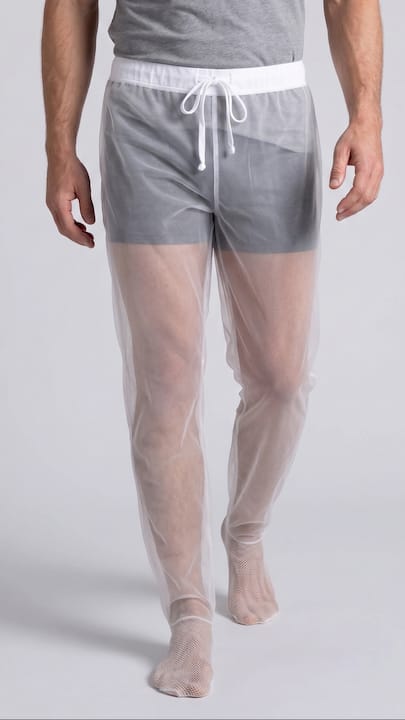
Coverage and barrier performance. The pants include integrated foot coverage, closing the ankle gap that standard hiking pants leave open. The mesh weave is fine enough to prevent tick attachment, not just slow it down.
Breathability. The lightweight mesh construction makes these practical for warm-weather hiking, not just cool-season trails. That’s a real design constraint most barrier clothing ignores.
Sizing. Bug Away Pants are available for men and women, with kid sizing options for families. That matters for hiking with kids tick protection, where ill-fitting adult pants create exactly the coverage gaps ticks exploit.
Durability. Because protection comes from the physical weave rather than a chemical treatment, the barrier doesn’t wash out. The pants hold their protective properties through repeated laundering, unlike permethrin-treated alternatives that need retreatment.
Guarantee. Bugawaygear backs every pair with a 30-day money-back guarantee. Over 500 customers have reported zero tick bites while wearing them.
Pro Tip: If you’re buying for a family, start with one adult pair to test fit and trail comfort, then add kid sizes before your next longer hike. The sizing runs consistent, so ordering based on standard measurements works well.
Quick checklist before you shop or pack
Use this before you buy or before you leave for the trailhead:
- Pack your tick removal kit. Clothing reduces risk; a tick removal kit handles the cases where one still gets through.
Key Takeaways
Chemical-free mesh clothing is the most practical non-chemical tick repellent for hiking, with peer-reviewed evidence showing protective clothing reduces Lyme disease risk by roughly 40%.
| Point | Details |
|---|---|
| Clothing beats topical options | Protective clothing showed a notably higher Lyme risk reduction than skin repellents in the same study. |
| Coverage gaps are the real risk | Ankle and foot coverage, not just long pants, closes the zone where most ticks first contact skin. |
| Barrier doesn’t wash out | Chemical-free mesh maintains protection through repeated laundering; no retreatment needed. |
| Pair clothing with post-hike routine | Tumble-dry on high for 10 minutes after every hike to kill any ticks on clothing. |
| Bugawaygear’s Bug Away Pants | Available for men, women, and kids; 30-day money-back guarantee; integrated foot coverage. |
Why the “repellent” framing misses the point
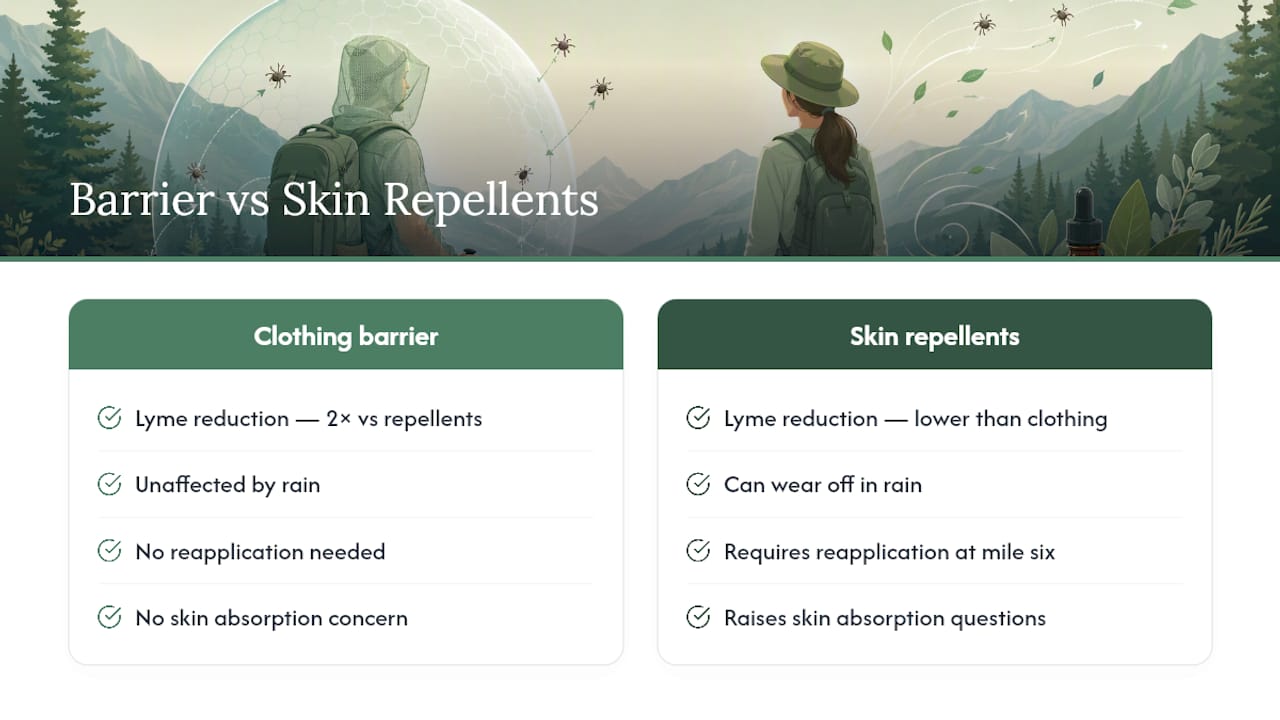
The conventional framing around tick prevention focuses on repellents, and that framing quietly shapes what people buy. Most hikers reach for a spray bottle out of habit, not because the evidence favors it. The PMC study data tells a different story: clothing outperformed skin-applied repellents by a factor of two in Lyme risk reduction. A physical barrier doesn’t wear off in the rain, doesn’t require reapplication at mile six, and doesn’t raise questions about what your kids are absorbing through their skin on a hot day.
The real gap in most hikers’ protection isn’t product strength. It’s coverage. A pair of standard hiking pants with no ankle closure leaves the highest-risk zone completely open. Ticks don’t fly; they climb. Close the ankle, use fine mesh, and check clothing on the trail. That combination is more reliable than any spray, and it works every time you put the pants on.
Where to get Bug Away Pants for your next hike

Bugawaygear’s Bug Away Pants are the direct answer to chemical-free tick protection on the trail. The men’s Bug Away Pants and women’s Bug Away Pants both include integrated foot coverage and ultra-fine mesh construction. Kid sizing is available for families hiking together. Every order comes with a 30-day money-back guarantee. If you’re packing for a hike this week, start with the pants and add a tick removal kit as a backup. Browse the full range at bugawaygear.com.
Sources and further reading
Key sources behind this article’s evidence and recommendations:
- Effectiveness of Personal Protective Measures to Prevent Lyme Disease
- Preventing Tick Bites | Ticks | CDC
- Lyme disease prevention | CDC
- About permethrin-treated clothing and gear | CDC
- Tick Borne Disease Prevention FAQ Series : Personal Protection Measures: Clothing
- How to Avoid Ticks While Hiking
- Mosquito & Tick Repellent Clothing: What Works Off-Grid
- Vector-borne diseases prevention | CDC
Clothing reduces but does not eliminate tick risk. Combine barrier clothing with routine trail checks and post-hike laundering for the strongest protection.