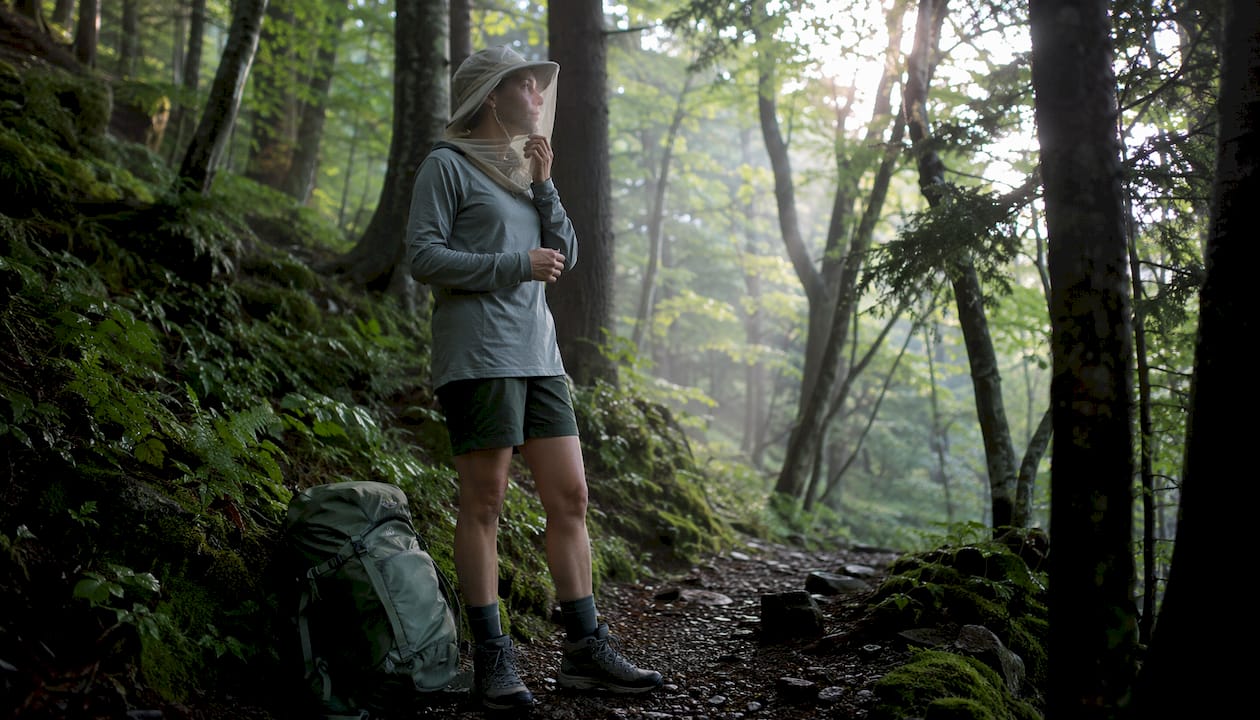
The best mosquito head net keeps bugs off your face without making you feel like you’re wearing a sauna. For most hikers and campers, that means a dark, ultra-fine mesh net that fits over a hat, weighs under an ounce, and packs down to nothing. The two names that consistently rise to the top are Sea to Summit and Coghlans, both offering frameless designs that experienced backpackers actually reach for. Below is a quick comparison of the top options, followed by everything you need to pick the right one.
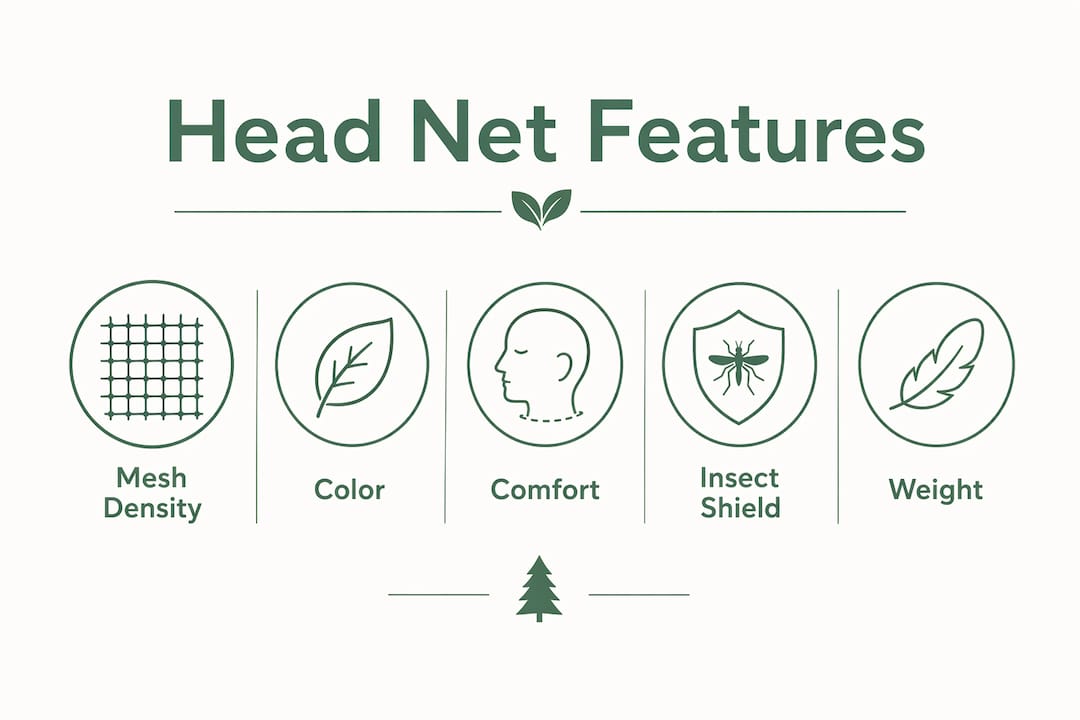
| Net | Mesh density | Color | Comfort/fit | Insect Shield treatment | Weight | Price range |
|---|---|---|---|---|---|---|
| Sea to Summit Ultra-Fine | 2,000 holes/sq in | Dark | Frameless, hat-dependent | No | Ultra-light | ~$20 |
| Sea to Summit Insect Shield | 500 holes/sq in | Dark | Frameless, hat-dependent | Yes | Ultra-light | $10 to $25 |
| Coghlans Ultra-Fine | 1,200 holes per square inch | Black | Elastic neck, universal fit | No | Light | ~$10 |
| Cocoon Insect Shield Ultralight | 500 holes per square inch | Low-contrast | Drawstring neck, stuff sack | Yes | 0.7 oz | ~$25 |
How do the top mosquito head nets actually compare?
Mesh density and what it means for protection
Mesh density is the single biggest variable in any head net. Standard nets run around 500 holes per square inch, which handles mosquitoes and most common flies just fine. If you’re heading into no-see-um territory, like coastal marshes or alpine meadows in june and july, you need at least 1,200 holes per square inch. The Sea to Summit Ultra-Fine has a very fine mesh density capable of blocking even sand flies and midges. The tradeoff is airflow: finer mesh runs noticeably warmer, so you’ll feel the difference on a humid afternoon.
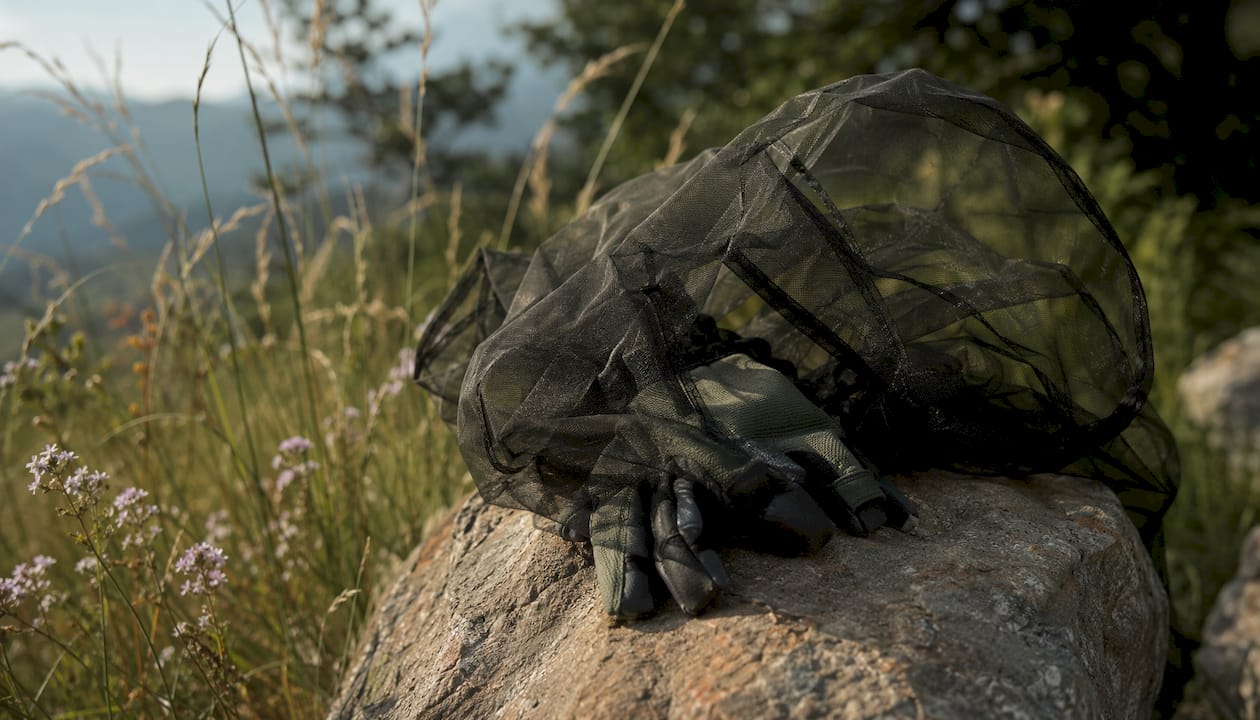
The Coghlans Ultra-Fine net has a mesh density that covers no-see-ums without going to the extreme end of the breathability spectrum. The standard Sea to Summit Insect Shield version at 500 holes per square inch is the better pick for cooler conditions or areas where only mosquitoes are the problem.
Color and visibility through the mesh
Dark mesh reduces eye strain and cuts down on the motion sickness that lighter-colored nets cause when you’re moving through the woods. This is a real complaint among hikers who’ve tried beige or olive nets: the visual interference from the mesh pattern becomes distracting after an hour on trail. Black or very dark gray mesh essentially disappears from your field of vision once your eyes adjust. The Cocoon Ultralight uses a low-contrast coloring for the same reason.
Comfort, fit, and the hat question
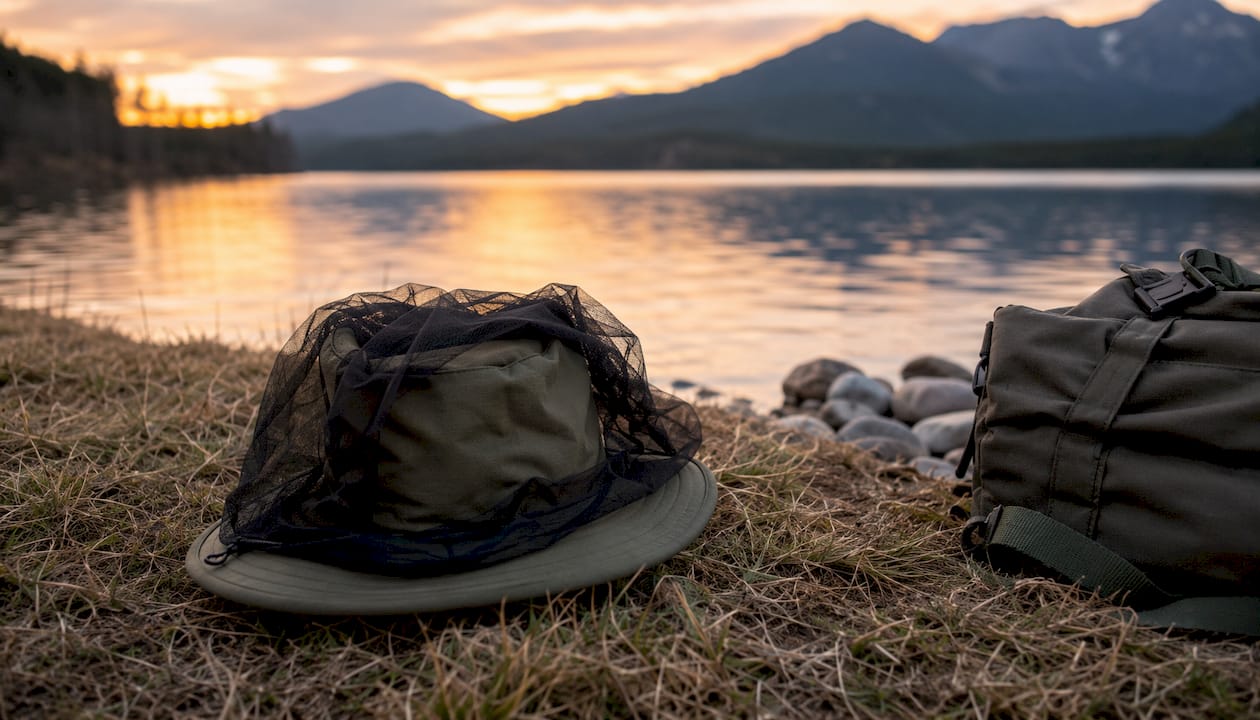
Every experienced hiker will tell you the same thing: wear it over a hat. A wide-brimmed or billed hat creates a tent-like gap between the mesh and your skin, which means better airflow and no mesh touching your lips or nose. Frameless nets, which both Sea to Summit and Coghlans use, pack far smaller than nets with stiffener rings and drape naturally over the hat brim. The Cocoon Ultralight measures 19 by 17 inches and packs to 2 by 2 inches, which is about the size of a golf ball.
Nets with stiffener rings hold their shape without a hat, but they add bulk and rarely pack smaller than a fist. For backpackers counting grams, frameless wins every time.
Insect Shield treatment: what it does and what it costs you
Insect Shield technology bonds permethrin to the fabric at a molecular level, providing protection against mosquitoes, ticks, ants, flies, fleas, chiggers, and midges for up to 70 wash cycles. It’s colorless and odorless, so you won’t notice it during use. The Sea to Summit Insect Shield version and the Cocoon Ultralight both carry this treatment.
The catch is that permethrin is a chemical insecticide, and some hikers prefer to avoid it entirely, especially for kids or those with chemical sensitivities. If that’s your situation, the untreated ultra-fine mesh nets from Sea to Summit or Coghlans give you physical protection without any chemical component.
- Treated nets: best for high-exposure environments, multi-day trips, tick country
- Untreated nets: best for chemical-free preferences, occasional use, or when paired with other protective layers
- Ultra-fine mesh (1,200+ holes/sq in): necessary for no-see-ums and sand flies
- Standard mesh (~500 holes/sq in): sufficient for mosquitoes, cooler and more breathable
Weight, packability, and price
The Cocoon Ultralight and Ben’s InvisiNet both weigh 0.7 oz, which is about as light as a head net gets. The Sea to Summit Ultra-Fine is in the same range, with the brand noting its 15-denier mesh cuts weight by nearly 50% compared to their standard version. Price-wise, most quality head nets fall between $10 and $25. Budget options like multi-packs of basic nets run as low as $9 for four, which makes sense for casual campers who won’t use one daily.
How to choose the best mosquito head net for your trip
The right net depends on where you’re going and what’s biting. Here’s how to think through it:
- Identify your insect threat. Mosquitoes only? A 500-hole-per-square-inch net works and breathes better. No-see-ums, sand flies, or midges? Go to 1,200 holes per square inch or higher.
- Pick dark mesh. Black or very dark gray mesh reduces eye strain and the motion sickness that lighter nets cause on the trail.
- Plan to wear it over a hat. A wide-brimmed or billed hat keeps the mesh off your face and creates ventilation. Without a hat, even a frameless net will rest against your skin.
- Skip the stiffener ring. Frameless nets pack smaller, weigh less, and work just as well over a hat.
- Decide on treatment. Insect Shield adds a meaningful layer of protection in tick-heavy areas, but untreated ultra-fine mesh is a solid chemical-free choice.
- Match price to frequency. A $20 treated net makes sense for a thru-hiker. A $9 four-pack is fine for someone who camps twice a year.
Care and maintenance: Hand wash or machine wash on gentle with mild soap. Treated nets retain their Insect Shield effectiveness through up to 70 washes, so don’t avoid washing them. Store dry and loosely packed to avoid creasing the mesh. Avoid high heat, which can degrade both the mesh fibers and any permethrin treatment.
Pro Tip: Before your trip, practice putting the net on and taking it off with gloves on. In heavy bug conditions, you’ll want to do this quickly without letting anything in, and fumbling with a drawstring while mosquitoes swarm is not the moment to figure it out.
The mesh hole size range that works best for most mosquito species falls between 0.2 and 1.5 millimeters. Anything finer than that blocks the smallest insects but reduces airflow noticeably. Anything coarser lets the tiniest bugs through.
Why Bugawaygear offers a different kind of insect protection
A head net solves the face and neck problem. Your arms, torso, and legs are still exposed unless you add another layer. That’s where Bugawaygear’s approach fills a real gap.
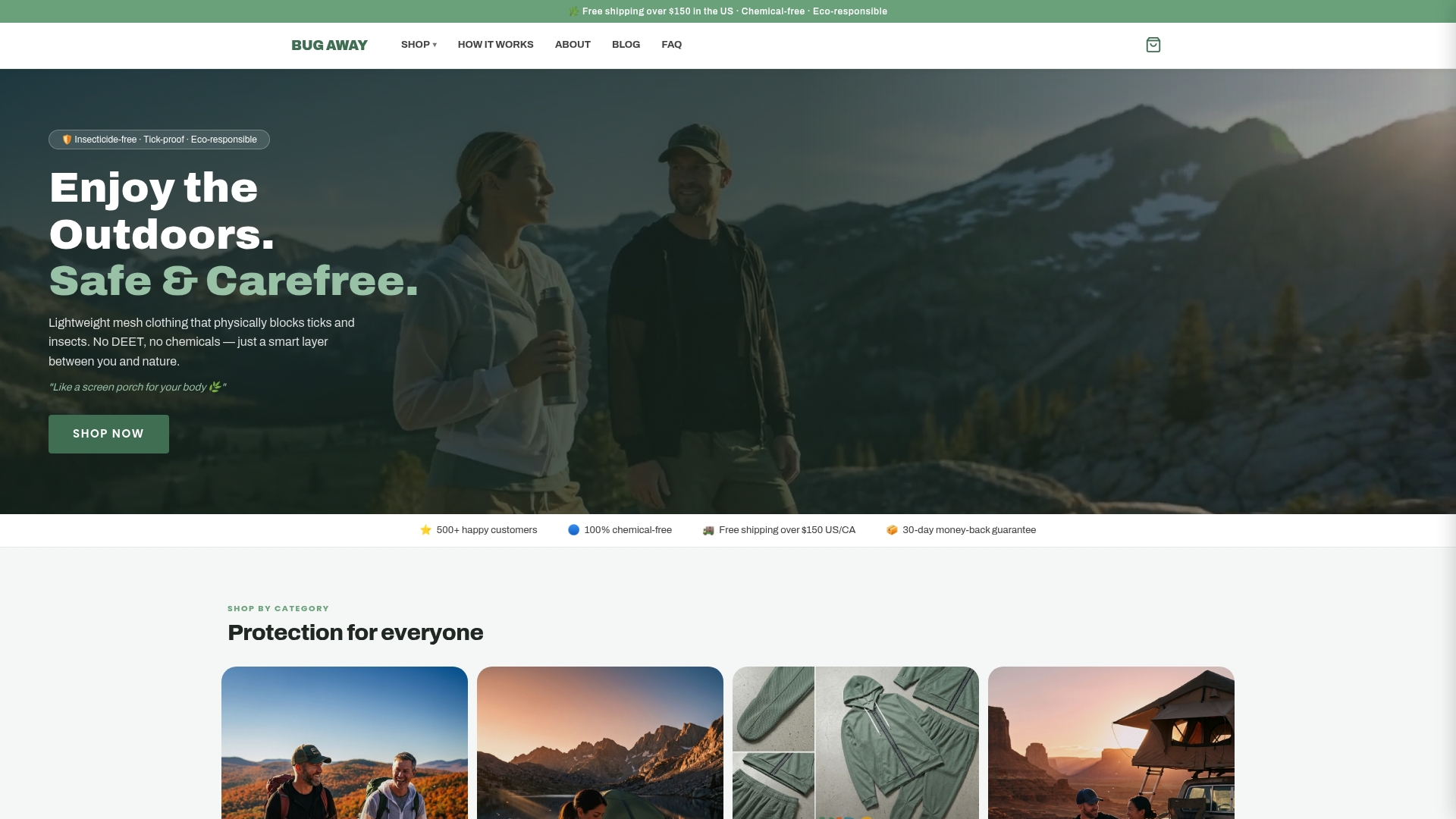
Bugawaygear makes chemical-free mesh clothing designed to physically block ticks and insects without sprays, DEET, or permethrin. The garments use ultra-fine breathable mesh and eco-responsible materials, available in sizes for men, women, and kids. There’s no chemical treatment to wear off, no smell, and no skin contact with insecticides.
Key features worth knowing:
- Physical barrier only: no permethrin, no DEET, no sprays
- Ultra-fine breathable mesh: blocks ticks and insects while allowing airflow
- Eco-responsible materials: designed for repeated, long-term outdoor use
- Sizes for the whole family: men, women, and kids
- 30-day money-back guarantee: zero risk to try
Paired with a quality head net for face and neck coverage, Bugawaygear’s mesh clothing gives you full-body protection that is entirely chemical-free. For hikers who spend long days in tick country, that combination is hard to beat.
Key Takeaways
The best mosquito head net pairs ultra-fine dark mesh with a frameless, hat-compatible design to deliver effective insect protection without sacrificing comfort or visibility.
| Point | Details |
|---|---|
| Mesh density drives protection | Standard nets offer ~500 holes/sq in for mosquitoes; no-see-um protection requires 1,200–2,000 holes/sq in. |
| Dark mesh reduces eye strain | Black or low-contrast mesh minimizes motion sickness and visual interference on the trail. |
| Always wear over a hat | A billed or wide-brimmed hat keeps mesh off your face and improves ventilation significantly. |
| Insect Shield lasts up to 70 washes | Permethrin-bonded treatment protects against mosquitoes, ticks, and six other pests through repeated washing. |
| Chemical-free full-body option | Bugawaygear’s mesh clothing physically blocks insects with no chemical treatment, complementing any head net. |