What makes a great head net for hiking?
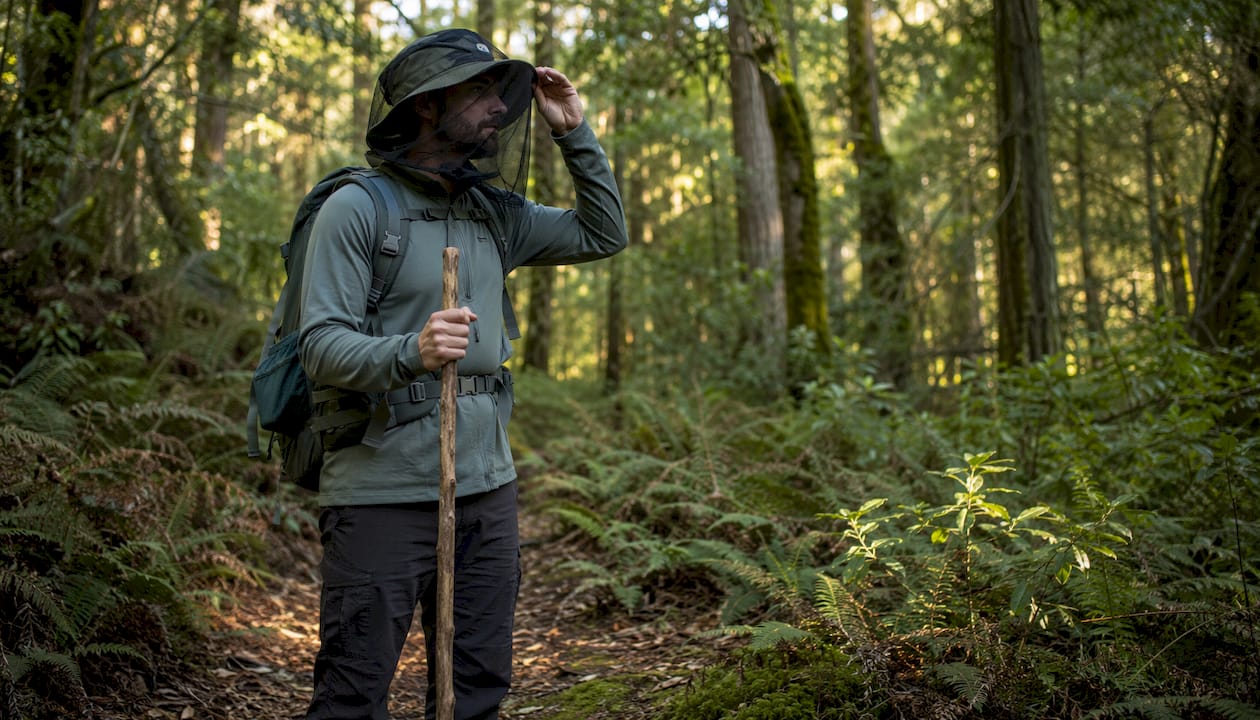
The best head net for hiking physically blocks insects, weighs very little, and packs down to almost nothing. No sprays, no reapplication, no greasy hands. Here are the features that actually matter:
- Mesh density: Standard mosquito nets have a mesh density sufficient to block mosquitoes effectively. No-see-ums require much finer mesh to prevent entry.
- Weight: Quality ultralight head nets weigh between 0.9 and 1.0 ounces, making them virtually unnoticeable in your pack.
- Fit system: Drawcord closures seal the net against your collar; spring-steel rings hold the mesh away from your face.
- Hat compatibility: A wide-brimmed hat keeps mesh off your skin, which is where most bites happen through contact.
- Color: Black mesh reduces eye strain and visual distortion compared to white or gray.
- Chemical-free construction: Bugawaygear’s ultra-fine mesh creates a physical barrier with zero insecticides or DEET.
- Packability: The best outdoor head nets compress into a shirt pocket or a small stuff sack.
Table of Contents
- How to choose the right head net for your hike
- Why wearing a head net protects your health, not just your comfort
- Why Bugawaygear is trusted for insect protection on the trail
- How durable and breathable are hiking head net materials?
- Packability and weight: what to expect on the trail
- Cleaning and maintaining your head net
- Weather conditions and when to use a head net
- Brand and price comparison: what the market looks like
- Key Takeaways
- Bugawaygear protects you from bugs without a single chemical
How to choose the right head net for your hike
Mesh count and insect type
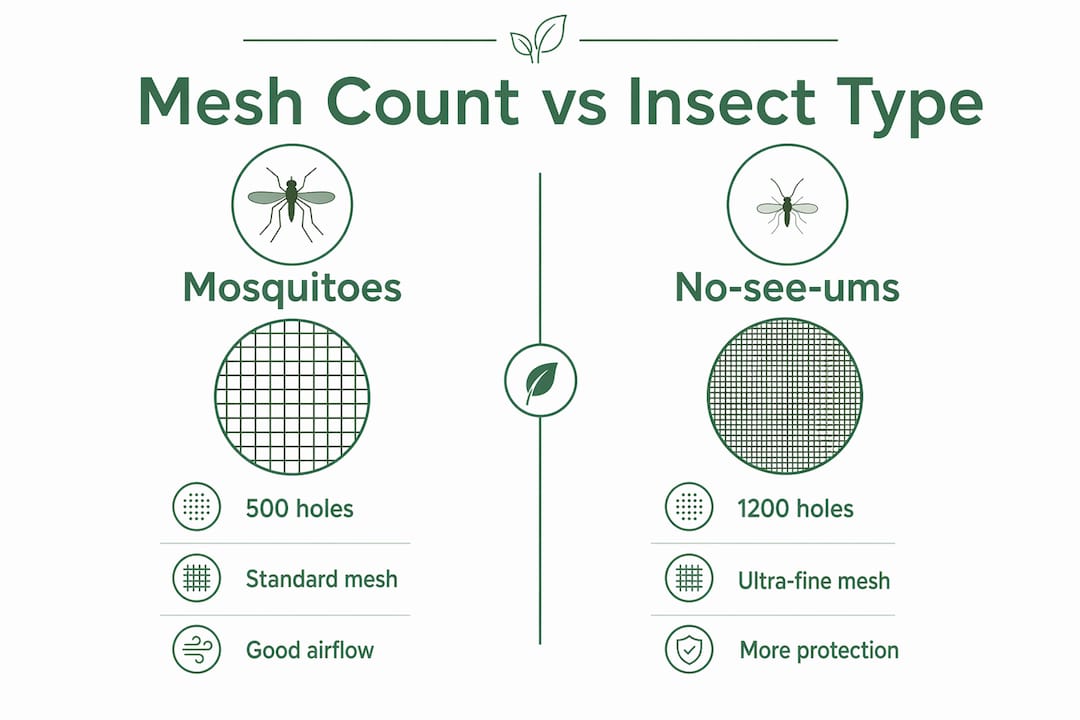
Not all bugs are the same size, and your net needs to match the threat. Mosquitoes are stopped by 500 holes per square inch, but no-see-ums, sand flies, and midges slip right through. For those, you need 1,200+ holes per square inch. The trade-off: higher-density mesh reduces airflow, so a no-see-um net will feel warmer on a humid August trail.
Spring-steel ring vs. ring-less
A spring-steel ring holds the mesh in a fixed shape around your face, improving airflow and visibility. Ring-less models compress flatter and weigh less, which matters if you’re counting every gram. If you hike with a wide-brimmed hat, a ring-less net works fine because the brim does the spacing work.
Hat compatibility
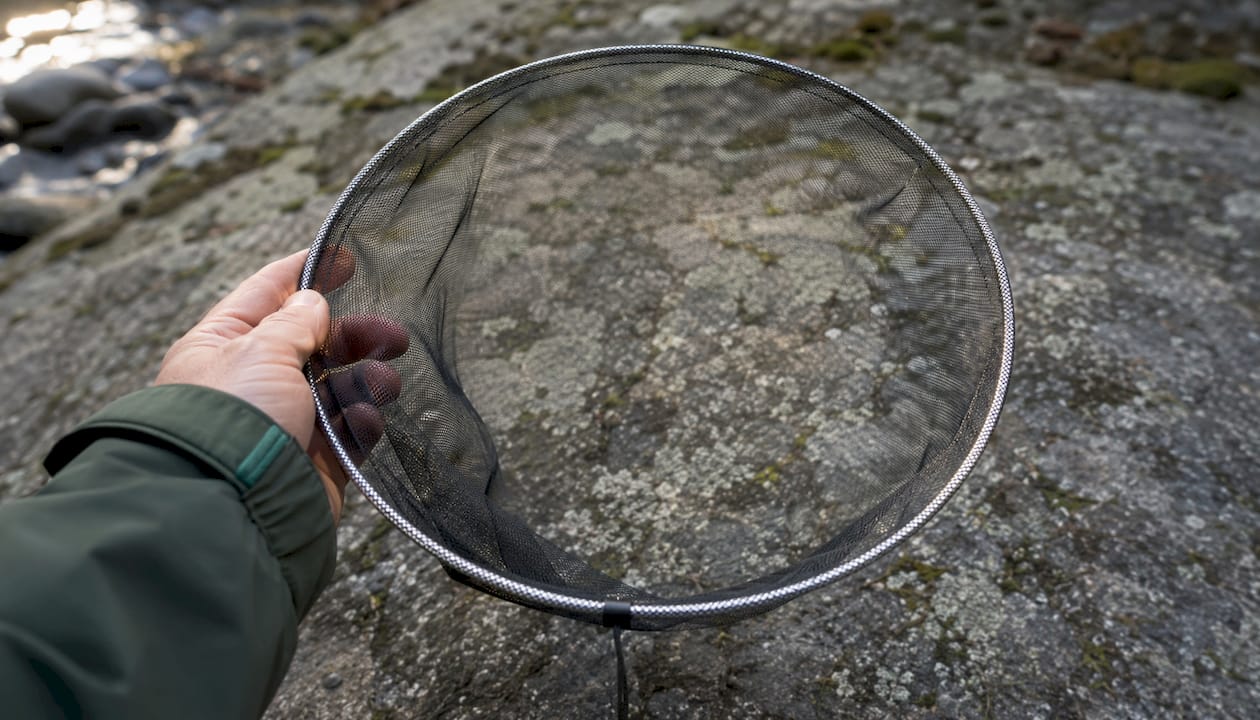
Pairing your net with a wide-brimmed hat is the single most effective usability upgrade. The brim creates a gap between mesh and skin, which eliminates contact bites and dramatically improves forward vision.
Pro Tip: Choose black mesh over white or gray. Black mesh makes the net nearly invisible to your eyes while you’re moving, cutting down on the visual shimmer that causes eye strain and, for some hikers, mild motion sickness on long descents.
Why wearing a head net protects your health, not just your comfort
Head nets do more than keep bugs off your face. Mosquitoes transmit West Nile virus, Zika, and malaria. A physical mesh barrier stops those exposures without putting anything on your skin.
Topical repellents like DEET work, but they require reapplication every few hours, leave a residue on hands and gear, and absorb through skin with repeated use. Expert backpacker Philip Werner notes that a head net is more comfortable and effective than chemical repellents for sustained trail use. For hikers who spend full days outside, that adds up.
The case for going chemical-free: A head net creates a physical barrier that requires no reapplication, no skin absorption, and no chemical residue on your hands or food. For hikers who spend hours in bug-heavy terrain, it’s the most consistent protection available.
Reducing skin exposure to insect repellents also matters for hikers with sensitive skin, children on family hikes, and anyone who prefers to keep their insect bite risk managed without synthetic chemicals.
Why Bugawaygear is trusted for insect protection on the trail
Bugawaygear built its product line around one principle: physical barriers beat chemical ones. Their ultra-fine mesh clothing, including head nets, jackets, and pants, blocks ticks and insects without a single drop of insecticide. Over 500 customers report zero tick bites while wearing Bugawaygear products.
The brand backs every product with a 30-day money-back guarantee, which removes the risk from trying a new approach to insect defense. Their chemical-free outdoor clothing is designed for hikers, gardeners, and families who want protection that doesn’t compromise their health or the environment.
Bugawaygear’s advantages for hikers:
- 100% chemical-free materials, no DEET or permethrin
- Ultra-fine breathable mesh that physically blocks insects and ticks
- Sizes for men, women, and kids
- 30-day money-back guarantee
- Eco-responsible manufacturing with a nature-inspired design ethos
- Expanding line includes head nets, gloves, and gaiters
How durable and breathable are hiking head net materials?
Most quality head nets use 15-denier polyester or nylon mesh. At that weight, the fabric is light enough to compress into a fist-sized bundle but strong enough to resist snagging on branches. Polyester holds its shape through repeated compression and resists moisture absorption, so it dries fast after a sweaty climb.
Breathability depends on mesh density. A standard 500-hole-per-square-inch net breathes freely. A no-see-um net at 1,200+ holes per square inch restricts airflow noticeably, especially in humid conditions. Bugawaygear’s ultra-fine mesh is engineered to balance both, keeping the weave tight enough to block small insects while maintaining enough airflow for active use.
Packability and weight: what to expect on the trail
A head net that stays home because it’s bulky isn’t protecting anyone. The best lightweight head net for hiking compresses to the size of a golf ball and weighs between 0.9 and 1.0 ounces. That’s small enough to live permanently in a hip belt pocket.
Ultralight head nets typically come with a small stuff sack. Some roll into their own crown. Either way, there’s no reason to leave one behind on any hike where insects are a possibility, which in most of the United States from May through September means nearly every trail.
Cleaning and maintaining your head net
Hand wash in cool water with mild soap. Avoid machine washing, which can distort fine mesh and stress the drawcord seams. Lay flat or hang to air dry. Never put a head net in a dryer.
Inspect the mesh after each trip for small tears, especially around the drawcord channel where friction is highest. A pinhole is enough for a no-see-um to enter. Store loosely in its stuff sack rather than compressed for months, which can crease fine mesh permanently.
Weather conditions and when to use a head net
Hot, humid weather is peak bug season, but it’s also when a dense no-see-um net feels warmest. In those conditions, a standard 500-hole-per-square-inch mosquito net gives better airflow while still blocking the primary threat. Save the high-density net for dawn and dusk hikes, shaded creek corridors, and coastal marshes where no-see-ums are heaviest.
In cooler weather, a head net adds a negligible amount of warmth. Wind reduces insect activity significantly, so above treeline or on exposed ridges, you can often skip it entirely and pull it out when you drop back into sheltered terrain.
Brand and price comparison: what the market looks like
Head nets range from under $10 for basic polyester mosquito nets to $25–$30 for spring-ring models with higher mesh density. Entry-level options handle mosquitoes adequately but often use coarser mesh and lack drawcord closures. Mid-range nets add finer mesh, better fit systems, and more durable construction.
Bugawaygear sits in the category of purpose-built, chemical-free insect protection clothing, where the value is the full-body system rather than a single accessory. Their pants, jackets, and head nets work together to eliminate chemical exposure entirely, which no spray-treated net can match.
Key Takeaways
The most effective hiking head net pairs high mesh density with a secure fit system and chemical-free construction, giving you reliable insect protection without skin exposure to repellents.
| Point | Details |
|---|---|
| Mesh density matters | Mosquitoes need 500 holes per square inch; no-see-ums require 1,200+ holes per square inch. |
| Weight and packability | Quality ultralight nets weigh 0.9–1.0 ounces and compress to pocket size. |
| Hat pairing improves protection | A wide-brimmed hat keeps mesh off skin, preventing contact bites and improving visibility. |
| Chemical-free is safer long-term | Physical mesh barriers eliminate skin absorption of DEET and permethrin entirely. |
| Bugawaygear’s system | 100% chemical-free mesh clothing with a 30-day money-back guarantee, trusted by 500+ customers. |
Bugawaygear protects you from bugs without a single chemical
If you’ve been relying on spray repellents, here’s the honest alternative: Bugawaygear’s mesh clothing stops insects at the fabric, not at your skin. No reapplication. No residue. No trade-off between protection and health.
Their Bug Away Pants for Men are built from ultra-fine breathable mesh that blocks ticks and insects on contact, with integrated foot coverage so nothing crawls in from below. Pair them with a head net and jacket for full-body coverage on any trail. Over 500 hikers have worn Bugawaygear through tick-heavy terrain and reported zero bites. The 30-day money-back guarantee means you can test them on a real hike with no risk. Visit Bugawaygear to see the full line.