
The fastest way to avoid a tick bite while berry picking is to layer your defenses: wear long, light-colored clothing (or a chemical-free mesh barrier), tuck pants into your socks, apply an EPA-registered repellent to exposed skin, and shower with a full-body check within two hours of leaving the field. The CDC backs every piece of that routine, and it works because it closes off the three ways ticks actually reach your skin, not just one.
TL;DR:
- Wearing light-colored, long-sleeved clothing tucked into socks significantly reduces tick encounters in overgrown berry patches, especially when paired with footwear and grooming.
- Permethrin-treated fabric provides ongoing protection by disabling ticks on contact, making it highly effective for repeated outings in dense brush environments.
- Skin repellents like DEET, Picaridin, and IR3535 last between 4 to 14 hours depending on the concentration and should be applied after clothing has dried.
- A full-body shower, clothing inspection, and high-heat drying within two hours after outdoor activity effectively remove or kill ticks before attachment can cause disease.
- Combining physical barriers like mesh clothing with chemical repellents and protective gear offers the strongest layered defense against tick bites.
Table of Contents
- How Layered Prevention Cuts Your Tick Bite Risk
- What to Wear and Pack for a Tick-Safe Berry Picking Trip
- Should You Treat Your Own Clothing or Buy It Pre-Treated?
- Your Post-Trip Tick Check Routine, Step by Step
- When Should You Worry About a Tick Bite?
- Why We Put Physical Barriers First
- Gear That Fits the Layered-Protection Approach
- Sources
- FAQ
How Layered Prevention Cuts Your Tick Bite Risk
Berry patches are exactly the terrain ticks prefer. Low brush, tall grass edges, and the kind of overgrown thicket that hides the best blackberries also happens to be where ticks wait on leaf tips for something warm to brush past. That is why a single product, whether it is a spray or a shirt, rarely does the whole job. The Harvard Lyme Wellness Initiative recommends a three-part approach for exactly this kind of high-risk outdoor activity: light-colored long clothing, permethrin on the fabric itself, and an EPA-registered repellent on any skin that clothing does not cover.
Each layer does a different job. Permethrin is applied to fabric, not skin, and it kills or disables ticks on contact when they land on treated clothing or boots. It bonds to the fibers and survives several washes, which is part of why treated footwear and socks rank among the most protective interventions for the lower legs, the entry point ticks use most often when you are walking through brush. Skin repellents cover the gap permethrin cannot, meaning your hands, neck, face, and any strip of skin between your sock line and pant cuff.
For skin, three active ingredients dominate the EPA’s registered list, and they are not interchangeable in how long they last:
- DEET (20 to 30% concentration) protects for roughly 4 to 8 hours depending on strength.
- Picaridin at 20% can protect for 8 to 14 hours, making it a strong pick for a full day of picking.
- IR3535 offers moderate protection and is often preferred by people who want a lighter scent profile.
The EPA’s repellent search tool lets you match a product’s active ingredient and concentration to how long you actually plan to be out, rather than grabbing whatever is on the shelf.
If you would rather skip permethrin altogether, chemical-free mesh clothing works as a physical barrier instead of a chemical one. Fine-weave mesh garments block ticks from reaching skin the same way tightly woven fabric always has, just without a chemical treatment that needs reapplying or a waiting period before it is safe to wear.
Pro Tip: Apply skin repellent first and let it dry for a minute or two before you pull on treated or mesh clothing. This keeps the repellent from smearing and gives you even coverage on the skin it is actually meant to protect.
One safety note worth flagging now: permethrin is highly toxic to cats, so consider amber collars for dogs as a natural way to protect pets from ticks during outdoor activities. Keep permethrin-treated gear away from pets, especially cats, until it is fully dry, and never apply permethrin products labeled for clothing directly to an animal.
What to Wear and Pack for a Tick-Safe Berry Picking Trip
Getting dressed right before you leave the house does more work than almost anything you do once you are in the patch. Clinicians at the Cleveland Clinic point to simple clothing tactics, tucking pants into socks and choosing boots over sandals, as some of the highest-value moves you can make, and they cost nothing beyond a few extra minutes.
Here is the outfit checklist, in the order you should put it on:
- A long-sleeve shirt in a light color. Light fabric makes a dark, crawling tick easy to spot before it finds skin.
- Long pants, also light-colored, tucked into your socks or boots. This single step blocks the most common path ticks use to climb toward your waistline.
- Tall socks or gaiters that create a solid seal at the ankle. Gaiters are worth the investment if you pick berries more than a few times a season.
- Closed-toe boots, not sneakers or sandals. Boots give ticks nothing to climb onto directly and pair well with permethrin treatment since they take repeated dousing better than sneakers do.
- A hat, which matters more than people expect. Ticks can drop from overhanging branches, and a hat keeps your scalp, one of the hardest spots to self-check, out of the direct line of contact.
- Optional gloves if you are reaching deep into thorny bushes, since forearms and wrists are common bite sites when sleeves ride up.
If you are dressing kids for the trip, the same rules apply, just with more supervision. Kids move through brush faster and lower to the ground than adults, brushing against exactly the height where ticks tend to wait. Do a mid-trip clothing check on children every hour or so rather than waiting until you get home, and remind them not to eat berries straight off the bush without a quick rinse. Field dust and whatever crawled across that branch are not things you want your child swallowing along with a blackberry.
Pack a small kit before you leave the driveway:
- Travel-size EPA-registered repellent for reapplication
- A small mirror for checking spots you cannot see directly
- Fine-tipped tweezers or a tick removal tool
- A zip-top bag to isolate clothing or a removed tick for later inspection
None of this is complicated, and once you have done it two or three times it takes less than five minutes. For a longer breakdown of outfit choices by activity type, Bugawaygear’s clothing guide walks through specific fabric and fit recommendations.
Should You Treat Your Own Clothing or Buy It Pre-Treated?
Permethrin only works on fabric, never on skin, and understanding that distinction is the whole point of using it correctly. When you spray a 0.5% permethrin product on clothing, the compound binds to the fibers and stays active through multiple wash cycles rather than sitting on the surface waiting to rub off. Ticks that land on treated fabric make contact with the chemical within seconds, which is enough to disable them before they can crawl to skin.
To treat clothing yourself, spray it outdoors or in a well-ventilated space, focus on cuffs, pant legs, sock tops, and boot exteriors since those are the first contact points, and let the garment dry completely (usually two to four hours) before wearing it. Follow the label’s reapplication schedule; most consumer permethrin sprays hold up for around six washes before you need to treat the garment again. Bugawaygear’s guide to permethrin safety covers application specifics in more depth if you are treating gear for the first time.
Buying pre-treated clothing skips all of that. You get consistent, factory-applied protection without the spraying, drying, and reapplication schedule, and many pre-treated garments carry a wash-count guarantee printed right on the tag. The tradeoff is cost and the fact that pre-treated items are still permethrin garments, meaning they carry the same pet and skin precautions as anything you treat yourself.
Weighing the two options comes down to:
- DIY treatment costs less upfront and lets you treat gear you already own, but requires drying time and periodic retreatment.
- Pre-treated clothing costs more per item but removes the guesswork and gives you a known wash-count lifespan.
- Chemical-free mesh clothing sidesteps the permethrin question entirely, which matters if you are treating kids’ clothes or if anyone in your group reacts to chemical treatments.
On the skin-repellent side, choosing between DEET, picaridin, and IR3535 mostly comes down to how long you will be out and how your skin tolerates each one. A two-hour berry run in a suburban patch does not need the same concentration as a full-day foraging trip into dense woods. Higher DEET concentrations (above 30%) extend protection time but do not necessarily work faster, and picaridin has become a popular alternative because it is odorless and less likely to degrade plastic or synthetic fabric, which matters if you are also wearing treated gear.
One figure worth remembering: washing clothes in the laundry, even a hot wash, does not reliably kill ticks that hitched a ride home on your pant leg. Only tumble drying on high heat for at least 10 minutes reliably kills them, a detail covered fully in the post-trip section below.
A few safety notes apply regardless of which repellent you choose. Keep permethrin off skin and away from pets until fully dry. Check the product label for guidance if you are pregnant, breastfeeding, or applying repellent to a young child, since concentration recommendations differ by age. And if you are treating your own gear at home, do it away from garden beds or anywhere pollinators feed, since permethrin is toxic to bees as well as cats.
Your Post-Trip Tick Check Routine, Step by Step
The work does not stop when you leave the berry patch. Most tick-borne infections require the tick to stay attached for many hours, so what you do in the first two hours after you get home matters as much as anything you did before you left.
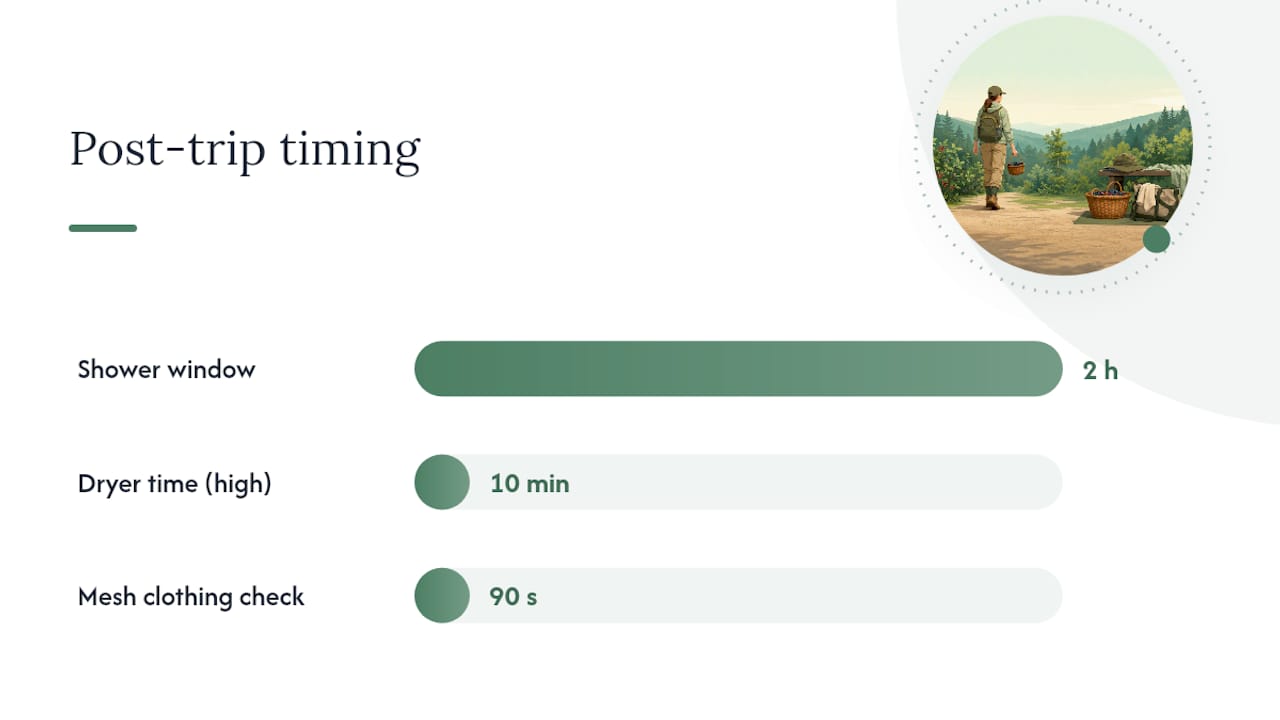
- Shower within two hours. Showering reduces the risk of tick-borne disease two ways: the water washes off ticks that have not yet attached, and the process of showering gives you a natural reason to look closely at your own skin.
- Do a full-body check, ideally with a mirror or a second set of eyes for spots you cannot see directly. Focus on the scalp, behind and inside the ears, armpits, the groin area, behind the knees, and the waistband line, since these are the warm, hidden spots ticks favor.
- Check clothing and gear before they go into a hamper. Ticks can survive on fabric for hours after you take it off, which is why the next step matters.
- Wash clothing in hot water, then tumble dry on high heat for at least 10 minutes. If clothing is already dry, you can skip the wash and go straight to the dryer, since heat alone kills ticks on dry fabric according to CDC guidance. Cold or medium-heat washing alone does not do the job.
- Remove any attached tick immediately using fine-tipped tweezers. Grip the tick as close to the skin as possible and pull straight up with steady, even pressure. Do not twist, jerk, or use petroleum jelly, a lit match, or nail polish, all of which are outdated advice that can cause the tick to release saliva into the bite.
- Clean the bite site with soap and water or rubbing alcohol once the tick is out.
- Save the tick in a zip-top bag or piece of tape with the date, in case your doctor wants to identify the species later.
If your household includes people wearing mesh clothing, Bugawaygear’s 90-second tick check routine is built around exactly this kind of quick post-trip inspection.
Pro Tip: Set a phone timer for two hours the moment you get back in the car. It sounds unnecessary until the errand you “quickly” run before showering turns into three hours, and the window that matters most has already closed.
Skipping the dryer step is one of the most common mistakes people make, since it feels redundant after a wash. It is not. Ticks can survive a full wash cycle in cooler water, and only sustained dry heat reliably kills them.
When Should You Worry About a Tick Bite?
Most tick bites do not lead to illness, but knowing the warning signs matters more than trying to identify the tick species yourself. Watch for these symptoms in the days and weeks after a bite:
- A rash that expands outward from the bite site, sometimes with a clear center, appearing anywhere from 3 to 30 days later.
- Fever, chills, or flu-like fatigue with no other obvious cause.
- Joint pain or swelling, particularly in the knees.
- Headache or muscle aches that show up alongside the above.
Seek immediate medical attention if you cannot fully remove an embedded tick, if the bite site shows signs of infection (increasing redness, warmth, or pus), or if you experience a severe allergic reaction such as difficulty breathing or facial swelling.
When you do see a clinician, documentation helps them make faster decisions. Note the date of the bite, roughly how long the tick was attached if you know it, and take a photo of the bite site and, if you saved it, the tick itself. This gives your doctor real information to work with rather than a guess.
It is also worth knowing that vaccination against tick-borne encephalitis exists but is region-specific and not a substitute for prevention. Even where it is available, it does not prevent Lyme disease or stop a tick from attaching in the first place, so the clothing and repellent routine above still applies regardless of vaccination status. None of this replaces a conversation with your own doctor, who can weigh your symptoms, location, and history in a way a general guide cannot.
Why We Put Physical Barriers First
Most tick-prevention advice treats clothing as an afterthought to chemical repellents. I think that gets the priority backward, especially for berry pickers who are often out for hours at a stretch with kids in tow, hands full of fruit, and little patience for reapplying spray every few hours.
A physical barrier does not wear off, does not need reapplication, and does not carry the safety caveats that come with permethrin around pets or young children. Ultra-fine mesh clothing works on the same principle tightly woven fabric always has. If a tick cannot get through the weave, it cannot bite. That is why chemical-free physical barriers hold up especially well for multi-hour outings, exactly the kind of session a serious berry-picking trip turns into once you find a productive patch.
Bugawaygear’s mesh garments are built on that principle: 100% chemical-free materials, a 30-day money-back guarantee, and reports from over 500 customers of zero tick bites while wearing them. Families with young kids and anyone sensitive to permethrin or DEET are the clearest fit, since mesh removes the chemical variable from the equation entirely rather than just tucking it out of sight until wash day.
That said, mesh is not a universal replacement for every layer. In extremely high tick-density environments, treated boots and socks still add a margin of protection that a jacket or pant alone cannot fully replicate, especially at the ankle line where ticks make first contact. The honest answer is that physical barriers and permethrin-treated footwear are not competitors. They solve different parts of the same problem, and picking berries for three or four hours in overgrown brush is exactly the scenario where stacking both makes sense.
— Thomas
Gear That Fits the Layered-Protection Approach
If the checklist above sounds like a lot to manage every time you head out to the berry patch, that is the actual problem chemical-free mesh clothing solves. Instead of remembering when you last treated a pair of pants or budgeting time for permethrin to dry, you put on a garment that is doing its job the moment it is on your body.

Bugawaygear builds three options specifically for this kind of outing. Bug Away Pants for women are cut for a natural fit through the waist and leg while keeping the ultra-fine mesh weave tight enough to block ticks at the ankle and thigh, the two spots berry pickers brush against brush most often. Bug Away Pants for men follow the same construction with a fit built for a broader range of body types. For kids, the Bug Away Kids Set pairs a jacket and pants so you are not stitching together mismatched protection for the smallest, and often least careful, member of your picking crew.
None of these garments require you to skip the rest of the routine. Pair mesh pants with permethrin-treated boots if you are heading into dense brush, or add an EPA-registered repellent on your hands and neck where the mesh does not reach. Check the sizing chart before you order, since mesh clothing works best snug at the wrist and ankle, and take advantage of the 30-day money-back guarantee if the fit is not right the first time.
Sources
- CDC — Preventing tick bites
- Harvard Lyme Wellness Initiative — Preventing tick bites
- EPA — Find an insect repellent that’s right for you
FAQ
How Did the Amish Traditionally Avoid Ticks?
Amish farming communities rely heavily on long-sleeve shirts, long pants, and wide-brimmed hats as everyday work attire, which naturally covers most of the skin ticks target, though this is a matter of practical dress rather than a documented tick-specific practice.
How Did Native American Communities Historically Manage Ticks?
Historical tick-avoidance practices among Native American communities are not well documented in current public health literature, but general principles like covering skin and inspecting the body after time in brush align with what clinicians recommend today.
How Do Farmers Keep Ticks Away From Themselves and Livestock?
Farmers typically combine long protective clothing, tucking pant legs into boots, and keeping grass and brush trimmed around work areas, since reducing tick habitat lowers exposure before any clothing or repellent comes into play.
What Is the Best Protection Against Ticks Overall?
No single product offers complete protection; the most effective approach layers permethrin-treated or chemical-free mesh clothing with an EPA-registered skin repellent, followed by a shower and full-body check within two hours of coming indoors.
Does Washing Clothes Kill Ticks?
No. Washing alone, even in hot water, does not reliably kill ticks; only tumble drying on high heat for at least 10 minutes gets the job done, per CDC guidance.
Can Mesh Clothing Replace Permethrin Entirely?
Chemical-free mesh clothing works well as a physical barrier for most berry-picking trips, especially for kids or chemical-sensitive users, though pairing it with treated boots adds extra protection in dense, high-tick-density brush.